Shop on Lazada
MENTHOLATUM products
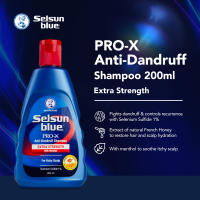
Selsun Blue PRO-X ANTI-DANDRUFF SHAMPOO 200ml
₱509.00₱566.00
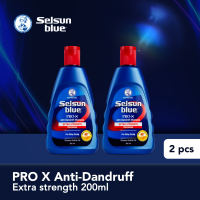
Selsun Blue PRO-X ANTI-DANDRUFF SHAMPOO 200m (Bundle of 2)
₱992.00₱1,102.00
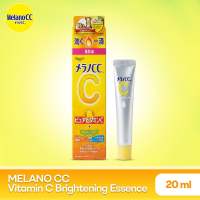
Melano CC Vitamin C Brightening Essence 20ml
₱784.00₱852.00
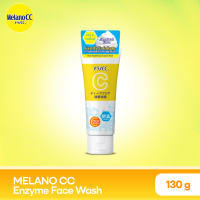
Melano CC Enzyme Face Wash 130g
₱392.00₱426.00
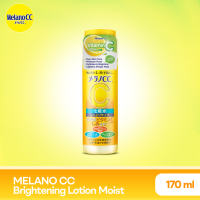
Melano CC Lotion Moist 170ml
₱588.00₱639.00
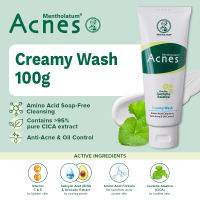
Acnes Creamy Wash 100g
₱254.00₱273.00
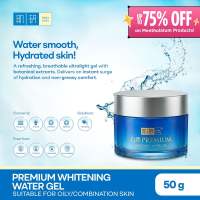
Hada Labo Premium Whitening Water Gel (50g)
₱976.00
Buy on Lazada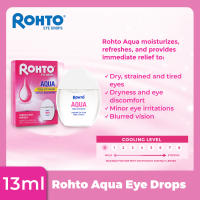
Rohto Aqua Eye Drops
₱197.00
Buy on LazadaAbout MENTHOLATUM
MENTHOLATUM is a historic American-origin healthcare and personal-care brand best known for Mentholatum Ointment, a topical product based on menthol and petrolatum. Founded in the United States in 1889, the brand has evolved from a traditional medicinal ointment into a broad international portfolio covering lip care, skincare, acne care, men’s grooming, hair care, sun care, and other health-and-beauty products. Today, MENTHOLATUM is part of the global Rohto Mentholatum group associated with Japan’s ROHTO Pharmaceutical Co., Ltd.1
Quick facts
| Category | Details |
|---|---|
| Brand | MENTHOLATUM |
| Origin | United States |
| Founded | 1889 |
| Founder | Albert Alexander Hyde |
| Original company | Yucca Company |
| Original flagship product | Mentholatum Ointment |
| Name registered | 1895 |
| Name origin | Menthol + petrolatum |
| Current corporate group | Rohto Mentholatum / ROHTO Pharmaceutical |
| Industry | Healthcare, pharmaceuticals, skincare and personal care |
| Global presence | Multiple countries and regions |
| Best known for | Mentholated ointment and lip-care products |
| Major Asian markets | Japan, China, Southeast Asia and others |
Origins
The history of MENTHOLATUM began in 1889 in Kansas, USA, when Albert Alexander Hyde established the Yucca Company. Working alongside pharmacist colleagues, Hyde developed medicinal products for everyday use.
After approximately four years of research, the team formulated an ointment designed to provide relief for common ailments, including discomfort associated with colds, itching, and insect bites. This formulation became known as Mentholatum Ointment.1
The name was formally registered as MENTHOLATUM in 1895. It is a portmanteau derived from:
- Menthol: The cooling aromatic compound.
- Petrolatum: The petroleum-based ointment base.
Consequently, the name describes the product’s characteristic combination of ingredients.1 In 1906, the Yucca Company was reorganized and renamed The Mentholatum Company.
The original Mentholatum Ointment
Mentholatum Ointment is the foundational product that established the brand’s reputation. Historically, it was positioned as a versatile household medicinal staple used for topical relief of minor itching, insect bites, and cold-related discomfort. The product’s distinctive cooling sensation and menthol aroma became synonymous with the MENTHOLATUM name.1
Crucially, the original ointment defined the brand’s identity as a provider of simple, practical healthcare intended for everyday family use. This positioning remained central even as the company expanded into new product categories.
International expansion and the Little Nurse
MENTHOLATUM gradually transformed from an American medicinal-product manufacturer into an international business. Historical records indicate that overseas expansion included operations in Canada and the United Kingdom during the early 20th century, followed by entry into numerous other international markets.
A defining element of the brand’s global identity was the “Little Nurse” character. Depicted as a young girl in nurse’s attire, she became an enduring symbol of care, relief, and family healthcare. Historical materials confirm that the Little Nurse appeared in promotional content as early as the 1920s before being formally incorporated into packaging.4
Relationship with Rohto Pharmaceutical
A pivotal chapter in the brand’s history is its integration with the Japanese healthcare company ROHTO Pharmaceutical. Established in 1899 by Yasutami Yamada as a pharmacy in Osaka, Rohto grew into a major pharmaceutical and healthcare enterprise.
In 1975, Rohto secured exclusive trademark usage rights for MENTHOLATUM in Japan, commencing local production and sales. This marked a significant expansion into the Japanese skincare and healthcare market. Subsequently, in 1988, Rohto acquired The Mentholatum Company (USA), assuming full management control. This acquisition served as a foundation for Rohto’s broader international strategy.
The brand’s trajectory can be summarized as follows: MENTHOLATUM originated as an American brand, expanded internationally, entered the Japanese market through Rohto, and was ultimately acquired by Rohto.
Product diversification
Under Rohto’s ownership, the MENTHOLATUM portfolio expanded significantly beyond its original ointment. Key categories include:
Lip care
Medicated and moisturizing lip care is one of the brand’s most recognizable categories. Rohto introduced MENTHOLATUM lip products in Japan during the 1970s, and the category subsequently became a major international pillar.4
Acne care
The brand developed specialized products for acne-prone skin, notably Mentholatum Acnes, which launched in Japan in 1998.
Skincare
The portfolio grew to encompass daily facial and body skincare, including moisturizers and treatment-oriented formulations.
Men’s grooming
Dedicated men’s skincare lines were introduced, featuring facial cleansers, lotions, and grooming essentials.
Hair and scalp care
The brand extended its reach into hair and scalp treatments.
Sun care
Product development also included sunscreens and sun-protection items.
This evolution illustrates the transformation of MENTHOLATUM from a single iconic ointment into a comprehensive consumer healthcare and beauty platform.4
Major historical milestones
| Year | Event |
|---|---|
| 1889 | Albert Alexander Hyde establishes the Yucca Company in Kansas |
| 1895 | “MENTHOLATUM” is formally registered as a name/trademark |
| 1906 | Yucca Company becomes The Mentholatum Company |
| 1910s–1920s | International expansion and development of visual identity |
| 1975 | Rohto obtains exclusive MENTHOLATUM trademark usage rights in Japan |
| 1975 | Rohto begins selling Mentholatum Ointment and lip products |
| 1988 | Rohto acquires The Mentholatum Company |
| 1991 | Mentholatum China Pharmaceuticals joint venture established |
| 1993 | Expansion into sun care and other categories |
| 1997 | Rohto-Mentholatum Vietnam established |
| 1998 | Mentholatum Acnes launched in Japan |
| 2000s onward | Continued expansion into skincare, acne care, men’s care, and other categories |
| 2024 | Brand celebrates more than 135 years of history |
Presence in China
MENTHOLATUM maintains a significant presence in the Chinese-speaking market. Mentholatum (China) Pharmaceuticals Co., Ltd. was established in 1991 in Guangdong, developing manufacturing and distribution capabilities for the region.4
Known locally as 曼秀雷敦 (Mànxiùléidūn), the Chinese portfolio has expanded well beyond the original ointment to include lip care, men’s and women’s skincare, sunscreen, acne care, hair care, anti-aging products, cleansers, moisturizers, and OTC healthcare items. The Chinese operation operates under the philosophy of “处处关怀,成就更好”, conveying the concept of care everywhere and making things better.3
Presence in Japan
Japan has been instrumental in the modern development of MENTHOLATUM. Following Rohto’s commercialization of the brand in 1975, it evolved from an imported American ointment into a platform for diverse healthcare and skincare innovation. Products such as Mentholatum Ointment, Mentholatum Medical Lip, Mentholatum Medicated Lip, Mentholatum AD, and Mentholatum Acnes were developed for this market. Rohto notes that the Japanese product line grew from just a few items in the 1970s to more than 170 products over its development history.4
Presence in Malaysia
In Malaysia, MENTHOLATUM is marketed within the broader Rohto Mentholatum ecosystem. The official Malaysian website features products across skincare, haircare, suncare, eyecare, lip care, acne care, and men’s care. The online catalog also lists sister brands within the Rohto portfolio, such as Hada Labo, Melano CC, and 50 Megumi, alongside MENTHOLATUM-branded items.5
The official site identifies the local entity as Mentholatum Malaysia Sdn Bhd, with an address in Bangsar South, Kuala Lumpur.
Brand portfolio structure
It is necessary to distinguish MENTHOLATUM as a master brand from the wider product lines associated with the Rohto Mentholatum business. For instance, while the Malaysian catalog includes Mentholatum Men, Mentholatum Acnes, Mentholatum Lipcare, and Mentholatum skincare, it also retails sister brands like Hada Labo and Melano CC.
References to “MENTHOLATUM” may encompass:
- Classic healthcare: Mentholatum Ointment and topical relief products.
- Lip care: Medicated balms, moisturizing lip products, and sun-protective lip items.
- Facial care: Cleansers, moisturizers, acne treatments, toners, and skincare.
- Men’s care: Facial cleansers, lotions, moisturizers, and oil-control products.
- Body and hair care: Scalp treatments, anti-dandruff products, and personal-care items.
Portfolio composition varies considerably by country.
Brand identity
The identity of MENTHOLATUM is historically anchored in several core concepts:
Care
Rooted in household healthcare, the brand’s messaging emphasizes care for ordinary people and families.
Reliability
With origins tracing back to 1889, the brand possesses over a century of consumer recognition.1
Accessibility
Rather than positioning itself exclusively as a luxury label, MENTHOLATUM emphasizes products intended for ordinary, everyday use.
Innovation
Under Rohto, the brand has continuously entered new healthcare and beauty categories while preserving its historical identity.4
The Little Nurse mascot
The Little Nurse remains perhaps the most recognizable visual element of the MENTHOLATUM heritage. Depicted as a young girl dressed as a nurse, she serves as an enduring symbol communicating healthcare, gentleness, family, trust, and relief.4
This imagery was significant because the brand’s early identity focused not merely on “menthol,” but on establishing a friendly household healthcare product.
Corporate status and Rohto group
Today, MENTHOLATUM functions as part of the Rohto group rather than as an independent entity. Rohto Pharmaceutical is a Japanese healthcare company with businesses spanning pharmaceuticals, cosmetics, functional foods, and other healthcare products. As of March 2026, Rohto reported consolidated sales of approximately ¥343.7 billion and 9,292 consolidated employees.
As a key international brand asset, MENTHOLATUM benefits from Rohto’s pharmaceutical expertise, research and development, manufacturing capabilities, Asian distribution network, skincare specialization, and international expansion infrastructure.
Longevity and distinctiveness
MENTHOLATUM is notable for preserving its heritage product identity while continuously adapting its portfolio. Its longevity is attributed to a combination of historic trust, recognizable branding, everyday healthcare focus, and product innovation. While the original ointment established the brand’s reputation, subsequent generations of products—particularly in lip care, acne care, skincare, and men’s grooming—have maintained relevance with younger consumers. This duality allows MENTHOLATUM to function simultaneously as a traditional medicine-cabinet brand and a modern Asian skincare brand.
Distinctive characteristics compared to typical modern skincare companies include:
- Extremely old heritage: Origins dating to 1889 predate many modern pharmaceutical and beauty brands.1
- Healthcare before beauty: Reputation built originally on medicinal ointment rather than cosmetics.
- American origins with Japanese development: Modern innovation and Asian expansion are largely driven by Rohto despite US founding.
- Strong Asian presence: Japan, China, and Southeast Asia are particularly important markets.
- Recognizable heritage mascot: The Little Nurse provides a distinctive visual identity.
- Diversification: Successful transition from ointments to a wide array of personal care categories.
Current status
As of 2026, MENTHOLATUM is best described as a global healthcare and personal-care brand within the Rohto group. While its historical core remains topical healthcare, its modern consumer-facing identity encompasses a vast range of health and beauty products. The official website highlights more than 135 years of health and wellness history.1
Markets such as Malaysia demonstrate the extent of this expansion, with official catalogs listing hundreds of products across skincare, haircare, lip care, men’s care, acne care, sun care, and other categories, although some belong to sister brands within the wider Rohto portfolio.5