Shop on Lazada
MGA products
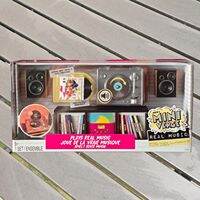
DIY Blind Ball Miniature Food Toy for Pretend Play
₱2,008.00
Buy on Lazada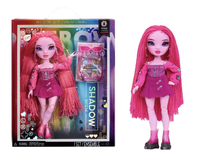
MGA Rainbow High School Girl Anime Action Figure Ruby Amaya Doll Model Toys Collect Ornaments
₱1,427.09₱1,855.22
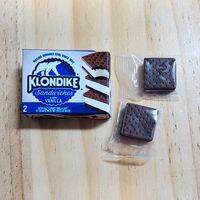
Confirmed Mini Supermarket Ball Blind Box Toy Miniature Snack Dollhouse Scene Decor
₱386.00
Buy on Lazada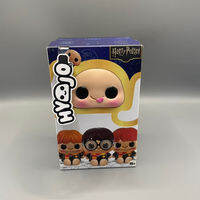
Stress Relief Squeeze Blind Box
₱1,267.00
Buy on Lazada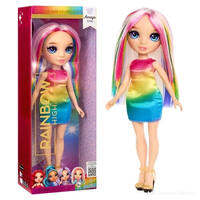
MGA Rainbow High Series Fashion Gifts Toy Model Anime Figures Collect Ornaments
₱1,027.02₱1,335.13

New Original MGA Miniverse Make It Mini Surprise Blind Ball Real Baby Mini Doll DIY Model Decoration Toy Mini Kitchen Set Birthd
₱2,506.87₱3,258.94
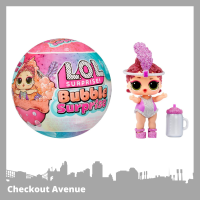
LOL Surprise! Bubble Surprise Dolls
₱900.00₱999.00
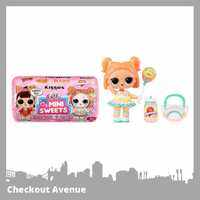
LOL Surprise! Loves Mini Sweets Surprise-O-Matic Series 2 with 8 Surprises
₱1,000.00₱1,399.00
About MGA
Overview
MGA Entertainment, commonly referred to as MGA, is an American privately held toy and entertainment company headquartered in Chatsworth, Los Angeles, California. Established in 1979, the firm evolved from a distributor of electronic games into one of the world’s leading toy and children’s entertainment businesses. Its portfolio encompasses dolls, collectibles, preschool toys, games, consumer products, digital content, films and television.1
MGA is best known for globally recognised brands such as Bratz, L.O.L. Surprise!, Little Tikes, Rainbow High and MGA’s Miniverse. The company states that it has created more than 13 brands that have each reached over $100 million in sales, with development primarily conducted in-house.1
Company profile
| Category | Information |
|---|---|
| Official name | MGA Entertainment, Inc. |
| Common name | MGA |
| Founded | 1979 |
| Founder | Isaac Larian |
| Headquarters | Chatsworth, Los Angeles, California, U.S. |
| Industry | Toys, entertainment & consumer products |
| Ownership | Privately held |
| Chief executive | Isaac Larian |
| Original name | Micro Games of America |
| Major markets | Worldwide |
| Best-known brands | Bratz, L.O.L. Surprise!, Little Tikes, Rainbow High, MGA’s Miniverse |
MGA describes itself as one of the largest privately held toy and entertainment companies globally. It maintains international offices and distributes products through major retailers as well as direct-to-consumer channels.1
History
1979–1990s: From electronics to toys
The origins of MGA date to 1979, when the business began operations as Micro Games of America. An early milestone was becoming an official U.S. distributor of Nintendo Game & Watch and other handheld LCD games.1
The company subsequently expanded beyond electronic games into toys and licensed products. During the late 1980s and 1990s, its focus shifted increasingly towards toys and children’s merchandise.
In 1997, the company adopted the name MGA Entertainment. Around this period, it began developing proprietary doll properties, including Singing Bouncy Baby, which MGA states sold more than one million units in its first year.1
2001: Bratz
A pivotal moment occurred in 2001 with the launch of Bratz. The line introduced a distinct aesthetic to the fashion doll category, characterised by large-headed figures, stylised proportions, contemporary clothing and a modern attitude. MGA describes Bratz as a line that “revolutioniz[ed] the doll industry”, noting its diversity compared to traditional fashion doll models.1
Bratz became a major international franchise, eventually expanding beyond dolls into fashion and accessories, games, books, television, movies, music, licensing and merchandise. It remains one of MGA’s signature properties; in 2026, Bratz celebrated its 25th anniversary, demonstrating the brand’s longevity.
Acquisition of Little Tikes
In 2006, MGA acquired Little Tikes, an established American brand specialising in preschool and outdoor toys. This acquisition was strategically significant as it provided MGA with a substantial presence outside the fashion doll and girls’ toy categories. Little Tikes is particularly noted for products such as the Cozy Coupe, playhouses, slides, ride-ons and other preschool items.1
The purchase helped transform MGA’s portfolio from one heavily centred on dolls and youth entertainment into a broader toy company serving diverse age groups.
L.O.L. Surprise! and the unboxing phenomenon
MGA achieved another major breakthrough in 2016 with the launch of L.O.L. Surprise! The product was built around the concept of surprise and unboxing, where consumers open multiple layers of packaging to discover a doll, accessories and other surprises. This concept proved highly successful by connecting traditional physical toys with the rising popularity of unboxing videos and social media-driven children’s entertainment.
MGA states that L.O.L. Surprise! has consistently ranked among the top five toy properties globally since its introduction.1 The franchise subsequently expanded into dolls, collectibles, fashion dolls, games, apparel, accessories, animated content, movies and specials, digital and social content, and licensed collaborations. It is considered one of MGA’s most important franchises alongside Bratz.
Rainbow High
In 2020, MGA introduced Rainbow High, a fashion doll franchise. Rather than focusing solely on traditional fashion doll concepts, Rainbow High established a fictional world centred on colourful characters, creativity, fashion and an arts-focused school environment. MGA states that Rainbow High became the No. 1 doll property globally in 2023.1
Similar to Bratz and L.O.L. Surprise!, Rainbow High was designed as more than a physical toy line, supported by animated entertainment and a broader character-driven franchise strategy.
MGA’s Miniverse
Another significant recent property is MGA’s Miniverse. Launched in 2022, Miniverse focuses on miniature DIY collectibles, where consumers purchase miniature components to create tiny versions of foods, objects and other themed products.2
The concept is notable for combining collecting, crafting, miniatures, surprise/unboxing mechanics and social media content. MGA has subsequently expanded Miniverse through themed collections and licensing partnerships.2
Major brands
MGA currently lists a broad portfolio of brands on its official website.1
Major flagship brands
- Bratz: Fashion dolls and entertainment franchise launched in 2001.
- L.O.L. Surprise!: Collectible doll and toy franchise built around surprise/unboxing.
- Little Tikes: Preschool, outdoor and ride-on toy company acquired by MGA in 2006.
- Rainbow High: Fashion-doll and entertainment franchise launched in 2020.
- MGA’s Miniverse: Miniature DIY and collectible franchise.
Other current MGA properties
MGA’s official brand portfolio also includes:
- BABY born
- Yummiland
- CarTuned
- Ninjombie
- Wonder Factory
- DohKins
- SlimeLife
- Armorsaurs
- Micro Games of America
The exact portfolio evolves over time as MGA launches new properties and develops or retires individual product lines.1
Business model
MGA operates less as a conventional toy manufacturer and more as an IP and entertainment company built around physical products. Its activities include:
Product development
MGA develops toys and consumer products across categories including dolls, collectibles, preschool toys, games, ride-on toys, electronics, craft products, apparel, home products and accessories. The company states that its brands are created internally by employees rather than relying solely on acquiring existing properties.1
Entertainment
MGA extends its toy properties into entertainment through animated series, movies, digital videos, YouTube programming and character-driven storytelling. This strategy is explicitly designed to bring its toy characters and worlds into other media formats.1
Licensing
The company develops collaborations and licensed products around its brands. Recent examples include collaborations involving L.O.L. Surprise!, MGA’s Miniverse and major entertainment and consumer brands.1
Direct-to-consumer
In 2024, MGA launched The MGA Shop, an online storefront bringing multiple MGA brands together. The company positioned the shop as a way to offer exclusives, early product access and limited merchandise directly to consumers.1
Corporate philosophy
MGA’s stated mission centres on entertaining children and becoming a memorable part of their childhood. Its published values emphasise:3
- Creative innovation
- Passion
- A “can-do” attitude
- Accountability
- Teamwork and employee potential
- Listening to consumers
These values underpin MGA’s emphasis on developing new toy concepts rather than simply replicating established categories.3
Isaac Larian
Isaac Larian is the founder and longtime chief executive of MGA Entertainment. He played a central role in transforming the company from an electronics-oriented business into a major global toy company, employing a strategy that emphasised creating original intellectual property rather than depending exclusively on licensed characters.
Under his leadership, MGA developed or acquired some of its most recognisable properties, particularly Bratz, L.O.L. Surprise!, Little Tikes and Rainbow High. He remains MGA’s CEO, and current corporate records identify him as an officer and director of MGA Entertainment.4
MGA versus traditional toy companies
MGA’s strategy differs from that of older toy manufacturers. While traditional companies may primarily manufacture products based on established categories or external licenses, MGA tends to pursue a “create the brand first, then build an ecosystem around it” approach. This typically follows a progression from character/IP to toy, collectibles, entertainment, digital content, licensing and merchandise.
Bratz exemplifies this model, while L.O.L. Surprise! demonstrates a variation where the unboxing experience itself became central to the brand. This approach has allowed MGA to compete with larger public companies despite remaining privately held.
Factors in success
Several factors contribute to MGA’s market position:
Strong original IP
MGA has repeatedly demonstrated an ability to create brands rather than simply license existing characters.
Understanding of trends
Major successes correspond closely with changing consumer behaviour:
- Bratz: Fashion and individuality
- L.O.L. Surprise!: Collecting and unboxing
- Rainbow High: Character-driven fashion dolls and online entertainment
- MGA’s Miniverse: Miniatures, DIY and collectible culture
Cross-media strategy
The company does not treat toys as isolated products. Successful brands are extended into television shows, movies, online series, games and merchandise.
Collectibility
Many MGA products encourage consumers to collect multiple characters or variations, increasing engagement with the franchise.
Fast product development
Being privately held provides MGA with considerable flexibility in developing and launching new products compared to more bureaucratic corporate structures.
Global presence
Although headquartered in Los Angeles, MGA brands are sold internationally and the company maintains operations outside the United States. For example, MGA has an Australian subsidiary and maintains international distribution and operations across multiple markets.1
Products are distributed through major retailers, specialist toy stores and online channels. Official retail listings include major chains such as Walmart, Target, Amazon, Kohl’s and Toys “R” Us.1
Significance in the toy industry
MGA is notable for repeatedly challenging the established hierarchy of the toy industry. Its Bratz dolls challenged the dominance of traditional fashion dolls in the early 2000s, while L.O.L. Surprise! helped popularise surprise-based collectible toys during the rise of YouTube and social media unboxing. Miniverse products illustrate a further evolution: toys that function simultaneously as collectibles, crafts and content for social platforms.
MGA has frequently succeeded by identifying new ways for consumers to interact with toys, rather than merely creating another version of an existing product.
Timeline
| Year | Event |
|---|---|
| 1979 | MGA’s predecessor begins as Micro Games of America |
| 1979–80s | Company distributes electronic games, including Nintendo Game & Watch |
| 1997 | Company becomes MGA Entertainment |
| 2001 | Bratz launches |
| 2006 | MGA acquires Little Tikes |
| 2016 | L.O.L. Surprise! launches |
| 2020 | Rainbow High launches |
| 2022 | MGA’s Miniverse launches |
| 2024 | MGA launches The MGA Shop direct-to-consumer platform |
| 2026 | Bratz reaches its 25th anniversary |