Shop on Lazada
Michelin products
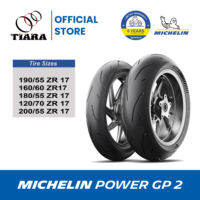
MICHELIN Power GP2 (TT/TL) (190/55 ZR 17 160/60 ZR17 180/55 ZR 17 120/70 ZR 200/55 ZR 17)
₱21,495.00
Buy on Lazada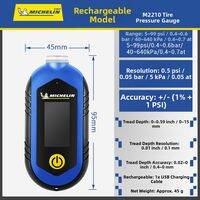
Michelin | High Precision Electronic Tire Pressure Gauge
₱1,260.14₱2,745.20
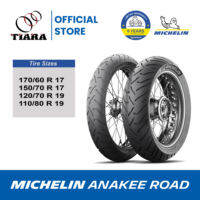
MICHELIN Anakee Road (TT/TL) (170/60 R 17 150/70 R 17 120/70 R 19 110/80 R 19)
₱13,195.00
Buy on Lazada
(Do Not Checkout)
₱5,138.25
Buy on Lazada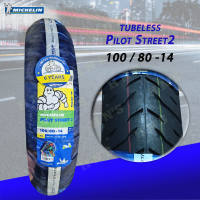
MICHELIN Pilot Street 2 Tubeless RIM 14 Tires ( 70/90-14 80/80-14 80/90-14 90/80-14 90/90-14 100/80-14 110/80-14 120/70-14 ) FREE Koby Tire Sealant and pito
₱2,774.77₱2,824.20
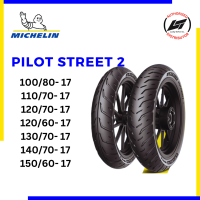
Michelin Pilot Street 2 Tires Rim 17 BigBike
₱4,266.00₱5,119.20
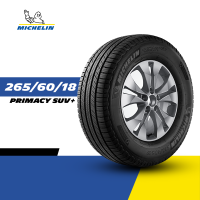
MICHELIN TIRES PRIMACY SUV+ 265/60/18 - Quality High Performance Car Tire Brand New Tires Durable Tyres
₱13,248.95₱15,587.00
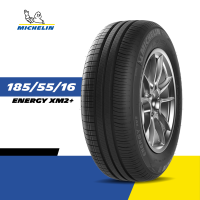
MICHELIN TIRES ENERGY XM2+ 185/55/16 - Quality High Performance Car Tire Brand New Tires Durable Tyres
₱7,967.05₱9,373.00
About Michelin
Michelin is a French multinational corporation best known for manufacturing tires, though its modern business extends well beyond conventional automotive products into engineered materials, connected mobility, specialty tires, and travel and hospitality experiences through the MICHELIN Guide. Founded in 1889 in Clermont-Ferrand, France, by brothers André Michelin and Édouard Michelin, the company has grown into one of the world’s major tire and mobility-technology groups.1
The name Michelin is also closely associated with the MICHELIN Guide and its famous restaurant stars, although the tire company and the restaurant guide are distinct parts of the broader Michelin brand ecosystem.
Basic information
| Item | Information |
|---|---|
| Full name | Compagnie Générale des Établissements Michelin / Michelin |
| Common name | Michelin |
| Founded | 1889 |
| Founders | André Michelin, Édouard Michelin |
| Headquarters | Clermont-Ferrand, France |
| Industry | Tires, engineered materials, mobility, technology and travel experiences |
| Main product | Tires |
| Major markets | Passenger cars, trucks, motorcycles, bicycles, aircraft, agriculture, mining, construction and motorsport |
| Major brand icon | Bibendum, the “Michelin Man” |
| Restaurant brand | MICHELIN Guide |
| Current CEO / Managing Chairman | Florent Menegaux |
| Countries with employees | 63 |
| Employees | About 129,800 |
| Production facilities | 128 |
| 2025 sales | €26.0 billion |
| 2026 H1 revenue | €12.7 billion |
Michelin reported approximately 129,800 employees in 63 countries and 128 production facilities on its current corporate site. Its first-half 2026 revenue was €12.7 billion.2
Origins
Michelin’s story begins in Clermont-Ferrand, in central France.
In 1889, André and Édouard Michelin took over and developed a business originally associated with rubber products and agricultural machinery. They recognized that the emerging automobile industry could transform transportation—and that better tires would be essential to making this possible.3
At the time, France had fewer than 3,000 automobiles, so automobiles were still a relatively experimental form of transportation. Michelin’s strategy was therefore much larger than simply selling tires: the brothers wanted to make road travel easier, safer and more practical.
One of Michelin’s early important innovations was the removable pneumatic bicycle tire, which helped establish the company’s reputation for engineering and practical innovation.4
The Michelin Man — Bibendum
One of the most distinctive aspects of Michelin is its mascot, Bibendum, commonly called the Michelin Man.
Bibendum was created in 1898, making him one of the world’s oldest continuously used corporate mascots.5
The story begins in 1894. The Michelin brothers reportedly noticed a pile of tires at an exhibition in Lyon that looked vaguely like a human figure. André Michelin later developed the idea with French artist Marius Rossillon, better known as O’Galop.6
The original Michelin Man was considerably stranger-looking than today’s friendly character. He was depicted as a figure made from tires, holding a cup filled with nails and broken glass.
The advertising slogan was:
“Nunc est bibendum”
This is Latin for approximately “Now is the time to drink.”
The joke was that the Michelin tire could supposedly “drink” or overcome the obstacles of the road. This is where the name Bibendum came from.7
Over the decades, Bibendum gradually changed from a somewhat intimidating advertising character into the friendly, rounded white figure recognized around the world today.
The first MICHELIN Guide
Perhaps Michelin’s most surprising achievement is that a tire manufacturer created one of the world’s most influential restaurant guides.
The first MICHELIN Guide was published in 1900.
Its original purpose was not to review luxury restaurants. It was essentially a travel guide for motorists.
The early guide contained practical information such as:
- maps;
- tire-changing instructions;
- petrol stations;
- hotels;
- automobile repair facilities;
- places to eat.
The logic was clever: if people drove more, they would use more tires. Michelin therefore had an incentive to encourage automobile tourism.8
The original guide was distributed free of charge.
From travel guide to restaurant authority
The MICHELIN Guide gradually became more focused on restaurants.
In 1920, Michelin began selling the guide rather than distributing it for free. It also expanded restaurant and hotel listings and removed paid advertising, reinforcing the guide’s editorial independence.9
Michelin subsequently introduced anonymous restaurant inspectors—professionals who visit restaurants without announcing themselves as Michelin inspectors.
This became one of the defining characteristics of the guide.
Michelin Stars
The first Michelin stars appeared in 1926.
Initially, restaurants received a single star. In 1931, Michelin introduced the now-famous hierarchy of one, two and three stars, with the criteria being published in 1936.10
The modern system is:
★ One Star
A restaurant with high-quality cooking that is worth stopping for.
★★ Two Stars
Excellent cooking that is worth a detour.
★★★ Three Stars
Exceptional cuisine that is worth a special journey.
Importantly, Michelin says that stars belong to restaurants, not individual chefs.
Inspectors primarily evaluate the food using five universal criteria:
- Quality of ingredients
- Mastery of cooking techniques
- Harmony of flavors
- The chef’s personality expressed through the cuisine
- Consistency over time and across visits
Decor, table setting and service are not what determine Michelin Stars.11
Michelin’s most important tire innovations
Michelin’s corporate history is essentially a history of tire technology.
Removable bicycle tire
Michelin pioneered a practical removable pneumatic bicycle tire in the company’s early years. This helped demonstrate how pneumatic tires could make transportation more efficient and comfortable.12
Radial tire
One of Michelin’s greatest technological achievements was the development of the radial tire, introduced in 1946.
The radial design significantly changed tire construction and subsequently became the dominant technology for modern road vehicles. Its advantages included greater durability, improved fuel efficiency and improved overall performance.13
Aircraft and specialty tires
Michelin subsequently expanded into specialized applications, including:
- aircraft;
- heavy trucks;
- mining vehicles;
- agricultural machinery;
- construction equipment;
- motorcycles;
- bicycles;
- motorsport.
The company emphasizes that it develops tires for virtually every major form of wheeled or tire-based mobility.14
Michelin and motorsport
Motorsport has played an important role in Michelin’s technological reputation.
Racing provides an extremely demanding environment for tires because manufacturers must simultaneously optimize:
- grip;
- durability;
- braking;
- cornering;
- heat resistance;
- wet-weather performance;
- energy efficiency.
Michelin has participated in major forms of motorsport, particularly endurance racing.
The 24 Hours of Le Mans, for example, has been an important technological laboratory for Michelin. The company argues that endurance racing has helped accelerate developments in tire longevity and performance that can eventually benefit road vehicles.15
This illustrates a central Michelin philosophy:
motorsport → experimentation → engineering knowledge → consumer products.
Michelin is more than a tire company
Although tires remain Michelin’s core business, the modern group describes itself increasingly as a manufacturer of engineered materials, composites and experiences.
A modern tire can contain more than 200 different components and materials, including:
- natural and synthetic rubber;
- polymers;
- silica;
- carbon black;
- steel;
- textile reinforcement;
- specialized chemical compounds.
Michelin’s expertise therefore extends into chemistry, physics, metallurgy, polymer science, manufacturing engineering and data science.16
The company is leveraging this expertise in other markets, including:
- aerospace;
- construction;
- energy;
- healthcare;
- industrial materials;
- transportation;
- connected fleet services.
Michelin calls this broader business Polymer Composite Solutions.17
Major Michelin product categories
Passenger-car tires
This is the Michelin product category most consumers know.
Michelin produces tires for:
- gasoline cars;
- diesel cars;
- hybrids;
- electric vehicles;
- SUVs;
- sports cars;
- luxury cars;
- classic cars.
Its product families include performance, touring, all-season and EV-oriented tires.18
Truck and commercial tires
Michelin produces tires for:
- trucks;
- buses;
- long-haul transportation;
- urban transport;
- commercial fleets.
For commercial operators, tire durability and rolling resistance can have a major effect on operating costs.
Motorcycle tires
Michelin makes tires for road motorcycles, scooters and racing applications.
Bicycle tires
Bicycles were actually part of Michelin’s earliest history, so bicycle tires represent a connection to the company’s origins.
Michelin produces tires for:
- road cycling;
- mountain biking;
- gravel;
- commuting;
- competition.
Aircraft tires
Aircraft tires operate under extraordinary loads and temperatures, making them a highly specialized engineering product.
Michelin has developed tires for commercial and other aviation applications.19
Mining, agriculture and construction
Michelin also produces enormous specialty tires for applications such as mining and heavy construction.
These tires can be dramatically larger and more technically specialized than ordinary automobile tires.
Michelin and sustainability
Sustainability has become a major part of Michelin’s long-term strategy.
One of the company’s major targets is to increase the proportion of recycled and renewable materials in its tires.
Michelin states a goal of using:
- 40% renewable, recycled or other sustainable materials by 2030
- 100% by 2050
The company considers the entire tire life cycle—from raw materials and manufacturing through transportation, use and recycling.20
This is particularly important because tire engineering involves a difficult trade-off: improving one characteristic, such as durability, can potentially affect others such as grip, rolling resistance or manufacturability.
The MICHELIN Guide today
The MICHELIN Guide has become a global hospitality and travel brand in its own right.
It now covers restaurants and hotels in numerous destinations worldwide and operates through both print and digital platforms. Michelin describes its inspectors as anonymous, independent and professionally trained.21
The guide’s restaurant distinctions now include more than just Stars.
MICHELIN Stars
The famous 1–3 Star system recognizes exceptional cooking.
Bib Gourmand
The Bib Gourmand recognizes restaurants offering good food at particularly good value.
The award’s name comes from Bibendum, the Michelin Man.22
MICHELIN Green Star
The Green Star highlights restaurants demonstrating notable commitments to sustainability.
Together, these distinctions allow the MICHELIN Guide to cover everything from inexpensive local food to some of the world’s most ambitious fine-dining restaurants.
Michelin in Thailand
Michelin has a particularly interesting presence in Thailand.
The MICHELIN Guide Thailand was introduced as part of the effort to showcase Thailand’s food culture, covering everything from street food to sophisticated fine dining. Michelin’s Thai guide uses anonymous inspectors and evaluates restaurants according to the same fundamental food criteria used internationally.23
This has helped bring international attention to Thai cuisine while also recognizing restaurants that might not fit the traditional image of luxury fine dining.
For example, a Michelin-recognized establishment can be a small street-food operation rather than an expensive restaurant.
That is one reason the MICHELIN Guide has become culturally important beyond its original role as a travel guide.
Corporate strategy
Michelin’s modern strategy is increasingly about moving beyond tires while retaining tires as its technological foundation.
The company’s expertise in rubber, polymers, composites, manufacturing and data can be applied to other industries.
Michelin’s current corporate vision describes the company as a manufacturer of “life-changing composites and experiences.”24
Its activities can therefore be thought of in three broad areas:
1. Tires
The traditional and still central Michelin business.
2. Engineered materials
High-performance composites, polymers and components for specialized industries.
3. Experiences and digital services
The MICHELIN Guide, connected fleet solutions and other services associated with mobility and travel.
Michelin’s financial scale
Michelin remains a very large global industrial group.
For 2025, the company reported:
- €26.0 billion in sales;
- €2.9 billion in segment operating income;
- €2.1 billion in free cash flow before M&A.
The company said its 2025 results were affected by lower volumes, currency movements and competitive pressures.
For the first half of 2026, Michelin reported:
- €12.7 billion revenue;
- €1.45 billion segment operating income;
- €282 million free cash flow before M&A.
It maintained its 2026 objective of increasing segment operating income at constant exchange rates and scope compared with 2025.25
Michelin’s global identity
Michelin’s brand is unusual because it simultaneously represents several very different things.
To a driver, Michelin = tires.
To an engineer, Michelin = tire technology, materials science and innovation.
To a racing fan, Michelin = motorsport and high-performance tires.
To a traveler, Michelin = maps, restaurants, hotels and travel recommendations.
To a food enthusiast, Michelin = Michelin Stars.
And to advertising historians, Michelin = Bibendum, one of the world’s most recognizable corporate characters.
This is arguably Michelin’s greatest branding achievement: a company selling an industrial product turned its name into a symbol of mobility, travel, engineering and culinary excellence.
Why Michelin became so influential
Michelin’s success can be understood through several interconnected strategies.
Innovation
The company has repeatedly attempted to solve technical problems rather than compete only on price. Its radial tire is the classic example.26
Brand building
Bibendum gave an otherwise technical product a recognizable human personality.
Creating demand
The MICHELIN Guide encouraged people to drive and travel, indirectly supporting automobile and tire use.
Motorsport
Racing gave Michelin a highly visible demonstration environment for tire technology.
Diversification
The company has gradually transferred its materials expertise into industries beyond conventional tires.
Long-term reputation
Michelin has invested heavily in the idea that the brand stands for quality, safety, technology and reliability. Michelin itself describes its brand as one of its most valuable assets and emphasizes innovation and quality as foundations of its reputation.27
A simplified Michelin timeline
| Year | Event |
|---|---|
| 1889 | André and Édouard Michelin establish the Michelin company |
| 1890s | Michelin develops removable pneumatic bicycle-tire technology |
| 1894 | Michelin brothers conceive the idea behind Bibendum |
| 1898 | Michelin Man/Bibendum officially appears |
| 1900 | First MICHELIN Guide published |
| 1920 | MICHELIN Guide becomes a paid publication |
| 1926 | First MICHELIN Star awarded |
| 1931 | One-, two- and three-Star hierarchy introduced |
| 1936 | Michelin publishes criteria for its Stars |
| 1946 | Michelin introduces radial-tire technology |
| 20th century | Michelin expands globally into automotive, truck, aviation, agriculture and specialty tires |
| 21st century | Greater focus on sustainability, digital services, connected mobility and advanced materials |
| 2020s | Michelin accelerates diversification beyond tires through Polymer Composite Solutions |
| 2026 | Michelin continues implementing its Michelin in Motion 2030 strategy |
The historical dates above are based primarily on Michelin’s own historical and corporate publications.
Michelin vs. “Michelin Star”
A very common misunderstanding is to think that Michelin is primarily a restaurant-rating organization.
It isn’t.
Michelin is fundamentally a French industrial and technology company whose historical core business is tires.
The restaurant guide was created as a marketing and travel-support initiative for motorists.
The sequence is essentially:
Michelin tires → encourage automobile travel → publish travel guide → recommend restaurants → develop restaurant inspections → create Michelin Stars → become a global culinary authority.
That makes the Michelin Guide one of the most successful examples of brand extension in business history.
What makes the Michelin brand unique?
If Michelin were reduced to one sentence, it could be described as:
A French engineering company that transformed expertise in tires into one of the world’s most powerful brands in mobility, technology, travel and gastronomy.
Its unusual strength comes from the combination of industrial engineering + branding + motorsport + travel + food culture.
Few companies can credibly occupy all of those worlds at once.
The Michelin Man represents the consumer-facing personality of the company; Michelin tires represent its industrial foundation; motorsport represents its technical ambition; and the MICHELIN Guide represents its cultural influence.
Together, those elements explain why “Michelin” means much more today than simply a tire manufacturer.28
References
- About Us
- A technological leader working for mobility | Michelin
- Financial information at June 30, 2026 | Michelin
- The Michelin Story: The power to reinvent yourself again and again
- Michelin equips everything that drives | Michelin
- Bibendum at 120: The Michelin Man As You Have Never Seen Him Before
- The History of the Michelin Man :: Michelin North America, Inc.
- The Michelin Man
- Unveiling the original Michelin Man | MICHELIN UK
- The MICHELIN Guide | Explore
- Explore 120 Years of Excellence with the MICHELIN Guide
- History of the MICHELIN Guide
- About The MICHELIN Guide
- What is a MICHELIN Star?
- Designing and Industrializing Innovative Materials | Michelin
- Tires that make the difference | Michelin
- Tires that make the difference | Michelin
- Technological Leadership | Michelin
- Michelin is growing beyond the tire | Michelin
- Michelin Group | World’s leading manufacturer of life-changing composites and experiences.
- Financial information at December 31, 2025 | Michelin
- Powerful brand | Michelin
- Results and Sales | Michelin
- “Extreme is our area of expertise”: specialty tires are powering the Michelin Group’s performance and growth | Michelin
- Results for “Registration” – Publications 2026 | Michelin
- Information financière au 31 décembre 2025 | Michelin
- Group Management 2026 evolution
- What are the MICHELIN Guide distinctions? | Michelin Guide Apps