Shop on Lazada
Mimi World products
MIMIWORLD | Singing Pinkfong Piano Drum Nursery Rhymes
₱4,305.12₱6,277.99
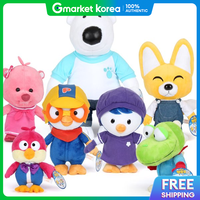
Mimi World | Pororo and Friends Plush Toy 7-Piece Set Pororo Doll
₱6,057.81₱9,108.20
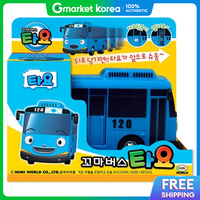
Mimi World | Moomi World Little Bus Tayo Bus Mini Car
₱682.69₱1,180.90
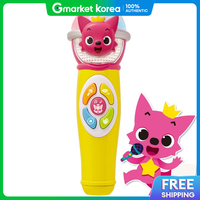
Mimi World | Pinkfong Microphone Childrens Songs
₱1,286.20₱1,937.83
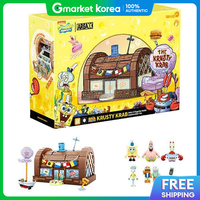
Mimi World | Officially Licensed Product Spongebob Krusty Krab House Block
₱6,469.78₱9,707.42
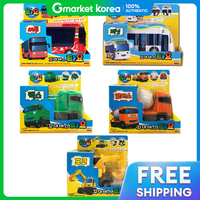
Mimi World | Moomi World Little Bus Tayo C2 Peanut Max Chris Billy
₱1,073.10₱1,602.50
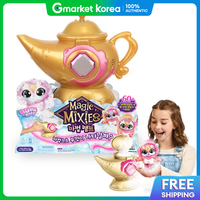
Mimi World | Magic Mixies Magic Lamp Genie Doll
₱3,233.15₱4,945.29
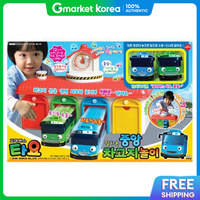
Mimi World | Tayo Talking Central Garage Play
₱2,571.17₱3,851.06
About Mimi World
Mimi World Co., Ltd. (Korean: ㈜미미월드, Mimiwoldeu) is a South Korean toy manufacturer best known for its MIMI fashion-doll franchise and a broad portfolio of children’s toys, role-play sets, educational products, character merchandise, vehicles, games, and DIY products. Headquartered in Anyang, Gyeonggi Province, South Korea, the company traces its origins to a small toy retail shop established in July 1973.1
Today, Mimi World positions itself as a general toy company rather than solely a doll manufacturer, with products aimed at toddlers through elementary-school-age children. Its major brands include MIMI, Little Mimi, Toritori, Mimi Friends, Mimi Pet Shop, Worldcar, Angel-E, and various character and educational-toy lines.2
Company overview
| Information | Details |
|---|---|
| Company name | Mimi World Co., Ltd. (㈜미미월드) |
| Korean name | 미미월드 |
| Industry | Toys and children’s products |
| Founded | July 1973 |
| Origins | Small toy retail shop, South Korea |
| Corporate name | Mimi World Co., Ltd. since 1994 |
| Headquarters | Anyang, Gyeonggi Province, South Korea |
| Current CEO | Lee Jong-yeol (이종열) |
| Best known for | MIMI fashion dolls |
| Major brands | MIMI, Little Mimi, Toritori, Mimi Friends, Mimi Pet Shop, Worldcar, Angel-E |
| Products | Dolls, role-play toys, educational toys, vehicles, games, DIY toys and character merchandise |
| Official website | Mimi World Official Website |
The company reports a July 1973 establishment date and lists its headquarters at 30 Beolmal-ro 102beon-gil, Dongan-gu, Anyang-si, Gyeonggi-do. Its official site identifies Lee Jong-yeol as CEO.3
History
Origins: 1973–1980
Mimi World’s history began in July 1973, when the business started as a small toy retail store. Over time, the company moved beyond retail and into toy manufacturing, eventually becoming one of South Korea’s established domestic toy companies.4
Manufacturing development became particularly important in the early 1980s. In February 1981, Mimi World established a toy manufacturing factory. That same year, it introduced the fashion doll Lala, which subsequently became the basis for the MIMI doll brand.5
The birth of MIMI
The company’s defining product was the MIMI fashion doll. Mimi World’s official brand history describes MIMI as “MIMI (美美),” meaning “Pretty, Pretty,” and identifies the doll as the first Korean fashion doll, introduced in 1982.6
The character became closely associated with Korean children’s culture, particularly girls’ role-play and fashion-doll play. Mimi World has emphasized the intergenerational aspect of MIMI: children who grew up playing with MIMI later became parents themselves, creating a continuing connection between the brand and successive generations.7
Another major early product was Mimi’s House, released in 1986 and described by the company as a top-selling product.8
Expansion during the 1990s
During the 1990s, Mimi World began expanding beyond conventional fashion dolls.
In 1993, the company developed Ttolttoli/Toritori (똘똘이), a functional doll that became another important Mimi World property.9
In 1994, the company formally changed its corporate designation to MIMI WORLD CO., LTD. The same year, it received a US$5 million Export Tower award after overseas sales, including the export of Sailor Moon toys to Japan.10
Mimi World also produced licensed character merchandise during this period. A notable example was Wedding Peach, whose toy products were launched in 1996.11
This period marked an important transition: Mimi World was no longer simply a company centered on one fashion-doll property but was becoming a broader toy manufacturer with domestic and international ambitions.
Diversification in the 2000s
The 2000s saw particularly rapid diversification. Mimi World expanded into digital toys, educational toys, water-play toys, character toys, role-play toys, drawing and art products, toys for boys, and licensed character merchandise.
In 2005, the company launched the digital toy Angel-E Phone, while in 2006 it entered educational toys and water-play products. In 2007, it began introducing toys based on various popular characters, including Pororo, Taegeuk Cheonjamun and Thomas.12
This diversification is central to understanding modern Mimi World. The company describes its evolution as a transformation from a business focused on MIMI and Ttolttoli dolls into a comprehensive/general toy company.13
Development since the 2010s
Mimi World continued developing its own intellectual properties while expanding its product categories.
In 2011, the company established a design research department, followed by a dedicated R&D division in 2012. In 2013, it launched its Worldcar business, creating a larger presence in vehicle toys and products aimed at boys.
In 2015, its Battle X Gun product received an award in the Korean Toy Association’s Korea Toy Awards.14
More recently, Mimi World received several Korean institutional and industry recognitions. Its Korean-language corporate history records, among other achievements, recognition as a family-friendly company in 2022, selection as a promising small and medium-sized enterprise in Gyeonggi Province in 2023, and Toy Award recognition in 2023 and 2024.15
The MIMI brand
The MIMI brand remains the symbolic core of Mimi World. It is primarily a fashion-doll and role-play franchise, centered around a girl character whose play environment can include fashion, beauty, careers, homes, shopping, hospitals, and other everyday scenarios. The concept is deliberately broader than the doll itself; products are designed to allow children to create stories and role-play different aspects of everyday life.
Examples currently featured by Mimi World include:
- Little Mimi Styling Bag
- Mimi’s Children Hospital
- Mimi Flip Phone
- Little Mimi Escalator Shopping Mall
- Various fashion and house-play products
The company’s product catalog divides the MIMI family into several sub-lines, including Princess Mimi, Fashion Mimi, Seventeen Mimi, Mimi, Mimi for Girl and Little Mimi.
Major brands and franchises
Mimi World operates a portfolio of brands rather than relying exclusively on MIMI.
MIMI / Little Mimi
The company’s flagship doll franchise focuses heavily on fashion, role-play, friendship, domestic life, and imaginative storytelling.
Toritori
Toritori is another major Mimi World character and role-play line, particularly aimed at younger children. Mimi World describes its newer Toritori products as “kid-led” toys intended to encourage children to take initiative during play. The company associates the line with five developmental areas: physical, emotional, language, artistic experience, and inquiry/logic.
Mimi Friends
Mimi Friends targets elementary-school children and emphasizes DIY, decorating, crafting, and collectible-style products. Its products include craft kits, character items, squishy-making products, resin art, and Sanrio-character merchandise.
Mimi Pet Shop
Mimi Pet Shop is an animal-themed toy line. Rather than simply presenting animals as collectibles, its concept revolves around children adopting and caring for animal characters, encouraging imaginative family and pet-care role-play.16
Worldcar
Worldcar is Mimi World’s vehicle-focused brand. It includes cars, emergency vehicles, heavy equipment, and playsets. The range includes vehicles inspired by real-world Korean automotive brands such as Hyundai and Kia, as well as police cars, fire trucks, ambulances, and construction vehicles.17
Angel-E
Angel-E represents Mimi World’s digital and technology-oriented toys. The company introduced Angel-E products during its expansion into digital toys in the 2000s.18
Product categories
Mimi World’s current catalog demonstrates how far the company has moved beyond fashion dolls. Its products encompass:
Dolls
* Fashion dolls
* Baby dolls
* Toddler dolls
* Character dolls
Role-play
* Houses
* Hospitals
* Shops
* Shopping malls
* Beauty/fashion sets
* Career-themed playsets
Educational and developmental toys
* Educational games
* Korean-language products
* Art and drawing products
* Developmental play
Vehicles
* Cars
* Emergency vehicles
* Construction vehicles
* Heavy equipment
* Vehicle playsets
Creative/DIY
* Craft kits
* Decorating products
* Squishy-making kits
* Resin/art products
* Collectible-style items
Games
* Board games
* Card games
* Quiz games
* Family games
Licensed character toys
* Pororo
* Tayo
* Titipo
* Pinkfong
* Sanrio characters
* Other entertainment properties19
Target age groups
Mimi World organizes its products partly by age. Its official catalog currently groups products approximately as follows:
- 3–5 years: Toritori, character toys, Mimi Pet Shop
- 5 years and above: MIMI and Worldcar
- 8 years and above: Mimi Friends, boys’ games and imported toys20
This age segmentation reflects Mimi World’s transformation into a broad children’s-toy company rather than a single-category doll manufacturer.
Role-play as a core philosophy
One of Mimi World’s most distinctive characteristics is its emphasis on role-play. The company treats toys as more than objects for entertainment. Its corporate philosophy is summarized by the Korean slogan “좋은 장난감, 행복한 아이”, roughly meaning “Good toys, happy children.” The company says it views toys as tools through which children can develop imagination, emotion, social skills, and other aspects of personality.21
This philosophy can be seen particularly clearly in its doll and playset products. A MIMI doll, for example, can be used within an entire miniature environment—a home, hospital, shop, or school—allowing children to construct narratives around the characters.
Character and licensing business
Although Mimi World has developed numerous proprietary brands, it also participates in the licensed-character toy market. Its official product catalog lists products connected with properties including Pororo, Tayo, Titipo, Pinkfong, and Sanrio characters.
The company has also highlighted its Tayo products specifically, stating that its Tayo merchandise was among the earliest released and helped drive the character’s popularity in the Korean toy market.22
Thus, Mimi World’s business model combines original IP, licensed characters, manufacturing, product development, and marketing.
International presence
Mimi World has pursued overseas markets for decades. One of its early documented international successes came in 1994, when the company received recognition for US$5 million in exports, including Sailor Moon toys exported to Japan.23
The company continues to describe international expansion as an important objective, stating that it wants to combine its brand strength, marketing capabilities, and in-house development capabilities to establish itself as a Korean toy company with a stronger global presence.24
Corporate scale
The figures published on Mimi World’s English corporate introduction page are based on 2020 financial data. That page reports:
- Revenue: KRW 54.832 billion
- Employees: 81
- Assets: KRW 51.415 billion
- Operating profit: KRW −468 million
The company lists its headquarters in Anyang, Gyeonggi Province. Because these figures are explicitly labeled as 2020 data, they should not be interpreted as Mimi World’s current financial results.25
Brand identity and cultural significance
Mimi World is particularly notable within South Korea because MIMI became a long-running domestic fashion-doll brand rather than merely a short-lived toy product. The company’s own brand story emphasizes that generations of Korean children have grown up with MIMI. This gives the brand an unusual position: it functions simultaneously as a children’s toy, a character franchise, and a piece of Korean toy nostalgia.
The company’s evolution can therefore be broadly divided into three stages:
- 1973–1980s — Toy retailer → doll manufacturer: The company establishes its manufacturing operations and creates MIMI.
- 1990s–2000s — Doll company → diversified toy company: It introduces Ttolttoli, licensed characters, digital toys, educational toys, and other categories.
- 2010s–2020s — Toy company → multi-brand children’s entertainment/product company: It develops MIMI, Toritori, Worldcar, Mimi Friends, Mimi Pet Shop, and other proprietary brands while continuing licensed-character businesses.
Corporate mission
Mimi World’s stated philosophy centers on the idea of “Good toys, happy children.” The company presents toys as an important part of childhood development and aims to create products that stimulate imagination, emotion, creativity, and social interaction.
Its more recent corporate messaging also emphasizes becoming a company that listens to its fans and customers, while developing new toys, merchandise, and content for both children and existing fans of Mimi World properties.
Legacy
More than five decades after its founding, Mimi World has evolved considerably from the small toy shop it began as in 1973. Its most recognizable legacy remains MIMI, the fashion-doll character introduced in the early 1980s, but the company today encompasses a much larger ecosystem of dolls, role-play toys, educational products, vehicles, games, DIY products, and licensed characters.
In particular, Mimi World’s significance lies in its ability to turn a single Korean fashion-doll concept into a long-running toy universe, while repeatedly expanding into new categories and generations of children’s play. The company’s current portfolio shows that MIMI is now one component of a much broader Korean toy brand architecture.26
In summary, Mimi World is a Korean toy company founded in 1973 and best known for MIMI, its pioneering Korean fashion-doll brand. From that foundation, it developed into a diversified toy manufacturer with proprietary franchises such as MIMI, Toritori, Mimi Friends, Mimi Pet Shop, and Worldcar, alongside licensed character products and educational, creative, and role-play toys.27
References
- 미미월드 오피셜
- 미미월드 오피셜
- 미미월드 오피셜
- 미미월드 오피셜
- 미미월드 오피셜
- 미미월드 오피셜
- 미미월드 오피셜
- 미미월드 오피셜
- 미미월드 오피셜
- 미미월드 오피셜
- 미미월드 오피셜
- 미미월드 오피셜
- 미미월드 오피셜
- 미미월드 오피셜
- 미미월드 오피셜
- 미미월드 오피셜
- 미미월드 오피셜
- 미미월드 오피셜
- 미미월드 오피셜
- 미미월드 오피셜
- 미미월드 오피셜
- 미미월드 오피셜
- Mimi Clothing & Accessories
- mimi world is here
- tradekorea.com
- Mimi World – Toys and games, electric, electronic and for computers to Gyeonggi-do, South Korea | Kompass
- Mimi World – Toys and games, electric, electronic and for computers to Gyeonggi-do, South Korea | Kompass