Shop on Lazada
Mini products

Mini UPS Portable Uninterruptible Power Supply for WiFi Router PLDT Converge Globe Smart SKY DVR Huawei TP Link CCTV Camera Battery Backup Power Supply
₱3,465.00₱4,500.00
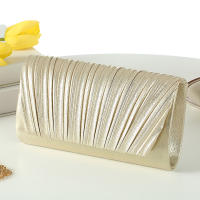
Mini Envelope Handbag Ruched Detail Fashionable For Women Party Wedding
₱261.00₱511.00

Mini Handmade Bags (Bayong) (Small - 5 x8 x4 )
₱49.00
Buy on Lazada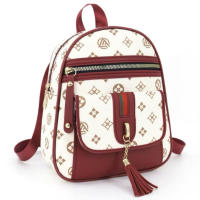
mini small size 23x25x9cm girl backpack school fashion ladys women korean
₱208.00₱350.00

Mini Dress Chalis Spaghetti ( S- 3XL )
₱274.00
Buy on Lazada
3pcs BUNDLE OF SMOCKING DRESS MINI / SMACKING DRESS MINI FOR WOMEN (ASSORTED PER PACK)
₱140.00
Buy on Lazada
Mini Small Massage Airbag Wooden Comb Solid Wood Comb Comb Portable Anti-static Small Wooden Comb
₱38.61₱99.00

gift Mini Cute Credit Card Holder Wallet For Women ID Card Coin Purse Leather Zip Wallets
₱35.00₱99.00
About Mini
Overview
Mini is a British automotive marque recognised globally for its compact dimensions, distinctive styling, agile handling, and deep ties to both popular culture and motorsport. Originally launched in 1959 as the Mini, the nameplate evolved from an affordable, practical city car into a cultural icon and, under BMW ownership, a premium automotive brand.1
Today, Mini operates as one of four core brands within the BMW Group, alongside BMW, Rolls-Royce, and BMW Motorrad.2
Basic Information
| Category | Information |
|---|---|
| Brand | Mini |
| Former name | Mini |
| Origin | United Kingdom |
| Founded | 1959 |
| Original manufacturer | British Motor Corporation (BMC) |
| Key designer | Sir Alec Issigonis |
| Parent company | BMW Group |
| BMW ownership | Since 1994 |
| Modern Mini launched | 2001 |
| Historic manufacturing centre | Oxford, England |
| Main identity | Small, stylish, agile, distinctive premium cars |
| Famous performance division | John Cooper Works (JCW) |
| Current direction | Electrification, digitalisation and premium compact mobility |
The contemporary Mini marque represents a synthesis of British automotive heritage and BMW-era engineering and management.
Distinction Between Classic and Modern Mini
Understanding the marque requires distinguishing between the classic vehicle and the modern brand.
Classic Mini
The original Mini was introduced by the British Motor Corporation in 1959. It was engineered primarily as an economical, compact vehicle capable of seating four adults while minimising road space and fuel consumption.
The car became renowned for its highly efficient packaging: a transversely mounted engine, front wheels positioned at the extreme corners of the body, and a compact exterior that concealed a surprisingly spacious cabin.3
Modern Mini
Following BMW’s acquisition of Rover Group in 1994, the Mini name served as the foundation for a new standalone premium marque. BMW launched the modern Mini in 2001.
While retaining recognisable elements of the original—such as round headlights, compact proportions, short overhangs, and an upright stance—the modern iteration became a substantially larger, safer, and more sophisticated automobile.4
Historically, the distinction is clear:
Mini = the original British car and its heritage
Mini = the modern BMW-owned automotive brand
Origins: Britain in the 1950s
The marque’s genesis lies in the Suez Crisis of 1956–57. Fuel shortages and rising prices in Britain created urgent demand for small, economical vehicles. Leonard Lord of BMC tasked engineer and designer Alec Issigonis with creating a compact automobile that could accommodate four people while remaining inexpensive and fuel-efficient.5
Issigonis approached the challenge unconventionally. Rather than simply scaling down a traditional car, he reimagined the entire vehicle layout.
Key Engineering Innovations
- Transverse engine mounting
- Front-wheel drive
- Wheels pushed toward the corners
- Minimal body overhangs
- Efficient interior space utilisation
- Compact external dimensions
- Low overall weight
This approach yielded a vehicle offering maximum interior space within minimum exterior dimensions, a concept that remains central to Mini’s identity decades later.6
Launch and Cultural Emergence
The first Mini was officially launched on 26 August 1959. Initially, BMC marketed essentially the same vehicle under two badges:
- Austin Seven
- Morris Mini-Minor
The model eventually became known universally as the Mini.7
Although initially viewed as a basic transport solution, the Mini unexpectedly became fashionable. Its diminutive size, unique appearance, engaging handling, and spirited character resonated strongly with younger demographics and celebrities throughout the 1960s, transforming it from an economy car into a cultural symbol.8
During this decade, the Mini became synonymous with emerging youth culture, appearing frequently in film, television, music, fashion, and motorsport. Its suitability for dense European cities, combined with its affordability and personality, established a formula of practicality, character, value, and style that continues to underpin the brand.
Motorsport Heritage and John Cooper Works
A pivotal chapter began in 1961 when racing car constructor John Cooper identified the Mini’s performance potential. Collaborating with Issigonis, Cooper developed the Mini Cooper, featuring a larger engine and upgraded brakes that transformed the city car into a genuine performance machine.
This partnership established John Cooper Works (JCW) as Mini’s high-performance sub-brand. The Mini’s motorsport achievements cemented a personality trait fundamental to the marque today: small size does not equate to slow or boring performance.
Monte Carlo Rally Success
The Mini gained international fame through rallying, particularly the Monte Carlo Rally. Its compact dimensions, low weight, front-wheel-drive layout, and agility allowed it to compete effectively against significantly larger and more powerful rivals.
A defining moment occurred at the 1964 Monte Carlo Rally, where Paddy Hopkirk and Henry Liddon secured victory in a Mini Cooper S. This triumph elevated the Mini from a clever city car to a motorsport legend, a heritage that remains integral to the brand’s identity.9
Production History of the Classic Mini
The original Mini remained in production for over four decades, spanning numerous variants including:
- Two-door saloon
- Estate
- Van
- Pickup
- Clubman
- Traveller
- Countryman
- Cooper
- Cooper S
- Convertible
More than 5.3 million classic Minis were manufactured before production ceased in October 2000.10
Transition to BMW Ownership
In 1994, BMW acquired Rover Group, which included the Mini marque. Although BMW subsequently divested most of Rover, it retained Mini. This strategic decision enabled BMW to reinvent Mini as a modern standalone premium marque.11
Rather than replicating the original car, BMW developed a modern interpretation that balanced heritage with contemporary requirements.
The Modern Era: 2001 Onwards
The modern Mini debuted in 2001, with production commencing at the historic Oxford plant in the United Kingdom. Initial models comprised the Mini One, Mini Cooper, and Mini Cooper S.
Despite being considerably larger than its predecessor, the new model deliberately retained signature design cues:
- Round headlights
- Contrasting roof options
- Short overhangs
- Upright proportions
- Large wheels relative to body size
- Distinctive grille
- Circular interior elements
- Extensive personalisation options
BMW positioned the new Mini as a premium product in the small-car segment, merging British character with modern engineering, safety, and quality standards.12
Design Philosophy
Design constitutes perhaps Mini’s strongest competitive advantage. The philosophy centres on making a relatively small car instantly recognisable.
Signature Elements
- Round headlights: Among the marque’s most identifiable features.
- Floating or contrasting roof: Many models offer roof colours distinct from the body.
- Short overhangs: Wheels are positioned close to the vehicle’s corners.
- Large wheels: Contribute to a distinctive stance relative to body size.
- Compact proportions: Despite growth over decades, models preserve the visual essence of a compact vehicle.
- Circular elements: The classic central speedometer has been reinterpreted in modern vehicles as a large circular OLED display.
BMW describes the latest design philosophy as “Charismatic Simplicity”, aiming to reduce visual clutter while preserving essential Mini characteristics.13
Driving Dynamics: The Go-Kart Feeling
Mini has long defined its driving experience through the phrase “go-kart feeling.” This denotes a vehicle that is responsive, agile, direct, easy to place on the road, and engaging even at modest speeds.
This philosophy derives directly from the original Mini’s combination of compact dimensions, low weight, front-wheel drive, and corner-mounted wheels. While modern vehicles are far more sophisticated, agile handling remains a core brand attribute.14
Model Range Expansion
The modern marque has expanded significantly beyond the original three-door hatchback.
Mini Convertible
A convertible variant emphasising lifestyle and open-air motoring.
Mini Clubman
A longer, more practical model with additional doors and increased cargo capacity.
Mini Countryman
A larger crossover/SUV-style vehicle. Introduced in 2010, the Countryman marked a significant expansion into a larger vehicle category.15
Mini 5-Door
A practical five-door version of the traditional hatchback, introduced in 2014.16
Mini Countryman Significance
The Countryman holds particular importance in the current lineup. As the largest Mini family member, it combines marque styling and driving characteristics with enhanced passenger space, cargo capacity, SUV proportions, optional all-wheel drive, and greater long-distance utility.
Depending on the market, the latest Countryman is available with both combustion and fully electric powertrains.17 In 2025, the Countryman accounted for 32.4% of Mini’s global sales volume, underscoring its commercial significance.18
Electrification Strategy
Mini’s shift toward electrification gained momentum with the Mini Cooper SE, the fully electric version of the traditional hatchback. Series production of fully electric vehicles commenced in 2020.19
The current generation represents a broader commitment, with electric versions now available across major models including the Mini Cooper, Mini Aceman, and Mini Countryman.20
Mini Aceman
The Mini Aceman is a compact crossover positioned between the Mini Cooper and Mini Countryman. Described as the marque’s first all-electric crossover, it combines urban dimensions with five-door practicality.
Conceptually, the Aceman signifies an evolution in product strategy:
- Cooper: Small hatchback
- Aceman: Compact crossover
- Countryman: Larger SUV/crossover
This structure broadens the range without abandoning compact-car roots.
Current Model Family
As of 2026, the Mini family centres on several core vehicles.
Mini Cooper
The traditional concept in modern form, available as a 3-door, 5-door, or Convertible. Both combustion-powered and fully electric variants exist depending on the market.21
Mini Aceman
A compact, five-door crossover positioned between Cooper and Countryman, with a strong emphasis on electric propulsion.22
Mini Countryman
The largest and most practical model, offered with combustion and electric powertrains depending on the market.
Mini John Cooper Works
The performance-oriented family includes high-performance derivatives across the range. Mini has extended the John Cooper Works identity into the electric era with fully electric JCW models.23
John Cooper Works Today
John Cooper Works (JCW) functions as Mini’s performance sub-brand rather than merely a trim level. Modern JCW vehicles feature higher performance, sportier suspension, aggressive styling, larger brakes, motorsport-inspired details, and more powerful powertrains.
In 2025, Mini introduced fully electric Mini John Cooper Works Electric and Mini John Cooper Works Aceman models.24 Globally, the JCW sub-brand recorded 25,630 sales in 2025, representing a 59.5% increase year-on-year.
Interior and Digital Experience
Mini interiors are deliberately distinct from conventional BMW designs, emphasising circular motifs, simple controls, strong visual personality, customisation, ambient lighting, digital interfaces, and efficient space usage.
A defining feature of the latest generation is the large circular OLED display at the dashboard’s centre. This forms part of a new digital interior concept incorporating customisable experience modes and the Spike intelligent personal assistant.25
Experience Modes
Modern Mini vehicles utilise Experience Modes to alter interface graphics, interior lighting, sound, driving characteristics, and digital experiences. This approach aims to position the vehicle as a personal lifestyle product rather than purely a transport appliance.
Lifestyle Brand Identity
Unlike many mainstream automotive manufacturers, Mini cultivates a broader identity encompassing fashion, music, design, art, urban culture, motorsport, customisation, community, and special editions.
This strategy originated with the classic Mini’s association with 1960s British cultural revolution and continues deliberately today. Ownership is framed as connection to a community and lifestyle rather than mere possession of a vehicle.26
Personalisation
Personalisation remains central to the marque. Customers have traditionally been offered extensive combinations of body colours, roof colours, wheel designs, interior trims, decals, mirrors, exterior accessories, and special editions.
This approach mirrors fashion product customisation, allowing the car to become an extension of the owner’s identity.
Relationship with BMW Group
Mini is not simply a BMW model but a separate brand within the BMW Group structure:
BMW Group
* BMW
* Mini
* Rolls-Royce
* BMW Motorrad
Mini maintains its own brand identity, design language, product strategy, marketing, model nomenclature, and customer community, while benefiting from BMW Group technology, engineering resources, manufacturing networks, and corporate infrastructure.
British Identity and German Ownership
Mini exemplifies a marque where national identity and corporate ownership differ.
British Attributes
- Original creation in Britain
- Designer Alec Issigonis was British
- Cultural history is inherently British
- Oxford remains central to production
- British design references persist
- Motorsport heritage originated in Britain
German Ownership
BMW has owned Mini since the 1990s and developed the modern brand. Consequently, Mini is accurately described as a British-origin automotive brand owned by Germany’s BMW Group.28
Manufacturing
The Oxford plant occupies a special place in Mini history. The original Mini was produced there, and modern production returned to Oxford in 2001.29
While manufacturing has expanded internationally as the product range grew, the Oxford connection remains vital to the brand’s authenticity.
Design Evolution
Mini design can be categorised into four eras:
1959–2000: Classic Mini
Extremely compact, minimalist, and functional. Core idea: “Maximum interior space in minimum dimensions.”
2001–2006: First Modern Mini
Retro-inspired yet unmistakably modern. Core idea: “Reinvent the icon.”
2006–2023: Expansion
Broadening into a diverse vehicle family. Core idea: “Mini as a lifestyle brand.”
2024 Onward: New Mini Family
Simplified design, greater digital integration, and stronger electrification focus. Core idea: “Charismatic Simplicity.”
Historical Timeline
| Year | Event |
|---|---|
| 1957 | BMC begins development of a new small, economical car |
| 1959 | Mini launched |
| 1961 | Mini Cooper introduced |
| 1964 | Mini wins Monte Carlo Rally |
| 1960s | Mini becomes a cultural and fashion icon |
| 1986 | Five-millionth classic Mini produced |
| 1994 | BMW acquires Rover Group, including Mini |
| 1997 | Mini Cooper concept shown |
| 2000 | Production of classic Mini ends |
| 2001 | Modern BMW Mini launches |
| 2002 | 100,000 modern Minis produced at Oxford |
| 2004 | Mini Convertible introduced |
| 2007 | New-generation Mini; Clubman introduced |
| 2010 | Countryman introduced |
| 2014 | Mini 5-door introduced |
| 2015 | New Mini logo |
| 2016 | Three-millionth Mini produced at Oxford |
| 2020 | Fully electric Mini Cooper SE enters series production |
| 2023 | New-generation Cooper and Countryman introduced |
| 2024 | New Mini family expands with Aceman |
| 2025 | Fully electric JCW models introduced |
| 2026 | Mini continues expanding its electric and performance lineup |
Market Positioning
Mini occupies a unique position between premium automotive, fashion, lifestyle, and performance segments. Key differentiators include:
- Design: Instantly identifiable from considerable distance.
- Driving Character: Emphasis on agility and responsiveness.
- Heritage: Direct lineage to a six-decade-old icon.
- Personalisation: Encouragement of individual visual expression.
- Motorsport: Strong performance narrative via JCW and rally history.
- Urban Identity: Continued focus on urban mobility rooted in original design intent.
- Electrification: Increasing centrality of electric vehicles in latest generation.31
Strengths and Challenges
Strengths
- Strong brand recognition: Immediately identifiable design.
- Exceptional heritage: Genuine historical narrative.
- Emotional appeal: Purchases driven by vehicle character.
- Driving dynamics: Agility remains core.
- BMW Group resources: Access to substantial engineering and technology.
- Performance credibility: JCW sub-brand resonates with enthusiasts.
- Crossover success: Countryman drives significant volume.
Challenges
- Size growth: Modern safety and technology have increased dimensions significantly.
- Premium pricing: Costs exceed mainstream small cars.
- Complexity: Expansion into SUVs, EVs, and digital tech complicates identity maintenance.
- Competition: Faces rivalry from premium compacts and sophisticated EVs.
- Heritage balance: Modernisation must preserve defining character.
Brand Philosophy
The enduring Mini philosophy can be summarised as making a relatively small car feel unusually big in personality. While the original maximised space within a small footprint, the modern Mini maximises personality, design, and driving enjoyment within the compact-car concept.
Strategic Outlook
In 2026, Mini operates as a global premium compact-car brand under BMW Group, with a family comprising Cooper, Aceman, Countryman, JCW derivatives, and multiple electric variants.
Strategy rests on three pillars:
1. Heritage: Classic British identity and motorsport.
2. Lifestyle: Design, personalisation, culture, and emotional appeal.
3. Future Mobility: Electrification, digital technology, and versatile formats.
This transition is substantial: Mini delivered more than 100,000 fully electric vehicles worldwide in 2025, alongside overall sales growth.32
Essence of the Marque
Ultimately, Mini’s significance transcends the vehicles themselves. The original solved a practical problem—efficiently transporting four people in a tiny car—but became a symbol of British design, youthful culture, individuality, clever engineering, and motorsport. BMW’s modern iteration converted these attributes into a premium global brand.
Mini remains unusual in the automotive industry because the physical car became an icon, and the icon eventually became a brand.33
References
- History of MINI – Story, Heritage & Origins | MINI USA
- 25 years of MINI Design at the BMW Group: from the classic Mini to a new icon
- Happy birthday, MINI! 66 years of driving pleasure, style and individuality.
- MINI Cooper History | The Origin Story & Heritage
- MINI – A BRIEF GLOBAL HISTORY OF THE WORLD’S MOST LOVED CAR
- 1959 – 2009. Fifty Years of MINI.
- MINI Cooper History | The Origin Story & Heritage
- PressClub Global · Articles · MINI.
- THE NEW MINI FAMILY. | MINI.com
- MINI COUNTRYMAN. | MINI.com
- ALL-ELECTRIC MINI COUNTRYMAN. | MINI.com
- Successful year for MINI: Strong sales increase in all regions – resulting in over 100,000 fully electric vehicles delivered in 2025.
- ALL-ELECTRIC MINI ACEMAN. | MINI.com
- The MINI Concept Aceman: Electrified in the city. | MINI.com
- Maximum Performance: MINI John Cooper Works as the highlight of Auto Shanghai 2025.
- THE NEW MINI FAMILY – 11 NEW MODELS FOR 2025 MODEL YEAR.
- MINI celebrates 25 years of modern MINI.
- MINI Timeline 2001 – 2026
- Postcard Story: MINI JCW Aceman.
- Happy birthday, MINI! 66 years of driving pleasure, style and individuality.
- Classic Mini Timeline: 1959 – 2000
- The MINI – for 20 years the original in the premium segment of small cars.
- MINI CELEBRATES 60 YEARS IN STYLE
- 1959 - 2009. Fifty Years of MINI.
- bmwgroup.com
- PressClub Global · Articles · John Cooper Works Countryman.
- PressClub Global · Articles · Aceman.
- PressClub Global · Articles · Countryman.
- PressClub Global · Articles · John Cooper Works.
- PressClub Global · Articles · MINI.
- bmwgroup.com
- 1959: The Mini Was Born. | MINI.com
- MINI JOHN COOPER WORKS | MINI.com