Shop on Lazada
Minoura products
Minoura Vergo TA Bike Holder for Thru-Axle Bikes
₱2,950.00
Buy on Lazada
Minoura DS-4200 Bicycle Display Stand
₱9,000.00
Buy on Lazada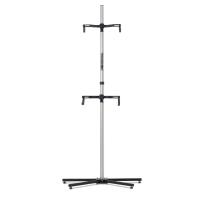
Minoura P-500AL-7S Pair Stand
₱9,200.00
Buy on Lazada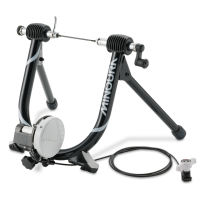
Minoura MagRide Bike Trainer (Remote / Dial)
₱7,300.00
Buy on Lazada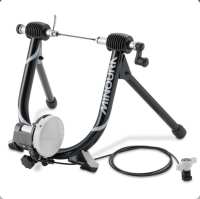
Minoura Magride 60R Indoor Bicycle | Bike Trainer
₱6,800.00
Buy on Lazada
ORIGINAL MINOURA BIKE TRAINER MAGRIDE 60R and MAGRIDE 60D MTB ROAD BIKE FIXIE GRAVEL Made in Japan
₱7,672.00
Buy on Lazada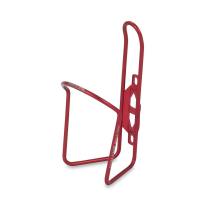
Minoura Dura-Cage AB100-4.5 Cycling Bottle Cage
₱280.00
Buy on Lazada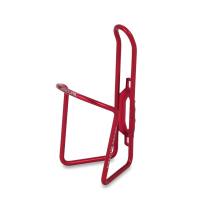
Minoura Dura-Cage AB100-5.5 Cycling Bottle Cage
₱300.00
Buy on LazadaAbout Minoura
MINOURA Co., Ltd., commonly referred to as MINOURA, is a Japanese manufacturer of bicycle equipment and accessories headquartered in Gōdo, Anpachi District, Gifu Prefecture, Japan. The company is widely recognised for its indoor bicycle trainers, rollers, bicycle storage systems, racks, maintenance stands, bottle cages, and other cycling accessories. MINOURA describes itself as the world’s first bicycle-trainer manufacturer and has been involved in bicycle-related manufacturing since the 1930s.12
Established on December 1, 1933, the company is more than 90 years old as of 2026. Its history began with relatively simple bicycle components such as carriers and stands before it evolved into a specialist manufacturer of bicycle training equipment and, subsequently, a comprehensive cycling-equipment company.12
Overview
| Field | Information |
|---|---|
| Official name | MINOURA Co., Ltd. / 株式会社箕浦 |
| Brand | MINOURA |
| Japanese name | ミノウラ / 箕浦 |
| Founded | December 1, 1933 |
| Founder | Masaji Minoura (箕浦正次) |
| Headquarters | Gōdo, Anpachi, Gifu, Japan |
| Industry | Bicycle equipment & manufacturing |
| Best known for | Bicycle trainers, rollers, racks, storage and cycling accessories |
| Notable technology | MAGTURBO magnetic-resistance trainer |
| Manufacturing identity | Strong emphasis on Japanese manufacturing |
| Current president | Takashi Minoura |
| Employees | 41, as of July 1, 2024 |
| Capital | ¥22.4 million |
Corporate information is based primarily on MINOURA’s official disclosures.1
History
1933–1970s: Origins
MINOURA traces its origins to 1933, when founder Masaji Minoura established Minoura Shokai as a manufacturer and seller of bicycle parts, particularly bicycle carriers and stands. The company was originally a bicycle-component manufacturer rather than a trainer specialist.1
During the Second World War, the company was redirected towards military-related manufacturing under government requirements. Following Japan’s defeat in 1945, it resumed bicycle-parts production. The company subsequently expanded its facilities in Gifu Prefecture and eventually relocated its headquarters and factory to its present region.1
A significant transition occurred in the 1970s when MINOURA entered the bicycle indoor-training market. According to the company’s historical records, it began producing bicycle trainers in 1978, initially with the TRO-2000, a three-roller trainer. This product established the foundation for what would become one of the company’s defining categories.1
1980s: Development of bicycle trainers
The 1980s were a pivotal decade for MINOURA. In 1982, the company developed the 826, an early form of fixed bicycle trainer in which the bicycle’s rear wheel drove a resistance mechanism.1
In 1986, MINOURA introduced the MAGTURBO, a magnetic-resistance bicycle trainer. The company states this was the world’s first magnetic bicycle indoor-training machine. The use of magnetic resistance became a significant element of MINOURA’s technical identity.12 The concept for the MAGTURBO’s magnetic mechanism was reportedly inspired by the mechanism of a fishing-rod reel.1 The MAGTURBO concept subsequently evolved through multiple generations of MINOURA trainers.
1990s: Expansion
In 1992, commemorating its 60th anniversary, the company changed its name to Kabushiki Kaisha Minoura (MINOURA Co., Ltd.).1
The company also began expanding beyond bicycles. In 1999, MINOURA started manufacturing and selling C-tube, a heat-pipe-related product used in applications including agriculture, livestock, construction, and industrial equipment.2 Consequently, MINOURA became more than solely a bicycle-equipment company at the corporate level, although cycling remained its most prominent business.
2000s–2010s: Modern MINOURA
MINOURA continued developing bicycle trainers and expanded into a broader range of cycling products. Its portfolio grew to include indoor bicycle trainers, three-roller trainers, magnetic trainers, smart trainers, bicycle storage stands, vehicle-transport systems, maintenance stands, bottle cages, bottle-cage holders, racks, carriers, fenders, lights, accessory holders, tools, maintenance equipment, and kickstands. This diversification is reflected in MINOURA’s current product catalogue.1
In 2019, the company moved its headquarters and factory to a new facility in Shimomiya, Gōdo, Gifu Prefecture, occupying a site of approximately 8,500 m².1
2020s: 90th anniversary and diversification
MINOURA celebrated its 90th anniversary in 2023. Current leadership emphasises continuing Japanese manufacturing while developing new products and manufacturing techniques.2
In 2022, the company launched a separate brand called Licolbe, derived from “Life + Colorful + Benefit”. Its first major product was the HOBBY TOWER, followed by outdoor-oriented products.1
MINOURA has also continued to develop new cycling products. Recent examples include new kickstands, rear carriers, bottle cages, fenders, and specialised accessories. Its official catalogue in 2026 lists products across smart trainers, rollers, transport systems, storage, tools, accessories, and cargo products.2
Bicycle Trainers
The bicycle trainer is the product category most strongly associated with MINOURA. A bicycle trainer allows a conventional bicycle to be used indoors by supporting the bicycle and applying resistance to the wheel or drivetrain, enabling cyclists to train regardless of weather, traffic, or daylight conditions.
MINOURA’s trainer history dates back to 1978, giving the company more than four decades of experience in the category.1
Rollers
MINOURA’s earliest trainer was the TRO-2000, a three-roller design introduced in 1978. The bicycle sits on rollers rather than being fixed directly to a frame.1 Rollers require the cyclist to maintain balance while pedalling, making them useful for fitness as well as for developing smooth pedalling and bike-handling skills.
Fixed trainers
MINOURA subsequently developed trainers that hold the bicycle in place while the rear wheel drives a resistance unit. The company’s early 826 model represented an important step towards the modern fixed trainer.1
MAGTURBO
The MAGTURBO became one of MINOURA’s signature technologies. Instead of relying solely on mechanical friction, the system uses magnetic resistance. Historical materials identify the 1986 MAGTURBO as the origin of the company’s magnetic-resistance trainer technology.2 The technology proved sufficiently significant that MINOURA continued the MagTurbo name and product family for decades.
Smart trainers
MINOURA’s modern lineup includes Smart Turbo products, reflecting the industry’s transition towards electronically controlled indoor training and cycling software. The current catalogue distinguishes Smart Turbo products from conventional trainers and rollers.1
Product Categories
MINOURA’s bicycle division is considerably broader than trainers alone. According to its current catalogue, major categories include:1
Indoor trainers
These include Smart Turbo trainers, conventional trainers, hybrid rollers, three-roller systems, MagTurbo trainers, tire-drive trainers, and trainer accessories.
Bicycle transportation
MINOURA produces systems designed to facilitate bicycle transport, including the VERGO series and associated accessories.1
Bicycle storage
Storage is another major segment for the brand. Products include floor-standing bicycle racks, multiple-bike storage units, single-bike stands, wall-mounted storage, and tower-style bicycle storage. The BikeTower series is particularly representative of MINOURA’s approach to storing bicycles in homes while minimising floor space.
Maintenance equipment
MINOURA manufactures bicycle work and maintenance stands, allowing bicycles to be elevated or supported during servicing.
Bicycle accessories
The company produces a wide selection of accessories, including bottle cages, bottle-cage holders, light holders, utility holders, derailleur guards, fenders, front racks, rear racks, and kickstands. The catalogue demonstrates how MINOURA has evolved from a trainer manufacturer into a broader cycling-equipment manufacturer.1
Manufacturing and “Made in Japan”
A defining characteristic of MINOURA is its emphasis on Japanese manufacturing. Company leadership explicitly identifies “Made in Japan” as a core component of its brand value and has stated its intention to preserve responsible in-house manufacturing. MINOURA has also discussed utilising technologies such as 3D printing with resin, stainless steel, and titanium to enable more flexible production.2
This distinction is significant in the bicycle-accessory industry, as MINOURA positions itself not merely as a design brand but as a manufacturer with proprietary production and development capabilities. The company operates from its factory in Gōdo, Gifu Prefecture, and its official corporate information lists manufacturing and product-development departments alongside its bicycle-products division.1
Brand Philosophy
MINOURA’s philosophy centres on practical innovation, manufacturing expertise, and cycling. The president has described the company’s traditional approach as starting with ideas along the lines of “it would be useful if something like this existed” and then developing practical products around those concepts.1
This philosophy helps explain why the product range covers seemingly ordinary but highly practical cycling equipment—such as bottle cages, stands, racks, and holders—alongside technically complex products such as indoor trainers. The company also frames its cycling business around “health and energy”.1
Corporate Structure and Other Businesses
Although MINOURA is strongly identified with cycling, MINOURA Co., Ltd. operates several business areas. Its current corporate profile divides production into three major segments:1
- Bicycle-related parts and accessories
- C-tube, based on heat-pipe technology
- Licolbe, covering home and outdoor solutions
The bicycle business remains the most internationally recognisable part of the organisation.
MINOURA and the Cycling Industry
MINOURA occupies a distinct position in the cycling market. It is neither a component manufacturer like Shimano nor a bicycle frame manufacturer like Trek or Giant. Instead, MINOURA specialises in the equipment surrounding the bicycle. Its products are designed to help cyclists train indoors, store bicycles, transport bicycles, maintain bicycles, equip bicycles, carry accessories, and protect bicycles. This specialisation has allowed MINOURA to remain relevant across multiple generations of cycling technology.
Industry profiles describe the company as being known not only for its bicycle trainers but also for bike racks, stands, bottle cages, and other everyday cycling products, while emphasising its more than 90-year history.3
Notable Technologies and Product Families
| Product/Technology | Significance |
|---|---|
| TRO-2000 | MINOURA’s first trainer, a three-roller system introduced in 1978 |
| 826 | Early fixed rear-wheel trainer from the early 1980s |
| MAGTURBO | Signature magnetic-resistance trainer technology |
| Smart Turbo | Modern electronically controlled indoor-training category |
| VERGO | Bicycle transportation system |
| BikeTower / Tower | Vertical bicycle-storage systems |
| Work Stands | Bicycle maintenance equipment |
| Bottle Cages | One of MINOURA’s longstanding accessory categories |
| Racks & Carriers | Bicycle cargo and transport equipment |
Historical information on early trainers is derived from MINOURA’s 90th-anniversary historical publication.1
Management
MINOURA Today
As of 2026, MINOURA remains an active Japanese cycling-equipment manufacturer. Its current product lineup spans smart trainers, rollers, traditional trainers, bicycle transportation systems, storage, maintenance equipment, cargo products, fenders, and accessories. The company continued releasing new products in 2025–2026, including kickstands, a rod holder, stainless-steel fenders, and other cycling accessories.2
The company combines three defining characteristics: over 90 years of manufacturing history, Japanese production expertise, and specialisation in cycling equipment.