Shop on Lazada
Slazenger products
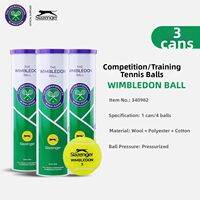
Slazenger | Wimbledon Official Professional Tennis Balls 3/4 Count
₱4,319.47
Buy on Lazada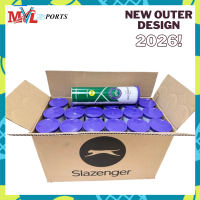
SLAZENGER TENNIS 4BALL 18CANS / 1BOX MVL SPORTS
₱10,350.00₱10,500.00
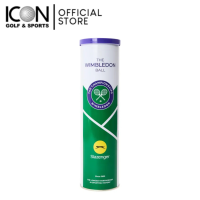
Slazenger Tennis Ball (3 Ball)
₱495.00
Buy on Lazada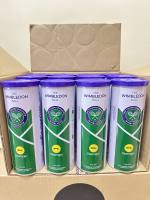
SLAZENGER TENNIS BALL (3BALLS) / 12CANS MVL SPORTS
₱5,640.00₱5,940.00
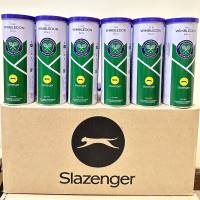
SLAZENGER TENNIS BALL THE WIMBLEDON 3BALL 1BOX 24CANS
₱11,350.00₱12,750.00
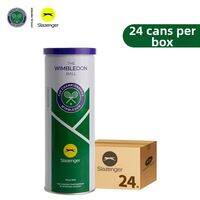
Slazenger | High Elasticity Training and Match Tennis Ball
₱20,536.00
Buy on Lazada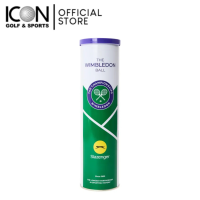
Slazenger Tennis Ball (4 Ball)
₱625.00
Buy on Lazada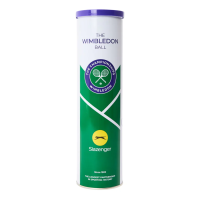
Slazenger Wimbledon Tennis Ball
₱625.00
Buy on LazadaAbout Slazenger
Overview
Slazenger is a historic British sporting-goods brand founded in 1881 by brothers Ralph and Albert Slazenger. Originally established in London as a manufacturer and retailer of sporting goods, the brand became particularly associated with tennis and golf, before expanding into cricket, hockey, swimming, football and sportswear. Today, Slazenger is owned by Frasers Group, the British retail group behind Sports Direct and a number of other sporting brands.
Slazenger is especially famous for its exceptionally long association with The Championships, Wimbledon. It has supplied the tournament’s official tennis balls since 1902, making the relationship one of the longest-running partnerships in sporting history. 1
Origins
Slazenger’s story began in 1881, when brothers Ralph and Albert Slazenger, originally from Manchester, established a sporting-goods business on Cannon Street in London. The company initially dealt in rubber sporting goods, but the rapid development of organised lawn tennis during the late 19th century gave Slazenger an opportunity to establish itself as a specialist sports manufacturer.
The timing was particularly important. Lawn tennis was becoming increasingly popular in Britain following the establishment of the first Wimbledon Championships in 1877. Slazenger began producing tennis equipment and subsequently developed a strong reputation in tennis and golf.
The company eventually became much more than a local sporting-goods shop. It developed into an international manufacturer whose products were used by athletes and sports organisations around the world.
Early Development
During its early years, Slazenger produced a variety of sporting products, with tennis and golf becoming two of its most important areas.
The company was involved in the development of tennis equipment at a very early stage of the sport. Its products included:
- Tennis rackets
- Tennis balls
- Cricket equipment
- Golf equipment
- Sporting nets
- Other rubber sporting goods
Academic research into the company’s history describes Slazenger as an important British sporting-goods manufacturer whose development was closely connected with the growth of tennis, golf and international sport. 2
This early specialisation in sports equipment would eventually become the foundation of Slazenger’s identity.
The Company’s Most Important Relationship
The single most significant part of Slazenger’s heritage is its relationship with Wimbledon.
In 1902, Slazenger became the official supplier of tennis balls to The Championships, Wimbledon. The partnership has continued for more than 120 years. Wimbledon itself describes Slazenger as part of the longest partnership in sporting-goods history. 3
This is extremely important to the Slazenger brand because Wimbledon is one of the world’s most prestigious tennis tournaments.
The relationship has also influenced Slazenger’s brand identity. Rather than being known simply as a general sporting-goods manufacturer, Slazenger became strongly associated with British tennis + tradition + quality + professional sport.
The company says its Wimbledon balls are tested for characteristics including weight, bounce and compression before being used at the tournament. 4
Tennis Heritage
Tennis remains one of Slazenger’s defining categories.
Throughout the 20th century, Slazenger equipment was associated with numerous prominent tennis players. The brand’s historical player connections include figures such as:
- Fred Perry
- Björn Borg
- Jimmy Connors
- Tim Henman
Slazenger’s historical importance in tennis therefore goes beyond merely supplying tennis balls. It has been involved with rackets, balls, clothing and other tennis equipment for generations.
One interesting aspect of the brand is that it has maintained a connection between traditional British tennis culture and modern sporting products.
Cricket
Although Slazenger is perhaps internationally most famous for tennis and Wimbledon, cricket is another major part of its heritage.
Slazenger cricket equipment has been used by generations of famous players, including:
- Sir Don Bradman
- Sir Garfield Sobers
- Viv Richards
- James Anderson
The modern Slazenger range includes cricket bats, balls, batting equipment, protective equipment, footwear and cricket clothing. 5
Cricket has consequently become an important part of Slazenger’s identity, particularly in Britain, Australia and other cricket-playing countries.
Golf
Golf was another important sport in Slazenger’s early history.
The company became a recognised manufacturer of golf balls, golf clubs and golf clothing, and its products were used by well-known golfers throughout the 20th century.
Slazenger’s historical golf associations include players such as:
- Jack Nicklaus
- Seve Ballesteros
- Tom Watson
- Johnny Miller
The brand’s connection with golf also became part of popular culture. Slazenger golf equipment famously appeared in the James Bond film Goldfinger (1964), helping reinforce its image as a classic British sporting brand.
Today, golf remains one of the sports represented in Slazenger’s product portfolio.
Football and the 1966 World Cup
One of the most historically significant moments outside tennis was Slazenger’s involvement in the 1966 FIFA World Cup in England.
Slazenger manufactured the Challenge 4-Star, which was selected as the official match ball for the tournament.
The ball was available in white, yellow and orange. The orange version became particularly famous because it was used during the historic final between England and West Germany at Wembley. England won the match 4–2 after extra time, with Geoff Hurst scoring a hat-trick.
This gives Slazenger a particularly interesting place in football history: the company is not primarily identified as a football brand today, but it produced one of the most historically famous World Cup footballs.
Expansion into Sportswear
Slazenger gradually expanded beyond equipment into clothing and footwear.
The modern brand offers products including:
- T-shirts
- Polo shirts
- Jackets
- Hoodies
- Tracksuits
- Shorts
- Trousers
- Trainers
- Swimwear
- Sports accessories
- Cricket clothing
- Golf clothing
The current Slazenger catalogue covers tennis, cricket, golf, hockey and swimming, alongside general sportswear.
This represents an important evolution: Slazenger is no longer positioned solely as a manufacturer of specialist sports equipment.
Corporate Ownership
Slazenger remained an independent family-associated business for much of its early history.
In 1959, the company was acquired by Dunlop Rubber. Slazenger subsequently became part of larger corporate structures as the British sporting-goods industry consolidated.
Dunlop Rubber was later acquired by BTR plc, which combined Slazenger with other sporting-goods operations. 6
A major change came in 2004, when Sports Direct International, now known as Frasers Group, acquired Dunlop Slazenger. Frasers Group’s own corporate history lists Slazenger as having been part of the group since 2004.
Therefore, although Slazenger has a distinctly British historical identity, it is not an independent family-owned company today. It is a brand within the Frasers Group portfolio.
Slazenger Under Frasers Group
Today, Slazenger is one of the sporting brands owned by Frasers Group.
Frasers describes Slazenger as a brand that began with tennis and golf equipment and subsequently expanded into other sports, clothing and footwear.
This ownership gives Slazenger access to a large sports-retail ecosystem, particularly through the group’s extensive retail operations.
The modern strategy can broadly be understood as combining heritage + mass-market sporting goods + sportswear + lifestyle fashion.
Current Product Categories
As of 2026, Slazenger’s official store covers several major categories.
Tennis
- Tennis balls
- Tennis rackets
- Tennis clothing
- Tennis footwear
- Accessories
Cricket
- Cricket bats
- Cricket balls
- Batting gloves
- Pads
- Helmets
- Cricket shoes
- Cricket clothing
Golf
- Golf clubs
- Golf balls
- Golf gloves
- Golf bags
- Golf clothing
- Accessories
Hockey
- Hockey sticks
- Hockey balls
- Protective equipment
- Hockey clothing
Swimming
- Swimwear
- Goggles
- Swimming accessories
General Sportswear
- T-shirts
- Polo shirts
- Hoodies
- Jackets
- Shorts
- Trousers
- Trainers
- Bags
- Headwear
The exact product mix can vary by country and retail channel.
Brand Identity
Slazenger has an unusually distinctive brand identity because its history combines Victorian-era British sporting culture with modern sports retail.
Its strongest associations are generally:
🇬🇧 British Heritage
The brand’s origins in London in 1881 give it a strong British sporting heritage.
🎾 Tennis
Wimbledon is arguably the most important association in the entire Slazenger story.
🏏 Cricket
Slazenger has a long association with professional and amateur cricket.
⛳ Golf
Golf was one of the company’s original major sporting categories.
🏆 Professional Sport
The brand’s historical relationships with major tournaments and athletes contribute to its performance-oriented image.
👕 Sports Lifestyle
Modern Slazenger increasingly uses its sporting heritage in everyday clothing and lifestyle products.
What Makes Slazenger Different?
Slazenger’s biggest competitive asset is arguably heritage.
There are many modern sportswear brands, but relatively few can point to a history beginning in 1881 and a continuous sporting partnership dating back to 1902.
The Wimbledon relationship is particularly valuable because it gives Slazenger something that cannot easily be reproduced through advertising:
more than a century of association with one of the world’s most prestigious sporting events.
Wimbledon continues to identify Slazenger as its official tennis-ball supplier, and the 2026 tournament continues to use Slazenger tennis balls.
Slazenger’s Position in the Sportswear Market
It is useful to distinguish Slazenger from brands such as Nike, Adidas, Puma and Under Armour.
Slazenger’s identity is less focused on being a global performance-fashion powerhouse and more on its combination of traditional sports + British heritage + accessible sporting goods + lifestyle clothing.
Its strongest historical authority is concentrated in sports such as tennis, cricket and golf, rather than in running, basketball or football.
This gives the brand a somewhat different personality from the major American and German sportswear giants.
| Brand | Strongest Historical Identity |
|---|---|
| Slazenger | British sporting heritage, tennis, cricket, golf |
| Nike | Performance sport, basketball, running, lifestyle |
| Adidas | Football, running, sportswear |
| Puma | Football, motorsport, lifestyle |
| Wilson | Tennis, baseball, American sports |
| Dunlop | Tennis, golf, automotive heritage |
| Babolat | Tennis and racket sports |
Slazenger’s distinctive advantage is therefore heritage and authenticity, particularly in racket sports and traditional British sports.
Slazenger Today
Today, Slazenger describes itself as one of the world’s longest-established sporting brands, with almost 150 years of history. Its current product portfolio spans tennis, cricket, golf, hockey, swimming and clothing.
The brand is also developing a more contemporary lifestyle identity. 7
This creates two complementary sides of Slazenger:
→ equipment, performance, competition and professional sport
→ heritage clothing, casual fashion and contemporary lifestyle
That combination is increasingly important to the brand’s modern positioning.
Major Historical Milestones
| Year | Event |
|---|---|
| 1881 | Ralph and Albert Slazenger establish the business in London |
| 1880s | Slazenger develops tennis and other sporting equipment |
| 1902 | Becomes official tennis-ball supplier to Wimbledon |
| 20th century | Expands internationally across tennis, golf, cricket and other sports |
| 1959 | Acquired by Dunlop Rubber |
| 1985 | Dunlop Rubber becomes part of BTR plc |
| 1966 | Slazenger Challenge 4-Star selected as the FIFA World Cup official match ball |
| 2002 | Slazenger’s historic Barnsley tennis-ball factory closes |
| 2004 | Acquired by Sports Direct/Frasers Group |
| 2020s | Expands further into sportswear, lifestyle clothing and newer sports |
| 2026 | Continues as Wimbledon official tennis-ball supplier and operates as a Frasers Group brand |
The Wimbledon partnership remains the defining continuous thread through this history. 8
References
- Slazenger
- Slazenger | Cricket, Tennis and Hockey Clothing and Equipment
- OUR STORY – Slazenger Padel
- Albert and Ralph Slazenger and the making of a global British sporting goods company: Sport in Society: Vol 23 , No 9…
- Cricket at store.Slazenger.com
- Slazenger
- EXEC: Sports Direct Owner Frasers Group Acquires Near 6 Percent Stake In Puma SE
- Slazenger – owned by Frasers Group – reveals plans to dominate the UK padel tennis market