Shop on Lazada
Mobil products
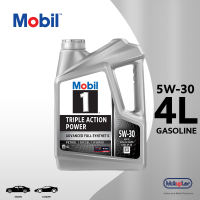
Mobil 1 5W-30 Triple Action Power 4 Liters
₱4,027.00
Buy on Lazada![[CLEARANCE SALE] Mobil Super Friction Fighter 10W-40 Synthetic Technology Engine Oil 4 Liters](https://ph-live.slatic.net/p/484cd69f8fe8f628bb90b6ef74bd9824.jpg_200x200q80.jpg)
[CLEARANCE SALE] Mobil Super Friction Fighter 10W-40 Synthetic Technology Engine Oil 4 Liters
₱1,875.00₱2,084.00
![[CLEARANCE SALE] Mobil Delvac Legend™ 15W-40 Complete Defense 5L](https://ph-live.slatic.net/p/92e7b661893aa1bc5df337dda0295a54.jpg_200x200q80.jpg)
[CLEARANCE SALE] Mobil Delvac Legend™ 15W-40 Complete Defense 5L
₱1,774.00
Buy on Lazada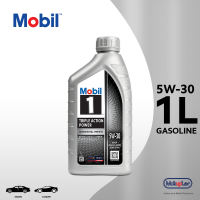
Mobil 1 5W-30 Triple Action Power 1 Liter
₱1,107.00
Buy on Lazada![[CLEARANCE SALE] Mobil Multipurpose ATF 1L](https://ph-live.slatic.net/p/bff3674f5f5d9b3c11a11a317d8fbb4d.jpg_200x200q80.jpg)
[CLEARANCE SALE] Mobil Multipurpose ATF 1L
₱456.00₱507.00
![[CLEARANCE SALE] Mobil Super Friction Fighter 10W-40 Synthetic Technology Engine Oil 1 Liter](https://ph-live.slatic.net/p/05e43ba77502d0650c17a33e07bc509b.jpg_200x200q80.jpg)
[CLEARANCE SALE] Mobil Super Friction Fighter 10W-40 Synthetic Technology Engine Oil 1 Liter
₱523.00₱582.00
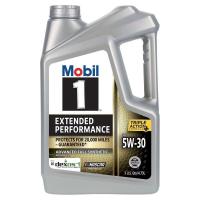
Mobil 1 EP Engine Oil 5W-30 4.73L/5L 100% Synthetic Engine Oil (Gasoline engine oil)
₱2,320.00₱3,590.00
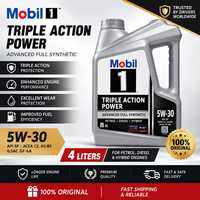
Mobil 1 Triple Action Power 5W-30 Fully Synthetic Engine Oil for Petrol Diesel Hybrid 4L
₱2,965.00₱3,650.00
About Mobil
Mobil is a prominent American-origin petroleum and energy brand best known for its fuel stations, motor oils, lubricants, and automotive products. Today, it serves as one of the principal consumer-facing brands of Exxon Mobil Corporation (ExxonMobil), operating globally alongside sister brands such as Exxon and Esso 68.
The brand traces its origins to the Vacuum Oil Company, founded in 1866, and rose to prominence during the development of the modern automobile industry 3. Its distinctive red Pegasus (flying horse) remains one of the most recognizable symbols in the history of the petroleum sector 4.
Brand overview
| Field | Information |
|---|---|
| Brand name | Mobil |
| Industry | Petroleum, fuels, lubricants, automotive products |
| Parent company | Exxon Mobil Corporation |
| Origin | United States |
| Roots | Vacuum Oil Company / Standard Oil of New York (Socony) |
| Modern company name | Mobil Oil Corporation (from 1966) |
| Current corporate parent | ExxonMobil |
| Major products | Fuels, motor oils, industrial lubricants, greases, automotive fluids |
| Famous sub-brand | Mobil 1 |
| Heavy-duty lubricant brand | Mobil Delvac |
| Famous symbol | Red Pegasus |
| Current logo feature | Red “o” in Mobil |
| Notable motorsport association | Formula 1 and other motorsports |
Mobil is primarily recognized as a petroleum and lubricants brand. Depending on the market, consumers encounter Mobil through gasoline stations, diesel fuel, motor oils, automotive fluids, industrial lubricants, and related services. The modern brand is particularly associated with advanced lubrication technology. Its product portfolio includes:
- Mobil 1 — premium synthetic automotive motor oil
- Mobil Super — automotive motor oils
- Mobil Delvac — heavy-duty and commercial-vehicle lubricants
- Mobil EV — fluids and lubrication technology for electric vehicles
- Industrial oils and greases
- Transmission fluids
- Gear lubricants
- Oil filters
- Automotive maintenance products
- Fuels and gasoline products in selected markets
Mobil’s official site describes the brand as being focused on performance, innovation, fuels, lubricants, and services.
History
Vacuum Oil Company
Mobil’s history can be traced to the Vacuum Oil Company, which was established in 1866 in Rochester, New York 3. The company initially specialized in petroleum-based lubricants, a critical necessity during an era when industrial machinery, steam engines, and later automobiles required increasingly sophisticated lubrication. This early specialization established a long-standing reputation that eventually became the foundation of the Mobil brand. ExxonMobil identifies 1866 as the beginning of its 150-plus-year lubrication heritage.
The Pegasus
One of Mobil’s most enduring trademarks is the flying red Pegasus. The symbol was first used by Vacuum Oil in South Africa in 1911 4. Following the merger of Vacuum with Standard Oil of New York (Socony) in 1931, the red Pegasus became a registered U.S. trademark 5. The symbolism was deliberate: the mythical flying horse represented qualities such as speed, power, and flexibility. It eventually became one of the most recognizable icons in American petroleum and automotive history.
Socony-Vacuum and the birth of Mobil
In 1931, Vacuum Oil merged with Standard Oil of New York (Socony) to create the Socony-Vacuum Corporation 25. The merger brought together complementary strengths: Vacuum contributed its lubricant heritage, while Socony provided an extensive petroleum marketing network. During this period, the Pegasus became associated with the emerging Mobil identity, and fuel products were marketed under names including Mobilgas 5. The combined entity became a significant player in the rapidly expanding automotive market.
Socony Mobil
In 1955, the company changed its name to Socony Mobil Oil Company 1. During this era, the Mobil identity became increasingly central to the company’s consumer marketing strategy. As the automobile became integral to daily life, oil companies competed aggressively through gasoline quality, service station networks, lubricants, automotive services, roadside advertising, and brand recognition. Mobil successfully built a distinct consumer identity around its products and retail locations during this period.
Mobil Oil Corporation
In 1966, the company simplified its name to Mobil Oil Corporation 1. This change marked a pivotal step in establishing Mobil as the primary corporate and consumer brand. Historical records identify 1966 as the year the company launched a comprehensive identity program emphasizing the Mobil trade name. The familiar visual identity associated with the brand developed considerably throughout the 1960s and 1970s.
Visual identity and logo
Mobil possesses a highly recognizable visual identity. The modern logo features the wordmark:
M O B I L
with the “o” rendered in red while the remaining letters are typically blue. This simplicity was intentional, creating a strong visual marker recognizable from a distance on gas stations, road signs, oil cans, service vehicles, advertising, and automotive products. Although the modern wordmark is now the dominant visual identifier, the older Pegasus symbol remains an important part of the brand’s heritage 4.
Mobil 1
Perhaps the most famous Mobil product today is Mobil 1, a synthetic motor-oil brand introduced commercially in the United States in 1974 following several years of development. The company describes it as the first globally available full-synthetic automotive motor oil.
Significance of synthetic technology
Conventional motor oils were derived primarily from petroleum-based mineral oils. Synthetic lubricant technology allowed engineers to formulate oils with precisely controlled properties suitable for demanding temperature ranges and operating conditions. Mobil 1 was developed to provide specific benefits, including:
- High-temperature performance
- Low-temperature performance
- Engine wear protection
- Improved lubrication
- Long-term engine cleanliness
- Performance under severe operating conditions
Mobil 1 subsequently became one of the world’s best-known synthetic motor-oil brands.
Motorsports involvement
Motorsports have played a significant role in shaping Mobil’s brand identity, with connections to racing dating back more than a century. Historical records note that Indianapolis 500 winner Ralph DePalma used Mobil products in 1915 4.
Mobil 1 later became heavily involved in motorsports, particularly Formula 1. In 1978, Mobil 1 began its official motorsports involvement through sponsorship of the Williams Formula One team. By 1979, Mobil had become a Grand Prix sponsor and technical partner of Williams. Motorsport served not only as an advertising platform but also as a technological testing environment, allowing lubricant engineers to develop and evaluate technologies under extreme racing conditions.
Mobil continues to associate itself with motorsports through partnerships involving Oracle Red Bull Racing, Visa Cash App Racing Bulls, and Porsche Carrera Cup North America 4.
Mobil Delvac
While Mobil 1 focuses heavily on passenger vehicles, Mobil Delvac targets heavy-duty applications. Mobil Delvac products are designed for trucks, diesel engines, commercial fleets, heavy machinery, construction equipment, and industrial applications. Mobil describes Delvac as having more than 90 years of experience and innovation in heavy-duty lubrication. This product line extends Mobil’s presence beyond individual motorists into the commercial transportation and industrial sectors.
Industrial lubricants
Mobil is also a major industrial lubricant brand. Its industrial products are utilized in manufacturing, mining, construction, power generation, oil and gas, aviation, wind energy, heavy machinery, and industrial plants. Mobil’s industrial business works directly with equipment manufacturers (OEMs) to develop lubrication solutions for specific machinery. The company states that its Equipment Builder Group has collaborated with OEMs since 1914. Consequently, lubrication technology represents a broader segment of Mobil’s business than just automotive oils.
Electric vehicle technology
Mobil has expanded its technology portfolio to address the rise of electric vehicles. The Mobil EV line focuses on specialized fluids and lubrication technologies for EVs and their components. While EVs do not use conventional internal-combustion engine oil, they still require specialized fluids for components such as:
- Electric motors
- Bearings
- Gears
- Transmissions/reduction systems
- Thermal-management systems
Mobil positions EV fluids as an extension of its broader lubrication-engineering expertise.
Relationship with ExxonMobil
A common source of confusion is the distinction between Mobil and ExxonMobil. These are not unrelated entities; in 1999, Exxon and Mobil merged to form Exxon Mobil Corporation 7. Following the merger, Mobil became one of ExxonMobil’s major consumer brands.
Today, ExxonMobil operates internationally under several major brands, including Exxon, Esso, and Mobil 68. The corporate relationship can be summarized as:
Exxon + Mobil → ExxonMobil
and:
ExxonMobil → Mobil brand
Major product families
Mobil 1
Premium synthetic automotive lubricants, particularly associated with high-performance passenger vehicles.
Mobil Super
Automotive motor-oil products intended for everyday vehicle maintenance.
Mobil Delvac
Heavy-duty lubricants for diesel engines, commercial vehicles, fleets, and heavy equipment.
Mobil EV
Specialized fluids and lubrication technologies for electric vehicles.
Mobil Industrial
Industrial oils, greases, lubrication services, and engineering solutions for machinery and industrial operations.
Mobil Fuels
Gasoline, diesel, and other fuel products sold through Mobil-branded fuel operations in applicable markets.