Shop on Lazada
Monchhichi products
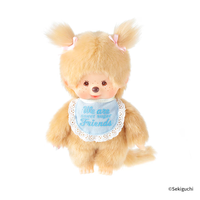
Monchhichi | Purse Pendant Pink Sitting Stuffed Doll
₱2,439.97
Buy on Lazada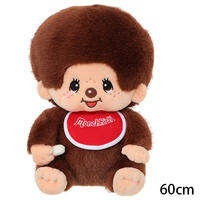
Monchhichi | Cute Farm Coffee Series Plush Doll
₱7,292.83
Buy on Lazada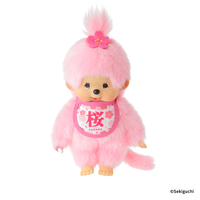
Monchhichi | Charming Sakura Girl Design Bag Charm
₱2,818.96
Buy on Lazada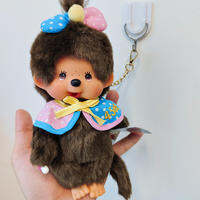
Monchhichi | 45th Anniversary Fashionable Cute Bag Charm
₱2,245.05
Buy on Lazada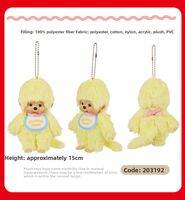
Monchhichi | Cute Gift Doll Keychain Couple
₱1,782.43
Buy on Lazada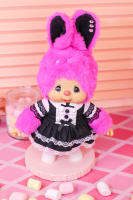
Monchhichi | Sweet and Cool Rabbit Shaped Plush Doll
₱5,693.56
Buy on Lazada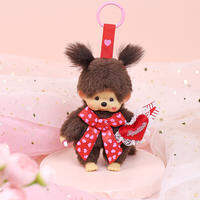
Monchhichi | Cute Decor Plush Doll Pendant Accessories
₱2,635.93
Buy on Lazada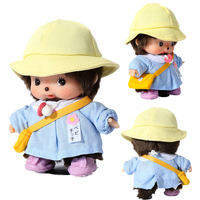
Monchhichi | Dress Overalls T-Shirt Design Plush Doll Without Support
₱2,425.99
Buy on LazadaAbout Monchhichi
Overview
Monchhichi (モンチッチ, Monchitchi) is a Japanese character and plush-toy brand created by Sekiguchi Corporation and first released in 1974. It is best known for its distinctive monkey-like characters featuring freckled faces, soft plush bodies, vinyl faces and limbs, and a characteristic thumb-sucking pose. From its origins as a Japanese toy, Monchhichi developed into an international character franchise spanning toys, fashion, books, television animation, merchandise, licensing, collaborations, and collectible products.1
As of 2026, Monchhichi has been sold in more than 30 countries, with over 70 million units sold since its debut. The brand celebrated its 50th anniversary in 2024.1
Basic information
| Category | Details |
|---|---|
| Brand | Monchhichi |
| Japanese name | モンチッチ |
| Type | Character brand / plush toys / collectibles |
| Country of origin | Japan |
| Created | 1974 |
| Creator / company | Sekiguchi Corporation |
| Original debut | January 26, 1974 |
| Main character | Monchhichi |
| Character type | Monkey-like humanoid character |
| Known for | Thumb-sucking pose, freckles, plush body, retro styling |
| Owner / rights holder | Sekiguchi Corporation |
| International expansion | Began in 1975 |
| Countries sold | 30+ |
| Units sold | 70+ million |
| 50th anniversary | 2024 |
The official Monchhichi site describes the original product as having a plush body combined with soft-vinyl (“sofubi”) face, hands and feet, an unusual construction for its time.1
Origins
Monchhichi was created by Sekiguchi, a Japanese company with roots going back to 1918. The company specialized in dolls, stuffed toys and related products. Monchhichi emerged in the early 1970s as part of Sekiguchi’s development of character-oriented plush toys.
The character officially debuted on January 26, 1974. One of its important predecessors was Sekiguchi’s Kuta Kuta Monkey, a floppy or “tired” monkey toy. Monchhichi transformed that basic concept into a more expressive, character-like figure designed to appeal emotionally to children and adults.1
The result was a toy that looked somewhat like a small monkey but had distinctly human characteristics and a highly recognizable personality.
The original design
The classic Monchhichi design is remarkably simple, which is one reason it has remained recognizable for decades.
Its defining characteristics include:
- A brown or tan monkey-like body
- Large, expressive eyes
- A freckled face
- Prominent ears
- A soft, plush body
- Vinyl/soft-vinyl hands, feet and face
- A characteristic thumb-sucking pose
- A small, childlike appearance
- Clothing that can be changed or customized
The thumb-sucking gesture is particularly important to the character’s identity. It gives Monchhichi an infant-like, comforting quality and became one of its most recognizable visual trademarks. The official brand describes the character through its thumb-sucking pose and freckles.1
Name etymology
The name has several layers of wordplay.
According to the official Monchhichi materials, the name combines the French words “mon” (“my”) and “petit” (“small/cute”), expressing the idea of “my cute little thing.” The name also evokes the words “monkey” and the sound/idea of a child sucking a pacifier or thumb.1
Because the character was designed to be an intimate companion rather than merely an animal toy, the name contributes to its deliberately affectionate and personal image.
Early success in Japan
Monchhichi became a major Japanese toy phenomenon shortly after its launch. The combination of an unusual construction, cute appearance and strong character identity helped distinguish it from ordinary stuffed animals.
The brand expanded rapidly into different sizes, outfits and character variations. Its popularity also encouraged Sekiguchi to build an increasingly elaborate Monchhichi universe rather than treating the character as a single plush toy.
By the late 1970s, Monchhichi had become a recognizable Japanese character brand.
International expansion
One of the most important developments in Monchhichi’s history was its rapid expansion outside Japan.
Sekiguchi began exporting Monchhichi in 1975, initially targeting Austria and German-speaking markets. From there, the character spread throughout Europe and other international markets.
Monchhichi was given different names in some countries. For example, it was known as:
- Kiki in France
- Mon Cicci in Italy
- Chicaboo in the United Kingdom
- Moncsicsi in Hungary
- Bølle in Denmark
This localization illustrates how broadly the character was marketed internationally.2
The character became particularly successful in parts of Europe. During its peak period, Monchhichi achieved enormous popularity in Germany and became an important piece of European toy culture.
The Mattel connection
In the United States, Monchhichi was licensed to Mattel, one of the world’s largest toy companies. Mattel’s involvement helped introduce the character to the American toy market.
The U.S. licensing arrangement lasted until 1985, after which Sekiguchi’s international strategy changed.1
This period is significant because it placed Monchhichi alongside some of the most recognizable international toy properties of the late 20th century.
Television and animation
Although Monchhichi began as a plush-toy character, it eventually expanded into animation.
Japanese animation
In 1980, Monchhichi appeared in the Japanese animated series Futago no Monchhichi (Monchhichi Twins). The series expanded the character universe by introducing additional members of the Monchhichi family. Sekiguchi’s own corporate history records the 1980 animated adaptation and the introduction of characters including grandparents.
American animation
In 1983, Hanna-Barbera produced the American animated series Monchhichis. This adaptation transformed the toy characters into a fantasy-oriented animated cast and introduced Monchhichi to another generation of television audiences.2
French animation
The franchise later received French animated adaptations, including Kiki, le Kiki de tous les Kiki in 2001.
A later CGI series, Monchhichi / La Tribu Monchhichi, was produced in France and released in 2017, demonstrating that the character continued to be adapted for new generations long after the original 1970s toy boom.2
The Monchhichi family
Monchhichi eventually evolved from one character into a broader fictional family.
Different generations and variations have included:
- Monchhichi-kun — the male Monchhichi character
- Monchhichi-chan — the female counterpart
- Babychhichi / Bebichhichi — a baby-oriented character
- Parents and grandparents
- Other members and variations appearing across different product lines and adaptations
The exact characterization and relationships have varied depending on the particular era, product series and animated adaptation.
The Bebichhichi character, for example, was introduced in 2004 and celebrated its 20th anniversary in 2024.
Fashion and collectibility
An important part of Monchhichi’s longevity is that the character was designed to be dressed and restyled.
Rather than being a fixed plush toy, Monchhichi can function almost like a small fashion doll. Over the years, Sekiguchi has produced:
- Traditional Japanese outfits
- Seasonal clothing
- School uniforms
- Professional costumes
- Character costumes
- Fashion collaborations
- Limited editions
- Regional outfits
- Anniversary editions
- Designer collaborations
- Miniature accessories
This creates a collectible culture around the character. A Monchhichi from one decade can look dramatically different from one released in another decade while retaining the same basic face and body identity.
Sekiguchi’s licensing materials specifically emphasize the ability to preserve Monchhichi’s recognizable character while adapting its products and promotions to different generations and audiences.1
Retro appeal
Monchhichi has developed a particularly strong association with Japanese retro culture, especially the aesthetic of the 1970s and 1980s.
The original character’s design has changed relatively little compared with many contemporary character brands. As a result, vintage Monchhichi products can immediately evoke the period in which they were produced.
This has helped the character acquire two audiences simultaneously:
Children and contemporary consumers can encounter Monchhichi as a cute character, while adult collectors may approach it through nostalgia and vintage toy culture.
Sekiguchi itself has explicitly positioned Monchhichi as a representative character of “Showa retro” culture and established a separate company in 2023 to use the character in regional revitalization and retro-culture initiatives.1
Period of decline and return
Like many character brands from the 1970s, Monchhichi experienced fluctuations in popularity.
According to the official Monchhichi history, sales were temporarily suspended in many markets from 1985, with Paris being an exception. After years of reduced availability, strong demand from fans helped lead to a major return in 1996, including re-debuts in Japan, Germany and New York.1
This comeback is an important part of the brand’s history: Monchhichi transitioned from being a mass-market children’s toy into something that could also function as a nostalgic collectible character.
Global popularity
According to Sekiguchi and the official Monchhichi website, the character has been sold in more than 30 countries and has surpassed 70 million units sold since its 1974 introduction.1
That makes Monchhichi one of Japan’s notable long-running character brands.
Its international history is unusual because its popularity has not depended exclusively on one particular media franchise. Unlike characters whose popularity comes primarily from a successful manga, anime or video game, Monchhichi’s core identity originated from the physical character itself.
The plush toy came first; animation, merchandise and licensing subsequently expanded the universe.
Brand philosophy
Monchhichi is generally positioned as a character that provides comfort, companionship, affection and nostalgia.
The official brand describes Monchhichi as a character capable of becoming different things to different people: a family member, friend, romantic companion, aspirational figure or simply a familiar presence.3
This flexibility is one of the brand’s strongest characteristics.
Monchhichi does not have an extremely rigid personality in the way some fictional protagonists do. Instead, consumers can project their own feelings onto the character.
That makes the character suitable for:
- Children’s toys
- Adult collectibles
- Gifts
- Fashion merchandise
- Home décor
- Character collaborations
- Regional merchandise
- Nostalgia products
- Social-media content
Licensing and collaborations
Monchhichi is now operated not simply as a plush-toy line but as a broader character licensing brand.
Sekiguchi offers licensing opportunities across areas such as:
- Consumer products
- Advertising
- Publishing
- Promotional campaigns
- Collaborations
- Retail products
- Fashion and accessories
The company describes Monchhichi’s international presence, heritage and cross-generational recognition as important advantages for licensees.1
The brand continues to release collaborations and new products. For example, the official site was still announcing new Monchhichi collaborations and products in August 2026, showing that the character remains an active commercial brand rather than simply a vintage property.1
50th anniversary
2024 marked 50 years of Monchhichi.
The anniversary generated special products, events, photo contests, exhibitions and other activities. Sekiguchi also published archival material documenting the brand’s history.1
The anniversary was particularly significant because Monchhichi had survived several major changes in the character market:
1974 → 1980s boom → international expansion → decline → 1990s revival → 2000s reinvention → modern collector culture → 50th anniversary
Rather than remaining frozen as a 1970s toy, the character has repeatedly been redesigned and repositioned for new audiences.
Cultural significance
Monchhichi occupies an interesting position in Japanese popular culture.
It is not simply a stuffed animal, nor is it exclusively an anime character. It belongs to the broader Japanese tradition of character merchandising, where a recognizable character can exist simultaneously across toys, fashion, advertising, entertainment and consumer goods.
Its longevity comes from several factors:
- Instantly recognizable design — the freckles, ears and thumb-sucking pose make the character distinctive.
- Emotional simplicity — Monchhichi communicates cuteness and comfort without requiring a complicated story.
- Fashionability — clothing allows the character to change with trends.
- Nostalgia — older generations recognize it from childhood.
- Collectibility — decades of variants make vintage and limited editions attractive to collectors.
- International identity — Monchhichi has developed cultural associations in Japan, Europe and other markets.
- Adaptability — the character can be incorporated into new products, collaborations and media without losing its basic identity.
Timeline
- 1918 — Sekiguchi’s business is founded in Japan.
- Early 1970s — Sekiguchi develops characters and prototypes leading toward Monchhichi.
- January 26, 1974 — Monchhichi officially launches in Japan.1
- 1975 — International exports begin, initially including Austria and German-speaking markets.
- Late 1970s — Monchhichi becomes an international toy phenomenon.
- 1980 — Japanese animated series Futago no Monchhichi is produced.
- 1983 — Hanna-Barbera produces the American animated series Monchhichis.2
- 1985 — Sales are suspended in many markets outside Paris.1
- 1996 — Monchhichi returns to major markets including Japan, Germany and New York.
- 2001 — French animated adaptation Kiki, le Kiki de tous les Kiki appears.
- 2004 — Bebichhichi is introduced.
- 2005 — Another Japanese stop-motion Monchhichi series is produced.2
- 2017 — Monchhichi / La Tribu Monchhichi CGI series is released.2
- 2023 — Sekiguchi establishes Monchhichi Co., Ltd., with the character named as its CEO, in connection with regional revitalization and retro culture.4
- 2024 — Monchhichi celebrates its 50th anniversary.1
- 2025 — An expanded Monchhichi 50th Anniversary Book is published.1
- 2026 — The brand continues releasing new products, collaborations and character merchandise.1
Continued relevance
The remarkable thing about Monchhichi is that its popularity has lasted for more than five decades without fundamentally changing the character’s visual identity.
A child who encounters a Monchhichi plush today can recognize essentially the same character that was sold in Japan in 1974. At the same time, the ability to change its clothes, colors, accessories, size, collaborations and presentation allows the brand to participate in contemporary trends.
In that sense, Monchhichi is both a vintage Japanese toy brand and a living contemporary character franchise.
Its story can be summarized as:
A 1974 Japanese plush toy that grew into an international character brand, disappeared from many markets, returned through nostalgia and fan demand, and ultimately became a multigenerational collectible and symbol of Japanese retro character culture.