Shop on Lazada
MSE Philipines products
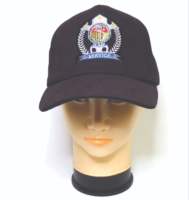
B.J.M.P Bull Cap GOABulltwill Black Color with Front and Back Computerized Embroidery
₱350.00
Buy on Lazada
EORA Embroidered Tab patch
₱60.00
Buy on Lazada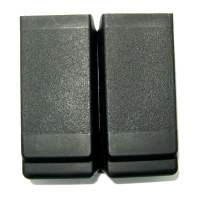
Magazine Case Double Stack Size for Glock Beretta Taurus and other Double Stack Magazine Made of Durable High-Tech Polymer Material Color Black
₱650.00
Buy on Lazada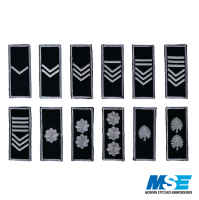
Delta Rank Emblem patches- with velcro embroidered patch
₱60.00
Buy on Lazada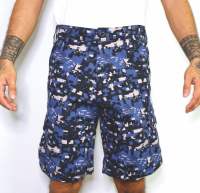
6 pocket Delta Cargo Shorts Tactical shorts- High quality Delta shorts original lightweight material
₱650.00
Buy on LazadaAbout MSE Philipines
MSE Philipines, also known as Marikina Shoe Exchange, is a Philippine retail and direct-selling enterprise primarily associated with footwear, apparel, bags, personal care items, and home merchandise. The company developed a nationwide business model oriented toward dealers and distributors, historically marketing products under the MSE name alongside related brands 1. It should not be confused with the former Manila Stock Exchange, which also used the acronym MSE.
Quick facts
| Field | Information |
|---|---|
| Brand name | MSE / Marikina Shoe Exchange |
| Country | Philippines |
| Industry | Footwear, fashion, consumer products, direct selling |
| Known for | Shoes, sandals, slippers, apparel, bags, and other consumer goods |
| Business model | Retail + dealer/direct-selling network |
| Origins | Late 1990s |
| First MSE branch | Tutuban, Manila |
| Corporate registration evidence | MSE (Philippines) Inc. is listed with SEC registration no. A200100571 and establishment year 2001 |
| Digital platform | MSE Go |
| Official brand trademark evidence | “MSE MARIKINA SHOE EXCHANGE” 1 |
| Market | Primarily Philippine consumers and independent sellers/dealers |
Corporate registration records list MSE (PHILIPPINES) INC. under SEC registration A200100571, with an establishment year of 2001. Historical material regarding the business places the opening of its first branch in September 1999, suggesting that the operating history and later corporate registration represent distinct milestones rather than a contradiction.
History
Origins
MSE Philipines emerged in the late 1990s within the Philippine footwear and direct-selling market. Historical accounts identify the opening of the first branch at Tutuban, Manila, in September 1999. The name Marikina Shoe Exchange reflects the company’s association with Marikina, a city historically renowned as a major center of shoemaking in the Philippines.
Early descriptions indicate that MSE was established in September 1999 and implemented a marketing plan targeting entrepreneurs managing their own dealer networks. From its inception, the product portfolio extended beyond footwear to include apparel, bags, personal care products, and home goods.
Expansion
The company subsequently expanded its branch and dealer network beyond Metro Manila. Historical catalog materials list locations including Manila, Quezon City, Cavite, Cebu, Davao, Naga, Butuan, Palawan, and Zamboanga. This expansion underscores that MSE Philipines was not merely a conventional shoe shop; its business model combined physical retail and distribution with a network-oriented selling system.
Business model
A defining characteristic of MSE Philipines is its direct-selling and dealer model. Rather than relying exclusively on conventional retail stores, the company has historically supplied products to entrepreneurs and dealers who market them to their own customers and networks. This structure creates two overlapping identities:
- Consumer brand: Customers purchase MSE products directly.
- Entrepreneurial platform: Independent sellers market MSE products and build their own customer bases.
This entrepreneurial aspect became increasingly visible with the introduction of MSE Go, the company’s digital platform.
MSE Go
MSE Philipines transitioned part of its sales operations to a digital environment through the MSE Go application. The platform enables sellers to access searchable and categorized product catalogs, view photographs and descriptions, share product images, and check real-time inventory information. It also features an Opportunities Board for identifying potential customers and provides tools designed to allow sellers to operate their business from home. Later updates integrated GCash payments, reflecting an adaptation of the traditional dealer model to e-commerce and social media-oriented selling.
Products
Although “Shoe” appears in the Marikina Shoe Exchange name, the product assortment of MSE Philipines has historically been diverse.
Footwear
Footwear remains the category most strongly associated with the brand. Catalogs and marketplace listings have featured men’s, women’s, and children’s shoes, as well as school shoes, sandals, slippers, sneakers, casual and formal footwear, and wedge or heeled styles. Historical catalogs contain numerous models and specifications, while current marketplace listings continue to show MSE-branded sandals, slippers, sneakers, and school footwear.
Apparel and underwear
The company has also retailed clothing and intimate apparel. Historical materials include children’s and adult underwear, and marketplace listings feature MSE men’s briefs and women’s underwear.
Bags and accessories
Product assortments have included backpacks, bags, pouches, and related accessories such as lunch bags.
Personal care
MSE Philipines has expanded into personal care products. In 2023, the Intellectual Property Office of the Philippines recorded the “POP BY MSE” mark for goods including body sprays, cologne, perfume, cosmetic lotion, body wash, shampoo, cosmetic powder, and soap 1.
Home and other products
Historical descriptions note the inclusion of home products and appliances alongside footwear, apparel, bags, and personal care items.
Relationship with Marikina’s footwear industry
The Marikina name is integral to the branding of MSE Philipines, connecting it to the city’s long-established shoemaking tradition and local manufacturing heritage. However, available sources do not establish a single manufacturing location for the entire product portfolio. Modern marketplace listings feature a variety of products and materials, indicating that not every item sold under the brand is necessarily manufactured in Marikina.
Brand portfolio
MSE Philipines has operated within a wider family of consumer brands. Historical accounts mention associated labels including Natasha, Confetti, Xxtra, Vivacci, Gabrio Franco, and Shoe Studio. As relationships between these brands have evolved, they are best described as sister or associated brands in historical contexts rather than assuming a static corporate structure. The MSE trademark itself remains active in government records; in 2023, the Bureau of Customs issued a memorandum concerning the intellectual property recordation of “MSE MARIKINA SHOE EXCHANGE” trademarks 1.
Retail presence
Historically, MSE Philipines operated numerous branches across the archipelago. Catalog materials from the late 2010s and early 2020s identify locations in Tutuban (Manila), Cubao (Quezon City), Imus (Cavite), Davao, Cebu, Taft (Manila), Novaliches (Quezon City), Naga, Butuan, Palawan, and Zamboanga. As the branch network has changed over time, these should be viewed as historical locations rather than a definitive list of currently operating stores.
Brand positioning
MSE Philipines is broadly positioned as an affordable, mass-market provider of footwear and consumer goods that also offers entrepreneurial opportunities. Historical company materials emphasize customer service, continuous improvement, teamwork, respect, product quality, competitive pricing, and a nationwide distribution network. The company specifically promoted the relatively low investment required for dealers and the discounts available to them. Consequently, the brand identity is simultaneously product-oriented and business-opportunity-oriented.
Distribution and entrepreneurship
The direct-selling aspect distinguishes MSE Philipines from conventional footwear companies. While standard models follow a manufacturer-to-retailer chain, MSE incorporates an additional layer: MSE to dealer/entrepreneur to end customer. This structure enables individuals to sell products without operating a traditional retail store. The MSE Go platform reinforced this model by providing digital catalogs, inventory data, and customer acquisition tools.
Digital transformation
The MSE Go app represents the translation of the traditional direct-selling system into a mobile environment. It streamlines the workflow from product discovery and information retrieval to inventory checking, marketing, customer acquisition, and payment. This evolution marks a shift toward social commerce and mobile-enabled entrepreneurship, with the app explicitly promoting the ability to work from home and grow an “MSE Negosyo.”
MSE and Philippine consumer culture
The history of MSE Philipines intersects with several key characteristics of the local retail market:
- Affordable fashion: The assortment traditionally emphasizes accessible pricing over luxury positioning, with marketplace listings showing low-to-mid price ranges for everyday items.
- Provincial distribution: The historical branch network demonstrates efforts to reach consumers outside Metro Manila, including key regional centers.
- Entrepreneurship: The business model treats individuals as potential sellers and dealers, not just consumers.
- Filipino footwear heritage: The Marikina association links the brand to one of the country’s most recognized traditional manufacturing industries.
Corporate identity
Legal entities associated with the MSE name present some complexity. Registry sources identify MSE (PHILIPPINES) INC. with SEC registration A200100571 and an establishment year of 2001. Separately, SBJ Marikina Shoe Exchange Corporation appears in business databases with an incorporation date of March 30, 1999. Philippine IP records also identify SBJ Marikina Shoe Exchange Corp. as an applicant for the “POP BY MSE” trademark 1. Due to these differing legal names, entities carrying “MSE” or “Marikina Shoe Exchange” should not be automatically equated without examining underlying SEC corporate records.
Distinction from the Manila Stock Exchange
The acronym MSE is ambiguous in the Philippine context. The Manila Stock Exchange (MSE), established in 1927, was one of the country’s two stock exchanges before merging with the Makati Stock Exchange to form the Philippine Stock Exchange. That financial institution is entirely unrelated to Marikina Shoe Exchange. To avoid confusion, particularly in formal writing, the consumer brand is best referred to as MSE Philipines or MSE Marikina Shoe Exchange.
Development stages
The historical development of MSE Philipines can be understood in four broad stages:
- 1999 (Foundation): Establishment of retail and direct-selling presence, with the first branch associated with Tutuban.
- 2000s (Expansion): Development of a broader product range and expansion of the dealer and branch network nationwide.
- 2010s–2020s (Diversification): Operation across footwear, apparel, bags, personal care, and home products while maintaining the entrepreneurial distribution model.
- Digital era (MSE Go): Migration of the traditional dealer model to a mobile platform featuring digital catalogs, inventory management, and customer acquisition tools.
MSE Philipines is best understood not merely as a shoe brand, but as a footwear-centered consumer products and direct-selling organization. Its historical strength lies in combining affordable products, physical distribution, independent dealers, and the cultural association of its name with Marikina’s shoemaking tradition. Publicly accessible information regarding the corporate history remains fragmented, with multiple MSE-related legal entities identified in registration records.