Shop on Lazada
Mustad products
MUSTAD BLACK Fishing Hook 1575-3135 #1-15
₱160.00
Buy on Lazada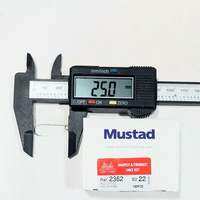
Original Mustad fish hook/sima/kawil/paminglit/saltwater or freshwater fishing hooks accessories/lure
₱175.00
Buy on Lazada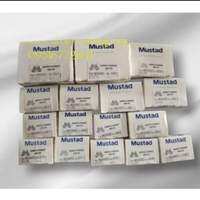
572 to 558 mustad fishing hook (1box=80pcs)
₱170.00
Buy on Lazada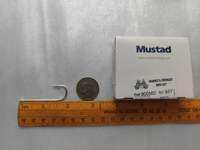
Mustad Hook | Flat Tinned Hook | Ref:900MD / 900M 557-572
₱173.00
Buy on Lazada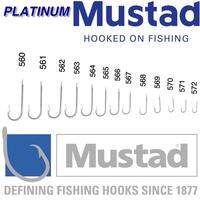
80pcs Per Box MUSTAD 560 - 572 Norway Fishing Hooks | 900MD
₱183.00
Buy on Lazada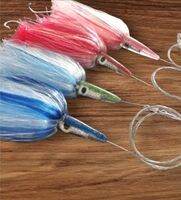
Pointed Resin Head Tangigue fish lure / wahoo lure set with hookscable and swivel
₱280.00
Buy on Lazada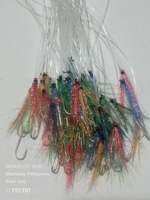
Fishing Lure Simbada o Uhayan ... Tali at Tuhog 80 pcs. per order Mustad #568569570
₱270.00
Buy on Lazada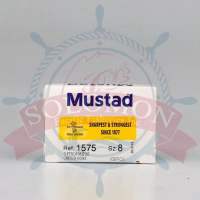
100 pcs. MUSTAD Fish Hooks Kawil - Ref: 1575D
₱200.00
Buy on LazadaAbout Mustad
Mustad is a historic Norwegian industrial brand best known today for fishing hooks and fishing tackle, although the Mustad name also maintains a significant presence in the horse-hoofcare industry. Its origins date to 1832 in Gjøvik, Norway, making it one of the country’s oldest continuously operating industrial businesses. Over nearly two centuries, the company evolved from a small producer of nails and steel wire into an internationally recognized manufacturer of metal products, fishing hooks, horseshoe nails, horseshoes, and related equipment.1
A key distinction for readers is that “Mustad” is used by more than one modern business operation. When anglers refer to Mustad, they generally mean Mustad Fishing / O. Mustad & Søn AS; in the equestrian world, Mustad refers to Mustad Hoofcare. Both entities trace their heritage to the same Norwegian industrial history.12
Mustad at a Glance
| Field | Information |
|---|---|
| Brand Name | Mustad |
| Origin | Gjøvik/Vardal, Norway |
| Founded | 1832 |
| Original Founder | Hans Schikkelstad |
| Historic Company | O. Mustad & Søn |
| Best Known For | Fishing hooks; horseshoe nails and hoofcare |
| Fishing Market | Sport fishing, traditional fishing, and industrial fishing |
| Global Reach | More than 160 countries |
| Core Reputation | Hook manufacturing, durability, innovation, and Norwegian industrial heritage |
| Modern Fishing Products | Hooks, lures, rods, line/leader, terminal tackle, tools, and apparel |
| Hoofcare Products | Horseshoes, horseshoe nails, rasps, farrier tools, and supplements |
Mustad Fishing states that one in four hooks in the world is made by Mustad and that its products are sold in more than 160 countries.1
History
1832: The Beginning
The company’s story began in 1832, when Norwegian farmer and entrepreneur Hans Schikkelstad established the Brusveen Spiger- og Staaltraadfabrikk near Gjøvik. The factory initially produced iron wire and nails. During this period, Norway had relatively limited industrial infrastructure, necessitating local manufacturing of a wide range of basic metal products.3
In 1843, Schikkelstad’s son-in-law Ole Hovelsen Mustad took over the business and renamed it O. Mustad. His son Hans Mustad later became a co-owner, and in 1874 the company was renamed O. Mustad & Søn (“O. Mustad & Son”).4
The company subsequently expanded into a diverse range of metal products, including:
- Nails
- Steel wire
- Horseshoe nails
- Fish hooks
- Shipbuilding nails
- Pins
- Paper clips
- Needles
- Tools
- Cast-iron products
This diversification was characteristic of Mustad’s early industrial development.1
The Horseshoe-Nail Revolution
Before becoming synonymous with fishing hooks, one of Mustad’s most critical products was the horseshoe nail. During the late 19th century, the company developed sophisticated machinery for automatically manufacturing horseshoe nails. This innovation greatly increased productivity and provided a significant technological advantage, helping Mustad expand beyond Norway to become a major European exporter.1
Horseshoe nails remained a primary business line for decades. Furthermore, Mustad’s expertise in wire, steel forming, and automated manufacturing created technological capabilities that would later prove essential for fish-hook production.
The Birth of the Fishing-Hook Business
The segment of Mustad’s history that established its international fame began in the 1870s, when the company started seriously developing fishing hooks. Engineers collaborated with specialists from the established British hook-making industry to refine manufacturing techniques.1
A major breakthrough occurred in 1877, when engineer Mathias Topp developed an automatic hook-making machine. This technology was revolutionary; instead of producing hooks individually through manual processes, machinery could transform steel wire into finished fishing hooks with greater efficiency. Mustad describes this technology as the foundation of its subsequent dominance in the global market.1
To protect this competitive advantage, the company reportedly went to extraordinary lengths to secure the machinery and its designs from competitors.
Global Expansion
Mustad’s growth accelerated dramatically in the late 19th and early 20th centuries. Under Hans Mustad, the organization pursued an aggressive internationalization strategy. From the 1890s through the 1920s, Mustad acquired more than 300 companies across Europe and established manufacturing operations in key markets.5
The fishing-hook business adopted a distinctly global outlook. Employees travelled internationally to study local fishing practices and identify specific hook types used by regional fishermen. The company reportedly collected more than 60,000 hooks from around the world, using this data to develop products suited to diverse environments.1 Rather than treating the fishing hook as a standardized commodity, Mustad recognized that different regions, species, and techniques required specialized designs.
Peak Production
By the 20th century, Mustad had become one of the world’s dominant fishing-hook manufacturers. The company states that it represented approximately 50% of global fishing-hook production during the 1950s.1
At its historical peak, the catalogue reportedly contained more than 105,000 different types and sizes of hooks. This extensive variety reflected the company’s international strategy and its commitment to serving local traditional fisheries alongside commercial and sport fishing sectors.1
Modern Product Portfolio
Modern Mustad Fishing offers a product range considerably broader than traditional hook manufacturing. Current categories include:1
Fishing Hooks
Hooks remain the core of the brand. Mustad currently offers:
- All-purpose hooks
- Bass hooks
- Big-game hooks
- Circle hooks
- Double hooks
- Treble hooks
- Fly hooks
- Jig hooks
- Jig heads
- Jigging assists
- Carp hooks
- Match and feeder hooks
- Hook kits
- Gaff hooks
The company also maintains specialist hook technologies and product families for specific applications.
Lures
Mustad has expanded into lure manufacturing, including:
- Metal jigs
- Hair jigs
- Soft lures
- Hard lures
- Micro-finesse baits
Fishing Line
The range includes:
- Braided line
- Fluorocarbon
- Monofilament
- Hollow-core braid
- Casting leaders
- Specialty lines
Terminal Tackle
Accessories include:
- Swivels
- Split rings
- Solid rings
- Sabikis
- Weights
- Rigs
- Snells
- Floats
Tools and Apparel
The modern brand sells fishing tools such as pliers and scissors, as well as fishing-oriented clothing and accessories including hats, shirts, hoodies, and gloves.1
Reputation and Technology
Mustad’s reputation is built on several defining characteristics relevant to both recreational and professional anglers.
Durability and Manufacturing Expertise
Fishing hooks must withstand forces significantly greater than the weight of the fish. Mustad’s historical competitive advantage stemmed from its ability to industrialize hook production, transforming it from a craft process into large-scale manufacturing with consistent steel quality and point integrity.1
Innovation and Variety
The company continues to develop hook geometries and materials for specific techniques. Notable modern product families include:
- Demon Perfect® Circle Hook
- Big Gun®
- Hoodlum® UltraNor
- Kaiju UltraNor
- KVD Elite® hooks
- Baitholder Beak
- Assault Wide Gap
- Apex Weedless Dropshot
These products cover applications ranging from delicate freshwater fly fishing to heavy saltwater big-game fishing.1
Catch-and-Release
Mustad is associated with modern conservation practices through its production of circle hooks, which are designed to reduce deep hooking. The company designs hooks around specific regulations and angler practices rather than solely focusing on strength.1
OEM Manufacturing
A significant but less visible aspect of the business is OEM manufacturing. Many lure and jig manufacturers use Mustad hooks in their own products. Consequently, the Mustad name may not always be visible to consumers even when a Mustad-made component is utilized.1
Global Organization
Mustad Fishing operates internationally with offices serving different regions:
- Gjøvik, Norway — Main European office
- Miramar, Florida, USA — Mustad Americas
- Singapore — Asia & Oceania
- Wuxi, China — East Asia
The company works with distributors and retailers globally, marketing products throughout Europe, North America, Asia, and other major fishing markets.1
Mustad Hoofcare
While often associated exclusively with fishing, the Mustad industrial heritage also exists in the hoofcare industry. Mustad Hoofcare describes itself as the world’s largest manufacturer and seller of hoofcare products, serving farriers, horse owners, and veterinarians. Its portfolio includes horseshoes, nails, rasps, tools, and supplements.2
The hoofcare division manages several brands, including:
- Mustad
- St. Croix Forge
- Heller Hoof Rasps
- Capewell
- Delta
- Derby
- Right Balance
- ComfortMix
The connection between fishing hooks and horseshoe nails is historically logical. Both products rely heavily on metal wire forming, steel processing, precision shaping, and mass-production technology. Mustad’s progression followed a clear industrial path: Steel wire → nails → horseshoe nails → automated metal forming → fishing hooks.1
Brand Philosophy
Mustad Fishing emphasizes five core values:
- Tradition: Preserving its long history in hook manufacturing.
- Innovation: Developing new products beyond historical designs.
- Sustainability: Acknowledging the environmental impact of fishing products.
- Excellence: Emphasizing manufacturing quality and detail.
- Passion: Presenting the brand as created by active participants in the sport.1
This positioning combines Norwegian industrial heritage with modern sport-fishing technology. Unlike many consumer-facing fishing brands, Mustad developed from the component manufacturing side, building its reputation on the critical importance of the hook itself. This has secured its place among commercial fishermen, tackle retailers, OEM manufacturers, and sport anglers alike.
Historical Significance
From an industrial-history perspective, Mustad represents the transformation of a small 19th-century Norwegian metalworks into a global enterprise.6
- 1832–1870s: Small Norwegian metal manufacturer producing wire and nails.
- 1870s–1890s: Expansion into horseshoe nails and fishing hooks with mechanized production.
- 1890s–1920s: Rapid international expansion and acquisition of European companies.
- 20th Century: Emergence as a dominant global hook manufacturer while maintaining hoofcare and metal-product businesses.
- Late 20th Century Onward: Reorganization of the historic industrial empire into specialized businesses.
- Today: The Mustad name remains prominent in both fishing tackle and hoofcare.6
For contemporary anglers, Mustad Fishing extends far beyond hooks to cover the complete terminal-tackle ecosystem: Hooks → Lures → Lines → Leaders → Terminal Tackle → Tools → Apparel. Nevertheless, the company continues to place fishing hooks at the center of its identity, maintaining its status as a leader in global hook manufacturing.1