Shop on Lazada
Nakamichi products
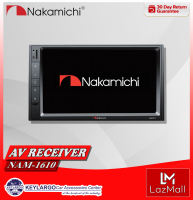
Nakamichi Head Unit 2 DIN 7″ Mechless BT
₱3,400.00₱6,000.00
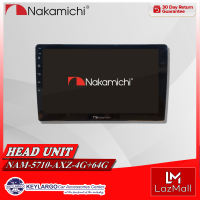
NAKAMICHI CAR HEAD UNIT 10″ 4G+64G ROCKCHIP PX5 8 CORE IPS 1280X720 5G WIFI CPAA EQ 32 360 DEGREE CAMERA READY WIFI CPAA ANTUTU 90K
₱20,000.00
Buy on Lazada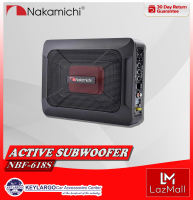
Nakamichi Subwoofer Active 6x8 100 Watts Rms Underseat Type 206mm X 195mm 72mm
₱6,740.00
Buy on Lazada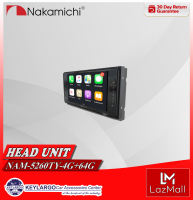
NAKAMICHI CAR HEAD UNIT 7″ TOYOTA PANEL (WITH TOYOTA WIRE HARNESS NEW) 4G+64G ROCKCHIP 4 CORE IPS 1280 X 720 5G WIFI EQ 12 360 DEGREE CAMERA READY WIFI CPAA ANTUTU 30K
₱13,900.00₱15,075.00
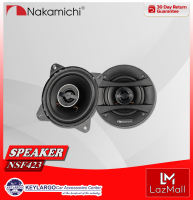
Nakamichi Speaker Coaxial 4″ 2-Way (Sold as Pair)
₱1,610.00
Buy on Lazada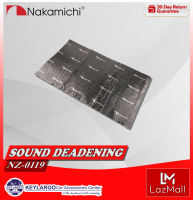
Nakamichi Sound Deadening Q-Film 82cm X 46cm/Pc NZ-0119
₱845.00
Buy on Lazada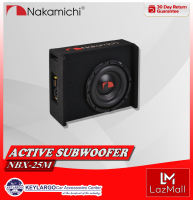
Nakamichi Speaker Subwoofer Active 10″100watts Rms Wedge Type
₱9,325.00
Buy on Lazada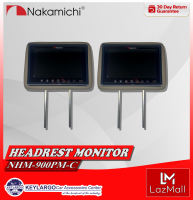
Nakamichi 9″ Car Headrest TV Monitor (Mirror Link) Without Earphone Jack (1 Pair)
₱7,890.00₱9,995.00
About Nakamichi
Overview
Nakamichi is a Japanese audio brand best known for its high-end cassette tape decks, particularly the legendary Nakamichi Dragon. Founded in Tokyo in 1948 by Etsuro Nakamichi, the company began as a research organisation focused on acoustics, electromagnetism, magnetic recording, and communications before becoming one of the most technically ambitious names in consumer audio.1
The name Nakamichi is closely associated with extracting exceptional sound quality from the Compact Cassette, a format originally regarded as inferior to open-reel tape and vinyl. During the 1970s and 1980s, Nakamichi’s engineering achievements helped establish the cassette as a legitimate high-fidelity medium.2
| Field | Information |
|---|---|
| Brand | Nakamichi |
| Japanese name | 中道 (Nakamichi) |
| Founded | 1948 |
| Founder | Etsuro Nakamichi |
| Origin | Tokyo, Japan |
| Industry | Consumer electronics / audio |
| Original specialty | Magnetic recording and audio technology |
| Best known for | High-end cassette decks |
| Famous products | 1000, 700, 1000ZXL, Dragon, CR-7, TX-1000 |
| Notable technologies | Three-head cassette decks, dual-capstan transports, manual/automatic azimuth adjustment |
| Modern identity | Audio brand with products including home audio, soundbars and wireless equipment |
Origins
Nakamichi was established in 1948 by Etsuro Nakamichi as the Nakamichi Research Corporation. Initially, it functioned more as a research laboratory than a conventional consumer-electronics manufacturer.
The company’s early work involved magnetic recording, acoustics, electromagnetism, and communications. These research activities included projects for outside companies and institutions, providing the organisation with experience in technologies that would eventually become central to its own products.3
Etsuro’s younger brother, Niro Nakamichi, later became one of the most important figures in the company’s history. Niro was particularly fascinated by the technical problems associated with magnetic tape recording and eventually drove Nakamichi toward increasingly sophisticated recording equipment.4
Early tape-recording development
During the 1950s, Nakamichi moved into the manufacture and development of reel-to-reel tape equipment, developing expertise in magnetic heads and recording mechanisms.
By the 1960s, Nakamichi was involved with Compact Cassette technology. At the time, cassette recording was primarily associated with convenience and portability rather than serious high-fidelity music reproduction. Rather than accepting the technical limitations of the cassette format, the company’s engineers attempted to solve them through extremely precise mechanical and electronic engineering. This approach became the foundation of Nakamichi’s reputation.
The cassette revolution
Nakamichi’s breakthrough came in the 1970s when it began producing sophisticated three-head cassette decks. The Nakamichi 1000, introduced in the early 1970s, became a landmark product. It used separate recording, playback, and erase heads alongside sophisticated tape-transport engineering. Contemporary accounts describe it as the first production cassette deck to employ a discrete three-head arrangement of this kind.5
This was enormously significant because a normal cassette deck had to deal with several inherent limitations:
- Extremely narrow tape tracks
- Relatively slow tape speed
- Limited tape-to-head contact
- Mechanical variations in cassette shells
- Tape-head alignment errors
- Wow and flutter
- Tape noise
- Limited high-frequency response
Nakamichi attacked these problems individually, resulting in a cassette deck that could achieve performance previously associated with much larger reel-to-reel tape machines.
Distinctive technologies
Nakamichi’s philosophy was essentially not to accept the limitations of the format but to engineer around them. Several technologies became particularly associated with the company.
Three-head design
Nakamichi separated the recording, playback, and erase functions into dedicated heads. This enabled off-tape monitoring, allowing the user to listen to the signal actually being recorded onto the tape rather than merely monitoring the incoming source.
Dual-capstan transport
Nakamichi developed sophisticated dual-capstan mechanisms to control tape tension. Instead of depending heavily on the cassette’s spring-loaded pressure pad, the deck could precisely control the tape mechanically. This improved tape-to-head contact and reduced variations in tape movement.6
Azimuth adjustment
One of the major problems with cassette playback is azimuth error, where the playback head can be slightly rotated relative to the orientation in which the tape was recorded. Even a small error can reduce high-frequency response. Nakamichi became famous for allowing extremely precise azimuth adjustment, which eventually culminated in its most famous technology: Nakamichi Automatic Azimuth Correction (NAAC).
The 1000ZXL
In the early 1980s, Nakamichi pushed the concept even further with the 1000ZXL. This was an ultra-high-end cassette deck designed to extract extraordinary performance from magnetic tape, representing the company’s philosophy at its most extreme through sophisticated electronics, precision mechanics, and extensive calibration capabilities.
The associated 1000ZXL Limited became one of the most expensive cassette decks ever produced, with contemporary pricing reaching roughly US$6,000.7 The 1000ZXL was not intended simply to be a mass-market product; it functioned as a technology demonstrator and halo product, establishing Nakamichi’s reputation while helping elevate the company’s more affordable decks.
The Nakamichi Dragon
If one product represents Nakamichi’s legendary status, it is the Nakamichi Dragon. Introduced in 1982, the Dragon became one of the most famous cassette decks in audio history.8
Its most famous feature was NAAC (Nakamichi Automatic Azimuth Correction). Instead of requiring the user to manually adjust the playback-head angle, the Dragon automatically detected the optimal azimuth and continuously adjusted the mechanism. This was a remarkable solution to one of cassette technology’s fundamental problems.
The Dragon also featured:
- Three-head architecture
- Dual-capstan tape transport
- Sophisticated motor control
- Automatic azimuth correction
- Dolby B and C noise reduction
- Playback auto-reverse
- Extremely low wow and flutter
- Extensive calibration capability
The original Dragon remained in production for approximately 11 years, until 1993,9 subsequently acquiring an almost mythical status among audiophiles and collectors.
Why the Dragon became legendary
The Dragon represented a particularly obsessive approach to engineering. While a conventional cassette deck asked how to make a deck that worked well, Nakamichi asked how close they could get an inherently compromised format to the theoretical limits of magnetic recording. This difference explains much of the brand’s reputation.
The Dragon’s combination of mechanical precision, automatic azimuth correction, and sound quality made it a reference point against which other high-end cassette decks were judged.10 Its downside was equally characteristic of Nakamichi: complexity. The Dragon’s elaborate mechanism could be expensive and difficult to repair, particularly decades later when original parts and specialist technicians became scarce.
Other notable products
Although the Dragon dominates the company’s mythology, Nakamichi produced a large number of important products.
700 series
The 700-series cassette decks helped establish Nakamichi as a serious high-fidelity manufacturer during the 1970s.
600/680 series
Models such as the 680 and 680ZX demonstrated Nakamichi’s willingness to experiment with tape speeds and sophisticated recording functions.11
ZX series
The ZX-7 and ZX-9 became particularly respected among serious cassette enthusiasts for their calibration and recording capabilities.
CR series
The later CR-7 became another highly regarded high-end cassette deck. Unlike the Dragon, it used a unidirectional transport and incorporated manual azimuth adjustment rather than the Dragon’s NAAC system.12
TX-1000
Nakamichi also applied its engineering philosophy to vinyl. The TX-1000 Computing Turntable was an extraordinary high-end turntable designed to automatically compensate for an off-centre record pressing, demonstrating that Nakamichi’s obsession was about precision audio engineering generally, not specifically cassettes.
Amplifiers and speakers
The company also produced integrated amplifiers, preamplifiers, power amplifiers, receivers, loudspeakers, turntables, CD equipment, and car audio systems. Its product portfolio therefore eventually extended far beyond cassette decks.13
Transition to digital audio
Nakamichi’s golden age coincided with the late analogue era. Unfortunately for the company, the market was changing rapidly. The Compact Disc appeared in the early 1980s, offering consumers digital audio, no tape wear during playback, very low noise, easy track access, and compact physical media.
The economic case for increasingly elaborate analogue cassette decks consequently became weaker. Nakamichi continued developing cassette technology, but by the late 1980s, the company had largely stopped advancing the high-end cassette format because the market was becoming too small to justify the development costs.14 The company also invested in newer digital formats, including Digital Audio Tape (DAT), but these efforts did not reproduce the commercial success Nakamichi had enjoyed during the cassette era.
Decline of the original company
By the 1990s, Nakamichi was facing serious financial pressure. Cassette decks were becoming a niche product while CD players and other digital technologies were becoming mainstream. The company eventually ceased manufacturing its own cassette decks in 1996. Later that decade, the Nakamichi family sold the business to Grande Holdings.15
This is an important distinction when discussing Nakamichi today: “Nakamichi” does not always mean the same corporate entity or the same type of product that existed during the company’s 1970s–1980s golden age.
Post-original company era
After the original company’s decline, the Nakamichi trademark continued to be used on various consumer-electronics products, including car audio, home audio, multimedia systems, CD equipment, compact audio systems, speakers, and wireless audio products.
Some later products were manufactured through different corporate arrangements and production partners, meaning they should not automatically be equated with the hand-engineered Japanese cassette decks of the classic era.16 This distinction is particularly important to collectors, as a 1980s Japanese Nakamichi cassette deck and a modern product carrying the Nakamichi logo can have very different corporate histories, engineering teams, and manufacturing origins.
Modern identity
The Nakamichi name remains active in consumer audio. The current brand describes itself as continuing Nakamichi’s audio heritage while expanding into wireless and portable audio technologies. Its modern product philosophy includes combining traditional audio expertise with contemporary wireless technologies.17
One modern branch of the brand also focuses heavily on home audio and soundbars, reflecting the shift from standalone Hi-Fi components toward integrated entertainment systems.21 The current brand therefore has a substantially different product landscape from the company’s classic period.
Brand philosophy
The historical Nakamichi brand can be summarised through several principles:
- Precision: Nakamichi was willing to spend enormous engineering effort correcting extremely small mechanical errors.
- Engineering over convenience: The company frequently prioritised performance over simplicity, cost, or ease of manufacture.
- Format optimisation: Rather than abandoning cassette technology because of its limitations, Nakamichi attempted to engineer around those limitations.
- Audiophile orientation: Many of its most famous products were designed for enthusiasts who were willing to pay substantially more for incremental improvements.
- Japanese craftsmanship: During its classic period, Nakamichi became strongly associated with Japanese precision manufacturing and meticulous mechanical engineering.
Cultural legacy
Nakamichi occupies an unusual position in audio history. Most consumer-electronics companies are remembered for products that sold extremely well, but Nakamichi is remembered disproportionately for products that demonstrated what was technically possible.
The Dragon is a perfect example. It was expensive, complicated, and relatively niche, but it became an icon because it represented the peak of cassette technology. Consequently, Nakamichi has developed a strong collector and enthusiast following decades after the end of its classic cassette production. The Dragon, 1000ZXL, CR-7, ZX-series decks, and other high-end models remain particularly sought after.
Place in Hi-Fi history
Nakamichi helped transform the Compact Cassette from a convenient consumer recording format into a genuinely high-fidelity medium. Its competitors included major Japanese audio companies such as Sony, Pioneer, Technics, JVC, Yamaha, Denon, TEAC, and Aiwa, as well as European high-end manufacturers such as Revox and Tandberg.
However, Nakamichi occupied a distinctive niche. While companies such as Sony were often associated with mass-market technological innovation, Nakamichi became associated with extreme optimisation and audiophile engineering.
The Nakamichi legend
The company’s reputation today is partly technical and partly cultural. Technically, Nakamichi produced genuinely remarkable machines; the 1000, 1000ZXL, and Dragon incorporated engineering solutions that were far ahead of ordinary cassette decks.
Culturally, the brand became a symbol of the golden age of Japanese Hi-Fi. For many enthusiasts, a classic Nakamichi represents a period when manufacturers competed to build the best possible physical machine, even when doing so was expensive and commercially difficult. The Dragon, in particular, has become a symbol of the absolute peak of analogue cassette engineering.20
Timeline
| Year | Event |
|---|---|
| 1948 | Etsuro Nakamichi establishes Nakamichi Research Corporation in Tokyo. |
| 1950s | Development and manufacture of magnetic recording equipment expands. |
| 1960s | Nakamichi becomes increasingly involved with Compact Cassette technology. |
| 1970s | Nakamichi establishes itself as a leading high-fidelity cassette manufacturer. |
| 1973 | The landmark Nakamichi 1000 helps redefine cassette performance. |
| Late 1970s | Advanced dual-capstan and calibration technologies become central to the product range. |
| 1981 | 1000ZXL becomes the company’s flagship cassette technology showcase. |
| 1982 | Nakamichi Dragon is introduced. |
| 1980s | Nakamichi expands into amplifiers, speakers, turntables, CD equipment and other high-end audio products. |
| 1984 | TX-1000 high-end turntable demonstrates Nakamichi’s precision-engineering philosophy beyond cassette. |
| 1986 | CR-7 joins the high-end cassette lineup. |
| Late 1980s | Digital audio increasingly undermines the high-end cassette market. |
| 1990s | Nakamichi shifts attention toward newer digital and consumer-electronics technologies. |
| 1993 | Original Dragon production ends.18 |
| 1996 | Nakamichi’s original cassette-deck manufacturing era effectively ends.19 |
| Late 1990s | Corporate ownership and use of the Nakamichi trademark change. |
| 2000s–2010s | Brand continues under new ownership/licensing arrangements across consumer electronics. |
| Today | Nakamichi remains an active audio brand, with modern home, wireless and multimedia products.20 |
References
- nakamichi.com
- History
- Nakamichi Dragon Cassette Deck | Sound & Vision
- Nakamichi History | The Legacy of Excellence in Car Audio Systems
- История – Официальный сайт бренда Nakamichi ©
- Vintage Test Report: Nakamichi Dragon Cassette Deck | Sound & Vision
- Nakamichi Dragon
- Nakamichi
- Nakamichi Dragon
- Timeline of Nakamichi cassette decks – Wikimedia Commons
- About Us – Nakamichi Car Audio Malaysia
- Nakamichi Dragon – Rebuild & Improvements | PAFT AUDIO
- Начало наследия – Официальный сайт бренда Nakamichi ©
- Материал из Википедии — свободной энциклопедии – Официальный сайт бренда Nakamichi ©
- nakamichi.com
- nakamichi.com
- О компании – Официальный сайт бренда Nakamichi ©
- Музей Nakamichi – Официальный сайт бренда Nakamichi ©
- Официальный сайт бренда Nakamichi ©
- Nakamichi | hifi-wiki.com
- About Us – Nakamichi Home Audio