Shop on Lazada
Nesti Dante products
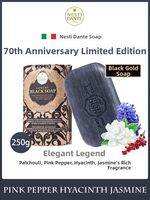
Nesti Dante | Handmade Face and Body Cleansing Soap
₱1,176.00₱1,294.00
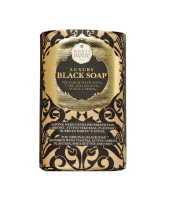
NESTI DANTE SOAP BAR 250G IL FruttetoLavandaVILLA SOLEREGINA DE PEONIE AQUA DE MARINELIMONUM ZAGARA and Philosophia made in Italy
₱785.00
Buy on Lazada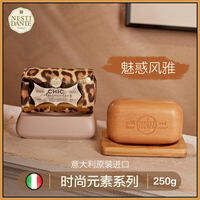
Nesti Dante | Essential Oil Handmade Soap for Face and Body Gift
₱1,073.00₱1,189.00
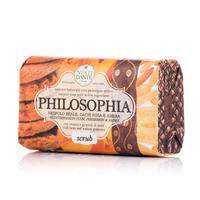
Nesti Dante | Floral Scented Handmade Bath Soap
₱937.00₱1,054.00
About Nesti Dante
Nesti Dante is an Italian manufacturer of soap and body-care products headquartered in Florence, Tuscany. The company is best known for its vegetable soaps, which are produced using traditional methods and characterised by rich fragrances. Its origins date to 1945, when founder Dante Nesti began experimenting with soap production at home; the business was formally registered with the Florence Chamber of Commerce in 1947 1.
The brand’s identity is closely tied to Florence, traditional Italian soapmaking, botanical ingredients, complex fragrance compositions, colourful packaging, and the traditional “cooked in a cauldron” manufacturing method. Nesti Dante remains a family-run business and states that all its products are manufactured in Florence, Italy 1.
Overview
| Brand | Nesti Dante |
| Company | Saponificio Nesti Dante |
| Founded | 1947 |
| Origins | Florence, Tuscany, Italy |
| Founder | Dante Nesti |
| Industry | Personal care, cosmetics, soap, fragrance |
| Best known for | Italian vegetable soaps and fragranced body-care products |
| Manufacturing | Florence, Italy |
| Ownership | Family business |
| Core philosophy | Traditional craftsmanship + modern production |
| Signature production method | Traditional cauldron/cooked soapmaking |
| Stated distribution | More than 70 countries |
| Official motto | “We work not to be the biggest, but to be the best.” |
Nesti Dante states that the brand is currently recognised in more than 70 countries.
History
The beginning: Dante Nesti
The history of Nesti Dante began in post-war Florence. According to the company’s own records, shortly after the Second World War, a young Dante Nesti set out to find meat for his family. After an unfortunate bicycle journey, he arrived at a market only to discover that the meat had sold out. A butcher, noticing his disappointment, gave him leftover animal fat and suggested he could combine it with soda to make soap.
As soap was relatively scarce in post-war Italy, Dante began experimenting at home. Using his mother’s copper washing basin, he spent days testing different formulations until he successfully produced his first solid block of soap. He initially shared this with family and friends, and demand gradually increased.
More detailed historical materials from the company place Dante’s first soapmaking activity in September 1945, when he was approximately 20 years old and working with a small 50-litre cauldron. By 1947, the enterprise had become a formally registered company in Florence. This origin story remains central to the branding of Nesti Dante, illustrating how a small post-war experiment evolved into a major Italian soap manufacturer.
From workshop to factory
The company expanded from Dante’s original small-scale operation into an industrial soap manufacturer while retaining the traditional cauldron-based process. Nesti Dante describes its current factory as a substantial production complex equipped with stainless-steel silos, cauldrons, and machinery. Official materials state a production capacity of approximately 35 tonnes of soap per day and a packaging capacity of approximately 250,000 soap bars per day.
The company’s headquarters and factory are located at Via delle Molina 39, San Donnino, Florence, Italy. This location is significant to the brand’s positioning; Nesti Dante emphasises that its soaps are made in Florence rather than being an Italian-designed label that outsources manufacturing elsewhere.
The Nesti family
Nesti Dante remains a family enterprise. The company highlights several members of the Nesti family in its current operations:
- Dante Nesti – Founder.
- Roberto Nesti – CEO and a key figure in the company’s manufacturing tradition.
- Carolina Nesti – Involved in marketing and product development.
The company describes its operations as being carried forward by the second and third generations, with later family generations also represented in its historical material 1. Roberto Nesti is particularly associated with the technical side of production; the company states that his years working around soap cauldrons led him to develop and invent machinery used in the manufacturing process. Carolina Nesti is associated with the creative and marketing aspects of the business and is credited with developing the Il Frutteto line and personally working on the design of its individual wrappers.
Production and craftsmanship
The defining characteristic of Nesti Dante is the combination of traditional soapmaking with industrial-scale production. Rather than positioning itself primarily as a modern skincare laboratory, the brand’s heritage is rooted in the European tradition of hard-milled, cooked vegetable soap. The company places particular emphasis on its traditional cauldron saponification process.
The basic process
Nesti Dante states that it begins with whole vegetable oils rather than purchasing pre-made soap noodles from other manufacturers. These oils are cooked in large cauldrons for approximately four days. The resulting soap base is then left to rest, allowing excess glycerin and impurities to separate before the usable portion is processed further.
The soap is subsequently subjected to triple milling or triple extrusion, a process intended to produce a smoother, denser, and more uniform bar 1. In simplified form, the process follows this sequence:
Vegetable oils → cauldron saponification → purification/resting → soap base → triple milling → moulding/finishing → wrapping
While considerably more labour-intensive than many continuous soap-production systems, this method is central to the concept of craftsmanship at Nesti Dante.
Identity and philosophy
The “Made in Florence” identity
While “Made in Italy” is a major component of the brand’s identity, Nesti Dante specifically emphasises Florence. The city has a long history of soapmaking and apothecary traditions. Nesti Dante connects itself to this heritage by referencing the historical Maestri Saponieri, or master soapmakers, associated with Florence during the era of the Medici. The company also points to Via dei Saponai, literally “Soapmakers’ Street,” as a surviving reminder of that tradition. Consequently, the brand’s positioning links Florence, historical soapmaking, and Italian craftsmanship directly to Nesti Dante, providing a stronger sense of place than a generic Italian cosmetics brand.
Brand philosophy
The corporate philosophy of Nesti Dante is summarised by a sentence attributed to its founder:
“We work not to be the biggest, but to be the best.”
The company uses this motto repeatedly across its communications 1. This philosophy underpins several aspects of the brand, including the emphasis on traditional manufacturing, preference for quality ingredients, long production times, attention to fragrance, elaborate packaging, family ownership, and Florence-based production. It also explains the avoidance of competing primarily on low price. Ultimately, Nesti Dante sells craftsmanship and sensory experience alongside its soap products.
Corporate identity
The brand name combines the family name Nesti with the founder’s first name, Dante. Branding frequently references Florence, Italy, traditional soapmaking, botanical ingredients, Renaissance and Tuscan visual culture, and family heritage. The recurring phrase “Made in Florence, Italy with love and care” encapsulates the desired image of the brand.
Product range
Although best known for bar soaps, Nesti Dante has expanded into a broader personal-care and home-fragrance portfolio. Current categories include:
- Traditional and classic soaps
- Liquid soaps
- Body creams
- Gift sets
- Home diffusers
- Scented candles
- Fragrances
- Other body-care products
Bar soaps remain the core of the brand.
Characteristics of the soap bars
Classic Nesti Dante bars are generally characterised by their large size, vegetable-based formulations, strong fragrance, decorative embossed surfaces, and colourful or illustrated paper wrapping. Themes are often botanical, fruity, or floral, and the products are noted for long-lasting fragrance and use. The company describes its classic soaps as natural vegetable soaps cooked in a cauldron, made with selected raw materials and triple milling. This positions the product simultaneously as a cleansing item, a fragrance object, and a small luxury or gift.
Fragrance and design
Fragrance is a primary differentiator for Nesti Dante. Instead of treating soap merely as a functional cleanser, many collections are built around specific olfactive themes inspired by Tuscan landscapes, flowers, fruits, herbs, Mediterranean ingredients, olive oil, lavender, almond, citrus, cypress, honey, grain, and botanical extracts. The official catalogue includes names such as Spigo Toscano e Verbena, Miele Germe di Grano, Mandorla & Olio d’Oliva, Lavanda, and Dei Colli Fiorentini Cipresso. This approach creates a product experience closer to Italian perfumery and bath culture than to basic commodity soap.
Packaging
Packaging is a significant element of the Nesti Dante aesthetic. The company identifies its pack design as a key characteristic distinguishing its soaps from competitors. Individual bars are often wrapped in richly illustrated paper, with designs corresponding to the specific fragrance or collection. This deliberate styling ensures the soap appears attractive even before opening, making the products suitable for gifting, guest bathrooms, and decorative display. The packaging further reinforces the Italian and Florentine identity through typography, colours, botanical imagery, and references to Tuscan culture.
Major collections
Nesti Dante has developed numerous collections rather than relying on a single flagship soap. Recognisable lines include:
- Il Frutteto – A fruit-oriented collection associated with Carolina Nesti, who conceived the original line after a course in New York.
- Dei Colli Fiorentini – A collection strongly connected to the landscapes and botanical imagery of the Florentine and Tuscan area.
- Luxury – A more upscale, fragrance-oriented range.
- Classic vegetable soaps – The traditional core range emphasising vegetable oils, cauldron cooking, and triple milling.
- Baby – Gentler products marketed for babies and children, featuring ingredients such as oat, calendula, and sweet almond in specific formulations.
These ranges evolve over time and serve as examples of the brand architecture rather than a permanent catalogue.
Ingredients and sustainability
Formulation philosophy
Nesti Dante emphasises the use of whole vegetable oils from sustainable and renewable cultivation. The company states that its traditional soaps are formulated without mineral oils, parabens, synthetic surfactants, EDTA, or animal-derived ingredients, and describes its soaps as vegan-friendly 1. Raw materials are selected to a high standard, with some vegetable oils reportedly of a quality suitable for food-industry applications.
It is important to distinguish terms such as “natural,” “vegetable,” and “vegan” from organic certification; these terms are not interchangeable, and formulations may vary. Consumers should consult the specific ingredient list for each product.
Sustainability initiatives
Sustainability has become an increasingly important part of the corporate identity. Reported measures include the introduction of solar panels from 2018, increased use of LED lighting, steam-based soap preparation, water recovery and reuse, plastic-free packaging claims, and the use of renewable or sustainably sourced raw materials. Notably, soap trimmings are returned to the cauldron and reprocessed rather than discarded 1. The company also states that it received a Green Cosmoprof award in 2012 and describes its manufacturing operation as environmentally focused.
Cruelty-free and vegan positioning
Official materials describe Nesti Dante soaps as vegan-friendly and free from ingredients of animal origin. Candles are also described as vegan and cruelty-free, using vegetable waxes and cotton wicks. However, consumers concerned about strict certification should distinguish between the company’s own claims and certification by independent organisations.
Market position and international presence
Position in the soap market
Nesti Dante occupies a distinct position between several categories. It functions as a traditional soapmaker due to its cauldron-based production and history; an Italian luxury and gift brand due to its packaging and presentation; a mass-production manufacturer due to the industrial scale of its Florence facility; a natural personal-care brand due to its emphasis on vegetable oils; and a fragrance brand due to the centrality of scent in its collections. Its identity sits between industrial manufacturing and traditional Florentine soap craftsmanship.
Compared to conventional mass-market soap designed around cleansing, price, and consistency, Nesti Dante prioritises fragrance, aesthetics, ingredients, traditional production, Italian heritage, and gifting. The differentiation lies primarily in the overall sensory and craftsmanship experience.
International presence
Despite its strong Florentine identity, Nesti Dante maintains an international customer base, stating its products are known in more than 70 countries. Products have appeared internationally through retailers and luxury-oriented stores, with media highlighting presence at locations such as Eataly New York and coverage in publications including British Vogue. This international reach exports a specific vision of Italian bath culture and Florentine craftsmanship.
Nesti Dante today
Today, Nesti Dante is a family-owned Florentine personal-care company whose flagship expertise remains traditional vegetable soap. While it has evolved significantly from its original 1940s workshop, the company deliberately preserves its historical narrative. Its factory combines traditional cauldron saponification with modern industrial equipment, and the brand has expanded into liquid soaps, creams, candles, diffusers, fragrances, and gift collections 1. The result is a brand occupying a distinctive niche defined by Italian heritage, traditional soapmaking, fragrance, decorative design, and modern sustainability.