Shop on Lazada
Netgear products
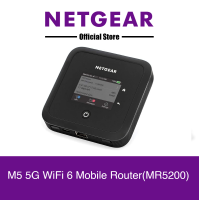
Nighthawk M5 5G WiFi 6 Mobile Router(MR5200)
₱46,800.00₱86,940.00
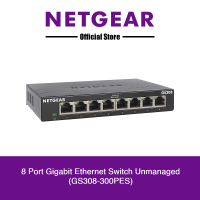
8 Port Gigabit Ethernet Switch Unmanaged (GS308-300PES)
₱2,080.00₱2,465.00
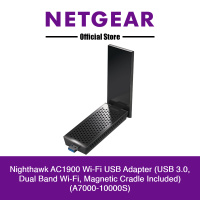
Nighthawk AC1900 Wi-Fi USB Adapter (USB 3.0 Dual Band Wi-Fi Magnetic Cradle Included)(A7000-100PES)
₱4,901.00
Buy on Lazada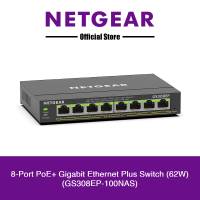
8-Port PoE+ Gigabit Ethernet Plus Switch (62W)(GS308EP-100NAS)
₱6,020.00₱8,430.00
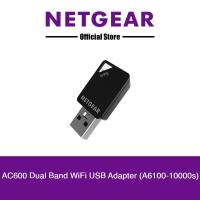
AC600 Dual Band WiFi USB Adapter (A6100-10000s)
₱2,430.00
Buy on Lazada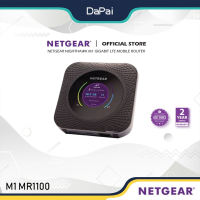
NETGEAR Nighthawk M1 MR1100 Mobile Hotspot 4G Router Mifi Portable Wi-Fi for Travel
₱5,999.00₱9,990.00
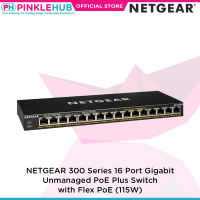
PinkleHub | NETGEAR 300 Series 16 Port Gigabit Unmanaged PoE Plus Switch with Flex PoE (115W) (GS316P-100NAS)
₱20,000.00₱21,250.00
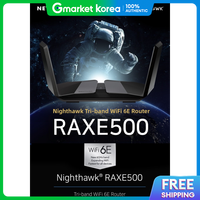
NETGEAR | Sandol Raxe500 Nighthawk Tri-Band Wifi 6E Router Raxe500
₱41,575.74₱63,586.43
About Netgear
NETGEAR, Inc. is an American networking technology company best known for producing Wi-Fi routers, mesh Wi-Fi systems, Ethernet switches, wireless access points, mobile hotspots, network security products, and business networking equipment. Founded in 1996, the company has grown from a manufacturer of basic Ethernet hardware into a global brand serving consumers, small and medium-sized businesses (SMBs), professional audio/video (ProAV) users, and service providers.1
Its major consumer brands and product families include Nighthawk, Orbi, and NETGEAR Armor, while its business portfolio comprises NETGEAR Insight, NETGEAR AV, switches, access points, and cloud-managed networking products.2
Company overview
| Item | Information |
|---|---|
| Company name | NETGEAR, Inc. |
| Brand | NETGEAR |
| Founded | 1996 |
| Headquarters | San Jose, California, United States |
| Industry | Networking technology / Computer networking |
| Stock ticker | NASDAQ: NTGR |
| Main markets | Consumer, Business/SMB, ProAV, Service Providers |
| Major products | Routers, Mesh Wi-Fi, Switches, Access Points, Mobile Hotspots, Security Software |
| Major brands | Nighthawk, Orbi, NETGEAR Armor, NETGEAR Insight |
| CEO | Charles “CJ” Prober |
| Current focus | Wi-Fi, Networking, Cloud Management, Security, SMB Networking, ProAV |
NETGEAR’s current CEO is Charles (CJ) Prober, who assumed the role of CEO and board member in January 2024.3
The company describes its mission as “unleash the full potential of connectivity with intelligent solutions that delight and protect,” with a stated purpose “to power extraordinary experiences.”4
History
Origins
NETGEAR traces its origins to 1996, when it was established to address the growing small-office/home-office (SOHO) networking market. Early products focused on making Ethernet networking equipment accessible to smaller organizations and individual consumers.5
One of its earliest significant products was the EN308 Ethernet hub, which the company cites as a foundational milestone in its history. NETGEAR subsequently expanded its lineup to include Ethernet switches and other networking peripherals.6
Expansion into home networking
As broadband internet adoption increased globally, NETGEAR moved beyond wired Ethernet into consumer internet gateways and wireless routers. The MR814 became one of the company’s early wireless routers, followed by models such as the WGR614, which helped bring Wi-Fi networking into mainstream households.7
This transition marked a strategic shift where networking evolved from a primarily corporate IT function to a standard household utility.
Gigabit Wi-Fi and performance networking
NETGEAR continued to develop higher-performance wireless networking solutions. The company identifies the R6300 as an early milestone in its next-generation wireless products, leading to subsequent releases aimed at demanding users.8
This evolution eventually resulted in one of NETGEAR’s most recognizable product families: Nighthawk.
Nighthawk
Nighthawk is one of NETGEAR’s most prominent consumer networking brands. The initial Nighthawk products were designed around the concept of a high-performance home router, specifically targeting users with demanding requirements such as:
- Gaming
- 4K/8K streaming
- Large numbers of connected devices
- High-speed broadband
- Home offices
- Network storage
- Low-latency applications
The Nighthawk R7000 holds particular significance in the brand’s history. NETGEAR describes it as the product that established Nighthawk as a premium, high-performance networking line.9
Today, the Nighthawk family includes modern Wi-Fi products, including Wi-Fi 7 routers.
Orbi and mesh Wi-Fi
A significant innovation in NETGEAR’s consumer networking portfolio was Orbi. Traditional Wi-Fi routers typically rely on a single wireless access point, which can result in weak-signal areas or “dead zones” in larger homes or buildings. Mesh Wi-Fi addresses this by using multiple coordinated network nodes.
NETGEAR introduced Orbi as its mesh networking system to provide seamless coverage throughout a home. The original Orbi RBK50 is described as a major milestone in the development of the company’s home Wi-Fi business.10
The Orbi family has since evolved to include higher-performance systems featuring Wi-Fi 6 and Wi-Fi 7 technologies. NETGEAR currently positions Orbi as its premium whole-home Wi-Fi solution, while Nighthawk remains strongly associated with high-performance individual routers and networking hardware.11
Major product categories
Routers
Routers are the product category most strongly associated with NETGEAR. A NETGEAR router typically provides internet gateway functionality, Wi-Fi, Ethernet connectivity, firewall protection, parental controls, device management, network monitoring, and security features. The company currently offers routers across multiple performance tiers, including Wi-Fi 7 models.12
Mesh Wi-Fi
NETGEAR’s Orbi systems are designed for whole-home wireless coverage. Instead of relying on a single router, a typical mesh system follows an architecture of Internet → main router → satellite nodes → connected devices. These nodes communicate with one another to provide consistent Wi-Fi coverage across larger spaces.
Ethernet switches
Switches remain a foundational part of NETGEAR’s business. An Ethernet switch allows multiple wired devices to communicate on the same local network. NETGEAR manufactures switches for home users, small offices, businesses, professional AV installations, and high-speed networks. Given the company’s origins in wired networking hardware, switching is one of its longest-running product categories.13
Wireless access points
NETGEAR produces dedicated wireless access points (APs). Unlike conventional consumer routers, access points are designed primarily to provide wireless connectivity as part of existing network infrastructure. This is particularly relevant for offices, schools, hotels, retail locations, warehouses, and commercial buildings.
Mobile hotspots
NETGEAR has developed mobile broadband and 5G hotspots that use cellular networks rather than fixed broadband to provide internet access over Wi-Fi. The current portfolio includes the Nighthawk M7 mobile hotspot, marketed for portable high-speed connectivity.14
Business networking
While widely recognized in the consumer market, NETGEAR is also heavily involved in business networking. Its business products primarily target small and medium-sized enterprises (SMEs) rather than competing exclusively in complex enterprise environments. The portfolio includes managed switches, smart switches, wireless access points, routers, cloud-managed networking, network monitoring, security, and AV-over-IP equipment.
NETGEAR emphasizes a combination of performance, ease of deployment, scalability, and simplified management for business customers.
NETGEAR Insight
NETGEAR Insight is the company’s cloud-based management platform for compatible business networking products. Rather than configuring each network device independently, administrators can use Insight for centralized visibility and management.
This platform represents a strategic shift where networking is treated not merely as hardware but as a combination of hardware, software, cloud management, and security. NETGEAR identifies Insight as a key milestone in bringing cloud-based network management to SMB customers.15
ProAV and AV over IP
An increasingly important segment for NETGEAR is ProAV (professional audio/video networking). Modern professional environments frequently transmit video and audio through IP networks rather than dedicated point-to-point cabling, a method known as AV over IP.
NETGEAR has developed specialized switches and software for broadcast facilities, corporate AV, live events, education, hospitality, professional production, and entertainment venues. The M4250 and M4300 families are examples of networking platforms designed around professional AV requirements. NETGEAR describes the M4300 series as an important step in its AV-over-IP strategy.16
By 2026, the company was also emphasizing software-defined and cloud-managed approaches to professional AV networking.17
Security
Networking hardware is increasingly integrated with cybersecurity. NETGEAR incorporates security into both its hardware and software ecosystem. One notable product is NETGEAR Armor, a security service designed to provide additional protection for connected devices and networks.
Security-related features across NETGEAR products may include firmware updates, security patches, network monitoring, device protection, threat detection, parental controls, and secure remote management.
NETGEAR maintains an End of Service (EOS) policy. Once a product reaches EOS, it no longer receives firmware or security updates. The company states that EOS generally occurs approximately three years after the last sale date, although the exact lifecycle varies by product and region.18 This is a critical consideration when acquiring older networking equipment.
Wi-Fi technology
NETGEAR has historically positioned itself near the high-performance end of consumer Wi-Fi. Its product evolution broadly tracks the development of Wi-Fi standards: 802.11g → 802.11n → 802.11ac → Wi-Fi 6 → Wi-Fi 6E → Wi-Fi 7.
The company’s newer portfolio increasingly emphasizes Wi-Fi 7, which is designed to improve throughput, latency, channel utilization, and performance in environments with many connected devices. NETGEAR’s 2026 product portfolio includes Wi-Fi 7 products for both consumer and business environments.19
Brand architecture
NETGEAR operates as an umbrella brand with several distinct product identities:
- NETGEAR: The overall corporate and networking brand.
- Nighthawk: Performance-oriented consumer networking, particularly routers and mobile connectivity.
- Orbi: Whole-home mesh Wi-Fi.
- NETGEAR Armor: Security and network-protection services.
- NETGEAR Insight: Cloud-based management for business networking.
- NETGEAR Enterprise: Networking products aimed at businesses and organizations.
- NETGEAR AV / ProAV: Professional audio/video networking and AV-over-IP infrastructure.
This portfolio structure allows NETGEAR to serve markets well beyond the traditional home Wi-Fi router segment.20
Market positioning
NETGEAR generally occupies a position between inexpensive consumer networking equipment and highly specialized enterprise infrastructure.
| Market | NETGEAR’s Role |
|---|---|
| Basic home networking | Strong |
| Premium home Wi-Fi | Very strong |
| Gaming networking | Strong |
| Mesh Wi-Fi | Major focus through Orbi |
| Small-business networking | Major focus |
| Enterprise networking | Selective |
| Professional AV networking | Major growth area |
| Mobile broadband | Established |
| Network security | Integrated into ecosystem |
Its competitive identity is strongly associated with performance, relatively accessible configuration, and a broad product range.
Competitors
NETGEAR competes with numerous companies depending on the product category.
Consumer networking
Major competitors include TP-Link, ASUS, Linksys, eero, and Google.
Business networking
Depending on the segment, NETGEAR also competes with companies such as Cisco, Ubiquiti, Aruba Networks, and HPE. The competitive landscape differs significantly between entry-level home routers and professional AV-over-IP switching installations.
Corporate development
NETGEAR became a publicly traded company in 2003, listing under the ticker NTGR on the Nasdaq.21
Over subsequent decades, its strategy expanded from basic networking hardware toward higher-value networking platforms. Major strategic stages include:
- 1990s: Ethernet hubs, switches, and basic networking.
- 2000s: Broadband routers and mainstream consumer Wi-Fi.
- 2010s: High-performance Wi-Fi, Nighthawk, cloud management, and Orbi mesh.
- 2020s: Wi-Fi 6/7, network security, SMB cloud management, ProAV, and higher-speed networking.
- 2026: Increasing emphasis on Wi-Fi 7, enterprise/SMB networking, professional AV, software-defined networking, and intelligent connectivity.22
NETGEAR filed its 2025 annual report with the SEC in February 2026, providing the company’s most recent full-year corporate reporting.14
Leadership
As of 2026, Charles “CJ” Prober serves as NETGEAR’s CEO and director. He assumed the CEO position in January 2024, succeeding longtime CEO Patrick Lo.23
Other senior leadership includes Bryan Murray, Chief Financial Officer, and Pramod Badjate, who leads NETGEAR’s business products organization.14
The leadership transition marked a new phase for NETGEAR following many years under Patrick Lo, one of the company’s key historical figures.
Key associations
When referencing NETGEAR, the following elements are most commonly associated with the brand:
- Wi-Fi routers: Arguably the company’s most recognizable product category.
- Nighthawk: High-performance routers and networking products.
- Orbi: Whole-home mesh Wi-Fi.
- Ethernet switches: A product category dating back to the company’s earliest years.
- Business networking: Especially SMB-oriented switches, access points, and management solutions.
- Wi-Fi innovation: Consistent pursuit of newer generations of high-speed wireless technology.
- Professional AV networking: An increasingly important part of its modern business.
- Network security: Including Armor and security-related firmware/software capabilities.
Strengths and weaknesses
Strengths
- Broad product portfolio: NETGEAR provides solutions ranging from simple home routers to sophisticated business and AV networking equipment.
- Strong consumer brand recognition: Nighthawk and Orbi are particularly well-known.
- High-performance products: The company frequently targets the upper end of consumer Wi-Fi performance.
- Long networking experience: Its history extends back to the early commercial internet and SOHO networking era.
- Strong SMB presence: Products aim to deliver sophisticated networking to smaller organizations without traditional enterprise complexity.
- ProAV specialization: Investment in AV-over-IP differentiates it from many traditional consumer Wi-Fi brands.24
Weaknesses and considerations
- Product complexity: The extensive portfolio can make choosing between routers, mesh systems, extenders, and access points confusing.
- Premium pricing: Higher-end products cost substantially more than basic networking equipment.
- Software/service dependence: Some advanced functionality relies on software or subscription services.
- Product lifecycle: Older products eventually reach End of Service and stop receiving security updates, making the purchase of aged hardware potentially problematic.25
- Strong competition: TP-Link, ASUS, Ubiquiti, eero, Cisco, and HPE/Aruba compete aggressively across various market segments.
NETGEAR in 2026
Having been founded in 1996, NETGEAR marked its 30th anniversary in 2026. The company used this milestone to highlight its evolution from Ethernet equipment to modern Wi-Fi, ProAV, and intelligent networking platforms.3
Current strategy extends beyond selling routers to focus on intelligent connectivity, combining networking hardware with software, cloud management, security, and specialized solutions. Major contemporary themes include Wi-Fi 7, high-speed home networking, Orbi mesh, Nighthawk, SMB networking, cloud-managed networking, AV over IP, professional networking, network security, and 5G/mobile connectivity.
NETGEAR’s 2026 materials describe continued investment in enterprise/SMB networking and the convergence of IT, AV, and broadcast networking.16
References
- What is NETGEAR | Company Info | NETGEAR
- NETGEAR, Inc. – Investor Relations
- NETGEAR Celebrates 30 Years of Innovation and Connection
- NETGEAR: Advanced WiFi & Networking
- MANAGEMENT | NETGEAR
- NETGEAR, Inc. – Investor Relations
- Netgear
- NETGEAR Home Networking Solutions | Smart WiFi for Your Connected Life
- NETGEAR Blog – Your Home For Tech News & Info
- NETGEAR Enterprise: Powering Extraordinary Experiences for a New Era of Connectivity – NETGEAR Blog
- NETGEAR End of Service | NETGEAR
- NETGEAR End of Service | NETGEAR
- Official NETGEAR and NETGEAR Sub-brand Logos – NETGEAR Pressroom
- NETGEAR, Inc. – Financials – SEC Filings – SEC Filings Details
- NETGEAR, Inc. – Financials – SEC Filings – SEC Filings Details
- NETGEAR, Inc. – NETGEAR® Reports Fourth Quarter and Full Year 2025 Results
- NETGEAR, Inc. – NETGEAR to Host Investor Day on November 17, 2025
- NETGEAR, Inc. – NETGEAR to Host Investor Day on November 17, 2025
- NETGEAR, Inc. – NETGEAR Appoints Jonathan Oakes to Lead Home Networking
- NETGEAR, Inc. – Financials – SEC Filings – SEC Filings Details
- NETGEAR, Inc. – Financials – SEC Filings – SEC Filings Details
- What is NETGEAR | Company Info | NETGEAR
- NETGEAR, Inc. – Investor Relations
- NETGEAR, Inc. – Investor Relations
- NETGEAR, Inc. – Resources – Information Request Form