Shop on Lazada
NISSHINBO products
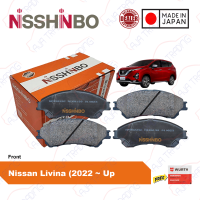
Genuine Nisshinbo Front Brake Pads for Nissan Livina (2022 - Up)
₱1,849.00₱2,375.00
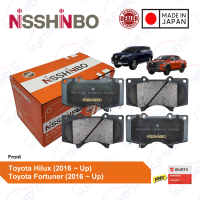
Genuine Nisshinbo Front Brake Pads for Toyota Hilux (2016 - Up) Toyota Fortuner (2016 - Up)
₱1,999.00₱2,575.00
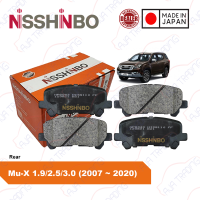
Genuine Nisshinbo Rear Brake Pads for Isuzu Mu-X 1.9/2.5/3.0 (2007 - 2020)
₱1,600.00₱2,100.00
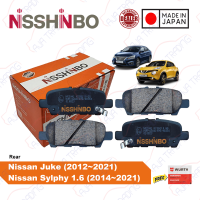
Genuine Nisshinbo Rear Brake Pads for Nissan Sylphy 1.6 (2014 - 2021) Nissan Juke (2012 - 2021)
₱1,549.00₱1,999.00
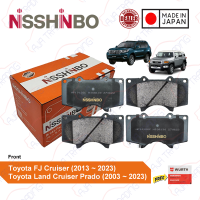
Genuine Nisshinbo Front Brake Pads for Toyota FJ Cruiser (2013-2023) Toyota Land Cruiser Prado (2003-2023)
₱1,999.00₱2,575.00
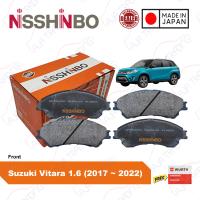
Genuine Nisshinbo Front Brake Pads for Suzuki Vitara 1.6 (2017 - 2022)
₱1,849.00₱2,375.00
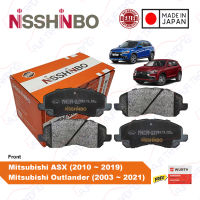
Genuine Nisshinbo Front Brake Pads for Mitsubishi ASX (2010-2019) Mitsubishi Outlander (2003-2021)
₱1,849.00₱2,375.00
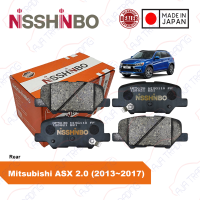
Genuine Nisshinbo Rear Brake Pads for Mitsubishi ASX 2.0 (2013 - 2017)
₱1,700.00₱2,245.00
About NISSHINBO
NISSHINBO (日清紡, Nisshinbō) is a Japanese industrial group with origins dating back to 1907, when it was established as Nisshin Cotton Spinning Co., Ltd. Over more than a century, the organisation has evolved from a textile manufacturer into a diversified technology and manufacturing conglomerate. Its current business portfolio spans wireless communications, electronic and microdevices, automotive brakes, mechatronics, chemicals, textiles, and real estate.1
The group is anchored by Nisshinbo Holdings Inc., which is headquartered in Nihonbashi, Tokyo. The company defines its strategic direction as an “Environment and Energy Company group,” leveraging its accumulated technological capabilities to address environmental and social challenges.2
Basic Information
| Item | Details |
|---|---|
| Name | Nisshinbo Holdings Inc. |
| Japanese Name | 日清紡ホールディングス株式会社 |
| Brand / Group Name | NISSHINBO / Nisshinbo Group |
| Founded | February 5, 1907 |
| Original Company | Nisshin Cotton Spinning Co., Ltd. |
| Headquarters | Nihonbashi, Chuo-ku, Tokyo, Japan |
| Paid-in Capital | ¥27.841 billion (as of May 20, 2025) |
| Employees | 17,811 consolidated (as of December 31, 2025) |
| President | Yasuji Ishii |
| Major Businesses | Wireless communications, microdevices, automobile brakes, mechatronics, chemicals, textiles, real estate |
| Corporate Structure | Holding company |
| Holding Company Established | 2009 |
Data sourced from the corporate profile of Nisshinbo.3
Corporate Identity and Strategic Domains
Although the name NISSHINBO derives from its historical identity as a spinning company, the modern Nisshinbo Group is a large, diversified Japanese corporate entity rather than solely a textile brand. Over successive decades, its business focus has shifted progressively towards electronics, communications, automotive technology, precision machinery, chemicals, and other industrial sectors.
The group currently organises its portfolio around three strategic domains:
- Mobility
- Infrastructure and Safety
- Life and Healthcare
Across these domains, the group emphasises core technologies including sensing, wireless communications, information processing, electronic devices, and advanced materials.4
The evolution of the group’s business can be characterised as a transition from cotton spinning to textiles, industrial materials, automotive components, mechatronics, electronics, and finally to wireless communications and microdevices.
Foundation and Early History
NISSHINBO was founded on February 5, 1907, during the period of rapid industrialisation following the Meiji Restoration. The original entity, Nisshin Cotton Spinning Co., Ltd., was established with the objective of mass-producing high-quality cotton yarn.
According to corporate records, the company was established by 76 sponsors, including prominent figures from the Japanese financial community. It introduced advanced spinning machinery with the specific ambition of competing directly with high-quality imported cotton yarn.5 This textile heritage remained fundamental to the company’s identity for much of the 20th century.
Diversification Beyond Textiles
Following World War II, NISSHINBO gradually diversified its operations. Rather than remaining exclusively a textile manufacturer, the company developed businesses in several new areas, including:
- Automobile brake friction materials
- Chemicals
- Precision machinery
- Mechatronics
- Electronics
- Communications equipment
- Industrial materials
This diversification became increasingly significant as the Japanese economy evolved and the relative importance of traditional textile manufacturing declined. For instance, the brake business commenced production of brake linings in 1946, marking the beginning of the company’s expansion into other industrial technologies.6
The company’s English name has changed to reflect this evolution:
- 1907: Nisshin Cotton Spinning Co., Ltd.
- 1962: Nisshin Spinning Co., Ltd.
- 1984: Nisshinbo Industries, Inc.
- 2009: Nisshinbo Holdings Inc.7
Transition to Holding Company Structure
A pivotal event in the history of NISSHINBO occurred in 2009, when Nisshinbo Industries reorganised into a holding-company structure. Five major business units were spun off into separate operating companies:
- Textiles
- Automobile brakes
- Papers
- Mechatronics
- Chemicals
The parent entity was renamed Nisshinbo Holdings Inc.8 This restructuring was designed to grant individual businesses greater autonomy and enable faster responses to market changes. Consequently, a distinction exists between Nisshinbo Holdings (the corporate holding company) and the Nisshinbo Group (the wider collection of operating companies).
Major Business Areas
Wireless Communications
Wireless communications constitutes one of the primary technology fields for NISSHINBO today. Through companies such as Japan Radio Co., Ltd. (JRC) and other group affiliates, the group provides communications and information systems for applications including:
- Marine communications
- Radar and navigation
- Infrastructure communications
- Disaster-prevention systems
- Sensing and information systems
This sector represents a significant departure from the group’s textile origins. The group has further strengthened its wireless and communications portfolio through acquisitions and organisational integration.9
Microdevices and Semiconductors
Nisshinbo Micro Devices Inc. is another key component of the modern business. Established in 2022 through the integration of New Japan Radio Co., Ltd. and Ricoh Electronic Devices Co., Ltd., this company develops electronic components and semiconductor-related products.
Its portfolio covers analog semiconductor devices, sensors, power management, signal processing, electronic components, and automotive electronics. The development of this business exemplifies the transition of NISSHINBO from a traditional manufacturer to an advanced electronics enterprise.10
Automotive Brakes
Automotive brakes remain a core segment of the Nisshinbo Group. The business focuses on the development and manufacture of friction materials for automobiles and transportation equipment. Historically, this was one of the most significant diversification moves away from textiles, and current corporate disclosures identify automobile and transportation-equipment friction materials as a core business.11
The group maintains an international automotive presence with operations in Japan, Thailand, China, South Korea, Indonesia, and the United States. Notable milestones include the establishment of Nisshinbo Somboon Automotive in Thailand in 1996 and Saeron Automotive in South Korea in 1999.12
Mechatronics
The mechatronics business combines mechanical engineering, electronics, and control technologies. Originating from the company’s historical expansion into machinery and precision equipment, modern applications include precision machinery, manufacturing equipment, industrial machinery, control technologies, and specialised production equipment.
Chemicals
NISSHINBO maintains a long-standing chemicals business rooted in technologies developed within the group. Key products include resins, foams, carbon-related materials, and other advanced industrial materials. The group has particularly explored materials relevant to environmental and energy applications, complementing its electronics, automotive, and industrial operations.13
Textiles
Despite extensive diversification, textiles remain integral to the identity of NISSHINBO. The modern textile business is operated principally through Nisshinbo Textile Inc., which was established as a separate entity in 2009. Activities encompass yarn, weaving, knitting, fabrics, clothing, industrial textile materials, and textile processing.14
Nisshinbo Textile traces its lineage directly to the original 1907 cotton-spinning company. The company has also developed functional textile products, including antimicrobial and odour-resistant fabrics, high-function nonwoven materials, and products associated with Japan’s Cool Biz movement.15
Real Estate
Real estate forms part of the diversified portfolio of NISSHINBO. The company entered urban development relatively early in its diversification history by establishing Nisshinbo Urban Development Co., Ltd. in 1995.16 While less technologically prominent than its electronics or communications divisions, this segment contributes to the group’s overall business mix.
Acquisitions and Corporate Developments
The transformation of NISSHINBO has been driven by numerous acquisitions and integrations. Significant milestones include:
2005–2006: Electronics Expansion
NISSHINBO increased its involvement with New Japan Radio and Japan Radio, thereby strengthening its electronics and communications businesses.17
2011: TMD Friction
The group acquired all shares of TMD Friction Group S.A. to expand its international automotive-friction business. All shares in TMD were subsequently transferred in 2023.18
2017: Japan Radio
NISSHINBO acquired all shares of Japan Radio Co., Ltd., further consolidating the group’s communications business.19
2018: Ricoh Electronic Devices and New Japan Radio
Ricoh Electronic Devices was added as a consolidated subsidiary, and all shares of New Japan Radio were acquired.20
2022: Nisshinbo Micro Devices
New Japan Radio and Ricoh Electronic Devices were integrated to form Nisshinbo Micro Devices Inc.21
2023: Hitachi Kokusai Electric
Hitachi Kokusai Electric was added as a consolidated subsidiary; the company was renamed KOKUSAI DENKI Electric Inc. in 2024.22
2026: JRC Mobility
JRC Mobility Co., Ltd. was merged into Japan Radio Co., Ltd. in 2026.23
Corporate Philosophy
The corporate philosophy of NISSHINBO is stated as:
“Change and Challenge! For the creation of the future of Earth and People.”
The group emphasises that a company is a public entity with a responsibility to contribute to society. Its business philosophy centres on creating a sustainable society and addressing global environmental problems through technology.24
Current strategic vision is closely linked to environmental sustainability, energy, smart society, sensing, wireless communication, information processing, and technological innovation.
Environment and Energy Strategy
NISSHINBO positions itself as an “Environment and Energy Company” by connecting its diverse business units through technologies that address environmental and social issues. Although the portfolio includes seemingly disparate sectors such as textiles, brakes, semiconductors, radio, chemicals, and machinery, the strategy integrates them as follows:
- Sensors, information, and communications combine to create intelligent systems for safer and more efficient infrastructure.
- Electronic devices and automotive technologies integrate to enhance mobility efficiency.
- Advanced materials and chemicals are applied to energy and environmental solutions.
Consequently, the company presents itself not merely as a manufacturer but as a technology group providing solutions to environmental and infrastructure challenges.25
Global Presence
While NISSHINBO is Japanese in origin and headquartered in Tokyo, its operations are international. Historical expansion has included companies and manufacturing facilities in Brazil, Thailand, China, Indonesia, South Korea, the United States, Singapore, and various European markets.
For example, the group established its Brazilian textile operation in 1972, entered Thailand in the 1980s and 1990s, and subsequently expanded automotive, textile, electronics, and communications activities across Asia and other regions.26
Evolution of Business Identity
| Period | Main Identity |
|---|---|
| 1907–1945 | Cotton spinning / textile manufacturer |
| 1945–1960s | Textiles + beginning of industrial diversification |
| 1960s–1980s | Textiles + brakes + industrial materials |
| 1980s–1990s | Diversified industrial manufacturer |
| 1990s–2000s | Automotive, machinery, chemicals and electronics expansion |
| 2009 | Transformation into Nisshinbo Holdings |
| 2010s | Major expansion into communications and electronics |
| 2020s | Increasing focus on wireless communications, microdevices, sensing and technology |
| Today | Diversified Japanese technology/manufacturing group focused on environment, energy, mobility, infrastructure and healthcare |
Current Group Structure
The modern Nisshinbo Group comprises several key entities, although the exact structure evolves as subsidiaries are reorganised, merged, or transferred:27
- Nisshinbo Holdings Inc. – Holding company
- Japan Radio Co., Ltd. – Wireless communications
- Nisshinbo Micro Devices Inc. – Electronic and microdevice technologies
- KOKUSAI DENKI Electric Inc. – Electronics and communications-related technology
- Nisshinbo Brake Inc. – Automotive friction materials
- Nisshinbo Mechatronics Inc. – Mechatronics and precision machinery
- Nisshinbo Chemical Inc. – Chemicals and materials
- Nisshinbo Textile Inc. – Textiles and industrial materials
- NISSHINTOA IWAO INC. – Trading and business activities
- D-CLUE Technologies Co., Ltd. – Technology-related business
Summary
NISSHINBO (Japanese: 日清紡, Nisshinbō) is a diversified Japanese industrial group headquartered in Tokyo. Founded in 1907 as Nisshin Cotton Spinning Co., Ltd. to manufacture high-quality cotton yarn, the company diversified throughout the 20th century into automobile brakes, chemicals, precision machinery, mechatronics, and electronics. In 2009, it reorganised as a holding company under the name Nisshinbo Holdings Inc.28
During the 2010s and 2020s, the group expanded significantly into wireless communications and electronic devices, notably through Japan Radio, New Japan Radio, and Ricoh Electronic Devices. In 2022, New Japan Radio and Ricoh Electronic Devices were integrated into Nisshinbo Micro Devices, and the group subsequently added KOKUSAI DENKI Electric to its consolidated entities.29
As of 2026, NISSHINBO describes itself as an Environment and Energy Company group, with businesses organised around wireless communications, microdevices, automobile brakes, mechatronics, chemicals, textiles, and real estate. Its broader strategic domains are Mobility, Infrastructure and Safety, and Life and Healthcare.30
References
- History | Corporate Profile | Group Overview | Nisshinbo Holdings Inc. Website
- Corporate Profile | Group Overview | Nisshinbo Holdings Inc. Website
- Group Overview | Nisshinbo Holdings Inc. Website
- Value-Creation Process | Sustainability Management | Sustainability | Nisshinbo Holdings Inc. Website
- Transition of Business Portfolio | Group Overview | Nisshinbo Holdings Inc. Website
- 日清紡のあゆみ |日清紡ホールディングス株式会社 採用情報
- Nisshinbo Holdings Inc.
- Integrated Report 2025
- 会社概要 |グループ概要|日清紡ホールディングスホームページ
- Brief History | About Us | Nisshinbo Chemical Inc.
- Company Outline | About Us | Nisshinbo Textile Inc.
- Brief History | About Us | Nisshinbo Textile Inc.
- Integrated Report 2018
- Corporate Profile | Group Overview | Nisshinbo Holdings Inc. Website
- sec.gov
- Integrated Report / Annual Report | IR Library | Investor Relations | Nisshinbo Holdings Inc. Website
- 沿革 |会社概要|グループ概要|日清紡ホールディングスホームページ
- どんな会社があるのかを知ろう! |日清紡ホールディングス株式会社 採用情報
- Integrated Report / Annual Report | IR Library | Investor Relations | Nisshinbo Holdings Inc. Website
- Investor Relations | Nisshinbo Holdings Inc. Website
- Financial Results | IR Library | Investor Relations | Nisshinbo Holdings Inc. Website
- Presentation Materials | IR Library | Investor Relations | Nisshinbo Holdings Inc. Website
- IR Library | Investor Relations | Nisshinbo Holdings Inc. Website
- 事業ポートフォリオの変遷 |グループ概要|日清紡ホールディングスホームページ
- Sitemap | Nisshinbo Holdings Inc. Website
- 会社概要/組織図 | 会社案内 | 日清紡テキスタイル株式会社
- Corporate Profile | Corporate Information | Nisshinbo Micro Devices
- Nisshinbo Holdings Inc. – MarkLines Automotive Industry Portal
- Nisshinbo | Business Diversification
- News Releases | Nisshinbo Chemical Inc.