Shop on Lazada
Nivea Men products
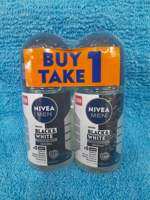
Nivea Invisible Original Deodorant Men 50ML buy 1 take 1
₱219.00
Buy on Lazada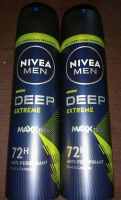
NIVEA MEN Antiperspirant Deodorant Spray 150ml - Deep Extreme * BUY 1 TAKE 1 *
₱499.00
Buy on Lazada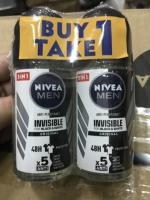
NIVEA MEN Anti-Perspirant Roll-On Invisible for Black & White Original Scent 50ml (Buy 1 Take 1)
₱249.00
Buy on Lazada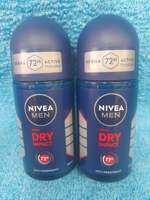
Nivea Dry Impact Deodorant Men 50ML 72H Buy 1 Take 1
₱219.00
Buy on Lazada![[BUNDLE OF 2] Nivea Men Facial Wash 100ml](https://filebroker-cdn.lazada.com.ph/kf/S2bb76143e8a1429785d789e83b47ab6fG.jpg_200x200q80.jpg)
[BUNDLE OF 2] Nivea Men Facial Wash 100ml
₱589.00₱650.00
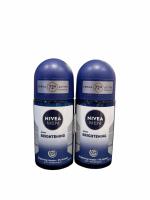
NIVEA MEN DEODORANT Brightening Anti-Perspirant Roll-On 50ml * BUY 1 TAKE 1 *
₱249.00
Buy on Lazada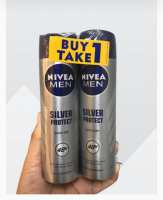
NIVEA MEN Antiperspirant Spray SILVER PROTECT 150ml ( BUY 1 TAKE 1 )
₱499.00
Buy on Lazada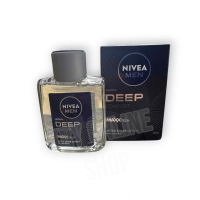
NIVEA MEN After Shave Balm/Lotion 100ml
₱520.00
Buy on LazadaAbout Nivea Men
Nivea Men is the men’s personal-care and skincare division of NIVEA, a global skincare brand owned by the German consumer-goods company Beiersdorf AG. The brand specialises in skincare, shaving, deodorants, body care, and related grooming products formulated and marketed specifically for men.
The origins of Nivea Men date back to 1922, when NIVEA introduced a shaving soap designed for male consumers. This initiative eventually evolved into a dedicated men’s-care business, culminating in the launch of the modern NIVEA for Men range in 1986. By its centenary in 2022, Nivea Men had established itself as a global brand with a portfolio exceeding 120 products and reported sales of approximately €1.1 billion in 2021.1
Infobox
| Attribute | Information |
|---|---|
| Brand | Nivea Men |
| Parent company | Beiersdorf AG |
| Parent brand | NIVEA |
| Origin | Hamburg, Germany |
| Men’s-care origins | 1922 |
| Dedicated men’s range | 1986 |
| Industry | Skincare, cosmetics & personal care |
| Major categories | Face care, shaving, deodorants, body care, hair/grooming |
| Global presence | International |
| Positioning | Accessible, practical, everyday men’s skincare |
| Notable slogan | “It starts with you!” |
| 2021 sales | Approximately €1.1 billion |
| 2022 product range | More than 120 products |
Beiersdorf reported the 2021 sales figures and product count in conjunction with the centenary celebrations of Nivea Men.1
History
Origins of NIVEA
The NIVEA brand predates the Nivea Men line by over a decade. The company’s history began in 1911 when Beiersdorf developed NIVEA Creme using the emulsifying agent Eucerit. The name NIVEA is derived from the Latin word nix/nivis, meaning “snow” or “snow-white,” a reference to the cream’s appearance.1
The iconic blue NIVEA tin was introduced in 1925 and has since become one of the most recognisable visual identities in the skincare industry.1
1922: The beginning of men’s care
NIVEA’s entry into the men’s grooming market occurred in 1922 with the release of NIVEA Shaving Soap. During this era, men’s skincare was predominantly associated with shaving rather than comprehensive facial routines. NIVEA gradually expanded this category with additional shaving products, including shaving foam.1
This 1922 launch is recognised as the historical foundation of what would later become Nivea Men.
1980: After Shave Balm
A significant milestone in the brand’s development was the introduction of an alcohol-free After Shave Balm in 1980. Unlike traditional aftershaves that relied heavily on alcohol, this product was formulated to soothe the skin post-shave. Beiersdorf cites the success of this balm as a pivotal moment in the evolution of men’s skincare.1
1986: NIVEA for Men
In 1986, NIVEA officially launched NIVEA for Men, a comprehensive range tailored to men’s specific skincare requirements. This marked a strategic shift from offering isolated shaving products to establishing a broader personal-care portfolio for men.1
Over the following decades, the range grew to encompass facial moisturisers, cleansers, anti-ageing treatments, deodorants, body washes, and various other grooming essentials.
From NIVEA for Men to Nivea Men
The brand eventually adopted the international name Nivea Men to align more closely with the global NIVEA master brand. Today, Beiersdorf describes Nivea Men as a leading global men’s skincare brand, characterised by products that are effective, straightforward, and convenient.2
The brand’s philosophy centres on the principle that men’s skincare should be effective without unnecessary complexity. This positioning is evident in multifunctional products, such as facial moisturisers that address multiple concerns simultaneously or 3-in-1 cleansing formulations. Beiersdorf explicitly frames the brand around the concept of “small effort, big effect.”2
Product Categories
Nivea Men has developed into a comprehensive grooming portfolio extending well beyond its shaving heritage.
Face care
Facial skincare is a core category for the brand. The range typically includes:
- Facial moisturisers
- Face cleansers
- Anti-ageing products
- Oil-control solutions
- Products for sensitive skin
- Energising formulations
- Eye-area care
- Sunscreen and UV-related facial care in selected markets
Beiersdorf identifies Nivea Men as one of its primary brands within the men’s face care segment.2
Shaving
Shaving remains historically significant to Nivea Men. The portfolio has progressed from the original 1922 shaving soap to include modern formulations such as:
- Shaving foams
- Shaving gels
- Aftershave lotions
- After Shave Balm
- Sensitive-skin shaving products
The alcohol-free After Shave Balm, launched in 1980, holds particular historical importance within this category.1
Deodorants
The brand maintains a substantial deodorant portfolio featuring products marketed for:
- Odour protection
- Long-lasting freshness
- Antiperspirant efficacy
- Sensitive skin compatibility
- Sport and active lifestyles
- Various fragrance profiles
Body care
Body-care offerings include shower gels and cleansing products. Several items are positioned as multifunctional solutions, including 3-in-1 formulations designed for convenience.2
Hair and styling
Depending on the specific market, Nivea Men also offers hair care and styling products. Beiersdorf’s brand description encompasses a spectrum ranging from facial creams and shower gels to hair-styling gels.3
Brand Positioning
Nivea Men occupies a distinct position within the men’s grooming sector. Rather than positioning itself as an ultra-premium luxury label, its strength lies in mass-market accessibility combined with the credibility of a long-established skincare manufacturer.
Key pillars of the brand’s positioning include:
- Simplicity: Products are engineered to integrate seamlessly into daily routines.
- Effectiveness: Communication prioritises functional benefits over elaborate beauty rituals.
- Masculine accessibility: Nivea Men played a role in normalising dedicated skincare for men, moving beyond generic soaps or products marketed primarily to women.
- Skincare expertise: The brand leverages NIVEA’s century-long history and Beiersdorf’s research capabilities.
- Everyday use: Skincare is framed as a standard component of personal hygiene rather than an exclusive luxury activity.
Beiersdorf notes that product development accounts for regional characteristics, focusing on solutions that are both quick and effective.2
Relationship With NIVEA
It is necessary to distinguish between NIVEA and Nivea Men. NIVEA serves as the overarching skincare brand, while Nivea Men operates as its dedicated men’s-care portfolio.
The broader NIVEA ecosystem covers face, body, and hand care, sun protection, deodorants, and other skincare categories. Beiersdorf recognises Nivea Men as one of the major brands within this family.3
This structure provides Nivea Men with immediate brand equity; it inherits the recognition associated with the classic blue-and-white NIVEA identity while delivering products specifically targeted at male consumers.
Corporate Ownership
Nivea Men is owned by Beiersdorf AG, a German skincare and consumer-goods company headquartered in Hamburg, Germany.
Beiersdorf’s history extends back to the nineteenth century. The company created NIVEA in 1911 and subsequently built an international portfolio of skincare brands.1 Its current holdings include NIVEA, Eucerin, La Prairie, Hansaplast, and other personal-care labels. NIVEA remains one of the company’s most significant global assets.3
Global Scale
Nivea Men operates well beyond the German or European markets. The NIVEA brand expanded internationally early in its history; Beiersdorf notes that just three years after the 1911 launch of NIVEA Creme, the product was available on every continent, with nearly half of sales originating outside Germany.1
Nivea Men subsequently grew into an international business, adapting products to diverse markets and consumer preferences. Beiersdorf states that NIVEA products are sold in more than 160 countries, reflecting the extensive reach of the parent brand.3
Nivea Men’s 100th Anniversary
2022 marked the centenary of NIVEA’s men’s-care business. According to Beiersdorf, the division had transformed from a single shaving soap in 1922 into a global men’s skincare brand achieving:
- More than 120 products
- Approximately €1.1 billion in sales in 2021
- Around 20% of total NIVEA sales
The company highlighted sustainability, innovation, and digitalisation as key areas for future development.1 This anniversary underscored the brand’s evolution far beyond its original shaving-centric role.
Brand Identity
Visually, Nivea Men retains the core DNA of the broader NIVEA brand while employing a more masculine product identity. The classic NIVEA visual language comprises:
- Dark blue
- White
- The distinctive NIVEA wordmark
- Clean, minimalist packaging
The famous blue NIVEA tin dates to 1925, while the distinctive “Creme” typography became a key identity element during the twentieth century.1 Nivea Men products typically adapt this established aesthetic into darker, more masculine packaging and communication styles.
Marketing Philosophy
Marketing for Nivea Men traditionally emphasises confidence, activity, masculinity, practicality, and personal care rather than aspirational luxury. Communications often present skincare as a tool for everyday preparedness rather than a cosmetic ritual.
The current brand positioning utilises the slogan:
“It starts with you!”
Beiersdorf describes this slogan as a reflection of the brand’s simple yet powerful approach to men’s skincare.2 Historically, NIVEA also used advertising to challenge traditional assumptions about men’s grooming. The early introduction of dedicated shaving products and the subsequent 1986 NIVEA for Men range helped establish men’s skincare as a distinct consumer category.1
Research & Product Development
A primary competitive advantage for Nivea Men is its integration with Beiersdorf’s skincare research infrastructure. The organisation conducts research across various skin types, considering factors such as culture, gender, and age, and reports cooperation with more than 50 institutions worldwide.1
Consequently, the brand’s approach involves researching specific differences in skin characteristics and consumer needs across demographics. For instance, Beiersdorf states that men’s skin is generally 15–20% thicker than women’s skin, a physiological factor relevant to product development and communication.2
Major Historical Timeline
| Year | Milestone |
|---|---|
| 1911 | NIVEA Creme launched |
| 1922 | NIVEA introduces shaving soap for men |
| 1920s | NIVEA expands shaving-related products |
| 1980 | Alcohol-free NIVEA After Shave Balm introduced |
| 1986 | Dedicated NIVEA for Men range launched |
| 1990s | NIVEA expands globally with standardised products and packaging |
| 1998 | NIVEA’s Q10 skincare technology enters the market |
| 2011 | NIVEA celebrates its 100th anniversary |
| 2022 | Nivea Men celebrates 100 years of men’s care |
| 2026 | Nivea Men continues as a major global men’s skincare and grooming brand |
Historical milestones are based primarily on official histories from Beiersdorf and NIVEA.1
Business Significance
The development of Nivea Men mirrors the broader transformation of the men’s grooming industry. For much of the twentieth century, men’s personal care focused heavily on shaving, hair products, and basic hygiene. NIVEA contributed to broadening this category towards dedicated skincare.
This progression can be summarised as:
Shaving soap → shaving care → aftershave → facial skincare → complete men’s grooming
The 1980 alcohol-free After Shave Balm and the 1986 NIVEA for Men launch were critical steps in this transition.1 By 2022, reported annual sales of €1.1 billion demonstrated that men’s skincare had matured into a substantial global consumer category rather than merely a niche extension of shaving.1
What Makes Nivea Men Different?
From a branding perspective, Nivea Men’s primary assets are the combination of heritage, accessibility, and specialisation.
Heritage
The brand traces its skincare lineage to 1911 and its men’s-care history to 1922.
Trust
It benefits from the established NIVEA name and Beiersdorf’s extensive history in skincare.
Accessibility
Products are designed for mass-market consumers rather than exclusively for premium skincare clientele.
Specialisation
Nivea Men provides products specifically targeted at men’s grooming needs.
Breadth
The portfolio covers multiple stages of a man’s routine, from cleansing and shaving to moisturising, deodorising, and body care.
Criticism & Limitations
As with most large mass-market skincare brands, Nivea Men may not be universally ideal for every consumer. Individual products can vary considerably regarding:
- Fragrance
- Alcohol content
- Preservatives
- Active ingredients
- Skin feel
- Intended skin type
- Price and formulation by country
Therefore, “Nivea Men” should not be viewed as a single formulation. A sensitive-skin moisturiser, shaving foam, and deodorant may possess entirely different ingredient profiles. Furthermore, the brand’s mass-market positioning places it in competition with both inexpensive supermarket alternatives and increasingly sophisticated specialist men’s skincare brands.
Overall Assessment
Nivea Men is widely regarded as one of the foundational global brands in modern men’s skincare. Its significance extends beyond the sale of individual products; historically, the brand facilitated the shift in men’s personal care from a narrow “shaving and hygiene” concept to a broader “skincare and grooming” category.
Its evolution is evident in the following trajectory:
1922: shaving soap
↓
1980: soothing aftershave
↓
1986: dedicated men’s skincare range
↓
1990s–2000s: global expansion and diversification
↓
2022: €1.1 billion annual sales and 120+ products
↓
Today: global men’s skincare and grooming portfolio
In summary, Nivea Men is best described as the men’s personal-care division of NIVEA and a major international men’s skincare brand operated by Beiersdorf AG, with roots extending back to NIVEA’s first men’s shaving product in 1922.1