Shop on Lazada
nizoral products
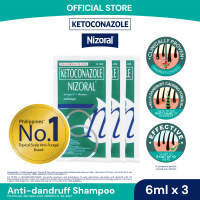
Nizoral® Anti-Dandruff Shampoo - Set of Three (3) Sachets
₱240.00₱245.00
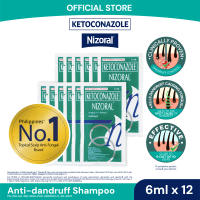
Nizoral® Anti-Dandruff Shampoo - Set of Twelve (12) Sachets
₱960.00₱965.00
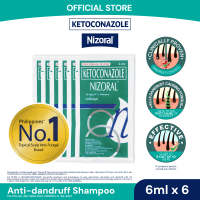
Nizoral® Anti-Dandruff Shampoo - Set of Six (6) Sachets
₱480.00₱485.00
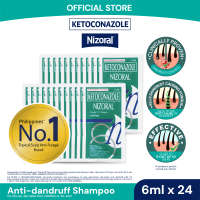
Nizoral® Anti-Dandruff Shampoo - Set of Twenty Four (24) Sachets
₱1,920.00₱1,925.00
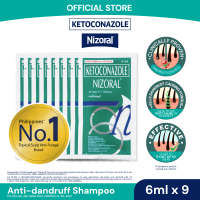
Nizoral® Anti-Dandruff Shampoo - Set of Nine (9) Sachets
₱720.00₱725.00
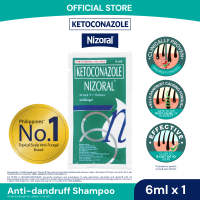
Nizoral® Anti-Dandruff Shampoo - One (1) Sachet Only 6ml
₱85.00₱90.00
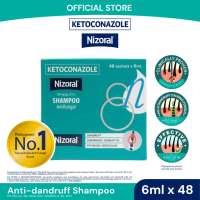
Nizoral Dandruff Shampoo (Box of 48 Sachets x 6ml)
₱3,840.00₱3,845.00
Nizoral® Anti-Dandruff Shampoo - One (1) Box of 48 Sachets
₱3,840.00₱3,845.00
About nizoral
Nizoral is a widely recognised brand of antifungal and anti-dandruff products, most notably shampoos containing ketoconazole, an antifungal medication. Historically associated with Janssen Pharmaceutica and Johnson & Johnson, the brand’s ownership and commercialisation have evolved across different markets over time. In the United States, the consumer-facing Nizoral anti-dandruff line is currently operated by Kramer Laboratories, Inc.1
Overview
| Field | Information |
|---|---|
| Brand name | Nizoral |
| Industry | Healthcare / Personal care |
| Main category | Anti-dandruff and antifungal scalp care |
| Best-known product | Nizoral Anti-Dandruff Shampoo |
| Key active ingredient | Ketoconazole |
| Common OTC U.S. formulation | Ketoconazole 1% |
| Prescription formulation | Ketoconazole 2% shampoo |
| Original pharmaceutical association | Janssen Pharmaceutica |
| Current U.S. consumer website operator | Kramer Laboratories, Inc. |
| Primary use | Control of dandruff and associated flaking, scaling and itching |
History
The history of Nizoral is intrinsically linked to the development and commercialisation of ketoconazole, a synthetic antifungal drug. The shampoo was first introduced internationally by Janssen Pharmaceutica, the Belgian pharmaceutical company founded by Dr Paul Janssen.
According to records from the U.S. Food and Drug Administration (FDA), ketoconazole shampoo under the Nizoral name has been marketed globally since 1987, available in both prescription and over-the-counter (OTC) versions depending on the country. The FDA subsequently approved Nizoral 2% shampoo in the United States in 1990 for prescription use.2
Janssen Pharmaceutica became part of Johnson & Johnson following its acquisition in 1961,1 integrating Nizoral into a broader pharmaceutical and healthcare portfolio. Over the decades, the brand has existed in various forms and markets, encompassing shampoos and other ketoconazole-containing products.
Major historical milestones
- 1987 — Nizoral ketoconazole shampoo began worldwide marketing by Janssen Pharmaceutica.2
- 1990 — Nizoral 2% shampoo received U.S. FDA approval as a prescription product.2
- 2000s–2010s — Nizoral continued to be marketed internationally in prescription and OTC formulations, depending on local regulations.
- 2012 — The FDA approved updated labelling for Nizoral 2% shampoo marketed by Janssen Pharmaceuticals.2
- 2018 — Johnson & Johnson reported completing the divestiture of the Nizoral anti-dandruff shampoo brand and certain other ketoconazole-based shampoo brands.
- Today — In the U.S., the Nizoral consumer site presents the brand primarily as a ketoconazole-based anti-dandruff shampoo and identifies Kramer Laboratories as the site operator.1
Brand concept and positioning
Nizoral is fundamentally positioned around the understanding that dandruff can have a fungal component, rather than being solely a cosmetic issue caused by dry skin. Its central ingredient, ketoconazole, is an antifungal agent. Current consumer positioning emphasises controlling the fungus associated with dandruff to help manage symptoms such as:
- Flaking
- Scaling
- Itching
- Visible dandruff
The brand identifies ketoconazole as the ingredient responsible for its antifungal action.1
Key ingredient: Ketoconazole
Ketoconazole is a synthetic antifungal medication belonging to the imidazole class. In Nizoral shampoo, it is applied topically to the scalp. The FDA-approved 2% formulation is specifically described as a topical shampoo containing ketoconazole at a concentration of 2%.2
It is important to distinguish that Nizoral is a brand, while ketoconazole is the active pharmaceutical ingredient. While several manufacturers may sell ketoconazole products, Nizoral is the trademarked brand historically associated with Janssen’s ketoconazole formulations.
Nizoral shampoo
The most recognisable Nizoral product is its anti-dandruff shampoo. In the United States, the current consumer website promotes an OTC ketoconazole 1% shampoo, intended to control dandruff symptoms including flaking, scaling and itching.1
The historical prescription product is Nizoral 2% shampoo, which FDA documentation describes as a red-orange liquid containing 2% ketoconazole.2 As regulatory status and concentrations vary by country, “Nizoral” does not necessarily denote an identical formulation in every market.
Mechanism of action
Dandruff is associated with the scalp’s interaction with microorganisms, particularly Malassezia species. Nizoral utilises an antifungal ingredient rather than relying exclusively on conventional cosmetic anti-dandruff agents. The mechanism can be summarised as:
Ketoconazole → antifungal activity → controls fungal growth → helps reduce dandruff symptoms
This use of an antifungal drug as the active ingredient distinguishes Nizoral from many conventional anti-dandruff shampoos.1
Products and formulations
Nizoral has existed in various formulations and regulatory categories throughout its history.
Ketoconazole 1%
The current U.S. OTC Nizoral Anti-Dandruff Shampoo contains 1% ketoconazole. Labelling recommends use approximately twice weekly during an initial treatment period, followed by use as needed.1
Ketoconazole 2%
The 2% formulation has historically served as the prescription version of Nizoral, with its U.S. approval and labelling documented by the FDA.21
Other Nizoral products
Historically, the Nizoral name was also associated with other ketoconazole products, including creams and tablets. However, these historical pharmaceutical products should not be assumed to represent the current U.S. consumer portfolio.
Medical versus cosmetic identity
Nizoral occupies a distinct space between traditional shampoo brands and pharmaceutical products. Unlike standard shampoos designed primarily for cleansing, Nizoral’s principal product contains an active antifungal drug. This confers a treatment-oriented identity:
Nizoral = shampoo format + pharmaceutical antifungal active ingredient
This combination is a primary differentiator from ordinary cosmetic anti-dandruff shampoos.
Scientific and regulatory significance
Nizoral holds historical significance as ketoconazole was a pivotal antifungal drug developed for human medicine, and the shampoo formulation enabled topical delivery to the scalp. FDA historical documentation notes that ketoconazole was not detected in plasma in patients using the 2% shampoo under specified study conditions, highlighting the distinction between topical application and systemic administration.2
Crucially, topical ketoconazole shampoo and oral ketoconazole are not interchangeable. Oral ketoconazole possesses a substantially different safety and regulatory profile.
Marketing and consumer image
Marketing for Nizoral has traditionally focused on clinical efficacy, antifungal science and stubborn dandruff rather than beauty or cosmetic transformation. Current U.S. branding describes the shampoo as having a clean, fresh scent and promotes its suitability for colour-treated, chemically processed and grey hair.1
This creates a hybrid identity combining medical credibility with everyday hair-care convenience.
Global presence
Nizoral has historically been sold in numerous countries, though formulations and regulatory classifications have not always been uniform. FDA documentation from the 1990s noted that Nizoral shampoo was marketed in 69 countries, with varying classifications as prescription or OTC, and some markets including indications for seborrhoeic dermatitis.2
Consequently, Nizoral should be viewed as a global brand with market-specific products and regulations rather than a single universally identical product.
Nizoral today
Today, Nizoral is most visible as a ketoconazole-based anti-dandruff shampoo. The U.S. brand focuses on controlling dandruff through antifungal action, addressing symptoms such as flaking, scaling and itching, while providing consumer education and usage guidance via its website.12
The brand’s evolution can be summarised as:
Pharmaceutical innovation → prescription antifungal → OTC scalp treatment → globally recognised anti-dandruff brand.
In summary, Nizoral is a globally recognised ketoconazole-based antifungal brand best known for its anti-dandruff shampoo, originating from Janssen Pharmaceutica’s pharmaceutical portfolio and evolving from a prescription treatment into an internationally marketed OTC and prescription scalp-care brand.21