Shop on Lazada
nsk products
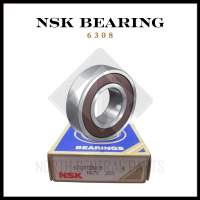
JAPAN NSK BEARING WHOLESALE PRICE FOR MOTORCYCLE RUBBER SEALED (6000 6001 6002 6003 6004 6005 6300 6301 6302 6303 6200 6200 6201 6202 6203 62056206 6304 6305 6306 6208 608 628 63/22 62/22 6904) SOLD PER PC
₱225.00
Buy on Lazada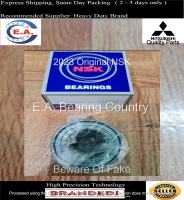
(Likod)ABS Original NSK Mitsubishi Mirage Wheel Bearing Mitsubishi Mirage Rear Bearing 28x58x48 28bwd08 Mirage Hub
₱1,875.00₱2,000.00
![NSK Surgic XT [NSK / Japan] Aseptico AEU-925 VCT [USA] Premium Implant Motor System Precision Surgical Implant Unit W Handpiece Full Set](https://ph-live.slatic.net/p/9447a43f954206cc45ed2509aef442c6.png_200x200q80.jpg)
NSK Surgic XT [NSK / Japan] Aseptico AEU-925 VCT [USA] Premium Implant Motor System Precision Surgical Implant Unit W Handpiece Full Set
₱53,284.00₱276,459.00
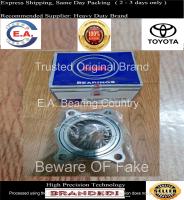
(FRONT) Japan Toyota Hi Ace Front Wheel Bearing 2005-2019 43560-26010 Toyota Hiace d4d wheel hub bearing 54kwh 54kwh02
₱2,950.00
Buy on Lazada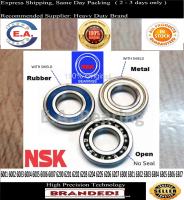
ORIGINAL NSK 6000 6001 6002 6003 6004 6005 6006 6007 6200 6201 6202 6203 6204 6205 6206 6207 6300 6301 6302 6303 6304 6305 6306 6307 6000ZZ 6001ddu 6001zz 6002ddu 6002zz 6004zz 6004ddu 6306zz 6200zz 6200ddu 6201zz 6201ddu 6202ddu 6202zz 6203zz 6204z
₱340.00
Buy on Lazada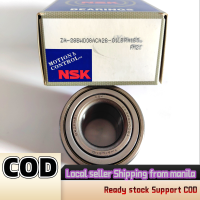
(1 PCS ) REAR WHEEL BEARING MIRAGE G4 MIRAGE HATCHBACK WHEEL BEARING ALL YEAR MODEL(28X58X42)
₱588.00₱1,688.00
(FRONT)2005up Original Toyota Innova Wheel Bearing Toyota Hilux Wheel Bearing Toyota Innova Front Wheel Bearing 43KWD07
₱1,700.00₱1,850.00
EPBD17-29 Original Japan NSK Idler Pulley Tensioner for Toyota Innova Tensioner Pulley Innova Idler Bearing Toyota Hiace 2011 2018 Aircon Bearing Alternator Bearing 17x52x22 BD17-29 EPBD17-29T1XL EPBD EPBD17 EPBD17-29T1 EPBD17
₱435.00₱520.00
About nsk
Overview
NSK Ltd. is a major Japanese engineering and manufacturing corporation best known for its bearings, though its business portfolio extends to automotive components, steering systems, precision machinery, ball screws, and other motion-control technologies. Headquartered in Shinagawa, Tokyo, Japan, the company has been in operation since 1916.1
| Item | Information |
|---|---|
| Company name | NSK Ltd. |
| Japanese name | 日本精工株式会社 (Nippon Seikō Kabushiki-gaisha) |
| Common brand | NSK |
| Founded | November 8, 1916 |
| Headquarters | Shinagawa-ku, Tokyo, Japan |
| Industry | Mechanical engineering / automotive / industrial machinery |
| Best known for | Bearings and motion-control technology |
| President & CEO | Akitoshi Ichii |
| Employees | 24,057 (as of March 31, 2025) |
| FY2025 sales | ¥796.7 billion |
| Capital | ¥67.2 billion (as of March 31, 2025) |
| Stock | Tokyo Stock Exchange, ticker 6471 |
| Core concept | “MOTION & CONTROL™” |
The latest official corporate profile reports 24,057 employees and ¥796.7 billion in annual consolidated sales for the fiscal year ended March 31, 2025.2
Corporate Identity and Business Scope
NSK is fundamentally a precision-engineering company. While the NSK name is most frequently associated with bearings, the company’s technological scope is significantly broader. NSK develops products that enable machines to move, rotate, steer, transmit power, and operate with reduced friction and high precision.
Its business operations are generally divided into three major areas:
- Industrial Machinery
- Automotive
- Steering
The industrial portfolio includes bearings, ball screws, precision machinery and parts, and condition-monitoring technologies. Automotive activities encompass bearings, steering systems, and products related to automatic transmissions.3
In essence, NSK manufactures the components that allow machines to move smoothly, accurately, reliably, and efficiently.
Origin of the Name
The company’s Japanese name is 日本精工株式会社 (Nippon Seikō Kabushiki-gaisha). This translates approximately as:
- Nippon: Japan
- Seikō: Precision or precision engineering
Internationally, the company is commonly known by the abbreviation NSK. The organisation’s origins trace back to Nippon Seiko Limited Partnership Company, established in 1914, with NSK Ltd. itself established in 1916.4
History
Foundation and Early Development
NSK was founded in 1916 in Tokyo, becoming the first manufacturer to produce ball bearings domestically in Japan. This development was critical as Japan’s rapidly industrialising economy required reliable precision components for machinery.5
A key figure in the company’s founding was Takehiko Yamaguchi, who had investigated manufacturing technology overseas and recognised the importance of developing indigenous precision-machinery capabilities in Japan.6 Consequently, NSK’s original mission was closely tied to the modernisation of Japanese industry.
During its early years, NSK expanded its bearing technology into various applications, including trucks, industrial machinery, cranes, ships, and general mechanical equipment. By establishing domestic bearing manufacturing, NSK helped lay the foundation for Japan’s entire bearing industry.7
Post-War Expansion
Following World War II, Japan entered a period of rapid industrialisation. NSK expanded its technology and manufacturing capabilities alongside key sectors such as automotive, steel, machine tools, electrical equipment, industrial machinery, and transportation.
As Japanese manufacturers sought higher machine speeds, better efficiency, longer service life, and greater precision, bearings became increasingly vital. NSK consequently evolved from a specialist bearing manufacturer into a broader precision-engineering company.
Global Expansion
A significant phase in NSK’s history was its international expansion. The company established its first overseas sales operation in Ann Arbor, Michigan, in the early 1960s, subsequently expanding manufacturing and sales operations into North America, Europe, South America, and Asia.8
Key milestones in this expansion include:
- Manufacturing expansion in Brazil during the 1970s
- Growth across North America
- Expansion into the United Kingdom and Europe
- Growing operations throughout Asia
- Major expansion in China from the 1990s onward
In the 1990s, NSK acquired UPI, a major British bearing manufacturer associated with the RHP brand.9 This acquisition helped transform NSK from a Japanese bearing manufacturer into a genuinely global engineering group.
Contemporary Status
Today, NSK describes itself as a comprehensive bearing manufacturer and a provider of “MOTION & CONTROL™” solutions. Its products are utilised in a vast range of applications, from industrial equipment to vehicles and precision machinery.10
NSK maintains business operations in more than 30 countries, with global manufacturing, R&D, sales, and technical-service capabilities.11 The company’s evolution can be characterised by three distinct stages: bearing manufacturer, precision-engineering company, and global motion-control technology company.
Products and Technologies
Bearings
Bearings remain NSK’s most recognisable and historically significant product. A bearing reduces friction and allows one component to rotate or move relative to another. NSK produces numerous types, including:
- Ball bearings
- Roller bearings
- Cylindrical roller bearings
- Tapered roller bearings
- Spherical roller bearings
- Thrust bearings
- Automotive bearings
- High-precision bearings
- Specialised industrial bearings
These components are found in machinery ranging from automobiles and electric motors to machine tools, railway equipment, and industrial production systems. Bearing technology serves as the foundation upon which much of NSK’s modern business is built.13
Automotive Products
The automotive industry represents one of NSK’s primary business areas. The company supplies technologies and components used throughout vehicles.
Automotive Bearings
Bearings are utilised extensively in vehicles, including in wheels, transmissions, engines and auxiliary systems, electric motors, and other rotating mechanisms.
Steering Systems
NSK is also a major supplier of automotive steering systems. These technologies are critical as modern vehicles increasingly demand precise steering, lower energy consumption, compact components, electronic control, improved safety, and compatibility with electrification.
Transmission Components
NSK produces components for automatic transmissions and related automotive applications.12
Precision Machinery
NSK applies the precision-machining expertise developed through bearing manufacturing to other fields. A notable example is the ball screw, which converts rotary motion into precise linear motion. Ball screws are widely used in CNC machine tools, industrial robots, semiconductor manufacturing equipment, precision machinery, and factory automation. The company also produces other precision machinery and mechanical components.13
Technical Philosophy and Expertise
Importance of Bearing Technology
While a bearing may appear to be a simple mechanical component, manufacturing a high-performance unit requires extremely precise control over material properties, heat treatment, grinding, surface finish, dimensional accuracy, lubrication, noise and vibration, fatigue resistance, and contamination resistance.
Bearing manufacturing therefore provides a robust technological foundation for other precision-engineering businesses. This expertise enabled NSK to expand beyond conventional bearings into automotive systems, precision machinery, and motion-control technology.
MOTION & CONTROL™
NSK’s central technological concept is “MOTION & CONTROL™.” This philosophy extends beyond simply making bearings; it aims to control the movement of machines by combining technologies involving mechanical engineering, materials, tribology, precision manufacturing, electronics, sensors, control systems, and data monitoring.
The company’s stated corporate philosophy is to contribute to society and protect the global environment through its Motion & Control technology.
Tribology
Tribology—the science of friction, lubrication, and wear—is a particularly important field for NSK. Excessive friction in a bearing can waste energy, generate heat, accelerate wear, reduce machine efficiency, and increase maintenance requirements. NSK invests heavily in technologies designed to reduce friction and improve bearing durability, with this expertise transferring to other mechanical systems.
Industry Trends and Adaptation
The Automotive Era
NSK’s traditional bearing business has adapted to the transformation of the automobile industry. Modern vehicles are shifting toward hybrid and battery-electric vehicles, drive-by-wire technologies, electrically assisted steering, increased electronic control, and autonomous driving.
While electric vehicles eliminate or reduce some conventional engine components, they still require bearings and precision mechanical systems. They also introduce new requirements involving high rotational speeds, electrical insulation, low friction, compact designs, high efficiency, and reliability. NSK’s strategy increasingly involves applying its mechanical expertise to these newer mobility technologies.
Industrial Automation
Factory automation represents another significant growth area. Modern factories rely heavily on robots, CNC machines, semiconductor equipment, automated production lines, and precision positioning systems. These machines require extremely accurate movement, allowing NSK’s bearings, ball screws, and precision machinery products to form part of the mechanical infrastructure behind automated manufacturing.
Corporate Values and Brand Positioning
Philosophy
NSK emphasises four core values: Safety, Quality, Compliance, and Environment. The company connects these principles with its objective of creating value while contributing to sustainable development.
Its broader philosophy posits that engineering should not merely make machines work but should help create a safer, more reliable, comfortable, and sustainable society.
Market Position
NSK is primarily a B2B engineering brand. Unlike consumer-facing brands, most ordinary consumers encounter NSK technology indirectly through cars, motorcycles, industrial machines, machine tools, robotics, factory equipment, railway systems, and electrical equipment.
Its reputation is based on precision, reliability, engineering capability, and long service life rather than consumer advertising.
Competitive Landscape
NSK operates in highly competitive global markets. Major competitors in bearings and related technologies include:
- SKF (Sweden)
- Schaeffler (Germany)
- NTN (Japan)
- JTEKT (Japan)
- Timken (United States)
- NACHI-FUJIKOSHI (Japan)
The competitive set varies according to the product and application; for instance, a competitor in automotive bearings may differ from one in machine-tool components.
Comparative Overview
| Company | Country | Strong Reputation |
|---|---|---|
| NSK | 🇯🇵 Japan | Bearings, automotive, precision machinery |
| SKF | 🇸🇪 Sweden | Bearings, industrial applications, services |
| NTN | 🇯🇵 Japan | Bearings, automotive, industrial |
| Schaeffler | 🇩🇪 Germany | Bearings, automotive, industrial |
| Timken | 🇺🇸 USA | Bearings, power transmission, industrial |
NSK is particularly notable for its historical role as Japan’s first domestic ball-bearing manufacturer and for its deep integration with Japan’s automotive and precision-manufacturing industries.14
Global Scale and Significance
According to NSK’s current corporate profile, the company has 24,057 employees, ¥796.7 billion in annual sales, and ¥67.2 billion in capital. Headquartered in Tokyo, its operations span more than 30 countries. These figures are based on the fiscal year ending March 31, 2025.15
NSK holds a special place in Japanese industrial history. Established when Japan was developing its own modern industrial capabilities, the company’s domestic bearing manufacturing helped reduce reliance on imported precision components. Over the following century, NSK became a major name in precision mechanical engineering, with its history closely connected to Japan’s transformation into a global manufacturing power.
Timeline
- 1914: Nippon Seiko Limited Partnership Company established.
- 1916: NSK Ltd. established; begins manufacturing bearings in Japan.16
- 1916–1940s: Development of Japan’s domestic bearing industry.
- Post-WWII: Expansion alongside Japan’s industrial and automotive development.
- 1960s: Begins significant overseas expansion, including the United States.17
- 1970s: Manufacturing expansion in Brazil and other overseas markets.
- 1980s–1990s: Greater expansion into Europe, North America, and Asia.
- 1990s: Acquisition of UPI/RHP-related operations strengthens NSK’s European presence.18
- 1990s onward: Rapid expansion in China and broader Asia.
- 2016: NSK celebrates its 100th anniversary and establishes its NSK Vision 2026.19
- 2020s: Increasing emphasis on mobility transformation, electrification, automation, sustainability, and broader Motion & Control technologies.
- 2026: NSK continues as a major global bearing and precision-engineering company; its current medium-term strategy is MTP2028, announced in May 2026.
Distinctive Characteristics
Four key factors define the NSK brand:
- Engineering Heritage: Dating back to 1916, NSK possesses over a century of experience in precision manufacturing.
- Technological DNA: Unlike diversified conglomerates that entered the sector later, NSK was fundamentally built around bearing technology.
- Industry Integration: NSK developed alongside Japan’s world-famous automotive and machine-tool industries.
- Motion Control Focus: The company has evolved beyond being solely a “bearing company” to position itself around controlling and optimising mechanical movement under the MOTION & CONTROL™ banner.
Summary
NSK is one of Japan’s historic precision-engineering companies. Founded in Tokyo in 1916, it pioneered domestic ball-bearing production in Japan and subsequently expanded into a global manufacturer serving the automotive, industrial machinery, automation, and precision-engineering sectors.
While its most famous product remains the bearing, its competitive strength lies in accumulated engineering knowledge surrounding friction, rotation, precision, materials, manufacturing, and motion control. Although not a household consumer brand, NSK is a critical behind-the-scenes technology provider whose components enable countless machines and vehicles to operate reliably.
References
- Corporate Profile | NSK Global
- Company | NSK Global
- Company | NSK Americas | NSK Americas
- ก.ล.ต.
- History | NSK Europe
- NSK REPORT 2023
- NSK历史沿革
- Corporate Profile | Company | NSK Global
- Corporate Profile | NSK Europe
- Top Message | NSK Global
- 社长致辞
- Integrated Reports / Annual Reports | NSK Global
- About NSK | NSK Global
- NSK集团简介
- 企业信息-NSK中国官网
- Corporate Profile | NSK Global
- Company profile | NSK Co., Ltd.
- 会社概要 | 株式会社NSK
- FAQ | NSK Global