Shop on Lazada
NVIDIA products

NVIDIA SHIELD Android TV Pro 4K HDR Streaming Media Player with High Performance / Dolby Vision / 3GB RAM / 2x USB / Alexa
₱23,649.62₱33,696.30
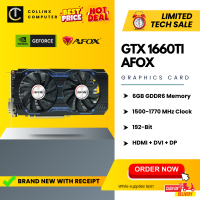
Nvidia GeForce GTX GT Graphics Card List Brand New Videocard GPU for Intel and Ryzen Gaming Streaming Work Computer PC
₱12,490.00₱20,000.00
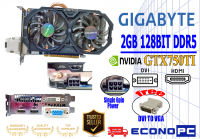
GAMING GRAPHICS CARD 1GB-2GB-3GB HIGH QUALITY PERFORMANCE AND ORIGINAL
₱2,450.00
Buy on Lazada
AMOLED/ TFT LCD For Samsung Galaxy S21 FE 5G LCD Display Touch Screen SM-G990B SM-G990B/DS Digitizer Assembly
₱2,895.00₱3,999.00
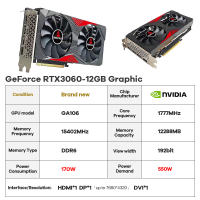
(Brand new) NVIDIA Graphics card GTX 1050TI Super 4GB Video card 128bit GPU GT610 710 730 740 750 Video card Computer PC Gaming Video rendering design work COD 1yr warranty
₱23,699.00₱47,398.00
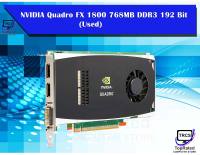
NVIDIA Quadro FX 1800 768MB DDR3 192 Bit Graphics Card / PCIE Video Card (Used)
₱1,800.00₱3,500.00
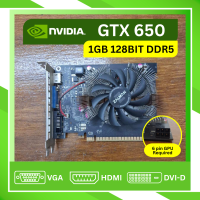
Graphics Card GTX650 GTX650 TI 1GB DDR5 128bit - NVIDIA Video Card for Desktop PC - HDMI/VGA/DVI
₱2,170.00
Buy on LazadaAMOLED/TFT For Samsung Galaxy S21 FE 5G LCD Display Touch Screen SM-G990B SM-G990B/DS Digitizer Assembly
₱2,599.00₱3,999.00
About NVIDIA
Overview
NVIDIA is an American multinational technology company specializing in accelerated computing, graphics processing units (GPUs), artificial intelligence (AI), high-performance computing (HPC), networking, robotics, and autonomous vehicle technologies.
Founded in 1993, NVIDIA initially focused on developing graphics chips for gaming PCs. Over the past three decades, it has evolved into one of the world’s most influential technology companies, providing the hardware and software that power modern AI systems, scientific research, cloud computing, robotics, and advanced visualization. The invention of the GPU in 1999 and the CUDA computing platform in 2006 transformed GPUs from graphics accelerators into general-purpose computing devices, laying the foundation for today’s AI revolution. [1]
Company Information
| Item | Details |
|---|---|
| Company Name | NVIDIA Corporation |
| Founded | April 5, 1993 |
| Headquarters | Santa Clara |
| Industry | Semiconductors, Artificial Intelligence, Computer Hardware |
| Type | Public Company |
| Stock Symbol | NASDAQ: NVDA |
| CEO | Jensen Huang |
| Founders | Jensen Huang, Chris Malachowsky, Curtis Priem |
| Employees | More than 42,000 (FY2026) |
| Core Business | AI Computing, GPUs, Data Centers, Networking, Robotics |
History
Founding (1993)
NVIDIA was founded on April 5, 1993, by three engineers:
-
Jensen Huang
-
Chris Malachowsky
-
Curtis Priem
Their vision was to revolutionize computer graphics through specialized processors designed for 3D rendering.
At that time, 3D gaming was still in its early stages, but the founders believed graphics acceleration would become essential for future computing.
Birth of the GPU (1999)
One of NVIDIA’s greatest achievements was introducing the GeForce 256, marketed as the world’s first Graphics Processing Unit (GPU).
The GPU integrated:
-
Geometry calculations
-
Lighting
-
Rendering
-
Texture mapping
onto one chip, greatly improving graphics performance.
This innovation changed PC gaming forever and established NVIDIA as the industry leader in graphics technology.
CUDA (2006)
In 2006, NVIDIA introduced CUDA (Compute Unified Device Architecture).
CUDA allowed developers to use GPUs not only for graphics but also for:
-
Scientific simulations
-
Physics
-
Medical research
-
Machine learning
-
Artificial intelligence
-
Data analytics
This became one of the most important breakthroughs in modern computing. [1]
AI Revolution (2012–Present)
In 2012, the breakthrough AlexNet neural network demonstrated the power of GPU acceleration for deep learning, helping ignite the modern AI era. NVIDIA GPUs quickly became the preferred hardware for training neural networks and large AI models.
Today, NVIDIA hardware powers AI systems developed by many major technology companies and research organizations.
Major Business Areas
1. Gaming
NVIDIA is best known for its GeForce graphics cards.
Popular gaming technologies include:
-
GeForce RTX
-
DLSS
-
Ray Tracing
-
NVIDIA Reflex
-
G-SYNC
These products serve PC gamers and creators.
2. Artificial Intelligence
NVIDIA develops AI hardware and software including:
-
AI GPUs
-
AI supercomputers
-
AI frameworks
-
AI inference systems
-
Foundation model infrastructure
Its GPUs are widely used to train and run large language models, image generation systems, and scientific AI workloads. [1]
3. Data Centers
NVIDIA provides hardware for:
-
Cloud computing
-
AI clusters
-
Supercomputers
-
Enterprise AI
-
Scientific computing
Many cloud providers use NVIDIA GPUs in their AI infrastructure.
4. Professional Visualization
Products include:
-
RTX Professional GPUs
-
3D rendering
-
CAD
-
Animation
-
Film production
-
Engineering design
5. Automotive
NVIDIA develops the DRIVE platform for:
-
Autonomous driving
-
Driver assistance
-
Smart cockpit systems
-
AI-powered vehicles
Major automotive companies have partnered with NVIDIA for vehicle computing platforms.
6. Robotics
The NVIDIA Isaac platform supports:
-
Industrial robots
-
Warehouse automation
-
Service robots
-
Research robots
-
AI-powered robotics
7. Networking
Following its acquisition of Mellanox, NVIDIA expanded into:
-
High-speed networking
-
InfiniBand
-
Ethernet
-
AI networking
-
Data center connectivity
Major Product Families
Gaming
-
GeForce RTX Series
-
GeForce GTX Series
AI & Data Center
-
A100
-
H100
-
H200
-
Blackwell
-
DGX Systems
Professional Graphics
-
RTX Professional GPUs
Automotive
-
DRIVE
Robotics
-
Isaac
Networking
-
Spectrum
-
Quantum
AI Software
-
CUDA
-
cuDNN
-
TensorRT
-
Omniverse
-
NIM
NVIDIA Technologies
GPU
Specialized processors optimized for massively parallel computation.
CUDA
A programming platform for GPU computing.
Ray Tracing
Real-time simulation of light for realistic graphics.
DLSS
AI-based image upscaling that improves game performance while maintaining image quality.
Tensor Cores
Dedicated hardware that accelerates AI and matrix operations.
Omniverse
A platform for building digital twins, simulation environments, and collaborative 3D workflows.
Industries Using NVIDIA
-
Artificial Intelligence
-
Gaming
-
Healthcare
-
Robotics
-
Autonomous Vehicles
-
Scientific Research
-
Manufacturing
-
Film Production
-
Architecture
-
Finance
-
Cybersecurity
-
Cloud Computing
-
Education
-
Aerospace
Research and Innovation
NVIDIA invests heavily in research areas including:
-
Deep Learning
-
Computer Vision
-
Robotics
-
Physics Simulation
-
Quantum Computing
-
Climate Modeling
-
Medical Imaging
-
Digital Twins
Corporate Culture
According to NVIDIA, the company emphasizes:
-
Innovation
-
Engineering excellence
-
Continuous learning
-
High performance
-
Open technical collaboration
Its mission is to advance accelerated computing to solve complex problems across industries.
Milestones
| Year | Event |
|---|---|
| 1993 | NVIDIA founded |
| 1999 | Introduced the GPU (GeForce 256) |
| 2006 | Launched CUDA |
| 2012 | GPUs power the AlexNet AI breakthrough |
| 2018 | Introduced RTX real-time ray tracing |
| 2022 | Expanded Omniverse platform |
| 2023–Present | Became a leading provider of AI infrastructure and accelerators |
Impact
NVIDIA’s technologies have significantly influenced:
-
Modern computer graphics
-
AI development
-
Scientific computing
-
Robotics
-
Autonomous vehicles
-
Cloud infrastructure
-
High-performance computing
Its GPUs are now foundational components in many AI systems and supercomputers worldwide. [1]
Official Resources
-
Company website: nvidia.com
-
Company history: NVIDIA Corporate Timeline
-
Company overview (PDF): NVIDIA in Brief