Shop on Lazada
Obsbot products
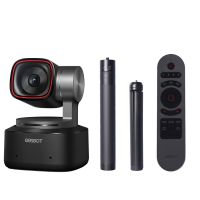
OBSBOT Tiny 2 4K AI-Powered PTZ Webcam with USB C 3.0 Type C Auto Focus & Tracking for Web Camera Live Streaming Home Workspace Setup Conference Meeting Online Class - Support Windows Mac OS Linux PC Laptop Computer Macbook iMac
₱21,690.00₱27,113.00
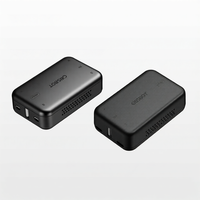
Obsbot | USB to HDMI Adapter
₱15,275.27
Buy on Lazada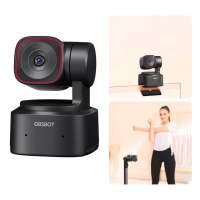
OBSBOT Tiny 2 Lite AI-Powered PTZ 4K Webcam with Intelligent Subject Tracking Auto Zoom Dual Omnidirectional Microphone with Adjustable Noise Cancellation 2-Axis Gimbal and Supports Windows and macOS for Computers & Laptops
₱11,090.00₱13,863.00

Obsbot | Live Streaming Video Conference Gaming CamerA
₱7,036.17
Buy on Lazada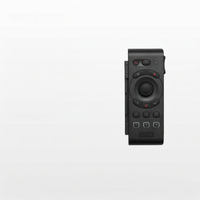
Obsbot | Smart Remote Control for OBSBOT Tail Series
₱5,649.15
Buy on Lazada
Obsbot | Beauty Enhancing 4K USB Web Camera
₱14,246.04
Buy on Lazada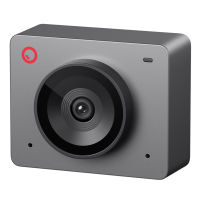
OBSBOT Meet SE Full HD 1080p at 100fps Webcam AI-Powered Plug-and-Play Framing Camera with 1/2.8″ Sensor Staggered HDR Gesture Control Beauty Mode for Video Conference Presentation Meetings Live Recording & Streaming
₱5,090.00₱6,363.00
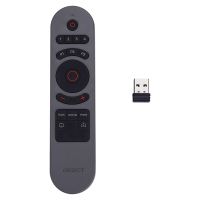
OBSBOT Tiny 2 Smart Remote Control with Wireless Connection via USB Receiver Presentation Clicker for Tiny 2/Tiny 4K/1080P Webcam
₱2,390.00₱2,988.00
About Obsbot
Overview
Obsbot is a Chinese consumer electronics brand specialising in AI-powered cameras, webcams, PTZ cameras, and video production equipment. The brand is distinguished by its integration of artificial intelligence with camera hardware, employing features such as AI tracking, auto-framing, gesture control, voice control, and intelligent image processing to simplify filming and video communication for users without traditional camera crews.1
Founded in April 2016 and headquartered in Shenzhen, Guangdong, China, Obsbot operates under REMO TECH (睿魔智能科技). The parent company focuses on applying artificial intelligence and robotics technologies to imaging systems.12 Obsbot describes its corporate mission as “Connecting you to the Future.”1
| Field | Information |
|---|---|
| Brand | Obsbot |
| Chinese name | OBSBOT 寻影 |
| Parent company | REMO TECH / 睿魔智能科技(深圳)有限公司 |
| Founded | April 2016 |
| Headquarters | Shenzhen, Guangdong, China |
| Industry | Consumer electronics, imaging, AI cameras |
| Core technology | Artificial intelligence, computer vision, camera systems |
| Main products | Webcams, PTZ cameras, live-production cameras, AI phone mounts and accessories |
| Major product families | Tiny, Meet, Tail, Talent, Me |
| Target users | Streamers, content creators, remote workers, educators, businesses, live-production professionals |
| Brand slogan | “Connecting you to the Future” |
| Global reach | Users in 150+ countries/regions2 |
| Technology patents | 140+1 |
Company materials characterise Obsbot as an artificial-intelligence camera brand rather than a conventional camera manufacturer.1
History
2016: Foundation
Obsbot was established in April 2016 by REMO TECH in Shenzhen. From its inception, the brand focused on the intersection of AI, imaging, and robotics.1
Rather than competing solely on traditional photography specifications, the company pursued the concept that a camera could utilise AI to interpret the scene before the lens and adjust automatically. This philosophy became the foundation of the brand’s signature feature: AI-powered subject tracking.1
2018: Obsbot Tail
One of the brand’s early flagship products was the Obsbot Tail, an autonomous camera designed to follow a subject while recording. The Tail represented a departure from standard consumer video cameras; instead of requiring an operator, it used AI to track subjects automatically. This functionality proved particularly useful for solo creators, presentations, and demonstrations where the subject was also the producer.1
2019: International recognition
The original Obsbot Tail gained significant international attention when it was selected as one of TIME’s Best Inventions of 2019.2 This recognition helped establish Obsbot globally as an innovative AI-camera company distinct from standard webcam manufacturers.
2019–2021: Expansion into webcams
Obsbot subsequently adapted its tracking technology for webcams, most notably with the Obsbot Tiny. The Tiny introduced AI tracking to a compact webcam form factor, enabling the camera to follow speakers during video calls or livestreams. The company later released the Obsbot Tiny 4K, described as its first 4K webcam.1
2022 onwards: AI webcams and professional video
The product lineup expanded into several distinct families:
- Tiny: AI-powered PTZ webcams
- Meet: Conventional-style webcams emphasising image quality and AI features
- Tail: Autonomous and PTZ cameras for live production
- Talent: Multi-camera live-streaming and production equipment
- Me: AI-powered smartphone and camera mounting products
The current ecosystem spans both consumer webcams and professional live-production equipment.1
Core Technology
Obsbot is defined by its approach to making the camera itself intelligent. Unlike traditional passive imaging devices, Obsbot products combine computer vision, motor control, and automation to analyse scenes and determine operational adjustments independently.
AI tracking
AI tracking is the brand’s signature technology. Compatible cameras can identify and follow a moving person, removing the need for the user to remain in a fixed position. This capability supports applications including livestreaming, online teaching, fitness instruction, cooking demonstrations, product showcases, video calls, and solo filmmaking.
Auto-framing
Auto-framing allows the camera to adjust composition dynamically around the subject. If a user moves closer to or further from the lens, the system modifies the framing to maintain appropriate positioning.
PTZ architecture
Many Obsbot cameras utilise PTZ (Pan-Tilt-Zoom) hardware:
- Pan: Horizontal rotation
- Tilt: Vertical rotation
- Zoom: Focal magnification adjustment
Combining PTZ mechanics with AI tracking enables models like the Tiny series to physically follow a subject.
Gesture and voice control
Select products incorporate gesture recognition, allowing users to control functions such as tracking without touching the device. Newer models also integrate voice-based and software-based controls alongside physical inputs, aiming to reduce manual operation.1
Product Families
Obsbot Tiny
The Tiny family is the product line most closely associated with the brand. It consists primarily of compact AI-powered PTZ webcams that combine motorised movement with AI tracking. The range has included the Obsbot Tiny, Obsbot Tiny 4K, Obsbot Tiny 2, Obsbot Tiny 2 Lite, Obsbot Tiny SE, and the Obsbot Tiny 3 series.1
Typical users include YouTubers, streamers, remote workers, teachers, online presenters, fitness instructors, and business professionals seeking flexibility beyond fixed webcams.
Obsbot Meet
The Meet family targets traditional webcam usage scenarios. Compared to the motorised Tiny series, Meet products emphasise a compact form factor while incorporating AI-based imaging and framing features. Models include the Obsbot Meet, Obsbot Meet 2, Obsbot Meet SE, and Obsbot Meet Flip.1
This series is relevant for video conferencing, online classes, streaming, content creation, hybrid work, and laptop or desktop setups.
Obsbot Tail
The Tail line represents the brand’s autonomous video camera technology intended for sophisticated video production. The original Tail was recognised in TIME’s Best Inventions of 2019.2
Subsequent models, including the Tail Air and Tail 2, have moved the concept towards professional live production. According to company materials, Tail 2 supports NDI and FreeD protocols and uses a PTZR design, placing it in a different category from standard USB webcams.1
Obsbot Talent
Obsbot Talent targets the live-streaming and video-production market. Rather than functioning solely as a camera, Talent provides functionality for managing multiple cameras and live video workflows. This marks an evolution in strategy from manufacturing intelligent cameras to building intelligent video-production systems.1
Obsbot Me
The Obsbot Me applies AI tracking to a smartphone mount rather than a webcam. The mount automatically tracks the user, enabling hands-free mobile recording without a separate tracking application. Obsbot describes it as its first AI-powered phone mount with built-in tracking.1
Brand Philosophy
Obsbot’s product strategy centres on three core concepts:
Autonomous cameras
The company aims to shift the operational model from “person operates camera” to “camera understands person and records automatically,” reducing the cognitive load on the user.
Accessible professional video
Professional video production traditionally requires operators, tripods, gimbals, tracking systems, lighting, and software. Obsbot attempts to automate these functions through AI to make high-quality production more accessible.
Solo creator focus
A primary audience is the one-person production team who acts as presenter, operator, director, streamer, and editor simultaneously. AI tracking is considered essential for this workflow.
Target Market
Obsbot operates at the intersection of several markets:
| Market | Relevance |
|---|---|
| Webcams | AI-enhanced video calls and streaming |
| Content creation | Hands-free recording and tracking |
| Livestreaming | PTZ cameras and production equipment |
| Education | Tracking instructors and presenters |
| Business | Video conferencing and presentations |
| Fitness | Following moving instructors |
| Live events | Automated camera operation |
| Professional production | PTZ, NDI and related workflows |
Depending on the specific product, the brand overlaps with traditional webcam manufacturers, PTZ-camera companies, action-camera brands, gimbal manufacturers, and live-production equipment firms.
Major Differentiator
Obsbot’s primary differentiator is the use of AI as a camera-control technology. While many manufacturers use AI for autofocus or exposure, Obsbot integrates AI into the physical operation of the camera. The combination of computer vision, motorised hardware, and software allows the device to recognise a moving subject and physically adjust to keep them framed.1
Awards and Recognition
Obsbot has received numerous design and technology awards, including:
- TIME Best Inventions 2019 (Obsbot Tail)
- CES Asia Innovation Awards
- Red Dot Design Award
- iF Design Award
- Edison Best New Product Awards
- NAB Show Product of the Year
- T3 Platinum Award
- Digital Trends Recommended
- PCWorld Best of
- CNET Best of / Editor’s Choice
- XDA Best of
The company’s website lists more than 140 technology patents and users across over 150 countries and regions.12
Relationship with REMO TECH
Headquarters and Global Presence
Obsbot originated in Shenzhen, a major technology and electronics manufacturing centre in China. The company’s Chinese website lists operations involving Shenzhen, Chengdu, and Hangzhou.2 Its international presence extends to users in more than 150 countries and regions, with a global strategy targeting streamers, YouTubers, remote professionals, technology enthusiasts, and video-production professionals.2
Comparison with Traditional Webcams
| Feature | Conventional webcam | Obsbot AI webcam |
|---|---|---|
| Fixed framing | Usually | Usually available |
| Auto-framing | Sometimes | Common |
| AI tracking | Less common | Major feature |
| Motorized movement | Rare | Available on Tiny/PTZ models |
| Hands-free operation | Limited | Major design goal |
| 4K models | Common in premium segment | Available |
| Live-production cameras | Usually separate category | Tail ecosystem |
| AI as core identity | Usually secondary | Central to brand |
The brand’s distinctive strategy lies in combining these technologies into consumer-friendly camera products rather than inventing every individual technology.
Competitive Position
Obsbot competes across multiple categories. Depending on the product, competitors may include Logitech (webcams), Insta360 (creator cameras), DJI (cameras and gimbals), Elgato (streaming equipment), AVer (professional webcams/PTZ), Sony (imaging), Canon (video equipment), and Panasonic (professional video/PTZ).
The brand’s strongest niche is arguably the intersection of webcams, AI tracking, PTZ functionality, and creator-oriented automation.
Evolution of the Brand
- 2016: Established as an AI imaging startup and brand.
- 2018–2019: Launched autonomous AI camera (Tail).
- 2019–2021: Expanded into AI webcams (Tiny).
- 2021–2023: Released 4K webcams and broadened the creator ecosystem.
- 2023–2024: Introduced advanced AI webcams and live-production products.
- 2024–2026: Expanded Tiny, Meet, and Tail ecosystems alongside professional production tools and AI phone accessories.
The current catalogue includes the Talent, Tail, Tiny, Meet, and Me families, demonstrating expansion beyond the original autonomous-camera concept.1
Reputation and Brand Identity
Obsbot has developed an identity centred on “AI that operates the camera for you.” This positioning appeals to users seeking professional-looking video without complex production setups. Products attract those valuing automation, ease of use, subject tracking, hands-free shooting, and AI-assisted production.
Professional users may evaluate the brand based on software compatibility, latency, image quality, tracking reliability, networking protocols, and integration with established production workflows.