Shop on Lazada
OEM Japan products
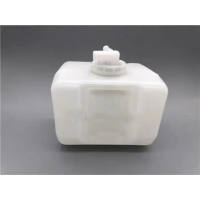
Radiator Reservoir (Thick) for Pajero Gen 1 & 2 4D56 2.5 Fieldmaster 4M40 Mitsubishi
₱238.00₱400.00
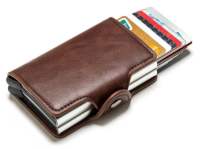
High Quality Rfid Wallet Men Money Bag Mini Purse Male Vintage Automatical Aluminium Rfid Card Holder Wallet Small Smart Wallet Credit Card Holder RFID Blocking Wallet Slim Wallet PU Leather Vintage Automatic Side Slide Trigger Card Holder
₱209.00₱699.00
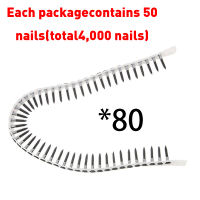
Big Promotion 500PCS Black Flat Head Screws for Wood Metal Gypsum Cordless Self-tapping Corrosion Resistant Power Tool
₱2,476.00₱4,952.00
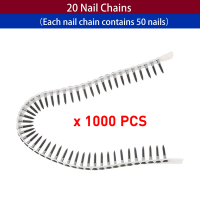
Chain Screw Gun Automatic Cordless Electric Hammer Drill Nail Gun Self-tapping Adapter
₱610.00₱1,220.00
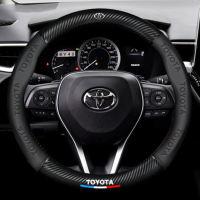
TOYOTA 38cm 3D Relief Carbon Fiber Leather Car Steering Wheel Cover Embossed Logo Decoration Accessories
₱399.00₱799.00
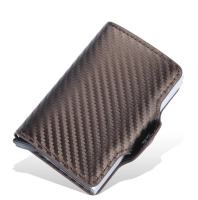
High Quality Credit Card Holder RFID Blocking Wallet Slim Wallet PU Leather Vintage Aluminum Business Card Holder Automatic Side Slide Trigger Card Case Wallet Security Travel Wallet for men Smart Wallet
₱209.00₱699.00
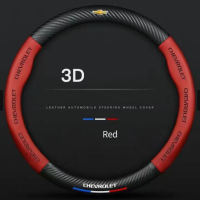
CHEVROLET 38cm 3D Relief Carbon Fiber Leather Car Steering Wheel Cover Embossed Logo Decoration Accessories
₱399.00₱799.00
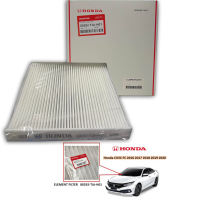
80292-TJA-H01Cabin Filter Element for Honda City / Jazz / Brio / Mobilo / Civic / CR-V / BR-V / HR-V
₱249.00
Buy on LazadaAbout OEM Japan
Overview
OEM Japan is a Japan-based online B2B directory and matching platform dedicated to OEM (Original Equipment Manufacturing), ODM, and private-label manufacturing. It primarily connects businesses seeking product development or manufacturing services with Japanese contract manufacturers, specifically within the food, cosmetics, and beverage industries.1 Unlike a traditional consumer brand that produces and sells its own goods, OEM Japan operates as an information discovery and business-matching service. Its database enables prospective brand owners, retailers, distributors, and other enterprises to search for Japanese manufacturers based on product category, location, production capabilities, certifications, minimum order quantities, and other specific criteria.2
| Item | Information |
|---|---|
| Name | OEM Japan |
| Japanese name | OEM JAPAN |
| Website | oemjp.com |
| Type | B2B OEM/ODM manufacturer directory & matching platform |
| Primary market | Japan |
| Industries | Food, cosmetics, beverages |
| Target users | Brand owners, businesses, buyers, retailers, distributors, entrepreneurs |
| Core function | Finding and comparing Japanese contract manufacturers |
| Manufacturing model | OEM, ODM, private label |
| International service | Yes |
| English platform | Japan Ingredient Sourcing Platform |
| Operator | OEM JAPAN 運営事務局 |
| Founded/launched | Not publicly disclosed |
The operator describes OEM Japan as a platform linking Japanese OEM and contract manufacturers with companies requiring production services. Additionally, it manages an English-language platform targeting overseas buyers known as the Japan Ingredient Sourcing Platform.3
History and Development
Publicly available corporate history for the company is limited. The operator page identifies the managing organization as OEM JAPAN 運営事務局, indicating the platform functions as a service entity rather than a large manufacturing corporation with proprietary factories.4 Over time, the platform has increasingly oriented itself toward international buyers. Its English-language resources cover various aspects of Japanese OEM manufacturing, including manufacturer selection, product development, regulatory compliance, cost structures, and export logistics.5
As of 2026, the English directory of OEM Japan lists 326 manufacturers across 43 prefectures, spanning the food, cosmetics, and beverage categories.6 Broader promotional materials describe the service as covering over 900 Japanese manufacturers, suggesting the precise count varies by directory version, language, database scope, or counting methodology. The specific English manufacturer directory currently displays 326 results.7
Business Model
OEM Japan operates fundamentally as a platform business rather than a factory. Its role sits between the buyer and the manufacturer:
Brand / Buyer → OEM Japan → Japanese Manufacturer → Finished Product
For example, a business intending to launch a Japanese skincare line can use the platform to identify capable manufacturers and compare relevant suppliers. The terms of service explicitly define the offering as a database service providing information on OEM manufacturers to businesses seeking production. Manufacturer data is independently compiled from publicly available sources, such as official company websites.8
Crucially, OEM Japan states that listing a manufacturer does not imply a partnership, endorsement, or agency relationship with that manufacturer.9
Main Industries
OEM Japan focuses on three primary sectors.
Food
The food directory encompasses a wide range of categories:
- Seasonings and sauces
- Prepared foods
- Sweets and desserts
- Noodles
- Processed meat
- Seafood
- Dairy products
- Supplements and health foods
- Retort foods
- Frozen foods
- Agricultural products
The directory includes manufacturers capable of both small-lot and large-scale production.10
Cosmetics
Cosmetics represents another major category, covering:
- Skincare
- Makeup
- Hair care
- Body care
- Fragrance
- Oral care
- Quasi-drugs
- Cosmetic contract manufacturing
Some listed manufacturers offer OEM/ODM development, sampling, small-lot production, and specialized formulation capabilities.11
Beverages
The beverage section includes:
- Tea beverages
- Coffee beverages
- Juices
- Vegetable drinks
- Carbonated drinks
- Functional/health beverages
- Dairy and other beverages
This focus makes the platform particularly relevant for Philippine companies aiming to create branded Japanese food or beverage products without establishing their own manufacturing facilities.12
OEM vs. ODM vs. Private Label
A key function of OEM Japan is helping prospective buyers distinguish between different manufacturing arrangements.
OEM
In an OEM arrangement, the brand owner typically leads in determining product specifications, formulation, ingredients, and packaging, while the manufacturer handles production. This model offers greater customization and differentiation but generally requires more extensive development work and technical expertise.5
ODM
With ODM, the manufacturer assumes a larger role in product planning and development. Manufacturers may provide existing formulations or concepts customized for the client’s brand, potentially reducing development time and complexity compared to creating a product from scratch.5
Private Label
Private-label manufacturing is generally the simplest model, where a company sells an existing product under its own branding with little or no modification. OEM Japan presents these models as distinct options depending on the buyer’s budget, desired level of customization, internal expertise, and time-to-market requirements.14
Manufacturer Discovery System
The manufacturer directory is a central feature of OEM Japan. Users can filter manufacturers based on multiple factors:
- Industry
- Product category
- Prefecture
- Small-lot capability
- Samples
- ODM support
- Certifications
- Minimum order quantity
- Production specialization
The current English directory identifies 69 certified manufacturers and covers manufacturers across 43 prefectures.11 Listings range from cosmetics companies and noodle producers to beverage firms, food processors, and specialized ingredient manufacturers.12
Small-Lot Manufacturing
OEM Japan places significant emphasis on small-lot manufacturing, which is particularly relevant for startups, new brands, small retailers, entrepreneurs, test-market products, limited editions, and overseas companies entering Japan-related markets. Some listed manufacturers accept relatively low minimum quantities. For instance, LOTTZ Co., Ltd. is highlighted as supporting cosmetics production from approximately 100 units, though minimums vary substantially by manufacturer and product type.12
Consequently, OEM Japan does not enforce a universal MOQ; minimum orders depend entirely on the individual factory, product type, formulation, packaging, and production process.
International Business
OEM Japan increasingly targets buyers outside Japan, including those in the Philippines. Its English-language content addresses international OEM projects and explains critical issues such as export requirements, regulatory compliance, product formulation, English-language communication, manufacturer selection, international shipping, costs, and timelines. While many Japanese manufacturers with export experience employ English-speaking staff or international sales teams, language capabilities vary by company.13
Notably, OEM Japan explicitly identifies Southeast Asia—including the Philippines, Thailand, Vietnam, Malaysia, and Indonesia—as a priority market for its distribution-related business.6
“Made in Japan” Positioning
The international reputation of Japanese manufacturing serves as a major value proposition for the platform. OEM Japan emphasizes perceived advantages of Japanese production, including quality control, manufacturing precision, product consistency, R&D capabilities, regulatory standards, intellectual property protection, supply-chain reliability, and “Made in Japan” brand value. The platform also highlights Japanese manufacturing concepts such as kaizen (continuous improvement) and monozukuri (manufacturing craftsmanship).15 This positioning is especially relevant for premium cosmetics, specialty foods, and functional beverages where Japanese origin contributes to the product’s marketing appeal.
How the OEM Japan Process Works
A typical sourcing project through the platform follows a structured workflow:
- Product concept: The buyer defines the product vision.
- Manufacturer search: The buyer uses OEM Japan to find manufacturers with appropriate capabilities.
- Inquiry / consultation: The buyer contacts suitable manufacturers or requests platform assistance.
- Development: The manufacturer develops formulations, recipes, prototypes, and packaging specifications.
- Testing and revisions: Samples are produced and adjusted per buyer requirements.
- Contract and specifications: Pricing, quantities, specs, IP arrangements, and terms are finalized.
- Mass production: The selected manufacturer produces finished goods.
- Delivery / export: Products are delivered or prepared for international distribution.
The platform’s 2026 guide outlines a similar process, covering stages from initial inquiry through formulation, prototyping, production, and delivery.7
Content and Educational Role
Beyond its directory function, OEM Japan publishes educational material explaining the Japanese OEM industry. Articles cover topics such as choosing an OEM manufacturer, OEM vs. ODM distinctions, small-lot cosmetics manufacturing, food OEM, manufacturing costs, certifications, regulatory requirements, and product development processes. The editorial team states that articles draw on manufacturer websites, industry association releases, and regulator publications.8 A comprehensive 2026 OEM guide further details manufacturing processes, costs, regulations, manufacturer selection, common pitfalls, and expected timelines.7
Relationship with Listed Manufacturers
It is important to note that OEM Japan is not necessarily the manufacturer of products shown in its directory. Instead, it aggregates and organizes information about independent Japanese manufacturers. For example, a listing for OEM Co., Ltd. identifies it as a Tokyo-based cosmetics OEM manufacturer, but the page explicitly states that OEM Japan has no partnership or agency agreement with the listed company and recommends consulting the manufacturer’s official website for current information.11 Therefore, OEM Japan functions as a specialized B2B marketplace, directory, and information intermediary rather than a single manufacturing entity.
Strengths
- Large manufacturer discovery network: Provides a centralized method to discover Japanese factories that might otherwise be difficult for overseas buyers to identify.
- Industry specialization: Concentrates specifically on OEM manufacturing in food, cosmetics, and beverages rather than serving as a generic business directory.
- Useful filtering: Enables easier manufacturer comparison through filters for product categories, locations, certifications, small-lot capabilities, and ODM support.11
- International orientation: English-language content and focus on international buyers enhance accessibility for overseas businesses, including those in the Philippines.12
- Educational resources: Guides assist first-time brand owners in understanding Japanese OEM terminology and processes.
- Access to small manufacturers: Includes both established manufacturers and smaller specialized producers offering small-lot production.16
Limitations
OEM Japan does not guarantee that every listed manufacturer is suitable for a specific project. The platform states that manufacturer information is compiled from public sources and that listed companies are not necessarily partners or endorsed entities.10 Prospective buyers should independently verify current production capabilities, MOQs, pricing, certifications, factory locations, export capabilities, lead times, regulatory compliance, product quality, IP ownership, contract terms, and whether the factory accepts overseas clients. Independent verification is essential as manufacturing requirements and capabilities can change over time.
Relationship to Japanese OEM Manufacturing
The name OEM Japan refers to the platform itself, not a single OEM factory. In practice, the platform serves as an interface between hundreds of independent Japanese manufacturers and brand owners or buyers. Its primary value lies in discovering, comparing, and connecting with manufacturers rather than producing goods directly.
Overall Assessment
OEM Japan is a specialized Japanese B2B sourcing and manufacturer-discovery platform focused on OEM, ODM, and private-label production. Its principal niche involves helping businesses—particularly those interested in Japanese food, cosmetics, and beverages—find suitable contract manufacturers. It combines a manufacturer database with educational content and matching services while increasingly targeting overseas buyers in markets like the Philippines.6 From a business perspective, its positioning resembles a vertical B2B marketplace with a narrow focus on Japanese contract manufacturing. Crucially, OEM Japan itself is generally not the factory but rather the platform through which buyers discover and approach manufacturers.
OEM Japan is a Japanese B2B OEM/ODM sourcing platform that connects businesses with Japanese food, cosmetics, and beverage manufacturers while providing directories, comparison tools, educational resources, and buyer-support services.12
References
- 運営会社 | OEM JAPAN | OEM JAPAN
- Terms of Service | OEM JAPAN
- Japanese OEM Manufacturer Directory — Food, Cosmetics & Beverages | 900+ Factories | OEM JAPAN
- The Complete Guide to OEM Manufacturing in Japan (2026) | OEM JAPAN | OEM JAPAN
- OEM vs. ODM: A Thorough Comparison of Benefits and Drawbacks | OEM JAPAN
- Exclusive Distribution Partnership — Japan Products for Your Market | oemjp | OEM JAPAN
- 日本OEM製造の完全ガイド(2026年版)|OEM JAPAN | OEM JAPAN
- Japan OEM Manufacturing Articles — Industry Insights & Know-How | OEM JAPAN
- OEM Co., Ltd. — Skincare OEM Manufacturer in Japan | OEM JAPAN
- プライバシーポリシー | OEM JAPAN
- 株式会社OEM|スキンケアOEM製造・受託製造メーカー | OEM JAPAN
- Japanese OEM Sourcing — B2B Buyer Services for Food & Cosmetics | oemjp | OEM JAPAN
- Japan Gals SC Co., Ltd. — Skincare OEM Manufacturer in Japan | OEM JAPAN
- Cosmetic OEM Japan – Private Label Manufacturing|Solid,Inc.
- Cosmetic OEM Japan – Private Label Manufacturing|Solid,Inc.
- 株式会社アクセル | OEM | Japan, 東京都渋谷区千駄ヶ谷3−54−13