Shop on Lazada
Olfa products
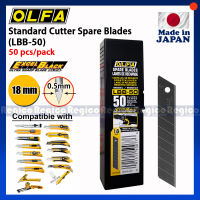
OLFA Spare cutter blade (LBB-50) 50 pcs per pack Regico Hardware
₱580.00
Buy on Lazada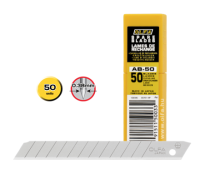
Olfa AB-50 Blade for OLFA AB-50 9mm for: SVR-1 180 Black A-1 A-2 A-3 A-5 300 NA-1SVR-2 PA-2 and XA-1.
₱360.00₱400.00
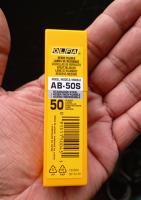
50pcs Olfa AB-50s Stainless Steel Blade for SVR-1 180 Black A-1 A-2 A-3 A-5 300 NA-1SVR-2 PA-2 and XA-1.
₱670.00
Buy on Lazada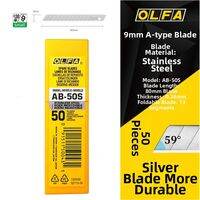
OLFA | Craft Blade 9mm
₱989.45₱1,091.71
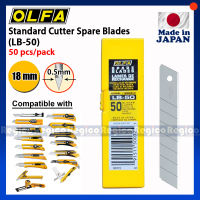
Olfa 18mm Blade Pack (LB-50) Regico Hardware
₱525.00
Buy on Lazada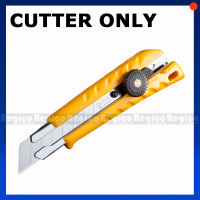
OLFA L-1 Heavy Duty 18mm Cutter Regico Hardware
₱215.00
Buy on Lazada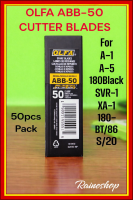
OLFA ABB-50 Blade 50pcs Pack 9mm Ultra Sharp Black Blade for SVR-1 cutter A-1 XA-1 A-5 S/20 180Black
₱370.00
Buy on Lazada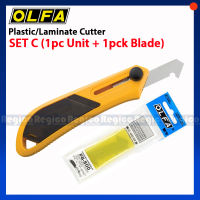
Olfa Plastic Laminate Cutter (PC-L) Regico Hardware
₱360.00
Buy on LazadaAbout Olfa
OLFA (オルファ, Orufa) is a Japanese manufacturer best known for inventing the snap-off blade cutter, a utility knife featuring segmented blades that can be broken off to reveal a fresh cutting edge. Founded on the innovations of Yoshio Okada, OLFA has established itself as one of Japan’s most prominent cutting-tool brands. Its products are widely used across construction, manufacturing, packaging, office work, arts and crafts, quilting, sewing, and modelling.1
Headquartered in Osaka, Japan, the company designs, develops, and manufactures its products domestically. According to current corporate information, OLFA Corporation reported ¥8.62 billion in sales for 2024, employed 99 staff members including those at OLFA WORKS, and was led by president Shinichi Okada.2
Quick facts
| Information | |
|---|---|
| Brand | OLFA |
| Japanese name | オルファ株式会社 (OLFA Corporation) |
| Country of origin | Japan |
| Headquarters | Osaka, Japan |
| Founder | Yoshio Okada (岡田良男) |
| Key invention | World’s first snap-off blade cutter |
| Year of invention | 1956 |
| First commercial sale | 1959 |
| Company founded | 1967 |
| Current company name | OLFA Corporation (since 1984) |
| Second major invention | World’s first rotary cutter (1979) |
| Main business | Cutting tools and hand tools |
| Major markets | Professional, construction, industrial, craft, quilting, sewing, art, and safety |
| Manufacturing philosophy | Designed, developed, and manufactured in Japan |
| Global reach | Exported to over 100 countries and locations |
| 2024 sales | ¥8.62 billion |
| Current president | Shinichi Okada |
| 70th anniversary | 2026 |
The company’s official history cites 1956 as the year the snap-off cutter was invented, 1959 as its commercialisation, 1967 as the establishment of predecessor Okada Kogyo, and 1984 as the adoption of the OLFA Corporation name.3
Core concept and product range
OLFA is fundamentally a cutting-tool company, but its significance extends beyond standard utility knife manufacturing. Its defining innovation transformed the disposable razor blade into a segmented blade that could be renewed by snapping off worn sections. This concept underpins the modern snap-off utility knife. Rather than discarding an entire blade when dull, users can break off the worn segment to expose a fresh edge, thereby improving efficiency, convenience, and safety. The dimensions and geometry of the original OLFA design eventually became de facto industry standards for snap-off blades.4
Today, the OLFA portfolio includes snap-off cutters, rotary cutters, replacement blades, cutting mats, scissors, scrapers, safety cutters, quilt rulers, and specialised hand tools.5
Founder and origins
Yoshio Okada (1931–1990) was the inventor behind OLFA’s core technology. Born in Osaka in 1931, he grew up in a family involved in paper cutting and developed an early interest in knives and cutting tools. According to company accounts, he would collect broken tools and reshape or sharpen them for reuse.6
His professional experience highlighted a recurring issue: cutting blades dulled quickly. Replacing entire blades was inefficient and costly for continuous users. Okada began experimenting with alternative concepts, drawing inspiration from two observations: the way chocolate bars divide into segments and the sharp edge produced when glass breaks. Combining these ideas led to the development of a blade divided into sections that could be deliberately broken away.7
Invention of the snap-off blade
In 1956, Okada completed the world’s first snap-off blade cutter. The early design was sophisticated, incorporating specific blade dimensions, groove spacing, groove depth, hardness, grinding precision, and a 59-degree blade angle—a specification OLFA states remains associated with its blade design today.8
Commercialisation proved challenging initially, as established manufacturers showed little interest due to conventional beliefs that blades should not break. Okada ultimately decided to produce the tool himself. One early production run of approximately 3,000 pieces required manual finishing; historical accounts note that Okada personally reworked imperfect pieces with hand tools over three months before they were saleable.9 The product was commercially launched in April 1959.10
Corporate history and naming
On 8 June 1967, Yoshio Okada established Okada Kogyo Co., Ltd. with his brothers and wife; this entity became the predecessor to today’s OLFA Corporation.11 The name OLFA was selected specifically for international use, deriving from the Japanese expression for “breaking a blade”. The company initially considered the spelling OLHA but changed the H to F because H pronunciation varies across languages, ensuring the name would work globally.12 In 1984, Okada Kogyo officially changed its corporate name to OLFA Corporation.13
Visual identity
Yellow colour scheme
The distinctive OLFA yellow is one of the most recognisable visual identities in the cutting-tool industry. Yoshio Okada deliberately chose this warm, egg-yolk-like yellow in 1967 over conventional industrial grey or black. The choice was both practical and symbolic: a bright yellow tool is easier to locate in a toolbox or workspace, and Okada associated the colour with safety and familiarity. Consequently, the colour became integral to the brand’s philosophy, with safety described as an underlying principle of OLFA yellow.14
Logo
The OLFA logo also relates directly to the company’s invention. The parallelogram-shaped mark is based on the form of a snap-off blade, meaning both the name and visual identity reference the original product. This creates strong integration between the brand name (referring to breaking a blade), the logo (representing a snap-off blade), the yellow colour (representing safety), and the core product itself.15
Rotary cutter and expanded categories
In 1979, Yoshio Okada invented the world’s first rotary cutter, which uses a circular blade that rolls across material rather than moving like scissors or a conventional knife.16 This invention transformed fabric cutting by enabling long, smooth cuts without repetitive scissor movements. Rotary cutters subsequently became essential in quilting, sewing, textile work, leatherwork, paper craft, vinyl cutting, and other precision-material applications, and remain a major part of the OLFA portfolio.17
Beyond utility and rotary knives, OLFA now offers several product categories:
- Snap-off blade cutters: Ranging from compact precision models to heavy-duty versions for demanding materials.
- Safety cutters: Designed for safer handling, including concealed and retractable-blade concepts; the Safety Cutter series launched in 1997.18
- Scrapers: For removing debris, cleaning surfaces, and preparing materials.19
- Scissors: Professional and craft-oriented models.
- Cutting mats: Self-healing and other mats designed to protect work surfaces and support rotary cutting.
- Quilt rulers: Complementary tools forming part of the quilting ecosystem.
- Replacement blades: Precision blades for various cutters and applications, critical to the system’s functionality.20
Markets and applications
OLFA divides its modern product offering into several application areas:
Professional
Professional tools target industries and trades including construction, maintenance, repair, packaging, shipping, manufacturing, flooring, industrial work, and general material processing. The range includes extra-heavy-duty, heavy-duty, medium-duty, precision, and specialty tools.21
Craft
The craft segment covers art, papercraft, quilting, sewing, modelling, hobby work, and precision cutting.22
Safety
A dedicated safety-tool category includes semi-automatic, fully automatic, concealed, and specialised cutters.23
Manufacturing philosophy
Japanese manufacturing is central to OLFA’s positioning. The company states that its products are designed, developed, and manufactured in Japan, emphasising blade quality as well as handle and holder engineering.24 Blade production draws on technologies associated with traditional Japanese sword-making, combined with modern sharpening and manufacturing techniques.25 Accordingly, OLFA positions itself around precision, sharpness, durability, safety, and Japanese manufacturing rather than as a low-cost disposable tool brand.
Global influence and organisation
The original snap-off blade specifications became a de facto industry standard. Because initial patent protection was geographically limited, other manufacturers eventually produced cutters based on the same dimensions and principles, which helped spread the concept internationally.26 OLFA cutters are now exported to more than 100 countries and locations worldwide, with over 100 product types currently available.27
While headquartered in Osaka, OLFA maintains an international corporate structure comprising OLFA Corporation (Japan), OLFA WORKS Co., Ltd. (manufacturing in Osaka), OLFA NORTH AMERICA INC. (Canada), OLFA U.S.A. INC. (United States), and OLFA Europe Kft. (Hungary). The North American subsidiaries were established in October 2020, while OLFA Europe Kft. was established in March 2025.28
Current status and anniversaries
As of 2026, OLFA is celebrating 70 years since Yoshio Okada’s 1956 invention of the snap-off blade cutter, using the anniversary to highlight its history of innovation and the continued relevance of the snap-off system.29 Current product guides describe OLFA as Japan’s number-one cutter-knife brand and note exports to users in over 100 countries and locations.30 The portfolio has expanded from a single breakthrough idea into a comprehensive cutting ecosystem encompassing snap-off knives, specialty knives, safety cutters, rotary cutters, blades, mats, rulers, scissors, and professional tools.
Historical timeline
| Year | Event |
|---|---|
| 1931 | Yoshio Okada is born in Osaka |
| 1956 | Okada invents the world’s first snap-off blade cutter |
| 1959 | Snap-off cutter is commercialised and sold |
| 1967 | Okada Kogyo is established; OLFA name appears |
| 1967 | OLFA yellow becomes part of the product identity |
| 1968 | Export operations begin |
| 1972 | English corporate name becomes OLFA Corporation |
| 1979 | World’s first OLFA rotary cutter is invented |
| 1980 | Rotary cutter officially launched |
| 1984 | Company adopts the name OLFA Corporation |
| 1988 | First 25 mm heavy-duty handle introduced |
| 1997 | Safety Cutter series launched |
| 2004 | X-design series introduced |
| 2008 | New Takaida factory completed |
| 2012 | 180 BLACK receives a three-dimensional trademark |
| 2013 | A-1 receives Good Design Award Best 100 recognition |
| 2018 | ESK-1 wins the Japan Stationery Awards Function Category Grand Prix |
| 2019 | Okada Kogyo becomes OLFA WORKS |
| 2020 | OLFA WORKS outdoor brand launched; North American subsidiaries established |
| 2022 | OLFA celebrates 55 years as a company |
| 2025 | OLFA Europe Kft. established |
| 2026 | OLFA celebrates 70 years since the 1956 invention |
Brand philosophy
OLFA’s official philosophy centres on hand tools, innovation, and quality. Its stated corporate philosophy is to enrich people’s lives and contribute to cultural development through the making of hand tools. Core values include Customer First, Originality, Challenge, Mutual Trust, Compliance, Eco-Friendly practices, and Community Contribution.32 This philosophy informs the company’s focus on details such as blade geometry, handle ergonomics, safety mechanisms, replacement systems, and manufacturing consistency.
Historical significance
OLFA’s importance stems from three key contributions. First, the 1956 snap-off blade invention solved the widespread problem of maintaining cutting-tool sharpness without constantly replacing entire blades. Second, the 1979 rotary cutter changed fabric cutting by replacing repetitive scissor movement with a rolling circular blade. Third, the dimensions and geometry established by the original snap-off blade were widely adopted, helping turn the concept into an international tool category.33 Consequently, OLFA’s greatest contribution is not merely a famous product, but a fundamental change in how an entire class of cutting tools functions.
Summary
OLFA is a Japanese cutting-tool manufacturer founded around Yoshio Okada’s 1956 invention of the world’s first snap-off blade cutter, known internationally for its Japanese-made utility knives, rotary cutters, blades, and specialised cutting tools.34 The brand identity combines Japanese precision, sharpness, safety, modular blades, and practical innovation. Notably, this identity has remained closely connected to the original 1956 invention for 70 years, even as the company has continuously expanded into professional, industrial, craft, and textile cutting applications.35
References
- About OLFA
- OLFA CORPORATION〖Official site〗|OLFA CORPORATION, inventor of the snap-off blade cutter knife and rotary blade cutter, is committed to developing unique and safe products. Made in Japan quality.
- Overview|OLFA CORPORATION〖Official site〗
- History|OLFA CORPORATION〖Official site〗
- Characteristics of OLFA products|OLFA CORPORATION〖Official site〗
- Birth of OLFA cutter|OLFA CORPORATION〖Official site〗
- THE HISTORY OF THE SNAP-OFF BLADE CUTTER
- 折る刃式カッターナイフの誕生秘話|オルファ株式会社 〖公式サイト〗
- OLFA Professional
- OLFA | North America
- 70 Years of Snap!
- PRODUCTGUIDE2026 en
- Philosophy|OLFA CORPORATION〖Official site〗
- Professional
- OLFA PRODUCT GUIDE 2026 is available here. Thank you for your patience!|OLFA CORPORATION〖Official site〗
- Be Prepared: Essential Cutting Tools for Life-Threatening Situations
- The OLFA Advantage
- Let’s Talk Backyard Safety with OLFA
- Summer Slice & Stitch – Planning a Portable Craft Project
- OLFA Blades 101: Facts, History and More
- Olfa Blades 101: faits, histoire et plus
- [TIGER & BUNNY 2] OLFA has been selected as an ad placement company for “Origami Cyclone”!|OLFA CORPORATION〖Official site〗
- Find the OLFA® handle that works best for you
- Product Spotlight: The Multi-Blade / Auto-Load Family
- Professional
- Renewed EXL and Additionally introducing NXL for the Overseas Market|OLFA CORPORATION〖Official site〗
- 沿革|オルファ株式会社 〖公式サイト〗
- FAQ|OLFA CORPORATION〖Official site〗
- News|OLFA CORPORATION〖Official site〗
- SITEMAP|OLFA CORPORATION〖Official site〗
- PICKUP|OLFA CORPORATION〖Official site〗
- How OLFA cutters are made|OLFA CORPORATION〖Official site〗
- 会社概要|オルファ株式会社 〖公式サイト〗
- 企業理念|オルファ株式会社 〖公式サイト〗
- Contact Us|OLFA CORPORATION〖Official site〗