Shop on Lazada
Olight products
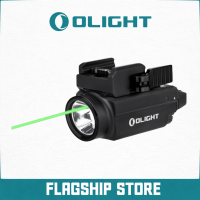
Olight Baldr S 800 Lumens Magnetic USB Rechargeable LED Weap*n Light - Three Modes Quick-Install Slide Rail
₱8,190.00
Buy on Lazada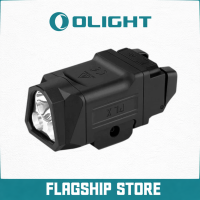
Olight PL X 1200 Lumens Dual-Beam USB-C Rechargeable Light - Flood & Spotlight Rail Mount Waterproof
₱10,995.00
Buy on Lazada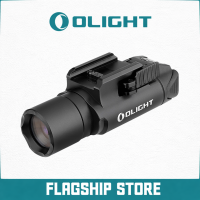
Olight Baldr Pro R 1350 Lumens Magnetic USB Rechargeable with Green Beam and LED Weap*n Light
₱10,195.00
Buy on Lazada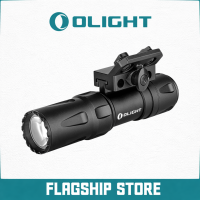
Olight Odin Mini 1250 Lumens Ultra Compact Rechargeable M-lok Mount Tactical Flashlight - Tail Switch Waterproof
₱9,550.00
Buy on Lazada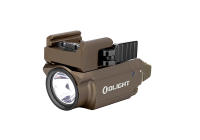
Olight Baldr Mini 600 Lumens Magnetic USB Rechargeable with Green Beam and LED W*apon Light
₱7,795.00
Buy on Lazada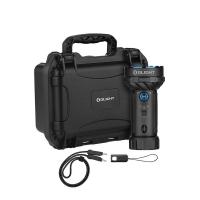
Olight Marauder Mini 2 10000 Lumens Compact Powerful Flashlight
₱13,850.00
Buy on Lazada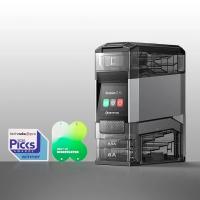
Olight Ostation 2 Pro 3-in-1 Smart Battery Charger & Storage Hub for AA & AAA Ni-MH & Li-ion Batteries
₱8,795.00
Buy on Lazada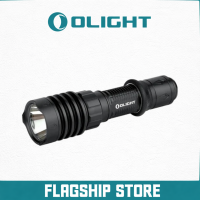
Olight Warrior X 4 2600 Lumens USB-C and MCC Rechargeable Flashlight - Waterproof High Performance Outdoor Use
₱8,450.00
Buy on LazadaAbout Olight
Olight (Chinese: 傲雷, commonly stylized as OLIGHT) is a Chinese technology-driven portable-lighting brand best known for high-performance LED flashlights, everyday-carry (EDC) lights, tactical lights, headlamps, and other personal illumination products. Originating in Shenzhen, the company was founded in the mid-2000s; while some regional materials cite 2006 as the start of operations, Olight’s international documentation generally identifies 2007 as its official founding year.1 The brand has since evolved from a specialized flashlight manufacturer into a global consumer-electronics-style lighting company with distribution and subsidiaries in over 100 countries and regions.2
Olight’s product philosophy emphasizes high output, compact dimensions, rechargeable power sources, distinctive industrial design, and proprietary charging technologies.2 The company is part of the Olight Group (傲雷集团), which is currently headquartered in Zhongshan, Guangdong, China.
Corporate overview
| Field | Information |
|---|---|
| Brand | Olight / OLIGHT |
| Chinese name | 傲雷 |
| Industry | Portable lighting / consumer electronics |
| Founded | 2007* |
| Origin | Shenzhen, Guangdong, China |
| Current group headquarters | Zhongshan, Guangdong, China |
| Founder | Fox Fan (范江) |
| Major products | Flashlights, EDC lights, tactical lights, headlamps, bicycle lights, camping/ambient lights, accessories |
| Market | Global |
| Countries/regions served | 100+ |
| Parent/group | Olight Group / 傲雷集团 |
| Official website | Olight.com |
*Published histories contain a minor discrepancy: some materials describe initial company activity beginning in 2006, while consistent official corporate history uses 2007 as the founding year.3
The company was originally associated with Shenzhen, a major electronics manufacturing hub. The group is now headquartered in Zhongshan, where it has developed a large headquarters and production base. In November 2023, authorities announced the groundbreaking of Olight’s new facility in Cuiheng New District, covering approximately 20,000 m² of land with a planned construction area of about 143,800 m².
Brand name and philosophy
The Chinese brand name is 傲雷. According to the corporate website, the name concept comprises four elements:4
- O — Open: Openness
- O — Original: Originality and innovation
- O — Outstanding: Excellence
- Light: Light, brightness, and happiness
The brand philosophy centers on innovation, user experience, and customer-centric design.4 English-language messaging focuses on making high-quality portable light accessible, with a stated goal of placing an Olight product in as many hands as possible to highlight the practical benefits of illumination in daily life.5
History
Early years and tactical expansion
Olight emerged during the rapid development of China’s LED and electronics manufacturing industries. Founder Fox Fan established the company in Shenzhen, initially targeting outdoor users and flashlight enthusiasts. The first recognized model was the T20, introduced around the founding period.6 Rather than competing solely as a low-cost commodity manufacturer, Olight positioned itself toward the premium and high-performance enthusiast market.
In 2008, the company entered the tactical, military, and law-enforcement lighting market with the M20 series.7 This expanded the portfolio beyond recreational outdoor flashlights. Subsequent developments included increasingly powerful tactical models such as the M30 and the SR series.8 Notable early products included the SR90, a single-LED flashlight capable of approximately 1,000 metres of throw, which helped establish the brand’s reputation for extreme brightness and long-distance illumination.9
Rise of EDC and headlamps
Around 2011, Olight introduced the S-series, characterized by a compact unibody design.10 This marked a transition toward small, high-output lights suitable for everyday carry (EDC). Key features included pocket clips, tail magnets, rechargeable batteries, magnetic charging, and sophisticated electronic controls. This philosophy remains central to modern families such as Baton, Warrior, and Arkfeld.
In 2012, Olight released its first headlamp, the H15.11 This moved the company beyond handheld illumination into hands-free applications for hiking, camping, running, repair work, and search activities, contributing to its transformation into a broader portable-lighting company.
Weapon-mounted lighting and modern era
Throughout the 2010s, Olight continued developing tactical lights, including the notable M22 model introduced in 2013.12 In 2015, the company entered the weapon-mounted lighting segment with the PL-1 pistol light.13 Product families subsequently expanded to include PL (pistol/rail-mounted), Baldr (weapon lights with laser functions), Odin (long-gun/rail-mounted), and Valkyrie (compact weapon lights).
The Warrior X, introduced in 2018, reinforced the brand’s tactical credentials by combining high output, long throw, robust construction, and magnetic charging in a compact form factor.14 In 2022, the Arkfeld shifted away from traditional cylindrical shapes to a flat, rectangular EDC form factor designed to be carried alongside smartphones and wallets. Later versions, such as the Arkfeld Pro, combined multiple illumination functions in a single device.15
Technology and design
Magnetic charging system
A signature technological feature is the extensive use of magnetic charging. Instead of a conventional USB port, many products use a magnetic cable that attaches to a contact on the body or tailcap. This eliminates the need to open rubber port covers, simplifies water and dust sealing, and maintains clean industrial design lines. The ecosystem approach allows compatibility across multiple products. Innovations continue within this platform; for example, the Baton 3 Premium introduced a portable wireless charging case, described as an industry-first for an EDC flashlight at the time.14
Design philosophy
Olight treats flashlights as integrated electronic devices rather than simple mechanical tools. The design approach combines four pillars:
- Performance: Emphasis on lumens, candela, throw distance, and runtime.
- Miniaturization: Delivering high performance in compact bodies.
- Industrial design: Attention to surface finishing, knurling, switch placement, colors, materials, and ergonomics, appealing to the EDC community where tactile quality matters.
- User interface: Sophisticated electronic controls including mode memory, lockout, turbo, strobe, and moonlight modes.
Materials and engineering
Bodies are commonly constructed from aluminum alloys. In 2024, Olight announced OAL™, a proprietary aluminum technology described as particularly resistant to wear.18 Premium and collector-oriented products have also utilized titanium, copper, brass, zirconium, and special anodized finishes.
Products are tested according to ANSI/NEMA FL1-2009 standards, providing standardized metrics for maximum output, runtime, beam distance, peak intensity, impact resistance, and water resistance.18
Manufacturing and operations
Olight maintains manufacturing operations in Guangdong. Its Dongguan facility covers more than 12,000 m² and incorporates automated equipment, robotics, and production-monitoring systems.19 The larger Zhongshan headquarters project, announced in 2023 with a projected construction area of approximately 143,800 m², is intended to integrate headquarters, manufacturing, R&D, and office functions.19 This infrastructure reflects the company’s evolution into a vertically coordinated lighting group.
The group reports having more than 1,000 employees globally and a marketing network covering more than 100 countries and regions.23 Overseas branches and official stores have been established in markets including the United States, Germany, United Kingdom, Australia, France, Japan, and South Korea.20 Unlike traditional manufacturers relying solely on third-party retail, Olight operates as a global direct-to-consumer brand through official online stores, regional websites, email marketing, and social media engagement.
Community and collecting
O-Fan community
Enthusiasts are referred to as “O-Fans.” The company actively organizes events such as O-Fan Day, product launches, factory visits, and loyalty programs. At O-Fan Day 2023, awards were presented including the Super Fan Award, Visionary Award, Group Contributor Award, and Helping Hand Award.21 This strategy fosters a brand community rather than a conventional customer base.
Limited editions
Limited-edition releases are a significant part of the brand identity. These may feature special anodized colors, premium metals, artwork, engraving, anniversary themes, or collaboration designs. Consequently, many users collect Olight products in addition to using them for illumination.
Product portfolio
Olight’s current portfolio extends well beyond traditional flashlights.
| Family | General purpose |
|---|---|
| Baton | Compact EDC flashlights |
| Warrior | Tactical/EDC hybrid flashlights |
| Arkfeld | Flat-form-factor EDC |
| i-Series | Small everyday lights |
| Oclip | Clip-on compact lights |
| Seeker | High-output general-purpose lights |
| Marauder | Extreme-output/high-performance lights |
| Perun | Headlamps / right-angle lights |
| Obulb | Ambient/camping lights |
| Odin | Rail-mounted tactical lights |
| Baldr | Weapon lights with laser-equipped variants |
| PL | Compact pistol/rail lights |
| Valkyrie | Compact weapon lights |
| Accessories | Batteries, chargers, mounts, clips, etc. |
Categories include EDC flashlights, tactical lights, weapon-mounted lights (entered in 2015 with the PL-116), headlamps (introduced in 2012 with the H1517), camping and ambient lights (such as the Obulb family), bicycle lights, and accessories. Recent expansions include smart battery management products like the Ostation X, indicating movement toward a broader portable power ecosystem.22
Market position and reception
Brand positioning
Olight occupies a distinct position defined by mass-market accessibility combined with enthusiast-level performance and premium design. It competes with brands such as Fenix, Nitecore, Acebeam, SureFire, Streamlight, ThruNite, Wurkkos, and Sofirn. However, its identity is differentiated by proprietary charging ecosystems, aggressive product launch cycles, and strong community marketing.
Strengths and criticism
Key strengths include recognizable industrial design, integrated technology, successful international direct-to-consumer marketing, and high customer engagement via the O-Fan ecosystem. The company states it has served more than 20 million users globally.8
However, the brand faces criticism from some enthusiasts regarding proprietary charging systems and battery requirements, which limit compatibility with standardized cells like 18650 or 21700. Other points of contention include aggressive marketing, frequent product revisions, high peak lumen figures that may not reflect sustained output, and pricing relative to other enthusiast brands. Despite this, the proprietary ecosystem is simultaneously cited as both a primary advantage and a disadvantage.
Recent milestones
- 2006–2007: Operations begin in Shenzhen.24
- 2008: Entry into tactical lighting with the M20.7
- 2011: S-series expands presence in the outdoor/EDC market.25
- 2015: PL-1 marks entry into weapon-mounted lights.13
- 2022: Arkfeld introduces flat-form EDC design.15
- 2023: Major headquarters expansion announced in Zhongshan; continued O-Fan community development.21
- 2024: Expansion into new materials and multi-function products; report of 20 million global users.8
As of 2026, Olight functions as a global portable-lighting technology company. While flashlights remain the core business, the strategic direction encompasses EDC, tactical, outdoor, ambient lighting, smart power, and connected consumer products. Physical retail integration has also increased, exemplified by the opening of an experience store in Las Vegas in 2024.
References
- About Olight – Our Culture & Story – Olight Australia
- About Us at Olightstore.uk – Olight UK
- Olight
- 手电, 战术手电, 户外手电 – 傲雷中国- 傲雷集团
- olight-傲雷集团- 傲雷集团
- About Us – Olight
- OPEN, COOPERATIVE, WIN-WIN.
- Celebrating 18 Years of Olight: Illuminating Dreams for 20+ Million Users Globally
- Olight O-Fan Day Story Recap 2023 -Action-packed In-person
- Olight Fall Event 2024 Recap | Olight
- Olight: Baldr Weapon Lights, Odin & EDC Flashlights | USA Gun Shop
- Who Owns Olight? Parent Company, Founder, and CEO – LegalClarity
- 广东小厂卖手电筒,熬了14年,从无人投资到一年12亿
- USA or China: Where are Olight flashlights made? – Tactical Flashlights
- Olight Flashlights | Weapon Lights | Primary Arms
- OLIGHT Shines Bright at SHOT Show 2024: A Recap of Innovation and Super Customer Service
- Inside the Olight factory! :: Tim McMahon
- Olight 10 năm, 1 chặng đường – Chuyên trang EDC
- Met een Olight verovert u de nacht | Bergwijzer
- 上榜-olight傲雷被评为-湾区知名品牌-深圳知名品牌- 傲雷集团
- olight傲雷手电筒-LED手电_户外手电_战术手电
- About Olight – Olight Benelux
- OLIGHT TECHNOLOGY CO., LIMITED | LinkedIn
- Présentation d’Olight, la marque de référence de la lampe tactique
- Olight