Shop on Lazada
Orange products

Orange Brand - Vegan Bicol Express Banayad and Oragon
₱230.00
Buy on Lazada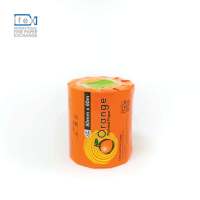
Orange Thermal Paper
₱109.00
Buy on Lazada
10 PACKS or 100pcs A3 Size Orange Specialty / Vellum / Poster Board Paper 200gsm White 10sheets/pk
₱690.00
Buy on Lazada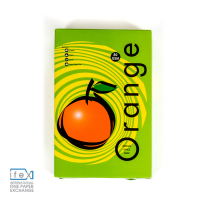
Orange Premium Office Paper 80g
₱418.00
Buy on Lazada
1 Pack Orange Specialty/ Vellum Board Paper 200gsm White A4 10sheets/ pack
₱38.00
Buy on Lazada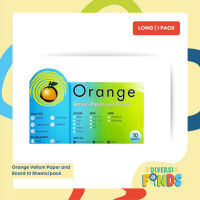
100 PCS or 10 Packs Orange Vellum White 120gsm Smooth Surface - Short A4 Long Size
₱260.00
Buy on Lazada
5 PACKS or 50pcs A3 Size Orange Specialty / Vellum / Poster Board Paper 200gsm White 10sheets/pk
₱350.00
Buy on Lazada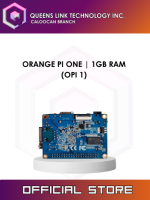
ORANGE PI ONE 1GB RAM H3 Development Board
₱2,527.30
Buy on LazadaAbout Orange
Orange is a major French multinational telecommunications company and one of the largest telecom operators in Europe. Headquartered in Issy-les-Moulineaux, France, the group provides mobile and fixed-line communications, broadband and fibre internet, digital services, cybersecurity, cloud and IT services, wholesale telecommunications infrastructure, and mobile financial services. Although Orange is now strongly associated with France, the brand itself originated in the United Kingdom in 1994 before being acquired by France Télécom in 2000.1
As of the end of 2025, Orange reported €40.4 billion in revenue, served approximately 340 million customers including those of MasOrange, and operated across 26 countries. The wider group employs about 123,500 people, and its business solutions reach roughly 200 countries and territories.2
Corporate overview
| Field | Information |
|---|---|
| Full corporate name | Orange S.A. |
| Industry | Telecommunications & digital services |
| Founded as Orange brand | 28 April 1994 |
| Original market | United Kingdom |
| Corporate predecessor | France Télécom |
| France Télécom acquired Orange | 2000 |
| France Télécom renamed Orange | 2013 |
| Headquarters | Issy-les-Moulineaux, France |
| CEO | Christel Heydemann |
| Chairman of the Board | Frédéric Sanchez |
| Employees | ~123,500 |
| Customers | ~340 million, including MasOrange |
| Countries of operation | 26 |
| 2025 revenue | €40.4 billion |
| Stock exchange | Euronext Paris |
| Ticker | ORA |
| Main businesses | Consumer telecom, Orange Business, cybersecurity, wholesale, mobile financial services |
| Official website | orange.com |
The corporate figures above are based primarily on Orange’s 2025 reporting and current corporate information.2
Scope of operations
Orange is best known as a telecommunications operator, but its activities extend well beyond mobile telephony. Its current operations span several key areas:
- Mobile telecommunications: Voice, SMS, mobile data, 4G and 5G services.
- Fixed telecommunications: Broadband, fibre-to-the-home (FTTH) and fixed telephone services.
- Television and entertainment: Television and digital content bundled with communications services.
- Enterprise technology: Networking, cloud, communications and digital transformation delivered through Orange Business.
- Cybersecurity: Security services for companies and governments, particularly via Orange Cyberdefense.
- Wholesale telecommunications: International connectivity, carrier services and submarine cable infrastructure.
- Mobile financial services: Notably Orange Money in Africa and the Middle East.
- Digital innovation and research: Development in artificial intelligence, networks and emerging technologies.
Orange describes its overarching ambition as being a “trusted partner for everyday digital life”, serving individuals, organisations and communities.1
History
Origin of the Orange brand
Orange did not originally begin as a French company. The brand was launched in the United Kingdom on 28 April 1994, at a time when the mobile phone industry was still relatively young, expensive and heavily oriented towards business users.1
The company behind the emerging Orange operation was Hutchison Whampoa, and the business had previously operated under the name Rabbit. Rather than shutting down the struggling operation, businessman Hans Snook and his team decided to relaunch it with a completely new identity. The new Orange brand was deliberately designed to make telecommunications feel simpler, friendlier, more accessible, less technical and more optimistic. Its original philosophy was essentially technology in the service of people, rather than technology for its own sake.1
The launch slogan was “The future’s bright, the future’s Orange.” Brand awareness reportedly reached 45% within two weeks and about 70% after two years. By 1997, Orange had more than one million customers, rising to about eight million by 2000.1
Naming and identity
The name Orange was intentionally chosen to be warm, distinctive and easy to remember, avoiding the conventional naming styles of technology or telecommunications companies. The brand’s identity was built around a strong orange colour and a simple visual language. The logo was not designed to represent the fruit; rather, it was created to be distinct, simple and recognisable.1
This approach formed a core part of the branding strategy: instead of competing through highly technical language, the company emphasised human benefits and simplicity.
Acquisition by France Télécom
In 2000, France Télécom acquired Orange for approximately €39.7 billion. The acquisition was strategically important as France Télécom sought to expand internationally and strengthen its position in mobile telecommunications.1
Consequently, Orange transitioned from being a British mobile brand to becoming the international consumer-facing brand of a much larger telecommunications group. Rather than abandoning the foreign brand in favour of the established France Télécom name, the group recognised that Orange had stronger international potential.
Transition from France Télécom to Orange
During the 2000s, Orange expanded beyond mobile phones. The brand was increasingly applied to fixed-line communications, broadband, television, internet and other digital services. In 2006, France Télécom made Orange its primary consumer brand for mobile, internet, television and digital services in its major markets.
The transformation was completed in 2013 when France Télécom officially changed its corporate name to Orange S.A. This milestone reflected the fact that the Orange brand had become more valuable and internationally recognisable than the historic France Télécom identity.1
The corporate evolution can be summarised as: French telecommunications administration → France Télécom → acquisition of Orange → Orange becomes the main brand → France Télécom becomes Orange S.A.
Historical background of France Télécom
Although the Orange brand dates from 1994, the corporate history extends much further back. France’s telecommunications infrastructure developed from government postal and telecommunications institutions. The Ministry of Posts, Telegraphs and Telephones was created in 1929, and the telecommunications administration later evolved into the Direction Générale des Télécommunications.
France Télécom was established in 1988, moving from a state-controlled organisation towards a commercial corporation.1 It became a société anonyme in 1996, and the French state gradually reduced its ownership as the telecommunications market was liberalised.
Expansion into mobile and internet services
Orange became significant during the transition from traditional fixed telecommunications to the mobile and internet era. In France, the broader France Télécom group launched services such as Itinéris for GSM mobile communications in 1992 and Wanadoo for consumer internet access in 1996, followed by ADSL broadband, 3G, Wi-Fi, internet television and fibre-optic broadband. Orange subsequently unified these services under a single brand.
The company was also an early operator in the smartphone era. In France, Orange was the initial exclusive operator for Apple’s iPhone when it launched there in 2007, reinforcing its position in the emerging smartphone market.
International operations
Orange has developed into a multinational operator with a significant footprint beyond France.
Europe
Orange maintains major operations in France and other European markets. Its European strategy emphasises mobile connectivity, fibre broadband, converged mobile and fixed services, enterprise networks, cybersecurity and digital infrastructure.
Africa and the Middle East
Africa and the Middle East constitute one of Orange’s most important growth regions. The group serves nearly 180 million customers in this region, making it a major growth engine. Operations focus on mobile connectivity, 4G/5G, broadband, digital services and mobile payments.
Key business divisions
Orange Money
Launched in Africa and the Middle East in 2006, Orange Money allows customers to use mobile phones for financial services, including money transfers and payments. The service is particularly significant in markets where traditional banking infrastructure is less widespread, positioning Orange’s African business as a participant in digital and financial inclusion rather than solely a conventional mobile operator.1
Orange Business
Orange Business is the group’s business-to-business division, serving multinational corporations, small and medium-sized enterprises, governments and public institutions. Services extend beyond conventional telecommunications to include enterprise networking, cloud computing, cybersecurity, artificial intelligence, digital transformation, Internet of Things, data infrastructure and communications. Through this division, Orange competes with both traditional telecom companies and major enterprise technology providers.
Orange Cyberdefense
Orange Cyberdefense provides cybersecurity services to organisations, helping them defend against threats and manage security infrastructure. The dedicated subsidiary was inaugurated in 2017, reflecting the growing importance of cybersecurity as telecommunications networks became increasingly integrated with cloud computing and digital services. This marks an evolution in the business model from pure telecommunications to connectivity combined with digital infrastructure and cybersecurity.
Network and infrastructure
Orange owns and operates substantial telecommunications infrastructure, including mobile networks, fibre-optic networks, fixed broadband networks, international networks, data centres, submarine telecommunications cables and wholesale connectivity.
The company describes itself as a European leader in fibre, with approximately 100 million connectable households. It also possesses significant submarine cable capabilities, which are strategically vital as these cables carry a large proportion of international internet traffic. Additionally, Orange employs around 700 researchers and holds a portfolio of approximately 11,000 patents.
Orange in France
France remains the company’s historical home and one of its most important markets. Orange is a principal provider of mobile communications, fixed broadband, fibre, television, enterprise telecommunications and digital services in the country.
At the end of 2025, Orange reported approximately 34 million customers in France. The national telecom regulator, Arcep, ranked Orange first for mobile network quality for the 15th consecutive year.
Corporate structure
Orange S.A. sits at the centre of a diversified telecommunications group comprising several key divisions:
- Orange Consumer: Services for individuals and households.
- Orange Business: Enterprise telecommunications, cloud, networking, AI and digital transformation.
- Orange Cyberdefense: Cybersecurity services.
- Orange Wholesale: Wholesale connectivity and telecommunications infrastructure.
- Orange Middle East & Africa: Mobile, broadband, digital and financial services in the region.
- Orange Europe: European operations outside France.
- Orange Innovation: Research and technological development.
The group also has interests connected with MasOrange, the major Spanish telecom business. The reported 340 million customer figure for 2025 explicitly includes MasOrange.1
Leadership
As of 2026, Christel Heydemann serves as Chief Executive Officer of Orange. She assumed the role in April 2022 after previously serving on the Board of Directors and holding senior positions at Alcatel-Lucent and Schneider Electric.
In May 2026, Frédéric Sanchez was appointed Chairman of the Board of Directors, succeeding Jacques Aschenbroich.3
Strategy and brand identity
Current strategy
Orange’s strategic plan “Trust the Future” was launched in 2026, following the previous “Lead the Future” plan. It focuses on three major ambitions:
- Customer intimacy: Personalising services and improving customer experience.
- Network and connectivity leadership: Continuing investment in fibre, mobile and other infrastructure.
- Growth and value creation: Driving expansion particularly through Europe, Africa and the Middle East.
The group aims to add around 40 million fixed and mobile customers by 2028.
Brand identity
Historically, Orange has emphasised values such as simplicity, friendliness, optimism, transparency, dynamism and human-centred technology. The distinctive orange colour remains the brand’s most recognisable feature. Rather than presenting itself as purely technical, Orange has traditionally communicated technology through human experiences.1
In 2024, the company introduced “Orange is here” as a new brand signature, emphasising availability and customer relationships.
Innovation
Innovation has been central to Orange’s identity. Notable developments associated with the group and its predecessors include GSM mobile services, early consumer mobile communications, mobile internet, 3G, broadband and ADSL, fibre-to-the-home, mobile television, Orange Money, 5G, cybersecurity, AI, cloud infrastructure and satellite-based connectivity. Orange has increasingly positioned itself as a provider of digital infrastructure and trusted technology services rather than solely a network operator.1
Financial profile
Orange is publicly traded on Euronext Paris under the ticker ORA. For the fiscal year 2025, the company reported the following:2
- Revenue: €40.4 billion
- Year-on-year revenue growth: 0.9%
- Customers: Approximately 340 million
- Countries of operation: 26
- Employees: Approximately 123,500
Industry significance
Orange occupies a distinctive position in the global telecommunications industry as one of Europe’s major operators, a key technology company in France, a major mobile operator in Africa and the Middle East, and a significant provider of fibre, enterprise telecommunications, cybersecurity and wholesale infrastructure. It is also a major provider of mobile financial services in parts of Africa.
Its history is notable because a British mobile brand launched in 1994 eventually became the corporate identity of one of France’s oldest telecommunications organisations.
Timeline
| Year | Event |
|---|---|
| 1929 | French Ministry of Posts, Telegraphs and Telephones established |
| 1988 | France Télécom created |
| 1992 | Itinéris GSM mobile service launched in France |
| 1994 | Orange brand launched in the UK |
| 1996 | Wanadoo internet service launched |
| 1996 | Orange listed on the London Stock Exchange |
| 1997 | Orange surpasses one million customers |
| 2000 | France Télécom acquires Orange for €39.7 billion |
| 2001 | Orange becomes increasingly used for France Télécom’s mobile operations |
| 2003 | Orange expands 3G, Wi-Fi and mobile multimedia services |
| 2006 | Orange becomes the unified brand for major consumer services; Orange Money launches |
| 2007 | Orange initially has exclusive iPhone distribution in France |
| 2013 | France Télécom officially becomes Orange S.A. |
| 2017 | Orange Cyberdefense subsidiary inaugurated |
| 2022 | Christel Heydemann becomes CEO |
| 2024 | Orange serves as official telecom operator for Paris 2024 |
| 2025 | Orange reports €40.4 billion revenue and 340 million customers including MasOrange |
| 2026 | Orange launches its “Trust the Future” strategy |