Shop on Lazada
Otoki products
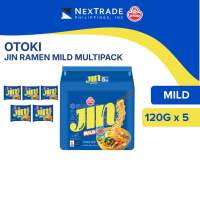
Otoki Jin Ramen Mild Multipack 120G
₱390.00
Buy on Lazada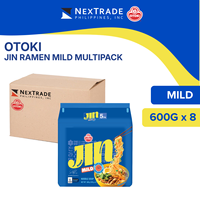
(CASE) Otoki Jin Ramen Mild Multipack 120G (Box of 8)
₱3,120.00
Buy on Lazada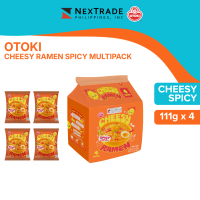
Otoki Cheesy Ramen Spicy Multipack 111G
₱331.00
Buy on Lazada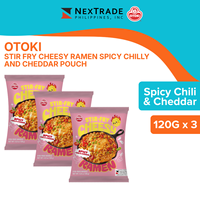
Otoki Stir Fry Cheesy Ramen Spicy Chili & Cheddar Pouch 120G (Pack of 3)
₱309.00
Buy on Lazada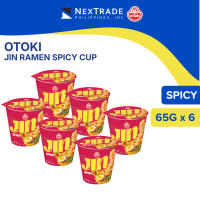
(CASE) Otoki Jin Ramen Spicy Cup Noodles 65G (Box of 6)
₱510.00
Buy on Lazada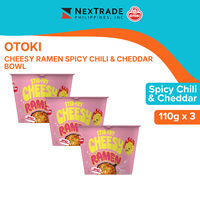
Otoki Cheesy Ramen Spicy Chili & Cheddar Bowl 110G (Pack of 3)
₱354.00
Buy on Lazada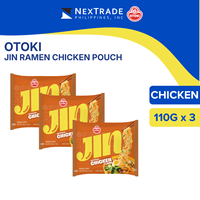
Otoki Jin Ramen Chicken Pouch 110G (Pack of 3)
₱303.00
Buy on Lazada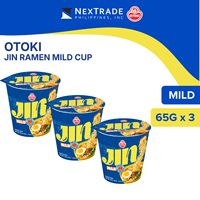
Otoki Jin Ramen Mild Cup (Pack of 3)
₱255.00
Buy on LazadaAbout Otoki
Otoki Corporation (Korean: 오뚜기; formerly romanized as Ottogi) is a major South Korean food manufacturer and consumer brand established in May 1969. Originally known for its curry products, the company has expanded into a comprehensive portfolio that includes instant noodles, sauces, condiments, ready-to-eat meals, rice, mayonnaise, ketchup, vinegar, cooking oils, and frozen foods.2 In March 2025, the company officially updated its English corporate name from OTTOGI CORPORATION to OTOKI CORPORATION, although its Korean name remains unchanged.1
Otoki is widely recognized for its distinctive yellow packaging, which reflects its origins as a curry manufacturer. The brand is closely associated with Korean household food culture, convenience, and consistent quality. Its stated mission focuses on contributing to better human nutrition and dietary habits through high-quality, nutritious, and advanced food products.3
Corporate profile
| Item | Information |
|---|---|
| Company | Otoki Corporation |
| Korean name | 오뚜기 |
| Former English name | OTTOGI CORPORATION |
| Current English name | OTOKI CORPORATION |
| Founded | May 1969 |
| Origin | South Korea |
| Industry | Food manufacturing |
| Core markets | Consumer foods and food ingredients |
| Best-known categories | Curry, instant noodles, sauces, ketchup, mayonnaise, instant meals |
| Major brand | Jin Ramen |
| Corporate color | Yellow |
| Global presence | Asia, North America and other international markets |
The company officially states that it was founded in May 1969 with initial curry production, subsequently developing into a comprehensive food enterprise.4
History
Foundation and early years
Otoki was established in May 1969, launching curry as its first major product. This introduction played a significant role in popularizing commercially produced curry as a convenient household staple in Korea. Historical records identify Otoki as the first company in the country to produce and sell curry products.5 From its inception, the company focused on improving everyday diets rather than limiting itself to a single food category.
During the 1970s, Otoki rapidly diversified its offerings:
- 1969: Company founded; curry products launched.
- 1971: Tomato ketchup production began.
- 1972: Anyang factory completed; mayonnaise production started.
- 1977: Expanded into vinegar and cooking oil production; introduced vegetable-oil-based margarine.
These expansions established Otoki as a mainstream food manufacturer beyond its initial curry focus.
Convenience food innovation
A pivotal development occurred in 1981 when Otoki introduced products in retort-pouch packaging. Items such as 3-Minute Curry and related 3-Minute meals represented an early iteration of the home-meal-replacement concept in Korea. This innovation reinforced the brand’s association with good food that could be prepared quickly and conveniently.
Entry into instant noodles
Otoki entered the Korean instant noodle market in 1987, subsequently introducing Jin Ramen, which became one of its most internationally recognizable brands. This product line helped transform the company from a traditional sauce and curry manufacturer into a significant competitor in the highly competitive instant noodle sector.
Corporate name change
For decades, the company’s English name was rendered as OTTOGI. In March 2025, the corporation officially adopted OTOKI CORPORATION as its English corporate name, while retaining the Korean name 오뚜기.6 Consequently, references to Ottogi, OTTOGI, Otoki, or OTOKI may all refer to the same entity, with Otoki serving as the current official English styling. This distinction is relevant for research and identification, as older publications and packaging typically use Ottogi, while newer corporate materials utilize Otoki.
Product portfolio
Otoki operates both B2C consumer food and B2B food ingredient businesses.7 Its global product portfolio encompasses curry, ramen, sauces, seasonings, ready-to-eat products, sesame oil, and various other food categories.8
Major consumer categories
- Curry: Instant curry, curry sauces, and related prepared foods.
- Instant noodles: Jin Ramen, cup noodles, specialty noodles, and other ramen varieties.
- Sauces and condiments: Tomato ketchup, mayonnaise, mustard, BBQ sauces, and dressings.
- Staple ingredients: Vinegar, cooking oils, sesame oil, tomato products, syrups, and other ingredients.
- Convenience foods: Ready-to-eat meals, instant rice, porridge, soups, and prepared foods.
- Other foods: Dumplings, frozen foods, processed meat products, vermicelli/glass noodles, seaweed, and other Korean food products.
Jin Ramen
Jin Ramen is arguably the brand most strongly associated with Otoki outside of Korea. Available primarily in mild and spicy varieties, it is a central component of the company’s international instant noodle business. Current global listings include Jin Ramen Mild, Jin Ramen Spicy, Jin Ramen Veggie, and Jin Ramen Chicken.9 Strategically, Jin Ramen provides Otoki with global recognition alongside its traditional Korean staples like curry, ketchup, and sesame oil.
Brand identity and philosophy
Visual identity
Yellow is the primary visual element associated with Otoki. The company has utilized this color extensively on packaging for decades due to its connection with curry, the founding product. Over time, yellow evolved into a representative corporate color symbolizing sincerity and consumer trust.18 This creates a coherent brand association linking curry, the color yellow, and the Otoki name, which has persisted even as the product range expanded.
Corporate philosophy
Otoki’s philosophy centers on improving diets through better quality, higher nutrition, and advanced food. Its corporate motto is “Unity in Humanity,” “Pioneering Research,” and “Swift and Accurate.” Quality and consumer trust are emphasized as central business principles.17
In practical terms, the brand combines three core concepts:
- Korean food heritage: Deeply connected to everyday Korean cooking rather than positioned solely as a premium luxury brand.
- Convenience: Products like instant curry, noodles, and ready-to-eat meals simplify the preparation of traditional foods.
- Reliability: Emphasis on consistent taste, manufacturing quality, and food safety establishes the brand as an everyday household staple.
Role in Korean food culture
Otoki has participated in major transitions within Korean food consumption, moving from traditional cooking to packaged and convenience foods within modern Korean food culture. Products such as curry, ketchup, mayonnaise, retort meals, instant noodles, and sauces helped normalize packaged versions of foods that previously required extensive preparation. The company characterizes itself as a pioneer in developing Korean dietary culture through these innovations,10 positioning it as a comprehensive Korean food company rather than merely a ramen manufacturer.
International expansion
Otoki has progressively expanded outside Korea through international businesses and subsidiaries, including operations in the United States, Vietnam, and China. Its U.S. subsidiary, Otoki America Holdings, was established in California in May 2005.11 The international strategy relies on two complementary approaches: exporting Korean products and manufacturing locally for regional markets.
Otoki Vietnam
Established in 2007, Otoki Vietnam serves as a key overseas manufacturing and sales base. Test production began in 2009, followed by full manufacturing in Bình Dương in January 2010.12 The Vietnamese portfolio expanded beyond imports to include local production of vinegar, tomato ketchup, mayonnaise, honey mustard, sauces, and dressings. A second manufacturing facility in Bắc Ninh commenced production in 2018.13
Otoki Vietnam functions as both a local producer and a distributor of Korean food, aiming to bring Korean-quality flavors to Vietnamese consumers while developing products suited to the local market.14
Globalization strategy
Otoki aims to become a global comprehensive food company with an international network covering manufacturing, distribution, and sales. This infrastructure allows the company to adapt its portfolio to different markets; for instance, the Vietnam operation supplies local products and serves as a raw material base, while the North American operation focuses on introducing Korean food products to U.S. consumers.15 The current global positioning leverages Korean food expertise through local manufacturing and distribution to reach global consumer markets.
Research and food safety
The company has invested significantly in research and safety infrastructure. A Research Center was established in 1983, followed by the Otoki Research Institute in 1989, which has received international laboratory accreditation.16 Today, the organizational structure includes a Central Research Institute and a Food Safety Science Institute.17 These facilities support the brand’s positioning as a reliable everyday household food manufacturer by ensuring safety and consistency.
Market positioning
Otoki operates as a large-scale integrated food manufacturer spanning basic ingredients, sauces, condiments, convenience foods, instant noodles, ready-to-eat meals, and Korean food products. Unlike brands focused exclusively on luxury items, snacks, or traditional ingredients, Otoki’s competitive advantage lies in its portfolio breadth combined with everyday household relevance.
Comparison with other Korean food brands
| Company | Strongest association |
|---|---|
| Otoki | Curry, ramen, sauces, condiments, convenience foods |
| CJ | Broad food portfolio, processed foods, Korean food, global expansion |
| Nongshim | Instant noodles and snacks |
| Samyang | Instant noodles, especially spicy noodles |
| Daesang | Korean ingredients, sauces, fermentation and food products |
Key brand characteristics
Several factors contribute to Otoki’s distinctiveness:
- Yellow branding: A highly recognizable visual identity inherited from its curry heritage.18
- Curry heritage: Curry remains a core part of the identity dating back to 1969.
- Jin Ramen: One of the most recognizable international products.
- Everyday condiments: Ketchup, mayonnaise, sauces, vinegar, and cooking ingredients integrate the brand into daily cooking.
- Korean household positioning: Products are closely tied to ordinary home cooking.
- Global expansion: Increasing positioning as a global Korean food company rather than a purely domestic manufacturer.
Brand evolution
Otoki’s development can be categorized into five stages:
- 1969–1970s (Foundation): Focus on curry and basic packaged foods.
- 1980s (Convenience revolution): Introduction of retort meals, research infrastructure, and expansion into noodles.
- 1990s–2000s (Diversification and globalization): Broader food portfolio, overseas investments, and international distribution.
- 2010s (Global manufacturing): Expansion of overseas manufacturing, particularly in Vietnam and Asian markets.
- 2020s (Global Korean-food company): Increased emphasis on international consumers, sustainability, food technology, and global brand building.
Current status
Otoki currently presents itself as a company combining taste, quality, nutrition, convenience, and innovation. Its corporate vision involves creating future value and a sustainable food culture while bringing Otoki products to tables worldwide. The modern strategy extends beyond selling Korean curry and ramen to building a global food company based on Korean food expertise. The company continues to expand its global business and develop products to meet changing consumer needs.