Shop on Lazada
Paul Frank products
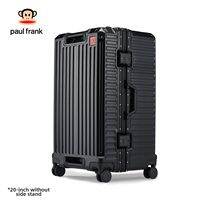
Paul Frank | Durable Large Capacity Password Travel Suitcase 24 Inch
₱5,528.30₱7,338.30
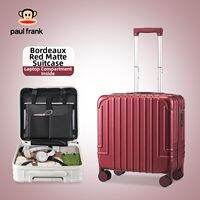
Paul Frank | Lightweight Small Childrens Travel Luggage 16 Inch
₱3,702.91₱4,619.21
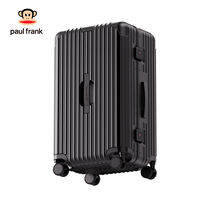
Paul Frank | Aluminum Frame Large Capacity Pure PC Travel Carry-On Luggage 2026
₱7,627.97₱9,777.34
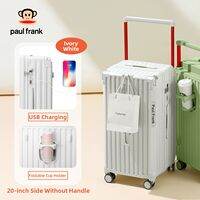
Paul Frank | Wide Handlebar Large Capacity Womens Cabin Bag 20 inch
₱5,629.17₱6,760.41
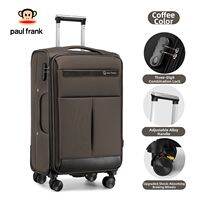
Paul Frank | Oxford Cloth Travel Suitcase 20inch
₱4,010.28₱4,123.41

Paul Frank | Cotton Summer Inner Wear Vest
₱1,183.36₱2,281.64
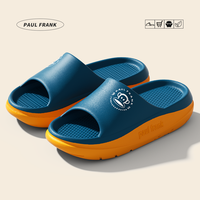
Non-slip Summer Bath Slippers
₱462.00₱623.00
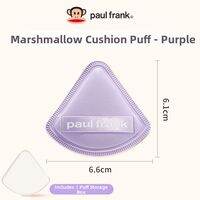
Paul Frank | Soft Non-caking Sponge Puff
₱181.00₱385.00
About Paul Frank
Paul Frank is an American lifestyle and pop-culture brand best known for its colorful, playful aesthetic and its signature character, Julius the Monkey. The brand originated in Huntington Beach, California, in 1995, beginning as a small garage operation making handmade vinyl accessories before expanding into clothing, bags, accessories, licensing, and other consumer products.1
Today, Paul Frank is a globally licensed lifestyle brand whose intellectual property is owned and managed by Futurity Brands. Its current identity continues to center on Julius and the wider Julius & Friends universe, while emphasizing playfulness, self-expression, inclusivity, bright colors, and mid-century-inspired design.2
Origins
The history of Paul Frank closely follows the classic “garage brand” narrative. In 1995, Paul Frank Sunich was living in Huntington Beach, working and studying art, when he received a sewing machine and began experimenting with fabric and vinyl. He started creating small handmade objects, particularly wallets, for friends.3
The materials used were deliberately unconventional for fashion: colorful cotton and Naugahyde, a type of vinyl. The resulting wallets were distinctive, intentionally playful in appearance, and markedly different from conventional fashion accessories. As demand grew among friends and acquaintances, Sunich entered into business with Ryan Heuser and John Oswald, transforming the informal garage project into a formal company. The business expanded rapidly, and Paul Frank Industries (PFI) became the corporate entity behind the brand.4
While 1995 is generally recognized as the birth of the Paul Frank brand, formal corporate development occurred later. Contemporary reporting indicates the company reached approximately $200,000 in sales in 1997 and formally incorporated around that period.4
Julius the Monkey
The defining element of Paul Frank is Julius, a simple, stylized monkey characterized by large round ears, a wide smile, a minimalist face, a compact cartoon body, strong black outlines, and bright, graphic colors. The character was inspired partly by the traditional sock monkey, but Paul Frank transformed that familiar object into a cleaner, graphic, mid-century-looking cartoon figure.5
Julius became more than a mascot; he served as the visual shorthand for the entire brand. In the late 1990s and early 2000s, Julius appeared on T-shirts, wallets, backpacks, handbags, hats, shoes, bicycles, helmets, household products, children’s products, and electronics accessories. The character was so closely associated with the brand that, at the height of its popularity, “Paul Frank” and “Julius” were often used interchangeably.5
The modern brand continues to describe Julius as its most recognized character and has expanded the universe into Julius & Friends.1
The “Julius & Friends” universe
Paul Frank was never intended to focus solely on one character. Over time, the brand developed a larger cast, and current licensing materials describe a portfolio of more than 150 characters, with Julius at the center.2 Associated characters include Skurvy and various other colorful cartoon personalities.
This character-based approach positions Paul Frank at the intersection of fashion brand, cartoon IP, lifestyle brand, and licensing property. This hybrid nature allowed the brand to extend easily from wallets to T-shirts, bicycles, toys, furniture, and collaborations.
Visual identity
Paul Frank possesses a highly recognizable design language defined by specific aesthetic choices.
Color
The brand historically favored bright, saturated colors—including orange, yellow, pink, green, blue, red, and purple—often combined with black outlines.
Graphics
Paul Frank graphics tend to be flat rather than photorealistic, highly legible, cartoon-driven, symmetrical or geometrically simple, humorous, and intentionally youthful.
Mid-century influence
A distinctive aspect of the Paul Frank aesthetic is its relationship with mid-century modern design. The brand combines the clean geometry and optimism associated with mid-century graphics with deliberately silly cartoon characters, creating a result that feels simultaneously retro and contemporary. The brand explicitly identifies its visual approach as brightly colored and mid-century inspired.1
Brand philosophy
The core philosophy of Paul Frank can be summarized as not taking life too seriously. The brand’s official narrative describes a return to innocence, encouraging people to be playful, happy, and fearless. Current stated values include playfulness, self-expression, and inclusivity.1
This philosophy distinguished Paul Frank from traditional fashion brands. Rather than communicating luxury, status, sophistication, or minimalism, Paul Frank communicated fun, individuality, nostalgia, youth, and humor. This positioning proved particularly powerful among younger consumers during the late 1990s and early 2000s.
Rise to popularity
Paul Frank experienced rapid growth after its handmade wallets attracted attention for being unlike conventional accessories. The company subsequently expanded into clothing and other products, collaborating with retailers, artists, musicians, and other brands. By the late 1990s, Paul Frank had moved beyond its local Southern California roots.
At the 1998 Action Sports Retailer trade show, the company reportedly received around $500,000 in orders, illustrating the speed of demand.6 By the early 2000s, Paul Frank had become a recognizable youth-culture label associated with Southern California, skate and action-sports culture, music, alternative fashion, celebrities, youth-oriented retail, and pop culture.
A 2005 profile described the business as having grown into a $100 million design enterprise, demonstrating the scale achieved within roughly a decade.3
Collaborations and licensing
A significant factor in Paul Frank’s success was its willingness to collaborate. Rather than operating as a conventional apparel label, the brand treated its characters as pop-culture assets applicable across diverse categories.
Companies and properties the brand has collaborated with include:
- Hello Kitty / Sanrio
- Barbie
- John Deere
- LEGO
- Nintendo
- Mattel
- Funko
- Skullcandy
- Nirve Bicycles
- Wahoo’s Fish Taco
- Oscar Mayer
The brand also worked with numerous musicians and music-related properties.3 A notable collaboration occurred in 1999 when Sanrio allowed Paul Frank Industries to create designs featuring Julius and Hello Kitty together, an early example of character crossover that later became common in streetwear and pop culture.3
Music culture
Paul Frank became closely associated with alternative and youth music culture, collaborating with or connecting to acts including Radiohead, Bad Religion, The Aquabats, The Vandals, Alkaline Trio, Atreyu, Tool, Gorilla Biscuits, and Every Time I Die. The brand also participated in partnerships connected with events such as Coachella and Lollapalooza.7
These connections helped Paul Frank occupy a unique cultural space as simultaneously a fashion label, cartoon brand, and youth-culture brand.
The Paul Frank Industries dispute
In 2005, Paul Frank Sunich left the company following a dispute with business partners Ryan Heuser and John Oswald. The separation evolved into a legal and public controversy involving ownership and control of the brand and its characters.4
A complicating factor was the dual nature of the name “Paul Frank,” which referred to both the designer and the commercial brand. Legal disputes arose regarding the use of the name and rights connected to Julius and other artwork.5 In 2007, intellectual-property ownership was resolved in favor of Paul Frank Industries rather than Sunich personally.7
Saban Brands era
In 2010, Paul Frank Industries was acquired by Saban Brands, the company associated with Haim Saban and known for properties including Power Rangers.5 This acquisition marked a transition from a small independent Southern California company to a licensed character and lifestyle property. Under this ownership, the brand continued producing apparel and accessories while expanding its licensing activity.
Return of Paul Frank Sunich
In 2016, Paul Frank Sunich returned to the company when Saban Brands appointed him Director of Creative Development for Paul Frank Industries. His role involved assisting with creative direction, character development, and content.6 This return was symbolically significant, reuniting the creator with the brand built around his artistic identity more than a decade after his departure.
Futurity Brands era
In 2020, Futurity Brands acquired the worldwide intellectual-property rights to the Paul Frank brand and its characters from Paul Frank Industries. The acquisition included a portfolio of more than 150 characters led by Julius.2
Futurity Brands assumed responsibility for international licensing, distribution, direct-to-consumer business, and global brand development, with a stated strategy of returning the brand to its Southern California roots while introducing it to new generations.2 Current wholesale information identifies Futurity Brands as the global brand owner of Paul Frank.8
Paul Frank today
As of 2026, Paul Frank remains active as a lifestyle and character brand. The official website offers accessories, bags, drinkware, apparel-related products, and Julius & Friends merchandise, while emphasizing collaborations and licensing.1
The contemporary strategy targets two primary audiences:
- Original fans: Consumers who remember Julius from the late 1990s and 2000s and maintain a nostalgic connection to the brand.
- New consumers: Younger audiences encountering Julius as a colorful, character-driven lifestyle brand rather than as a relic of early-2000s fashion.
This dual strategy of combining nostalgia with appeal to new generations has been noted in licensing-industry coverage.9
Cultural significance
Paul Frank arrived at a pivotal moment in American consumer culture during the late 1990s and early 2000s, when youth fashion, skate culture, music, celebrity culture, and character merchandising increasingly overlapped. The brand demonstrated that a cartoon character could function as a fashion identity.
Prior to Paul Frank, characters were generally associated with toys, children’s products, animation, and entertainment. Paul Frank shifted this model toward character-driven fashion, accessories, lifestyle products, collaborations, and pop culture—a framework that subsequently became widespread.
Distinctive characteristics
Several factors contributed to the brand’s distinctiveness:
- Recognizable mascot: Julius is instantly identifiable even without the “Paul Frank” text.
- Consistent visual language: Colors, outlines, typography, and characters created a coherent universe across diverse products.
- Accessibility: The brand initially positioned itself as approachable and fun rather than elite fashion.
- Humor: Products were often purchased for their ability to evoke smiles rather than demonstrate wealth or status.
- Cross-category licensing: Julius appeared on wallets, bicycles, sneakers, toys, phone accessories, and furniture without seeming unnatural.
- Nostalgia: For many consumers, the brand remains strongly connected to the visual culture of the late 1990s and early 2000s.
Position in fashion history
From a fashion-history perspective, Paul Frank is best understood not as a traditional fashion house but as a character-driven lifestyle and graphic-design brand. Its closest conceptual relatives are brands that transform a recognizable visual character or universe into a broad consumer identity.
The brand sits at the intersection of streetwear, graphic design, character merchandise, youth culture, licensing, and lifestyle products. This hybrid model represents one of Paul Frank’s primary innovations.
Aesthetic summary
The Paul Frank aesthetic can be described as playful Southern California youth culture filtered through bright mid-century graphics, cartoon characters, nostalgia, and irreverent humor.
Legacy
The most enduring legacy of Paul Frank is Julius the Monkey, who became one of the recognizable character icons of early-2000s youth culture and appeared on products far beyond conventional fashion. The brand demonstrated that a simple original character could serve as the foundation for a global lifestyle business.
The company’s journey from handmade wallets in a Huntington Beach garage in 1995 to a globally licensed character brand illustrates the intersection of independent design, youth culture, licensing, and fashion.1 Throughout its 30-year history, the fundamental concept has remained consistent: making everyday things more colorful, more playful, and less serious.
References
- Our story
- Futurity Brands Acquires Worldwide Rights to Paul Frank, the acclaimed pop culture and life-style brand made famous by the iconic Julius the Monkey.
- How I Did It: Paul Frank
- The Artist Formerly Known as Paul Frank | Vanity Fair
- Haim Saban buys Paul Frank Industries – Los Angeles Times
- Paul Frank Returning to the Company He Founded | California Apparel News
- Paul Frank Limited
- Futurity Brands B2B | Official Paul Frank Wholesale Products
- Ten Minutes with Paul Frank | License Global