Shop on Lazada
Peak Design products
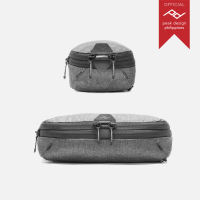
Peak Design Packing Cube
₱3,950.00
Buy on Lazada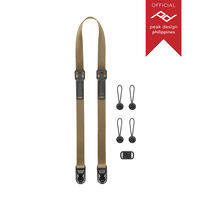
Peak Design Leash Strap
₱3,600.00
Buy on Lazada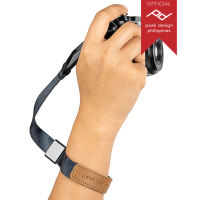
Peak Design Cuff Wrist Strap
₱2,378.00₱2,900.00
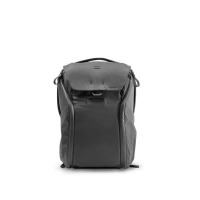
Peak Design Everyday Backpack V2
₱22,800.00
Buy on Lazada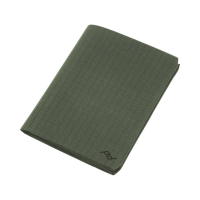
Peak Design Passport Wallet with RFID Protection 2-Passport & 8-Card Capacity Magnetic Closure & TerraShell Ultra Fabric Water-Repellent Passport-Sized Travel Wallet
₱7,190.00₱8,988.00
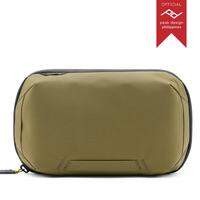
Peak Design Tech Pouch
₱4,500.00
Buy on Lazada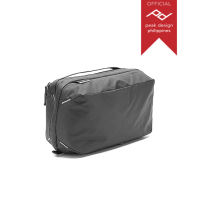
Peak Design Wash Pouch
₱4,500.00
Buy on Lazada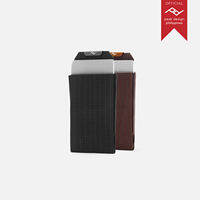
Peak Design Everyday Slim Wallet
₱2,850.00
Buy on LazadaAbout Peak Design
Peak Design is an American design and manufacturing company best known for premium camera gear, bags, travel equipment, mobile accessories, and outdoor carry products. Founded by Peter Dering in the San Francisco Bay Area, the company became notable for using Kickstarter and other crowdfunding campaigns as a core part of its product-development model rather than relying on conventional venture-capital investment.1 Today, Peak Design positions itself less as a traditional camera-accessory company and more broadly as a maker of products that help people “create, commute, and explore.”2
Basic information
| Category | Information |
|---|---|
| Brand | Peak Design |
| Founded | 2010 |
| Founder | Peter Dering |
| Origin | San Francisco, California, United States |
| Industry | Consumer products / industrial design |
| Core markets | Photography, travel, outdoor recreation, everyday carry, mobile |
| Best known for | Camera Capture Clip, Everyday bags, Travel Tripod, camera straps, travel gear |
| Business model | Direct-to-consumer + retail + crowdfunding |
| Notable characteristic | Historically investor-free |
| Corporate philosophy | Product design, customer participation, sustainability |
| Official site | peakdesign.com |
Peak Design’s own brand materials describe the company as making products for people who create, commute, and explore.3
History
Origins: the camera problem
The company’s origins trace back to Peter Dering. In 2010, Dering took a long trip around the world and, as a photographer, found that carrying a large camera while traveling was inconvenient. Rather than accepting this limitation, he began designing a better way to carry a camera, eventually quitting his job to work on a mechanical camera-carrying system.4 The result was the Capture Camera Clip. The concept was simple: instead of letting a camera hang loosely from a conventional strap, Capture could securely attach the camera to a backpack strap or belt while still allowing quick access. Dering spent months developing prototypes, eventually working with machinist Dave Stoltz to produce a metal prototype.5
The Kickstarter revolution
The defining event in Peak Design’s early history was its decision to launch Capture on Kickstarter. In 2011, the first Capture campaign set a relatively modest target of $10,000 but ultimately raised approximately $364,698 from 5,258 backers.6 This established a pattern that would become fundamental to the company: design, prototype, show customers, crowdfund, manufacture, and improve. Instead of raising money from venture capitalists and then designing products for investors or mass-market retailers, Peak Design could show its products directly to potential customers. The company subsequently launched numerous products through crowdfunding.7
Major early Kickstarter campaigns
| Year | Product | Backers | Amount raised |
|---|---|---|---|
| 2011 | Capture v1 | 5,258 | $364,698 |
| 2012 | Leash & Cuff | 3,108 | $215,721 |
| 2013 | Capture v2 | 8,090 | $819,108 |
| 2014 | Slide & Clutch | 9,455 | $861,164 |
| 2015 | Everyday Messenger | 17,029 | $4,869,472 |
| 2016 | Everyday Line | 26,359 | $6,565,782 |
| 2017 | Capture v3 / Straps v2 | 12,196 | $1,330,583 |
| 2018 | Travel Line | 14,752 | $5,206,611 |
| 2019 | Travel Tripod | 27,168 | $12,143,435 |
| 2020 | Mobile | 14,169 | $2,000,497 |
Figures are from Peak Design’s brand materials; campaign totals can vary slightly between historical and subsequently updated reporting.8
The Everyday Messenger turning point
One of Peak Design’s most important products was the Everyday Messenger, launched through Kickstarter in 2015. It raised almost $4.87 million from 17,029 backers, making it an enormous success for the company.9 More importantly, the product represented a change in Peak Design’s philosophy as it was not designed exclusively for professional photographers. The bag could carry camera equipment, laptops, tablets, everyday electronics, clothing, personal items, and travel equipment. This became one of the company’s defining ideas: photography gear that does not look like photography gear. Rather than making conventional camera bags covered in obvious technical features, Peak Design attempted to make products that could transition between photography, work, travel, and everyday life. That philosophy eventually became the Everyday Line.10
Expansion beyond photography
Peak Design gradually expanded beyond camera accessories. Its current product ecosystem covers several major categories:
Camera Gear
- Capture camera clips
- Camera straps
- Hand straps
- Tripods
- Camera plates
- Camera accessories
Everyday Bags
- Everyday Backpack
- Everyday Backpack Zip
- Everyday Messenger
- Everyday Sling
- Tote and other everyday carry products
Travel
- Travel Backpack
- Travel Duffel
- Packing Cubes
- Wash Pouch
- Travel accessories
- Roller Pro
Outdoor
- Outdoor Backpack
- Outdoor Sling
- Outdoor accessories
Mobile
- Phone cases
- Mobile Tripod
- Car mounts
- Charging accessories
- Wallets
- Phone straps
Motorcycle
- Motorcycle phone mounts
- Motorcycle charging and mounting accessories
Peak Design’s current catalog contains hundreds of products and accessories across these categories.11
Design philosophy
Design is arguably the heart of the company. Peak Design describes its approach around several principles: solve genuine problems, make products intuitive, avoid unnecessary complexity, make products aesthetically appealing, make them durable, make them versatile, consider how products age, and minimize environmental impact. The company’s internal philosophy is sometimes summarized as “selfish design”: designers are themselves photographers, travelers, adventurers, and gear enthusiasts, so they design products that they personally want to use.12 This explains a major part of Peak Design’s appeal. It does not generally try to compete simply by making the cheapest bag or accessory; instead, it tries to make a product where the engineering, organization, materials, and user experience justify a premium price.
Distinctive product characteristics
Several design characteristics appear repeatedly across the brand.
Modular organization
Peak Design’s bags frequently use configurable internal systems. The best-known example is the FlexFold divider system used in the Everyday bags. Instead of fixed compartments, users can configure the interior around cameras, lenses, drones, laptops, clothing, or other equipment.13
Quick access
Many products are designed around the principle that the item needed should be accessible quickly. This is particularly important for photographers who may need to retrieve a camera or lens within seconds.
Mechanical hardware
Peak Design tends to make its hardware visually prominent rather than treating buckles, clips, and adjustment systems as afterthoughts. Examples include MagLatch, Capture, Anchor Link, FlexFold, Cord Hook, and various mounting systems. The hardware is part of the product’s identity.
Minimalist appearance
Although the products can be technically complicated internally, Peak Design generally favors a clean exterior. This helped the company move from “camera gear” toward “premium lifestyle gear.”
Signature products
Capture Clip
The Capture Clip remains one of Peak Design’s signature products. It is essentially a quick-release camera mounting system that allows a compatible camera to attach to a backpack strap, belt, or other stable location. Its significance is greater than its physical size, as Capture established the formula Peak Design would repeatedly use: identify an annoying problem, develop a clever mechanical solution, make it beautiful, and test it with real users. The original 2011 Kickstarter campaign raised roughly $365,000, and later versions continued to be crowdfunded.14
Travel Tripod
Another landmark product was the Travel Tripod. Traditional tripods tend to have a relatively large folded volume because their legs, center column, and head do not integrate particularly efficiently. Peak Design redesigned the architecture from the ground up to make a full-featured tripod substantially more compact. The 2019 Kickstarter campaign raised more than $12.1 million from over 27,000 backers, becoming one of the company’s biggest crowdfunding successes.15 The Travel Tripod became particularly associated with Peak Design’s engineering philosophy of taking something familiar and redesigning the underlying architecture rather than merely adding features.
Pro Tripod
Peak Design subsequently moved further into professional photography with the Pro Tripod. The Pro Tripod builds upon the Travel Tripod concept but emphasizes greater stability, greater load capacity, carbon-fiber construction, compatibility with professional cameras and lenses, modular accessories, and more demanding photographic and video applications. Peak Design developed the Pro Tripod with photographer and filmmaker Jimmy Chin.16 The company launched the Pro Tripod through crowdfunding in 2025, raising more than $4.6 million from 5,533 backers according to Peak Design’s current mission page.17
Travel and luggage products
Peak Design’s travel category has become a major part of the company. The Travel Backpack is particularly important because it takes many of the principles developed for camera bags and applies them to general travel. Typical characteristics include a large opening, modular packing, laptop storage, camera compatibility, expandable capacity, carry-on-oriented dimensions, and multiple access points. This illustrates Peak Design’s broader evolution from a camera company to a camera and everyday carry company, and finally to a travel and lifestyle company.
Roller Pro
Peak Design has also entered the rolling-luggage market with the Roller Pro. The Roller Pro uses a hybrid construction incorporating a rigid polycarbonate structure, recycled fabric, and a carbon-fiber trolley system. The company describes its approach as an attempt to rethink the conventional roller suitcase rather than simply assemble existing luggage components.18 Its 2025 Kickstarter campaign raised approximately $13.4 million from 24,219 backers, making it one of Peak Design’s largest crowdfunding campaigns.19
Sustainability and materials
Sustainability is an unusually important part of Peak Design’s corporate identity. The company has explicitly incorporated environmental responsibility into its mission. Its six stated mission principles are: make the best things, succeed at the expense of nobody, treat customers as peers, offset environmental impact, use its voice to inspire positive change, and seek happiness over growth.20 Peak Design is a Certified B Corporation and has also participated in 1% for the Planet and Climate Neutral initiatives.21 The company’s impact reporting says it has donated more than $5.8 million through its 1% for the Planet commitment to date.22
Peak Design has increasingly incorporated recycled and lower-impact materials into its products. For example, its Everyday bags use recycled post-consumer materials, solution-dyed fabrics, bluesign-approved materials, recycled nylon, and durable technical textiles. The company has also established future targets for recycled materials, bluesign-approved materials, and other improvements across its supply chain.23 The philosophy is essentially to not just make a product that lasts, but also try to reduce the environmental cost of making it.
Manufacturing
Peak Design is primarily a design-led company rather than a vertically integrated manufacturer. The company works with manufacturing partners, particularly in Asia. Its history includes significant manufacturing relationships in Vietnam and China, and Peak Design has emphasized maintaining close relationships with its factories. Its sustainability program includes social and environmental audits of Tier 1 factories and efforts to improve manufacturing conditions rather than simply abandoning factories that perform poorly.24
Business model
One of Peak Design’s most unusual characteristics is its relationship with crowdfunding. For many companies, Kickstarter is simply a way to launch a startup, but for Peak Design, it became part of the company’s long-term operating philosophy. The company says it has remained investor-free since its beginning and uses crowdfunding to launch products on its own terms.25 This gives Peak Design several advantages:
- Customer validation: The company can determine whether people actually want a product before committing to a large production run.
- Early cash flow: Crowdfunding allows customers to finance production before mass manufacturing.
- Direct feedback: Backers can provide feedback during development.
- Lower dependence on investors: The company does not have to satisfy traditional venture-capital expectations for rapid growth or exit.
- Marketing: A successful Kickstarter campaign simultaneously becomes a product launch, marketing campaign, and community-building exercise.
Peak Design itself describes crowdfunding as being “baked into” its DNA.26
Brand positioning and target customers
Peak Design occupies an interesting position between several industries. Compared with traditional camera brands like Canon, Nikon, Sony, or Fujifilm, it is less focused on cameras themselves and instead makes the ecosystem around the camera easier to carry and use. Compared with luggage companies such as Bellroy, Aer, Tumi, Patagonia, Osprey, or Nomatic, Peak Design differentiates itself through photography integration and mechanical design. While it has some overlap with outdoor companies, its aesthetic tends to be more urban and technology-oriented. The result is a distinctive niche of premium technical products for people who move between photography, work, travel, and outdoor activities.
Peak Design’s own brand research describes its customers as generally higher-income, tech-savvy early adopters who value thoughtful features, durability, and appearance.27 Historically, photographers were its core audience, but the company has deliberately expanded toward travelers, creators, commuters, digital professionals, outdoor enthusiasts, cyclists, motorcyclists, everyday-carry enthusiasts, and people who simply appreciate well-designed products. This broadening is strategically important because the global camera market is much smaller than the broader travel, luggage, and everyday-carry markets.
Product ecosystem and warranty
One of Peak Design’s strongest strategic advantages is that its products can work together. For example, a camera connects to a Capture clip, which attaches to a backpack containing a Camera Cube, while a tripod stores externally. Similarly, a phone case integrates with wallets, car mounts, motorcycle mounts, and tripods. This creates an ecosystem in which customers can gradually buy additional products without having to learn an entirely new system.
Peak Design emphasizes long-term ownership. Many of its major products carry a lifetime guarantee, reflecting the company’s positioning around durability rather than disposable consumer goods.28 This is important to the brand’s premium positioning, as a $250–$350 backpack becomes easier to justify if the customer believes it can survive many years of travel and everyday use.
Current direction and cultural significance
As of 2026, Peak Design is no longer simply a camera-accessory company. Its current portfolio spans camera gear, everyday carry, travel, outdoor, mobile, wallets, and motorcycle products, ranging from Capture Clips and tripods to backpacks, packing systems, phone accessories, and rolling luggage.29 The company has also continued experimenting with newer categories. Its Outdoor Line appeared in 2024, while 2025 brought major launches such as Roller Pro and Pro Tripod.30 This suggests a long-term strategy of taking Peak Design’s design language into increasingly broad categories rather than remaining confined to photography.
At first glance, Peak Design sells bags and camera accessories, but its deeper proposition is better ways to carry the things that enable one’s life. That distinction explains why a camera company can successfully sell backpacks, phone mounts, luggage, and travel accessories. The underlying problem is how people can carry, access, protect, and organize the things they use while moving through the world.
Peak Design is culturally significant beyond its products because it became an example of a different kind of consumer-product company. It demonstrated that a hardware company could combine industrial design, direct-to-consumer sales, crowdfunding, community, sustainability, and premium branding without following the traditional Silicon Valley startup model. Its Kickstarter campaigns also helped popularize the idea that customers could participate in product development before the product officially existed.
Timeline
- 2010 — Peter Dering develops the idea that becomes Peak Design.
- 2011 — Capture launches on Kickstarter and raises about $365,000.31
- 2012–2014 — Peak Design expands into straps and improved camera-carrying systems.32
- 2015 — Everyday Messenger becomes a major Kickstarter success.33
- 2016 — Everyday Line expands the company beyond traditional camera accessories; Peak Design joins 1% for the Planet.34
- 2017 — Capture v3 and updated straps continue the ecosystem approach.35
- 2018 — Travel Line launches.
- 2019 — Travel Tripod becomes one of the largest Kickstarter campaigns in the company’s history, raising more than $12 million.36
- 2020 — Mobile ecosystem launches; Peak Design becomes a Certified B Corporation around this period.37
- 2023 — Micro Clutch launches.
- 2024 — Outdoor Line and Motorcycle products expand the company’s scope.38
- 2025 — Roller Pro and Pro Tripod represent another major expansion into luggage and professional creator equipment.39
- 2026 — Peak Design operates as a broad premium carry/creator/travel brand spanning camera gear, everyday bags, travel, outdoor, mobile, wallets, and motorcycle products.40
References
- Our Mission | Peak Design Official Site
- Peak Design and building a company on the Kickstarter platform | TechCrunch
- Peak Design Brand Book
- BackerKit | Success Stories | Peak Design
- How Peak Design Used Crowdfunding To Kickstart Its Business Model
- Everday Line | Peak Design Official Site
- All Products | Peak Design Official Site
- Peak Design | Peak Design Official Site
- Pro Tripod | Peak Design Official Site
- Our Mission | Peak Design Official Site
- Roller Pro Carry-On | Peak Design Official Site
- Look Mom, We’re a B Corp – Field Notes
- Advocacy
- Peak Design Annual Impact Report
- Road to Responsibility – Field Notes
- Peak Design | Peak Design Official Site
- ピークデザイン(Peak Design) | 〖公式〗ブランドサイト
- Tariffs and Doughnuts – Field Notes
- Enough is Enough – Field Notes
- Sticker Shock – Field Notes
- Peak Design: A Crowdfunded Company – Uncommon Path – An REI Co-op Publication
- Love Thy Crowd – Field Notes
- Track The Everyday Messenger: A Bag For Cameras & Essential Carry on BackerTracker
- LP – Rich Roll | Peak Design Official Site
- Everday Line | Peak Design Official Site
- Factories
- Peak Design Marketplace | Peak Design Official Site
- Collaboration | Peak Design Official Site
- Camera Gear | Peak Design Official Site
- Warranty | Peak Design Official Site
- Camera Gear | Peak Design Official Site
- Warranty | Peak Design Official Site
- Pro Tripod | Peak Design Official Site
- Pro Tripod | Peak Design Official Site
- Pro Tripod | Peak Design Official Site
- Pro Tripod | Peak Design Official Site
- Pro Tripod | Peak Design Official Site
- Tripods & Accessories | Peak Design Official Site
- Pro Tripod | Peak Design Official Site
- Pro Tripod | Peak Design Official Site