Shop on Lazada
Eneloop products
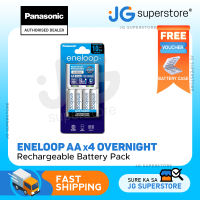
Panasonic Eneloop Basic Charger K-KJ51MCC40T with AA Rechargeable Battery Pack of 4 (White) | JG Superstore
₱1,800.00₱2,250.00
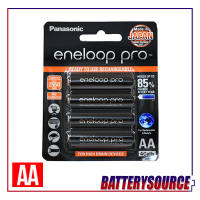
Panasonic Eneloop Pro AA Rechargeable BK-3HCCE 1.2V 2550mAh NiMH AA HR6 HR3U Ready To Use Battery
₱1,350.00
Buy on Lazada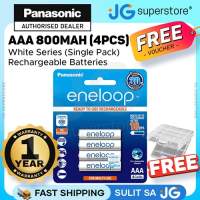
Panasonic Eneloop BK 4MCCE 4BT AAA Rechargeable Battery Pack of 4 (White) | JG Superstore
₱1,000.00₱1,250.00
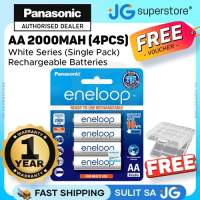
Panasonic Eneloop BK 3MCCE 4BT AA Rechargeable Battery Pack of 4 (White) | JG Superstore
₱1,000.00₱1,250.00
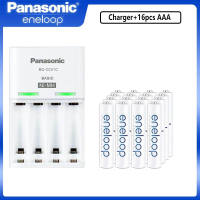
Pansonic Original Charger BQ-CC51 With AA/AAA Rechargeable Battery 1.2V NiMH 1900mAh 800mAh Pack of 4 (White)
₱1,748.00₱2,768.00
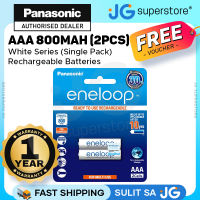
Panasonic Eneloop White 800mAh 1.2 V Rechargeable Battery AAA Pack of 2 | BK-4MCCE/2BT | JG Superstore
₱600.00₱750.00
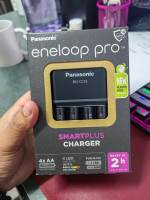
Charger for AA & AAA PRO Quick Charger K-KJ55HCD40E K-KJ55HCC with 4 pcs Eneloop Pro AA 2550mah
₱2,900.00
Buy on LazadaAbout Eneloop
Overview
Eneloop is a Japanese brand of low self-discharge nickel–metal hydride (NiMH) rechargeable batteries, widely recognised for its AA and AAA cells. Originally developed by Sanyo Electric and launched in November 2005, the brand gained global prominence due to its ability to retain charge over extended periods while supporting hundreds to thousands of recharge cycles.1 Today, Eneloop is owned by Panasonic Holdings Corporation and forms part of Panasonic’s battery product lineup.12
| Category | Details |
|---|---|
| Brand name | eneloop (エネループ) |
| Product type | Rechargeable batteries and accessories |
| Main technology | Low self-discharge Nickel–Metal Hydride (NiMH) |
| Origin | Japan |
| Introduced | November 2005 |
| Original developer | Sanyo Electric |
| Current owner | Panasonic |
| Main products | AA, AAA, C, D rechargeable batteries; chargers; accessories |
| Brand concept | Reusable energy and reduction of disposable batteries |
| Tagline | “Recharging a better tomorrow.” |
History
Origins
Prior to the introduction of Eneloop, rechargeable NiMH batteries suffered from significant self-discharge, losing stored energy relatively quickly when not in use. This limitation required consumers to recharge batteries immediately before use, reducing their convenience compared to disposable alkaline alternatives.
Sanyo addressed this issue by developing a low self-discharge NiMH battery capable of retaining much of its capacity during storage. The first Eneloop batteries were released in Japan in November 2005.1 The name “eneloop” combines the concepts of “energy” and “loop”, symbolising a continuous cycle of charging and reuse rather than single-use disposal.
Panasonic acquisition of Sanyo
In 2009, Panasonic acquired a majority stake in Sanyo, bringing Eneloop under Panasonic’s control.1 Following the acquisition, Panasonic retained the Eneloop trademark and continued to market the batteries under the original name. In subsequent years, the brand was gradually integrated into Panasonic’s global battery portfolio while maintaining its distinct identity and reputation.2
Technology
Low Self-Discharge NiMH
The defining innovation of Eneloop is its Low Self-Discharge (LSD) NiMH technology. While traditional rechargeable NiMH batteries lost significant charge during storage, Eneloop utilises improved internal materials and manufacturing processes to minimise this loss.
Key technical advantages include:
- Pre-charged state allowing immediate use out of the package
- Charge retention during long-term storage
- Stable voltage output
- High recharge cycle capability
- Reduced reliance on disposable batteries
Early Eneloop models were marketed as retaining approximately 85% of their charge after one year of storage, representing a substantial improvement over conventional NiMH technology.1
Product Line
Standard Eneloop
The standard white Eneloop battery serves as the core product in the range. It offers a balance of capacity and lifespan, making it suitable for everyday electronics such as cameras, game controllers, flashlights, toys, keyboards, mice, and household devices. It is primarily available in AA and AAA formats.
Eneloop Pro
Eneloop Pro is the high-capacity variant designed for high-drain devices. It provides greater energy capacity than the standard model, making it appropriate for digital cameras, powerful flashlights, and professional equipment. This higher capacity comes with trade-offs, including a slightly shorter cycle life and higher self-discharge rate compared to the standard Eneloop.
Eneloop Lite
Eneloop Lite is engineered for low-power devices. It features lower capacity and lighter weight but offers more recharge cycles and faster charging times. Typical applications include remote controls, clocks, wireless keyboards, and other low-power household electronics.
Battery Sizes
Eneloop batteries are manufactured in several standard sizes:
AA (HR6)
The most popular format, commonly used in cameras, controllers, flashlights, toys, and computer accessories.
AAA (HR03)
A smaller size intended for compact devices such as remote controls, wireless mice, and small electronics.
C and D Sizes
Larger cells designed for equipment requiring higher energy output, including large flashlights, audio equipment, and emergency devices.
Chargers
Eneloop chargers are specifically designed for NiMH rechargeable batteries. Common features across the range include individual charging channels, battery condition monitoring, automatic charging control, overcharge protection, and fast charging capabilities. Certain Panasonic Eneloop charger models can independently detect and charge individual cells, eliminating the need to charge batteries in pairs.
Environmental Philosophy
Sustainability is central to the Eneloop brand philosophy. The concept promotes replacing disposable alkaline batteries with rechargeable cells that can be reused hundreds of times. Benefits of this approach include reduced battery waste, lower long-term costs, decreased resource consumption, and less frequent replacement. Panasonic positions Eneloop as part of a transition from “use-and-discard” batteries towards reusable energy solutions.2
Reputation and Market Position
Eneloop has established a strong reputation among photography enthusiasts, flashlight users, electronics hobbyists, gamers, outdoor enthusiasts, and emergency preparedness communities. The brand is frequently regarded as a benchmark for rechargeable AA and AAA batteries due to its consistency, long storage life, and reliability.3
Comparison With Ordinary Batteries
| Feature | Eneloop Rechargeable NiMH | Alkaline Disposable |
|---|---|---|
| Rechargeable | Yes | No |
| Initial cost | Higher | Lower |
| Long-term cost | Lower | Higher |
| Waste generation | Lower | Higher |
| Storage ability | Excellent | Good |
| Voltage | 1.2V | 1.5V |
| Best use | Repeated-use devices | Occasional-use devices |
Brand Significance
Eneloop fundamentally altered consumer expectations regarding rechargeable batteries. Before its launch, many users found rechargeable options inconvenient due to poor storage performance. Eneloop demonstrated that rechargeable batteries could match the convenience of disposable ones while offering reusability. It stands as one of the earliest mainstream examples of environmentally focused consumer electronics, combining convenience, durability, and sustainability.2
Current Status
Eneloop remains an internationally available Panasonic battery brand.2 It continues to focus primarily on rechargeable NiMH batteries and accessories, maintaining its position as a premium rechargeable battery solution. The brand’s enduring success stems from solving the rapid self-discharge issue inherent in early rechargeable batteries while promoting a viable reusable alternative to disposables.1