Shop on Lazada
PEAKMETER products
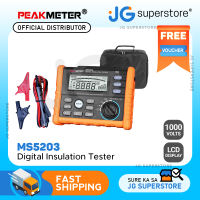
PeakMeter MS5203 Analog and Digital 1000V Insulation Resistance Tester megger meter 0.01~10G Ohm with Multimeter | JG Superstore
₱5,590.00₱6,988.00
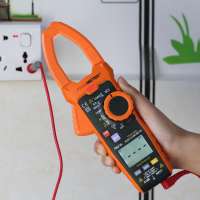
PeakMeter PM2128 Digital AC / DC Clamp Meter 1000V Multimeter | JG Superstore
₱2,490.00₱3,113.00
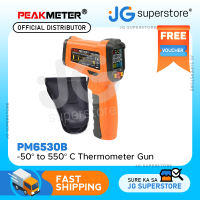
PeakMeter PM6530B Laser LCD Digital IR Infrared Thermometer Temperature Meter Gun Point -50~550 Degree Non-Contact Thermometer | JG Superstore
₱1,490.00₱1,863.00
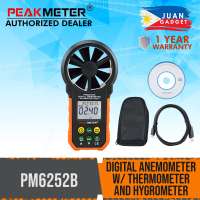
PeakMeter PM6252B Digital Anemometer Air Speed Velocity Air Flow Meter with Air Temperature Humidity RH USB Port | JG Superstore
₱2,490.00₱3,113.00
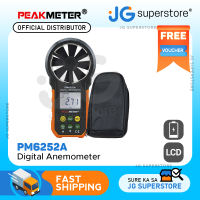
PeakMeter PM6252A Digital Anemometer Wind Speed Air Volume Measuring Meter | JG Superstore
₱1,590.00₱1,988.00
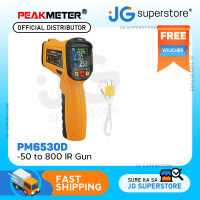
PeakMeter PM6530D -50~800 with Humidity and Dew Point IRT K type Ambient UV Light Infrared Thermometer Gun | JG Superstore
₱1,480.00₱1,850.00
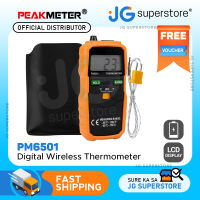
PeakMeter PM6501 LCD Display Digital Wireless Thermometer With K type Thermocouple Temperature Meter With Data Hold Logging | JG Superstore
₱690.00₱863.00
About PEAKMETER
PEAKMETER is a Chinese brand specialising in electrical, electronic, and environmental measurement instruments, with a particular focus on digital multimeters, clamp meters, electrical testers, and related test equipment. The brand is associated with corporate entities operating under the Peakmeter name, including Guilin Huayi Peakmeter Technology Co., Ltd. and Peakmeter Instruments Co., Ltd. based in Shenzhen.1 PEAKMETER describes itself as a professional manufacturer of measuring instruments with products sold internationally, covering a broad range of electrical and environmental testing equipment.2
Overview
| Item | Information |
|---|---|
| Brand | PEAKMETER / Peakmeter |
| Industry | Test & measurement equipment |
| Primary products | Digital multimeters, clamp meters, electrical testers, environmental meters |
| Country of origin | China |
| Origins | Shenzhen, China |
| Established | 2013 |
| Current manufacturing presence | Guilin, Guangxi, China |
| Major markets | International / export markets |
| Business model | Brand manufacturing, OEM and ODM |
| Main website | peak-meter.com |
| Other official site | peak-meter.cn |
History
According to official company history, PEAKMETER was founded in Shenzhen in 2013 by personnel with over 20 years of experience in the measuring instrument industry.3 By 2018, the company stated that its products were being sold in more than 80 countries and that product development had reached over 70 distinct models.2
In 2019, PEAKMETER was invited by the Guilin government to establish operations in the region. The company invested in a 12,000 m² factory building with the stated goal of increasing production capability and creating opportunities for further innovation and cooperation with universities and research institutions.3 Consequently, while the brand’s history and commercial identity are strongly associated with Shenzhen, its current manufacturing operation is prominently linked to Guilin.
Corporate structure
Information regarding the corporate ownership of PEAKMETER involves multiple related entities. The English-language manufacturing website identifies the company as Guilin Huayi Peakmeter Technology Co., Ltd., with a listed address in Lingui District, Guilin, Guangxi, China.3 A separate official site identifies Peakmeter Instruments Co., Ltd. with an address in Shenzhen, describing it as a digital measuring instrument manufacturer offering more than 100 series of products.1
PEAKMETER is therefore best understood as a brand or business group comprising related Chinese corporate entities, rather than a single legal company manufacturing every product.13
Products
PEAKMETER is categorised as a general-purpose test and measurement equipment manufacturer. Its catalogue extends significantly beyond multimeters to include dozens of products across various categories.2 Major product lines include:
- Digital multimeters
- Auto-ranging digital multimeters
- Digital clamp meters
- Earth/ground resistance testers
- Digital insulation resistance testers
- AC voltage detectors
- Infrared thermometers
- Environmental meters
- Motor phase-rotation testers
- RCD/loop testers
- Digital power clamp meters
- Multifunction process calibrators
- Electrical socket testers
- Temperature and humidity meters
- Cable/line testers
- Multimeter test probes
- DC power supplies
- EV testers
Digital multimeters
The digital multimeter (DMM) is a core product category for PEAKMETER. The catalogue includes conventional handheld meters alongside sophisticated models featuring AC/DC voltage and current measurement, resistance, capacitance, frequency, diode and continuity testing, temperature measurement, transistor testing, non-contact voltage detection, auto-ranging, True RMS measurement, data hold, backlighting, and automatic power-off.2
Capabilities vary considerably by model. PEAKMETER lists basic manual-ranging meters as well as advanced instruments with 6000-count displays. Some models target general electrical work, while others are positioned for automotive, industrial, or professional applications.2
Clamp meters
PEAKMETER produces digital clamp meters that allow users to measure current without disconnecting the conductor from the circuit. The range includes AC-only and AC/DC models incorporating True RMS, non-contact voltage detection, high-current measurement, inrush-current measurement, low-pass filtering, automatic ranging, analog bar graphs, and multiple electrical measurement functions.2 Depending on the instrument, current ranges reach up to 600 A and 1000 A.2
Electrical safety and testing equipment
The brand offers a substantial range of dedicated electrical testers that position it within the electrical installation and maintenance testing sector:2
- Earth/ground resistance testers: Designed for testing grounding systems and earth resistance.
- Insulation resistance testers: Used to assess insulation integrity in electrical installations and equipment.
- RCD/loop testers: Used in electrical installation testing for checking protective devices and circuit characteristics.
- Socket testers: Designed for quick checks of electrical outlets.
- AC voltage detectors: Provide non-contact voltage detection for electricians and maintenance personnel.
- Phase rotation testers: Used to determine phase sequence in three-phase electrical systems.
Environmental measurement
PEAKMETER participates in the portable measurement instrument market through environmental testing equipment. The catalogue includes handheld infrared thermometers, wood and material moisture meters, anemometers, combustible gas detectors, and instruments for measuring temperature, humidity, wind speed, air flow, and other environmental parameters.2
Technology and manufacturing
PEAKMETER emphasises engineering and product development, stating that its R&D department includes personnel with more than 20 years of industry experience.3 The company operates partly as a manufacturer and OEM/ODM supplier, offering customised instruments for customers with specific market requirements alongside its own branded products.3
Manufacturing is centred in China, with the Guilin operation identified as Guilin Huayi Peakmeter Technology Co., Ltd. located at No. 15-3 Xingyuan Road, Sitang Town, Lingui District, Guilin.3 The company maintains control over the supply chain, incoming materials, equipment, production processes, and quality control. Capabilities include mold development, injection moulding, and silk-screen printing, indicating in-house or closely integrated manufacturing rather than a trading-only function.3
Quality and certifications
Products are designed according to IEC 61010, an international safety standard for electrical measurement and laboratory equipment. Listed certifications and compliance frameworks include CE, UL, RoHS, REACH, WEEE, and ISO 9001.1 The Guilin entity also references CE, RoHS, SGS, TÜV SÜD, BSCI, and various patents on its corporate website.3
It should be noted that precise certification varies by product; these claims do not imply that every PEAKMETER model carries every listed certification.1
Market position
PEAKMETER generally occupies the mid-range or value professional segment of the test and measurement market, distinct from premium brands such as Fluke, Keysight, Hioki, Megger, and Chauvin Arnoux, as well as entry-level generic consumer meters. The brand’s strategy involves offering a large selection of reasonably sophisticated instruments at competitive prices while retaining professional features such as True RMS, higher-count displays, and specialised testing functions.2
Unlike anonymous generic labels, PEAKMETER has a documented corporate history, dedicated manufacturing operations, R&D capabilities, and published compliance information.23 However, for demanding professional applications, individual model specifications, safety certifications, CAT ratings, and independent test results remain critical evaluation criteria regardless of brand positioning.
Typical users
Due to the breadth of its product range, PEAKMETER instruments serve diverse user groups including electricians, electronics technicians, electrical maintenance personnel, HVAC technicians, automotive technicians, industrial maintenance workers, engineers, DIY enthusiasts, students, educational laboratories, and manufacturing or OEM customers.2
Product naming and specifications
Model numbers typically follow PM or MS series designations, such as PM118B, PM1508, PM5909, PM6308, PM6800, PM6811, PM6860D/DR, PM7221, MS5208, and MS6530D.1 When evaluating these instruments, key specifications to consider include CAT safety rating, maximum voltage and current, AC/DC capability, True RMS implementation, accuracy, resolution, input impedance, frequency and resistance ranges, protection arrangements, physical construction, and calibration capability.
Brand philosophy and strengths
PEAKMETER describes its philosophy as centred on technology, innovation, and customer satisfaction, emphasising cost-effective professional products and quality control.2 Notable strengths include a very broad product selection, strong focus on electrical measurement, OEM/ODM capability, international export experience, and competitive positioning. The current catalogue lists 89 handheld digital multimeters, 62 auto-ranging multimeters, 71 digital clamp meter products, 19 earth-ground testers, and 15 insulation testers among other categories.3
Limitations and considerations
Quality and suitability can vary by model and application. For mains electrical work, users should verify specific CAT ratings, voltage ratings, fuse types, interrupt ratings, input protection, independent safety testing, accuracy, and calibration availability. Considerations for low-voltage electronics differ significantly from those for professional high-energy installations. Therefore, evaluation should focus on whether a specific PEAKMETER model is appropriate and adequately protected for the intended application rather than relying solely on the brand name.
For critical professional electrical work, specific PEAKMETER models should be compared against alternatives from established manufacturers such as Fluke, Hioki, Brymen, UNI-T, Mastech, Kyoritsu, or Megger, with particular attention paid to safety architecture and independent verification.