Shop on Lazada
PERI products
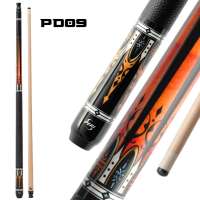
PERI BARON SERIES CUE STICKS FOR BILLIARD
₱15,493.00
Buy on Lazada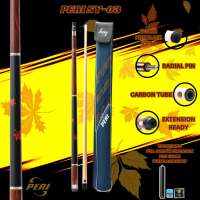
PERI SY SERIES PLAYING CUES FOR BILLIARDS
₱17,325.00
Buy on Lazada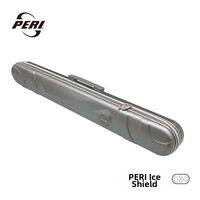
PERI | Ice Shield Four Hole Middle-Eight Specialized Pool Cue Case
₱8,835.70
Buy on Lazada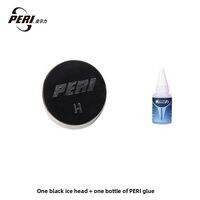
PERI | Speed Black Icy Large Head Billiard Cue
₱918.54₱1,067.22

PERI | Billiard Cue Cleaning Powder Accessory
₱2,451.68₱2,863.29
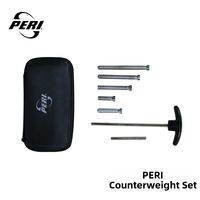
PERI | Tail Plug Billiard Cue Accessories
₱2,319.56
Buy on Lazada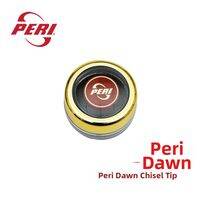
PERI | Professional Billiard Cue Tip Red
₱1,722.94₱2,026.57
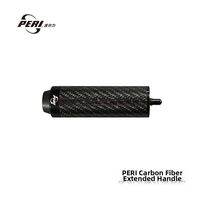
PERI | Lengthening Carbon Fiber High-End Billiard Cue
₱2,051.92
Buy on LazadaAbout PERI
PERI SE, commonly known as PERI, is a German family-owned construction technology company headquartered in Weißenhorn, Bavaria, Germany. Founded in 1969 by Artur and Christl Schwörer, the firm specialises in formwork, scaffolding, engineering, and related construction services and technologies. PERI has evolved from a domestic formwork manufacturer into an international construction-systems provider serving projects worldwide 1.
The company is particularly recognised for developing industrialised formwork and scaffolding systems designed to make concrete construction faster, safer, more economical, and easier to execute. Its products and engineering services are utilised in the construction of high-rise buildings, bridges, tunnels, infrastructure, industrial facilities, residential developments, and other major structures. PERI has also expanded into digital construction solutions and 3D construction printing 1.
Company profile
| Field | Information |
|---|---|
| Company name | PERI SE |
| Brand | PERI |
| Founded | 1969 |
| Founders | Artur Schwörer and Christl Schwörer |
| Headquarters | Weißenhorn, Germany |
| Industry | Construction technology |
| Main activities | Formwork, scaffolding, engineering and construction services |
| Ownership | Family-owned |
| CEO | Christian Schwörer |
| CFO | Jürgen Voss |
| COO | Martin Schlecker |
| CSO | Goran Kovacev |
| Website | peri.com |
PERI’s current corporate structure is PERI SE, with its registered company address in Weißenhorn. The management board currently comprises Christian Schwörer as CEO, Jürgen Voss as CFO, Martin Schlecker as COO, and Goran Kovacev as CSO 1.
History
Foundation
PERI was established in 1969 by Artur Schwörer and his wife Christl Schwörer in Weißenhorn, Germany. From its inception, the company’s objective was to rationalise concrete construction, aiming to make construction work easier, faster, and safer.
One of PERI’s earliest products was the T 70 wooden lattice girder, which became the foundation for the company’s early formwork business. The first production facility was constructed on a 6,000-square-metre site in Weißenhorn 1. During its initial years, PERI concentrated on developing practical systems for concrete construction before expanding beyond its home market.
International expansion
During the 1970s, PERI established its first German branches and subsequently expanded internationally. Subsidiaries were set up in countries including France, Switzerland, and Spain. In 1979, the company entered Belgium and the Netherlands, followed by its first subsidiary outside Europe in the United States in 1982 1.
International expansion continued throughout the 1980s and 1990s, with operations established in Turkey, Hungary, Singapore, Malaysia, Austria, Poland, South Korea, Canada, Brazil, Argentina, Chile, Australia, and the United Arab Emirates 1.
Development of formwork technology
PERI’s growth has been closely linked to innovations in formwork technology. Notable developments include:
- KGF 240 climbing scaffold, introduced in 1973
- MODUL aluminium slab formwork, introduced in 1980
- TRIO panel formwork, launched in the 1980s
- ACS Self-Climbing System, introduced around 1990
- SKYDECK slab formwork
- MULTIPROP aluminium slab props
- MAXIMO wall formwork
- VARIOKIT engineering construction systems
- PERI UP scaffolding systems 1
These systems helped establish PERI as a major international supplier of reusable construction equipment and engineering solutions.
Business activities
PERI’s business encompasses several major areas of construction technology.
Formwork
Formwork is the temporary structure used to contain and shape fresh concrete until it gains sufficient strength. This remains one of PERI’s core areas of expertise. The company develops systems for wall formwork, slab formwork, column formwork, climbing formwork, self-climbing systems, tunnel formwork, bridge construction, special structures, and infrastructure projects.
PERI’s approach is generally based on systematised and reusable construction equipment, allowing contractors to reduce labour, crane time, material waste, and construction duration.
Scaffolding
PERI expanded significantly into the scaffolding market during the 1990s with the development of its PERI UP scaffolding system. Designed for applications ranging from conventional building construction to industrial facilities and complex infrastructure projects, the system emphasises safety, flexibility, and efficient assembly 1.
Engineering
Engineering constitutes a significant component of PERI’s business. Rather than simply supplying construction equipment, the company provides engineering and project-specific solutions for complicated structures. Services include structural planning, formwork design, scaffolding design, construction sequencing, project-specific systems, site logistics, and technical consultation. This engineering-oriented model allows PERI to participate in projects from the planning stage through to construction.
Infrastructure construction
PERI systems are used extensively in infrastructure projects, including bridges, tunnels, dams, transport infrastructure, large concrete structures, and marine infrastructure. The company’s VARIOKIT system, for example, was developed as an engineering construction kit for applications including tunnel, bridge, and building construction 1.
High-rise construction
The company has developed specialised technologies for high-rise buildings, particularly climbing and self-climbing formwork. A notable example is the use of PERI’s ACS Self-Climbing System during the construction of the Petronas Towers in Kuala Lumpur. PERI states that the system facilitated the construction of the 452-metre towers, which were the world’s tallest buildings at the time 1.
Digital construction
PERI has increasingly incorporated digital technology into its construction business. Its portfolio includes digital solutions intended to improve planning, project management, information access, and construction processes. The company introduced its myPERI online portal in the 2010s as part of this digital development 1.
3D construction printing
A recent area of innovation for PERI is 3D construction printing. The company describes itself as a pioneer in this field and has expanded beyond its traditional formwork and scaffolding business into automated concrete construction technologies 1.
Notable projects
PERI technology has been involved in numerous major international construction projects. Examples highlighted by the company include:
- Petronas Towers, Kuala Lumpur, Malaysia
- Panama Canal expansion
- Third Bosphorus Bridge, Turkey
- Øresund connection, Denmark–Sweden
- Scharnebeck ship lift, Germany
- Atatürk Dam, Turkey
- Major industrial and LNG facilities
- Large bridge and tunnel projects 1
These projects illustrate the range of PERI’s capabilities, from conventional building construction to technically complex infrastructure.
Business model
A distinctive feature of PERI is that it does not operate solely as a manufacturer of construction equipment. The company combines products, engineering, rental, logistics, and technical services. This integrated approach means contractors can obtain not only physical formwork or scaffolding but also the engineering expertise required to configure and utilise the system effectively.
PERI operates rental parks and logistics facilities alongside its manufacturing and sales network. Its official company profile describes a global network of more than 60 subsidiaries and approximately 140 rental parks, with more than 160 locations worldwide 1.
Family ownership
PERI remains a family-run business. Founded by Artur and Christl Schwörer, management subsequently passed to the next generation, and PERI describes itself as a family business in its second generation 1.
In 2007, Artur Schwörer handed management of the company to his sons Alexander and Christian Schwörer. Artur Schwörer died in 2009 1. The continuation of family ownership is a central element of PERI’s corporate identity and distinguishes it from many large publicly traded construction-equipment manufacturers.
Global presence
PERI has developed a substantial international network, operating in more than 70 countries with a workforce spanning more than 160 locations. Operations are organised through subsidiaries and local organisations that allow PERI to combine standardised global products with local construction knowledge 1.
This international model is significant in the construction sector, where building practices, regulations, labour conditions, engineering requirements, and project logistics vary considerably between markets.
Major product families
Key PERI systems and technologies include:
| Product/system | Main application |
|---|---|
| TRIO | Wall formwork |
| MAXIMO | Wall formwork |
| SKYDECK | Slab formwork |
| MULTIPROP | Aluminium slab props |
| ACS | Self-climbing formwork |
| PERI UP | Scaffolding |
| VARIOKIT | Engineering construction system |
| QUATTRO | Column formwork |
| KGF | Climbing systems |
| T 70 / GT 24 | Formwork girders |
These products represent different stages of PERI’s development from a traditional formwork manufacturer into a broader construction-technology provider 1.
Brand identity
PERI’s brand is closely associated with construction engineering, technical innovation, and jobsite efficiency. The company positions itself as a partner to contractors, construction companies, scaffolders, architects, and other participants in the construction process rather than merely as an equipment supplier. Its stated philosophy emphasises partnership, customer proximity, reliability, innovation, and technical expertise 1.
Visually, PERI is recognisable on construction sites through its yellow-and-black/red branding and large-scale formwork and scaffolding equipment bearing the PERI name.
Industry position
PERI is regarded as one of the major international companies in the formwork and scaffolding industry. Its competitive position derives from several factors:
- Long history: More than five decades of experience since its 1969 founding.
- Engineering expertise: Combining equipment with technical design and project support.
- International presence: Local subsidiaries enabling service across multiple markets.
- Product systems: Standardised systems reusable across different construction projects.
- Innovation: Continuous introduction of new formwork, climbing, scaffolding, and digital technologies.
- Family ownership: Retention of a long-term family-business structure.
- Large-project experience: Technology deployed on major high-rise and infrastructure projects 1.
Current operations
Today, PERI is positioned as a global construction technology company. Its activities encompass formwork solutions, scaffolding solutions, infrastructure construction, construction accessories, engineering, rental services, digital construction solutions, 3D construction printing, and specialised construction technologies 1.
The company continues to be headquartered in Weißenhorn, Germany, where the business began in 1969.
Significance
PERI’s significance lies in its role in industrialising the construction of concrete structures. Instead of treating formwork and scaffolding as temporary, individually improvised components, the company develops standardised, engineered systems that can be planned, reused, transported, and adapted across projects. The concept of making construction more systematic, efficient, safe, and predictable has been central to PERI since its founding 1.