Shop on Lazada
Picasso Tiles products
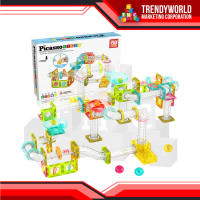
Picasso Tiles Magnet Tile Building Block 80pc Marble Run with Launcher
₱2,199.00
Buy on Lazada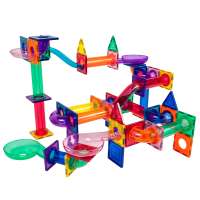
PicassoTiles Marble Run 100 Piece Magnetic Tile Race Track Toy Play Set STEM Building & Learning Educational Magnet Construction Child Brain Development Kit Boys Girls Age 3-99 Years Old Toys PTG100
₱3,000.00
Buy on Lazada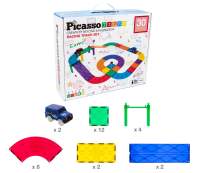
Picasso Tiles 30 Pieces Racing Track Set Stem Learning Kit PTR30
₱2,600.00
Buy on Lazada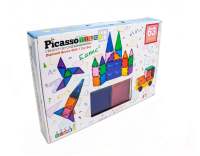
Picasso Tiles 63 pcs Diamond Series with 1 Car Set Stem Learning Kit PT63
₱2,500.00
Buy on Lazada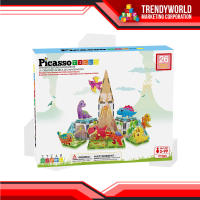
Picasso Tiles Magnet Tile Building Blocks Dinosaur World Themed Playset with 8 Animal Character
₱1,699.00
Buy on Lazada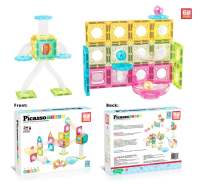
PicassoTiles 60 pc Magnet Tiles Building Block Travel Size Magnetic Marble Run Construction Toy Set Mini Diamond Marble RaceTrack Building Blocks Playset Education STEM Learning Kit Boy Girl 3+ PTMG60
₱1,300.00
Buy on LazadaAbout Picasso Tiles
Overview
Picasso Tiles is an American toy brand best known for magnetic building tiles and construction toys designed around open-ended creative play. Its products combine magnetic construction with concepts from STEM/STEAM education, allowing children to build 2D patterns and 3D structures while experimenting with geometry, balance, spatial relationships, and design.1
| Category | Information |
|---|---|
| Brand | Picasso Tiles |
| Industry | Toys / Children’s educational toys |
| Best known for | Magnetic building tiles |
| Founded | 2011, according to LinkedIn2 |
| Business type | Privately held |
| Core concept | Open-ended construction and creative play |
| Educational positioning | STEM / STEAM |
| Typical age range | 3+; individual products have their own age recommendations |
| Headquarters / listed address | Hacienda Heights, California, United States |
| Official website | picassotiles.com |
The company’s LinkedIn profile lists Picasso Tiles as founded in 2011, while its own history page describes the brand as having developed from a group of toy enthusiasts who wanted to make a difference in the toy industry.12
History
Picasso Tiles states that its origins came from a group of toy enthusiasts who believed children’s toys could encourage more creativity and learning. The company’s early approach was centred on creating toys that did not require children to follow fixed instructions, instead encouraging them to experiment and create their own structures.
The brand’s name is an explicit reference to Pablo Picasso. According to Picasso Tiles, the name represents its philosophy that children should be encouraged to remain creative and artistic as they grow. The company describes itself as combining an “art-faced” approach with STEM, effectively turning STEM into STEAM by incorporating artistic creativity.
The brand has subsequently expanded beyond its original magnetic-tile concept into a broader construction-toy ecosystem.
Product Range
Although magnetic tiles remain its signature product, the current Picasso Tiles range is considerably broader.
Magnetic Building Tiles
These are the brand’s core products. Individual tiles generally consist of colourful geometric plastic pieces containing enclosed magnets around their edges. The basic concept is simple: pieces attract one another and can be assembled into flat designs or three-dimensional structures.
A typical starter set contains combinations of:
- Squares
- Equilateral triangles
- Isosceles triangles
- Larger squares
- Window pieces
- Door pieces
- Specialty geometric shapes
For example, the company’s 100-piece PT100 starter set contains five principal tile types and is intended for children aged 3 and above.
Marble Runs
Picasso Tiles also produces magnetic-tile-compatible marble-run systems. These add tracks and motion to the traditional construction experience, letting children construct a pathway and then test how a marble travels through it. This introduces an additional engineering element, as children must consider gravity, slopes, momentum, connections, and structural stability.
Race Tracks and Vehicles
Another major category is magnetic race-track construction. Children can build tracks using magnetic components and combine them with toy cars, including versions with LED-equipped vehicles. This changes the play pattern from simply constructing a static object to designing a functioning course.
Themed Construction Sets
Picasso Tiles sells themed sets that turn the basic magnetic-tile system into miniature environments. Examples include:
- Castles
- Schools
- Hospitals
- Police stations
- Aquariums
- City environments
- Princess/fantasy settings
- Seasonal structures
Its 300-piece set, for example, is designed around school, hospital, and police-station environments and includes numerous specialised pieces and accessories.
Educational Sets
The brand also produces sets specifically oriented toward educational concepts, including:
- Numbers and mathematics
- Shapes
- Drawing
- Visual expression
- Engineering
- Construction
For example, its magnetic number-tile set combines magnetic construction with basic numerical learning.
Accessories and Expansions
An important part of the Picasso Tiles ecosystem is the ability to expand an existing collection. The company sells accessories such as:
- Expansion tiles
- Character figures
- Animals
- Vehicles
- Storage products
- Specialty geometric pieces
- Clip-in components
- Themed accessories
This allows a relatively basic tile collection to evolve into a larger construction and role-playing system.
Design Philosophy
The defining idea behind Picasso Tiles is open-ended play. Instead of giving a child a single object that can only be assembled one way, magnetic tiles can be repeatedly taken apart and recombined into different structures.
For example, the same collection of square and triangular tiles can become:
- A house
- A tower
- A castle
- A vehicle
- An animal
- A geometric pattern
- A maze
- A city
- An entirely original structure
Picasso Tiles specifically states that it intentionally emphasises exploration rather than requiring children to follow instructions.1 This is central to the brand’s distinction: the toy is not the finished structure; the construction process is the play experience.
Educational Philosophy
Picasso Tiles positions its products as STEM/STEAM toys. The company’s educational claims centre on children learning through physical experimentation rather than traditional instruction. Building with the tiles naturally involves concepts such as:
- Geometry — shapes, angles and symmetry
- Spatial reasoning — understanding how 2D pieces become 3D structures
- Engineering — determining how to make structures stand
- Problem solving — figuring out why a construction fails
- Fine motor skills — manipulating and connecting pieces
- Hand-eye coordination
- Creativity
- Planning and design
The company describes this as combining STEM learning with art and creative expression, hence its emphasis on STEAM.1 Importantly, these skills arise through play rather than the child necessarily perceiving the activity as a lesson.
Magnetic-Tile System
The magnetic connection is the key piece of technology behind Picasso Tiles. Magnets are enclosed inside the plastic components, allowing children to connect pieces along their edges. This makes construction substantially easier than traditional interlocking blocks for very young builders.
The company’s product information describes its magnets as being positioned to provide stable connections while still allowing children to pull pieces apart and rebuild them.1 The result is a construction system with a relatively low learning barrier: connect → build → test → modify → rebuild. That cycle is one of the main reasons magnetic tiles work particularly well as an open-ended toy.
Compatibility
One notable characteristic of the Picasso Tiles system is its compatibility with other major magnetic-tile systems. Picasso Tiles currently states that its full-sized magnetic tiles can connect with Magna-Tiles, Connetix and most major magnetic-tile brands.
This is significant because it means a family does not necessarily have to remain exclusively within the Picasso Tiles ecosystem. Existing magnetic tiles from another compatible brand can potentially be incorporated into a Picasso Tiles construction. Compatibility can vary with tile size, shape and particular product generation, however, so individual sets should be checked rather than assuming every Picasso Tiles product is interchangeable.
Safety
Safety is an important part of the brand’s marketing. Picasso Tiles states that its products use:
- Enclosed magnets
- Rounded/smooth edges
- Food-grade or non-toxic plastic materials on applicable products
- BPA-free materials on product pages
- Testing against children’s-toy safety standards
The company’s FAQ states that its toys are tested to ASTM and CPSIA safety standards and that magnets are sealed inside the tiles. Some sets contain smaller accessories, however, so the appropriate age recommendation and choking-hazard warnings remain important. The standard magnetic-tile range is generally marketed toward children 3 years and older, although individual products have their own recommendations.1
Major Product Categories
A simplified picture of the current Picasso Tiles portfolio looks like this:
Picasso Tiles
│
├── Magnetic Tiles
│ ├── Classic tiles
│ ├── XL tiles
│ ├── Windows & doors
│ └── Specialty shapes
│
├── Construction Systems
│ ├── Magnetic bricks
│ ├── Interlocking construction pieces
│ └── Engineering sets
│
├── Motion-Based Toys
│ ├── Marble runs
│ ├── Race tracks
│ └── Toy cars / vehicles
│
├── Themed Sets
│ ├── Castles
│ ├── Cities
│ ├── Schools
│ ├── Hospitals
│ └── Fantasy / seasonal themes
│
├── Educational Toys
│ ├── Math
│ ├── Shapes
│ ├── Drawing
│ └── STEM/STEAM activities
│
└── Accessories
├── Figures
├── Animals
├── Expansion pieces
└── Storage
This diversification is visible in the company’s current catalogue, which ranges from basic 60- and 100-piece magnetic sets to marble runs, race tracks, themed sets, construction toys and drawing products.1
Brand Positioning
Picasso Tiles occupies a particularly interesting position in the children’s construction-toy market. Its basic proposition is essentially:
Magnetic construction + creativity + STEM learning + affordability
Rather than positioning itself solely as an educational toy, the company emphasises the idea that learning happens naturally through creative play. The company’s own materials repeatedly emphasise affordability and accessibility alongside creativity.1
This also explains why its product line extends beyond conventional magnetic tiles. Marble runs, race tracks, vehicles, figures and themed sets allow the same construction principles to be combined with engineering, storytelling and pretend play.
Comparison with Traditional Building Blocks
The biggest conceptual difference between Picasso Tiles and traditional interlocking blocks is the magnetic connection mechanism.
| Feature | Picasso Tiles magnetic tiles | Traditional interlocking blocks |
|---|---|---|
| Connection | Magnets | Mechanical studs/connectors |
| Ease of assembly | Very easy | Usually requires more precise alignment |
| 2D construction | Excellent | Usually less central |
| 3D construction | Excellent | Excellent |
| Open-ended play | Very high | Very high |
| Geometry learning | Particularly visible | Present but less visually obvious |
| Fast rebuilding | Excellent | Moderate |
| Large flat structures | Excellent | Less convenient |
| Age accessibility | Generally 3+ | Varies substantially |
The magnetic system makes Picasso Tiles particularly suitable for large geometric constructions where pieces need to be repeatedly attached and detached.
Comparison with Magna-Tiles
One of the most obvious comparisons is with MAGNA-TILES. Both brands occupy the magnetic-tile construction category, and their full-sized products can be compatible. Picasso Tiles itself explicitly promotes compatibility with Magna-Tiles.
Broadly speaking:
- Picasso Tiles emphasises value, a broad range of magnetic construction products, and a large selection of specialty sets.
- MAGNA-TILES is one of the best-known names in the category and is often treated as a benchmark brand.
- Both rely on magnetic geometric pieces and open-ended construction.
- Picasso Tiles has expanded particularly aggressively into accessories, marble runs, race tracks and themed construction systems.
The precise quality and magnetic strength can differ by individual product and generation, so comparing a particular set rather than only the brand names is more meaningful.
Brand Name and Picasso
The word “Picasso” is deliberate. Picasso Tiles states that the brand name pays homage to Pablo Picasso and reflects its belief that children should retain their creativity as they grow. Its philosophy therefore places art alongside science and engineering, rather than treating creativity as separate from technical learning.
That philosophy is summarised by the company’s broader STEAM positioning: Science + Technology + Engineering + Art + Mathematics.
Corporate and Trademark Information
Public company information is somewhat less extensive than that available for major publicly traded toy companies. LinkedIn describes Picasso Tiles as a privately held consumer-goods company, with a reported founding year of 2011 and an employee range of 11–50.2
More recent trademark information is also useful for understanding the scope of the brand. A 2025 Philippine Intellectual Property Office publication identifies Laltitude, LLC, of Hacienda Heights, California, as the holder of an international registration for the PICASSOTILES mark. The listed goods cover a broad range of construction toys, magnetic building blocks, toy vehicles, tracks, figures and related children’s toys.3 That filing suggests that Picasso Tiles is not simply a single magnetic-tile product line; the brand is being used across a considerably broader toy portfolio.
Current Brand Direction
As of 2026, Picasso Tiles appears to be moving toward a broader construction-and-play ecosystem rather than relying exclusively on classic magnetic squares and triangles. Its current catalogue includes:
- Traditional magnetic tiles
- Larger magnetic pieces
- Marble runs
- Race tracks
- LED vehicles
- Themed environments
- Educational sets
- Engineering/construction toys
- Drawing tiles
- Figures and accessories
- Storage and expansion products
The company’s website also continues to present itself explicitly as an award-winning STEM-toy brand.
Reception and Reputation
Picasso Tiles has developed a substantial consumer presence in the magnetic-building-toy category. Its own website displays numerous customer reviews describing the products as versatile, engaging and useful for children of different ages. Those testimonials are first-party customer reviews, so they should be understood as company-hosted feedback rather than independent product testing.
The brand’s strongest selling points are generally its:
- Open-ended nature
- Ease of construction
- Large variety of pieces
- Expandability
- STEM/STEAM positioning
- Compatibility with other magnetic-tile systems
- Relatively broad range of themed and motion-based products
Summary
Picasso Tiles is a privately held American children’s-toy brand founded in 2011 and best known for magnetic construction tiles. Its central philosophy is that children learn through creative, open-ended play, with magnetic construction providing a hands-on way to explore geometry, spatial reasoning, engineering, problem solving and artistic expression.1
What began around the concept of magnetic building tiles has grown into a much broader ecosystem encompassing marble runs, race tracks, vehicles, themed environments, educational sets, construction toys and accessories. Its branding deliberately connects art and STEM, using the Picasso name to communicate the idea of preserving creativity while developing technical and analytical skills.1
In short, the easiest way to characterise Picasso Tiles is: Picasso Tiles = magnetic construction + open-ended creativity + STEAM learning + expandable play.