Shop on Lazada
Pixel products
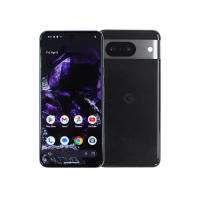
Refurbished Phone Pixel 8 5G Smartphone Unlocked 128GB Screen 6.2inche 4575mAh 2400x1080px 50MP All Colours Good Condition
₱17,199.00₱24,000.00

Pixel University Notebook with Yarn Binding - Big Notebook for School Office or Personal Use - 80 Leaves - Available in Various Colors
₱45.00
Buy on Lazada
Pixel Notes Notebook with Yarn - Plain Color Cover 80 Leaves
₱26.00
Buy on Lazada
Pixel Neon Notes Writing Plain Color Cover 80 Leaves
₱24.00
Buy on Lazada
Pixel Neon Notes Composition - Plain Cover 80 Leaves
₱24.00
Buy on Lazada![STENO NOTEBOOK 60 LEAVES [10 PIECES/REAM]](https://sg-live-01.slatic.net/p/9020e0467e6367cce36c85737b775eba.jpg_200x200q80.jpg)
STENO NOTEBOOK 60 LEAVES [10 PIECES/REAM]
₱229.00
Buy on Lazada
Pixel University Notebook Spiral - Big Notebook for School Office or Personal Use - 80 Leaves - Available in Various Colors
₱42.00
Buy on Lazada
High-Speed Sync Hot Shoe Adapter for Canon Camera Compatible with Canon Flashlight Pixel TF-321 Photography Accessory
₱788.00
Buy on LazadaAbout Pixel
Overview
Pixel is a premium consumer electronics brand developed by Google. Originally introduced in 2016 with the launch of the first Pixel smartphone, the brand has grown into a family of devices that includes smartphones, smartwatches, wireless earbuds, tablets, and foldable phones. Pixel products are designed to showcase Google’s vision for Android by tightly integrating hardware, software, and artificial intelligence (AI). [1]
Pixel is widely recognized for its computational photography, clean Android experience, long-term software support, and AI-powered features that often debut on Pixel devices before becoming available elsewhere in the Android ecosystem. [2]
-
Brand: Google Pixel
-
Owner: Google
-
Introduced: October 4, 2016
-
Product Categories:
-
Smartphones
-
Foldable phones
-
Smartwatches
-
Wireless earbuds
-
Tablets
-
Mobile accessories
-
Operating System: Android
History
Origins
Before Pixel, Google produced the Nexus series (2010–2016), which served as reference devices for Android in partnership with manufacturers such as HTC, LG, Huawei, Motorola, and Samsung.
In 2016, Google replaced Nexus with the Pixel lineup, aiming to create devices fully designed and controlled by Google, similar to Apple’s approach with the iPhone. The first Pixel and Pixel XL were announced on October 4, 2016. [3]
Google described Pixel as a product built to deliver “the best of Google” through integrated hardware, software, and AI. [4]
Design Philosophy
Pixel devices are designed around four principles:
-
Simplicity
-
Intelligence
-
Helpful AI
-
Seamless Google ecosystem integration
Rather than focusing only on hardware specifications, Google emphasizes software optimization and machine learning to improve everyday experiences. [5]
Product Line
Pixel Smartphones
The smartphone lineup is the flagship Pixel product.
Notable families include:
-
Pixel & Pixel XL
-
Pixel 2 Series
-
Pixel 3 Series
-
Pixel 4 Series
-
Pixel 5
-
Pixel 6 Series
-
Pixel 7 Series
-
Pixel 8 Series
-
Pixel 9 Series
-
Pixel 10 Series
Google has also introduced several variants:
-
Pixel “a” Series (budget)
-
Pixel Pro
-
Pixel Pro XL
-
Pixel Fold
-
Pixel Fold Pro
The phones typically feature:
-
OLED displays
-
Google Tensor processors
-
Titan security chips (earlier generations)
-
AI-powered cameras
-
Exclusive Android features
-
Monthly security updates
-
Long software support commitments [6]
Pixel Fold
Pixel Fold is Google’s foldable smartphone series.
Features include:
-
Book-style folding display
-
Large internal OLED screen
-
Tensor processors
-
Multitasking features
-
Split-screen Android interface
-
Advanced camera system
Pixel Tablet
Released as Google’s return to the Android tablet market.
Features include:
-
Large LCD display
-
Google Tensor chipset
-
Optional charging speaker dock
-
Smart home controls
-
Entertainment features
-
Integration with Google Home
Pixel Watch
Google’s smartwatch lineup combines Wear OS with Fitbit health tracking.
Main features:
-
Heart-rate monitoring
-
ECG (supported regions)
-
Sleep tracking
-
Google Maps
-
Google Wallet
-
Google Assistant/Gemini integration
-
Fitbit Premium features (varies by model)
Pixel Buds
Google’s wireless earbuds feature:
-
Active Noise Cancellation
-
Real-time language translation
-
Adaptive sound
-
Google Assistant
-
Spatial audio (supported models)
-
Fast Pair
Software
Pixel devices run Google’s own version of Android.
Key software characteristics include:
-
Clean Android interface
-
No manufacturer skins
-
Fast Android updates
-
Monthly security patches
-
Pixel Feature Drops
-
AI-first user experience
Many Android features appear first on Pixel before expanding to other Android phones. [7]
Artificial Intelligence
AI is the defining feature of the Pixel brand.
Google integrates machine learning directly into Pixel devices through custom Tensor chips and cloud-based AI services.
Major AI capabilities include:
-
Gemini assistant
-
Magic Eraser
-
Best Take
-
Photo Unblur
-
Call Screen
-
Hold for Me
-
Live Translate
-
Recorder transcription
-
Circle to Search
-
AI image editing
-
Voice typing
-
Spam detection
Google increasingly positions Pixel as an AI-first smartphone platform. [8]
Camera Technology
Pixel cameras have consistently received critical acclaim despite often using fewer camera sensors than competitors.
Key technologies include:
-
HDR+
-
Night Sight
-
Super Res Zoom
-
Portrait Mode
-
Astrophotography Mode
-
Magic Editor
-
Real Tone
-
Motion Mode
-
Video Boost
-
AI-enhanced image processing
Google’s computational photography relies heavily on software and AI rather than only larger camera hardware. [9]
Hardware
Pixel devices have used different chipsets over time:
Qualcomm Snapdragon (2016–2021)
Used in:
-
Pixel
-
Pixel 2
-
Pixel 3
-
Pixel 4
-
Pixel 5
Google Tensor (2021–Present)
Beginning with Pixel 6, Google introduced its custom Tensor processors, designed to accelerate AI, imaging, speech recognition, and on-device machine learning. [10]
Security
Pixel devices include several security technologies:
-
Titan security architecture (earlier generations)
-
Tensor security features
-
Verified Boot
-
Android SafetyNet/Play Integrity
-
Security Hub
-
On-device encryption
-
Regular security updates
Pixel Ecosystem
Google has expanded Pixel into an interconnected ecosystem.
Products work together with:
-
Android
-
Google Photos
-
Google Drive
-
Gmail
-
Google Calendar
-
Google Home
-
Nest devices
-
Chromebook
-
Google TV
-
Wear OS
Software Updates
Pixel is known for receiving Android updates directly from Google.
Benefits include:
-
Immediate Android version upgrades
-
Monthly security patches
-
Quarterly Pixel Feature Drops introducing new capabilities between major Android releases. [11]
Market Position
Pixel competes in the premium smartphone market against brands such as:
-
Apple (iPhone)
-
Samsung Electronics (Galaxy)
-
Xiaomi
-
OnePlus
-
OPPO
-
HONOR
Unlike many Android manufacturers, Google focuses heavily on software experiences and AI rather than offering a wide range of hardware models.
Brand Identity
Pixel branding emphasizes:
-
Minimalist industrial design
-
Distinctive camera bar (introduced with Pixel 6)
-
Clean Android interface
-
AI-powered productivity
-
Photography
-
Everyday usefulness
Google markets Pixel as a device that combines hardware, software, and AI into a cohesive user experience. [12]
Legacy and Impact
Since its debut, Pixel has significantly influenced the Android ecosystem by introducing features that later became widely adopted, including advanced computational photography, AI-assisted calling, on-device speech recognition, and regular feature updates outside major Android releases. Google’s investment in custom Tensor processors further shifted the brand toward AI-centric mobile computing, making Pixel both a flagship product line and a showcase for Google’s latest software innovations. [13]