Shop on Lazada
Police products
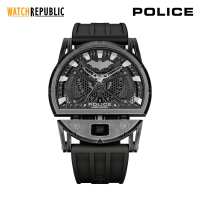
Police Batman Dark Side Limited Edition Black Rubber Analog Quartz Watch For Men PEWGN0075401
₱18,950.00₱22,295.00
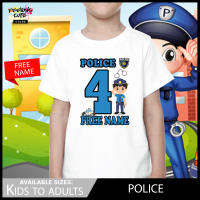
Police Birthday Theme Number Shirt 12345678910 For Kids to Adults Unisex
₱139.00₱350.00
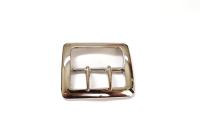
Police Buckle Accessories
₱100.00
Buy on Lazada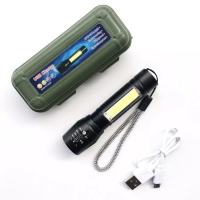
Police Cree Mini LED Flashlight Rechargeable Waterproof USB Charging
₱150.00
Buy on LazadaAbout Police
Police is an Italian fashion and lifestyle brand best known for its eyewear, particularly sunglasses and optical frames. Founded in 1983 by the Italian eyewear group De Rigo, the brand originally focused on sunglasses before expanding into fragrances, watches, jewellery, leather goods, and clothing. Today, Police is positioned as a lifestyle brand built around boldness, individuality, urban style, and a rebellious spirit.1
Its official brand site is policelifestyle.com.
Overview
| Category | Information |
|---|---|
| Brand name | Police |
| Origin | Italy 🇮🇹 |
| Founded | 1983 |
| Founder / parent group | De Rigo |
| Original category | Sunglasses / eyewear |
| Current positioning | Fashion & lifestyle |
| Main identity | Bold, urban, individualistic |
| Best known for | Sunglasses and optical frames |
| Other categories | Fragrances, watches, jewellery, leather goods, clothing |
| Signature symbol | Eagle |
| Notable design element | Blue mirrored lenses |
| International presence | 100+ countries according to De Rigo |
| Parent company | De Rigo S.p.A. |
History
Origins: 1983
Police was created in Italy in 1983 by De Rigo, during a period when eyewear was increasingly shifting from being merely functional to becoming an important fashion accessory.
De Rigo itself had been established in 1978 by the De Rigo family as an eyewear manufacturer. Its original business was producing sunglasses and prescription frames for other companies. Police became one of the group’s own brands.1
The idea behind Police was different from traditional, conservative eyewear. Rather than simply making glasses for vision or sun protection, the brand sought to make eyewear communicate personality and attitude.
De Rigo describes the brand’s original spirit in terms of audacity, style and character.1
The rise of Police eyewear
Eyewear remained the heart of Police.
During the 1980s and 1990s, the brand developed an identity associated with a more assertive, contemporary and metropolitan aesthetic. This helped Police distinguish itself from traditional Italian optical brands.
One of its most recognizable innovations came during the 1990s, when Police introduced blue mirrored lenses. According to De Rigo, the lenses quickly became a global trend and subsequently became one of the visual signatures associated with Police.1
This period was particularly important because sunglasses were increasingly being treated as a fashion statement rather than simply a functional product.
From eyewear to lifestyle brand
Police did not remain an eyewear-only company.
1997 — Fragrances
In 1997, Police introduced its first fragrances for men and women.
This represented the beginning of a much broader strategy: instead of being identified solely with sunglasses, Police began turning its visual identity into a complete lifestyle concept.1
2003 — Watches
Police entered the watch category in 2003. Watches fit naturally with its existing accessories-oriented positioning and allowed the brand to put its design language onto another highly visible fashion object.1
2005 — Jewellery
The brand expanded into jewellery in 2005, continuing its move toward a broader fashion-accessories portfolio.1
2011 — Small leather goods
Police added small leather goods in 2011, extending the brand into wallets, accessories and related leather products.1
Clothing
Police subsequently expanded into clothing, completing its transition from an eyewear company into a wider lifestyle/fashion brand. De Rigo now describes Police as a lifestyle brand spanning multiple product categories.1
Brand identity
Police’s identity is perhaps the most interesting part of the brand.
Rather than presenting itself as traditional Italian luxury, Police has historically emphasized concepts such as:
- Audacity
- Freedom
- Individuality
- Adventure
- Urban culture
- Nonconformity
- Masculinity
- Self-expression
De Rigo describes the Police consumer as someone who is willing to take risks and does not need other people’s approval.1
This gives Police a different position from brands whose identity is based primarily on heritage, aristocratic luxury or understated elegance.
A useful way of describing the brand is:
Italian fashion design + urban attitude + rebellious individuality.
The Police aesthetic
Police’s visual language has evolved considerably since the 1980s, but several recurring elements have remained important.
The eagle
The eagle is perhaps Police’s most recognizable symbol.
According to De Rigo, the eagle represents freedom and fearlessness and has been repeatedly redesigned throughout the brand’s history while remaining an important part of its identity.1
The eagle is particularly appropriate for Police’s positioning because the brand frequently associates itself with independence and freedom.
Blue
Blue, especially the distinctive blue mirrored lens, became another important visual element.
The blue mirror lenses introduced in the 1990s became one of Police’s signature features and were subsequently used as an identifiable element beyond eyewear.1
Gothic / aggressive typography
Police has also used strong typography and, at various points, motifs such as a Gothic-style “P” and skull imagery. These elements reinforce its tougher, more rebellious visual character.1
Celebrity and popular-culture marketing
Police has historically relied heavily on celebrity ambassadors and personalities to communicate its image.
Over the years, people associated with Police campaigns have included:
- Bruce Willis
- George Clooney
- David Beckham
- Antonio Banderas
- Paolo Maldini
- Neymar Jr.
- Lewis Hamilton
The use of internationally recognizable personalities helped Police associate its products with ideas of masculinity, confidence, celebrity, sport and contemporary culture.1
This is particularly significant for an accessories brand because sunglasses and watches are highly visible products: consumers can buy into the image represented by the celebrity without necessarily purchasing luxury clothing.
Police and motorsport
Police has also been connected with Formula 1 and motorsport, most notably through its association with Mercedes-AMG Petronas.
This fits the brand’s positioning surprisingly well.
Motorsport provides Police with several attributes that are consistent with its identity:
speed → performance → technology → masculinity → risk → adventure
The connection therefore extends the brand beyond conventional fashion advertising and into a world associated with performance and competition.
Product categories
Eyewear
Eyewear remains the core of Police.
The brand currently offers:
- Sunglasses
- Optical/prescription frames
- Junior eyewear
This is also the category in which Police has its strongest historical credibility because it originated as an eyewear brand in 1983.
Fragrances
Police entered fragrance in 1997.
Its fragrance business allowed the brand to translate its visual identity into something more personal and sensory. Police fragrances generally operate within the same broad world of masculinity, confidence, nightlife and individuality.
The fragrance expansion was important because it transformed Police from a company selling something worn primarily on the face into a brand that could become part of a consumer’s overall lifestyle.1
Watches
Police watches began in 2003.
The watches generally follow the brand’s recognizable aesthetic rather than trying to compete directly with traditional Swiss watchmaking houses.
In other words, Police watches are primarily fashion watches: the emphasis is on design, identity and visual presence.
Jewellery
Police also produces jewellery and fashion accessories.
The jewellery follows the same general aesthetic vocabulary: stronger forms, masculine styling, symbolic elements and a somewhat rebellious character.
Leather goods
Small leather goods became part of the Police portfolio in 2011.
This category allows the brand to extend its identity into everyday objects such as wallets and other accessories.
Clothing
Police has also expanded into clothing, reinforcing its status as a lifestyle brand rather than an eyewear specialist alone.1
Target consumer
Police’s traditional consumer has been particularly associated with men and younger, fashion-conscious urban consumers, although the brand has products for both men and women.
The target customer can broadly be described as someone who:
- wants recognizable fashion branding;
- likes a stronger or more aggressive aesthetic;
- values individuality;
- enjoys urban/metropolitan style;
- prefers accessories that make a visual statement;
- is interested in fashion without necessarily buying traditional luxury;
- sees accessories as an expression of personality.
De Rigo describes Police as targeting people with a modern, dynamic and metropolitan lifestyle.2
Market positioning
Police occupies an interesting position in the fashion market.
It is not primarily a traditional luxury house in the same sense as Prada, Gucci or Dior.
Instead, Police is better understood as an accessible/premium fashion lifestyle brand with particularly strong recognition in eyewear and accessories.
Its competitive advantage comes from combining:
Italian design heritage
strong branding
+
celebrity marketing
+
recognizable accessories
+
urban/rebellious personality
This makes it possible for a consumer to buy into the Police aesthetic without entering the price territory of the major luxury fashion houses.
Police vs. De Rigo
An important distinction is that Police and De Rigo are not the same thing.
De Rigo
De Rigo is the larger Italian eyewear group.
It was founded in 1978 and operates a portfolio of brands and licensed businesses. Its history is rooted in the design, manufacture and distribution of eyewear.1
Police
Police is one of De Rigo’s proprietary brands.
So the relationship is roughly:
De Rigo → parent/group
Police → brand
De Rigo describes Police as one of its own “house brands.”1
International presence
Police has grown well beyond its Italian origins.
De Rigo says Police is distributed in more than 100 countries, with Europe being its principal market and particularly important markets including Italy, France, Germany, Spain, the UK and Portugal.
Outside Europe, De Rigo identifies Japan, India, Korea, Indonesia and China among important Asian markets, along with the Middle East, particularly the United Arab Emirates.1
That international distribution is important to understanding Police: although its identity is distinctly Italian, it is marketed as a global lifestyle brand.
40th anniversary
Police celebrated its 40th anniversary in 2023.
For the anniversary, De Rigo organized a “Daring Evolution” celebration and introduced four limited-edition products along with a special anniversary logo.1
The anniversary is significant because it demonstrates how far the brand had traveled from its original 1983 sunglasses collection:
1983: eyewear
↓
1997: fragrances
↓
2003: watches
↓
2005: jewellery
↓
2011: leather goods
↓
later: clothing
↓
2023: established global lifestyle brand
What makes Police distinctive?
If you strip away the individual products, Police’s strongest asset is arguably its brand personality.
Many eyewear brands compete primarily on:
- materials,
- optical technology,
- craftsmanship,
- fashion,
- luxury heritage.
Police adds another dimension:
Attitude.
Its products are intended to communicate something about the wearer.
A Police pair of sunglasses isn’t merely:
“I need sunglasses.”
The intended message is closer to:
“This is part of my identity.”
That idea has been present since the brand’s early eyewear period and remains central to its modern positioning. De Rigo specifically emphasizes courage, determination, adventure and freedom in describing Police.1
Brand evolution
One of the most interesting aspects of Police is how dramatically its identity has evolved.
1980s
Bold Italian eyewear
Police establishes itself as a fashion-oriented eyewear brand.
1990s
Urban / celebrity / blue-mirror era
The blue mirrored lens becomes an important visual signature, while the brand begins expanding beyond eyewear.
2000s
Lifestyle expansion
Watches, jewellery and other accessories turn Police into a broader lifestyle proposition.
2010s
Global lifestyle brand
The brand increasingly operates across multiple categories and markets.
2020s
Contemporary reinterpretation
Police retains its rebellious heritage while attempting to make the aesthetic more contemporary and relevant to newer generations. De Rigo describes this as moving beyond its 1990s style while maintaining its core sense of masculinity and individuality.1
Logo and symbols
Police’s visual identity can be summarized by several recurring motifs:
🦅 Eagle — freedom, fearlessness and independence.
🔵 Blue mirror — one of the brand’s historic eyewear signatures.
P / Gothic typography — a stronger, darker visual identity.
Skull — rebellion and an anti-conformist attitude.
These aren’t merely decorative elements. They reinforce the same underlying brand narrative: freedom, danger, confidence and individuality.1
Brand philosophy
A concise way to understand Police’s philosophy would be:
Don’t conform. Be recognizable. Be yourself.
This is why words such as audacity, freedom, courage, adventure, and individuality repeatedly appear in Police’s own descriptions of the brand.1
Its consumer isn’t portrayed as someone seeking approval from established fashion authorities. Instead, Police tries to position the wearer as someone who creates their own identity.
Overall assessment
Police is best understood as an Italian-born, De Rigo-owned fashion and lifestyle brand that evolved from sunglasses into a broad accessories business.
Its historical importance comes primarily from eyewear, particularly its role in turning sunglasses into a more expressive fashion accessory during the 1980s and 1990s. Its blue mirrored lenses, eagle logo and bold designs helped establish a recognizable visual language.1
Its subsequent expansion into fragrance, watches, jewellery, leather goods and clothing transformed it into something considerably larger than an eyewear label.
In one sentence
Police is an Italian fashion-accessories brand founded in 1983 by De Rigo, famous for bold eyewear and an urban, rebellious aesthetic, which subsequently evolved into an international lifestyle brand encompassing fragrances, watches, jewellery, leather goods and clothing.1
Quick positioning map
Italian heritage
⬇
Eyewear expertise
⬇
Bold / urban design
⬇
Celebrity culture
⬇
Individuality & rebellion
⬇
Lifestyle accessories
⬇
Global fashion brand