Shop on Lazada
Polk Audio products
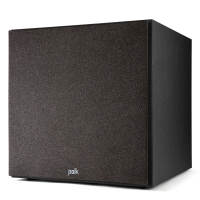
Polk Monitor XT12 12″ powered subwoofer - Polk MXT12
₱21,991.00₱26,990.00
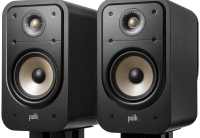
Polk Audio Signature Elite Series ES20 Bookshelf Speakers (black) Polk ES20
₱22,871.00₱27,990.00
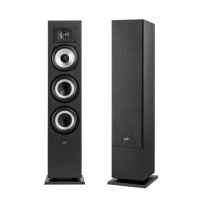
Polk Audio Monitor XT60 Floorstanding speakers for Home Theater and Music - MXT60 Tower Speakers Polk MXT60 XT60
₱30,791.00₱36,990.00
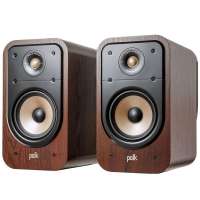
Polk Audio Signature Elite Series ES20 Bookshelf Speakers (brown) Polk ES20
₱22,871.00₱27,990.00
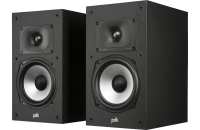
Polk Audio Monitor XT20 High-Resolution Bookshelf Speakers - sold as a pair - Polk MXT20
₱16,711.00₱20,990.00
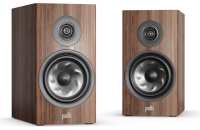
Polk Audio Reserve R200 Bookshelf Speakers (brown) Polk R200
₱39,591.00₱46,990.00
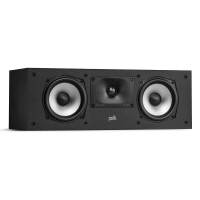
Polk Audio Monitor XT30 High-Resolution Center Channel Speaker - Polk MXT30
₱10,551.00₱13,990.00
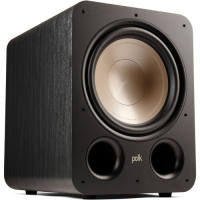
Polk Audio Signature Elite ES12 12″ 300W Subwoofer - Polk ES12 sub
₱46,631.00₱54,990.00
About Polk Audio
Polk Audio is an American consumer audio brand recognised for loudspeakers, home theatre systems, soundbars, subwoofers, and automotive and marine audio products. Established in 1972 in Baltimore, Maryland, the company built its reputation on delivering strong acoustic performance at relatively accessible price points. Its current philosophy is summarised by the slogan “Great Sound for All.”1
As of 2026, Polk Audio operates under Sound United, which functions as a standalone strategic business unit within HARMAN International. HARMAN itself is a wholly owned subsidiary of Samsung Electronics and completed its acquisition of Sound United on September 23, 2025.2
Quick facts
| Item | Information |
|---|---|
| Brand | Polk Audio |
| Founded | 1972 |
| Founders | Matthew Polk, Sandy Gross, George Klopfer |
| Origin | Baltimore, Maryland, USA |
| Industry | Consumer electronics / audio |
| Specialisation | Loudspeakers, home theatre, soundbars, subwoofers, automotive & marine audio |
| Best known for | Value-oriented hi-fi speakers and home theatre products |
| Major technology | SDA, Power Port, VoiceAdjust |
| Current parent organisation | HARMAN / Sound United |
| Ultimate parent | Samsung Electronics |
| Engineering heritage | Baltimore |
| Official philosophy | “Great Sound for All” |
Although the corporate headquarters are now located in Carlsbad, California, Polk Audio states that its engineering operations retain a connection to Baltimore.3
Origins and early history
The company was founded in 1972 by three Johns Hopkins University graduates: Matthew Polk, Sandy Gross, and George Klopfer. Their objective was to build loudspeakers capable of producing accurate and lifelike sound.3
Initially, the founders operated from a large 18th-century house on Notre Dame Lane in Baltimore, which they nicknamed the “Addams Family house.” This location served simultaneously as a workshop, headquarters, and living space.3 Rather than beginning as a large electronics corporation, Polk Audio started as a small engineering operation focused on extracting maximum performance from carefully designed speaker systems. The founding philosophy centred on building genuinely good speakers that were attainable, rather than treating high-quality audio as an exclusive luxury. This value proposition has remained central to the brand’s identity for decades.4
The Monitor 7 and market breakthrough
One of the company’s earliest significant successes was the Monitor 7, introduced in 1974. This model helped establish Polk Audio among serious hi-fi listeners. According to company history, Matthew Polk observed that while some European loudspeakers of the era offered excellent midrange, treble, and imaging, they often lacked the bass response, dynamics, and volume capability he desired.5
The Monitor 7 embodied a design philosophy combining accurate sound, strong dynamics, useful bass, and reasonable pricing. This combination allowed Polk Audio to distinguish itself from both inexpensive mass-market speakers and expensive audiophile products.5
Growth and engineering philosophy
In 1975, the company relocated to Dickeyville, a former mill town on the western edge of Baltimore. At that time, the operation had only six employees and produced approximately ten speakers per day. Within a year, however, it achieved its first $1 million in sales.6 The company subsequently developed a reputation for producing technically ambitious loudspeakers that offered comparatively high performance for their prices, establishing a performance-per-dollar concept that became a defining characteristic.
Polk Audio is generally positioned between mainstream consumer audio and traditional hi-fi. Its modern engineering approach focuses on four broad sonic objectives:
Bass
The brand emphasises deep, controlled bass and uses proprietary cabinet and port technologies to reduce unwanted noise and improve low-frequency performance.7
Midrange
Speaker designs typically feature relatively rigid, low-mass midrange drivers intended to provide balanced reproduction and accurate imaging.8
Treble
Modern Polk Audio speakers use specialised tweeters, with select models carrying Hi-Res Audio certification.9
Soundstage
A significant part of the brand’s identity involves producing a large, spacious soundstage rather than focusing solely on frequency-response specifications.10
Signature technologies
SDA (Stereo Dimensional Array)
Perhaps the most historically significant Polk Audio technology is SDA, or Stereo Dimensional Array. Developed to manipulate the interaction between left and right channels, SDA aims to create a wider, more immersive stereo presentation by reducing interaural crosstalk. The technology returned in modern flagship products, notably the Legend Series introduced in 2018. The flagship L800 tower incorporated modernised SDA technology alongside newly developed drivers, cabinets, and port designs.5
VoiceAdjust
Introduced in 2014, VoiceAdjust is designed to make dialogue easier to understand by emphasising voices without simply increasing overall soundtrack volume. This addresses a common issue with modern television where explosions are loud but dialogue is difficult to hear, prioritising practical usability for everyday viewers over traditional audiophile purity.11
Power Port
Power Port is a cabinet and port design approach intended to improve bass performance while reducing turbulence and unwanted noise associated with conventional ports. The Signature Series, introduced in 2016, was the first speaker family to feature exclusive Power Port technology and receive Hi-Res Audio certification.11
Product categories
Home speakers and home theatre
Home speakers remain the core category, including bookshelf, floor-standing, centre-channel, surround, and height speakers, as well as subwoofers. The current lineup is organised around the Monitor XT, Signature Elite, Reserve, and Legend families.5 Home theatre systems typically combine front, centre, surround, and height speakers with subwoofers to create cinematic soundstages. Current products support immersive formats such as Dolby Atmos and DTS:X.11
Soundbars
Polk Audio entered the soundbar market with the SurroundBar SDA in 2007, addressing consumers seeking improved TV sound without complex multi-speaker setups.7 The MagniFi family subsequently became one of its most recognisable lines. Notable products include the compact MagniFi Mini and the current MagniFi Mini AX, which supports Dolby Atmos and DTS:X.7
Automotive, marine, and outdoor audio
The company entered automotive audio in 1999, including a collaboration with Italian design company MOMO. It later expanded into custom installation and marine audio, offering products for cars, boats, motorcycles, ATVs, and outdoor environments designed to withstand specific environmental demands.8 The Atrium family is specifically designed for outdoor spaces such as patios, decks, and gardens.8
Modern speaker families
Monitor XT
Positioned towards accessible home theatre and hi-fi, this series serves as an entry point into the ecosystem. It includes towers, bookshelf speakers, centre channels, subwoofers, and height speakers for those building serious systems without premium pricing.5
Signature Elite
Sitting above the Monitor XT line, this range combines dynamic sound, strong bass, detailed reproduction, and large soundstage at relatively accessible prices. It is oriented towards mixed use across music, movies, television, and gaming.5
Reserve Series
Introduced in 2021, this premium line incorporates acoustic technologies derived from the flagship Legend family in more understated and affordable products. Examples include the Reserve R200 bookshelf speaker and R700 floor-standing speaker.5
Legend Series
Representing the modern high-end expression of the brand’s engineering, the Legend Series was introduced in 2018 and brought SDA technology back into the mainstream flagship lineup. The L800 tower demonstrates the company’s ability to compete in serious high-end loudspeaker engineering.5
Corporate ownership history
- 1972: Founded by Matthew Polk, Sandy Gross, and George Klopfer in Baltimore.3
- 2006: Acquired by Directed Electronics, which later became DEI Holdings.10
- 2013: Became part of Sound United, consolidating several consumer audio brands.18
- 2025: HARMAN completed its acquisition of Sound United on September 23, 2025. Polk Audio joined a portfolio including Bowers & Wilkins, Denon, Marantz, Definitive Technology, HEOS, Classé, and Boston Acoustics.12
HARMAN has been a wholly owned subsidiary of Samsung Electronics since 2017. Sound United operates as a standalone Strategic Business Unit within HARMAN’s Lifestyle Division, with individual brands retaining their distinct identities.17
Brand identity and market position
Polk Audio occupies a middle ground between mainstream consumer audio and high-end audiophile brands. Its closest conceptual territory is accessible hi-fi and home theatre, aiming to provide serious performance without extreme budgets. Key characteristics include:
- Performance for the money: Emphasis on high-quality sound at accessible prices rather than ultra-luxury pricing.16
- Strong bass and dynamics: Designs generally emphasise scale, impact, and room-filling sound over thin or analytical presentations.
- Large soundstage: Continued focus on wide, immersive stereo presentation through technologies like SDA.
- Home theatre friendliness: Strong ecosystem integration for music, movies, television, and gaming.
- Practical engineering: Technologies like VoiceAdjust address everyday usability issues.
While there is no single universal “Polk sound,” the traditional identity favours warm, engaging, dynamic, and spacious presentations. Higher-end products aim for greater neutrality, resolution, and imaging precision. The brand maintains both mainstream and enthusiast credibility, with the Monitor series, SDA speakers, and Legend products holding particular importance in American hi-fi culture.16
Polk Audio in the 2020s
The company celebrated its 50th anniversary in 2022.13 Current strategy extends beyond traditional stereo speakers to cover Dolby Atmos, wireless surround, outdoor audio, and marine applications. The brand continues to adapt its loudspeaker expertise to modern formats while maintaining its founding philosophy that high-quality sound should not be prohibitively expensive.1415
Despite being part of a global conglomerate, Polk Audio retains its engineering heritage linked to Baltimore and its original mission of making genuinely good sound available to more people.1617
References
- Polk Story | Polklore
- Polk Audio | Great Sound for All
- Polk Audio | High-Performance Speakers, Sound Bars & Sound Systems
- Polk Technology
- Home Audio Speakers & Systems | Polk Audio
- Home Audio Speakers & Systems | Polk Audio
- Sound Bars for TVs & Wireless Woofers | Polk Audio
- Speakers and Subwoofers for Cars, Boats, Motorcycles & ATVs | Polk Audio
- Polk Audio | High-Performance Speakers, Sound Bars & Sound Systems
- DEI Holdings
- Polk Audio
- sec.gov
- Polk at 50 – A Conversation with Matthew Polk | Polklore
- Audio articles, stories, and guides | Polklore
- polkaudio.com
- Polk Audio | Great Sound for All
- Audio articles, stories, and guides | Polklore
- Polk Audio, Sound United? — Polk Audio Forum