Shop on Lazada
POY-SIAN products
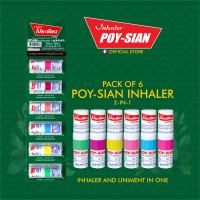
Poy Sian Inhaler and Liniment 2-in-1 (Pack of 6)
₱349.00₱375.00
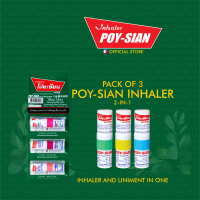
Poy Sian Inhaler and Liniment 2-in-1 (Pack of 3)
₱189.00₱200.00
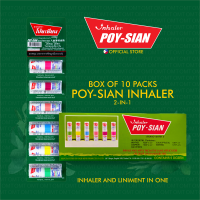
Poy Sian Inhaler and Liniment 2-in-1 (Box of 10 Packs)
₱3,199.00₱3,300.00
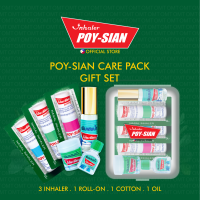
Poy-Sian Care Pack Gift Set - (3 Inhalers 1 Roll-on 1 Cotton 1 Oil Liniment)
₱479.00₱495.00
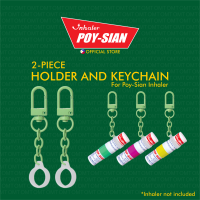
Poy Sian Inhaler Holder Keychain - 2 Pieces
₱129.00₱149.00
POY SIAN COTTON!!!!
₱68.00₱100.00
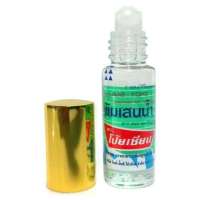
ACE ROYAL POY SIAN ROLL ON THAILAND
₱89.00₱150.00
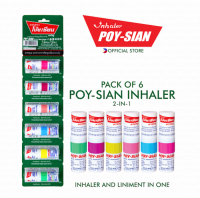
Poy Sian Inhaler and Liniment 2-in-1 (Pack of 6)
₱321.08₱349.00
About POY-SIAN
POY-SIAN (Thai: โป๊ยเซียน, commonly styled Poy-Sian or POY-SIAN) is a Thai herbal wellness brand widely recognized in the Philippines for its compact nasal inhalers, particularly the POY-SIAN Mark II Inhaler. The brand is rooted in Thailand’s ya dom (ยาดม) tradition of portable aromatic inhalers used for refreshment and, depending on local regulatory labeling, relief from nasal congestion.1 In the Philippine market, POY-SIAN is marketed as a Thai herbal wellness product and is officially described as Thailand’s leading inhaler brand.2
The brand traces its origins to 1936, when it began as a small traditional herbal shop in Bangkok’s Chinatown (Yaowarat). Over subsequent decades, the business refined its inhaler formulas and established itself as one of Thailand’s most recognizable herbal inhaler brands.1 Today, Gold Mints Products Co., Ltd. serves as the manufacturer, distributor, and exporter of POY-SIAN products, operating GMP-certified facilities in Bangkok and exporting to more than 25 countries, including the Philippines.12
Overview
| Information | Details |
|---|---|
| Brand | POY-SIAN |
| Thai name | โป๊ยเซียน |
| Origin | Thailand |
| Founded | 1936 |
| Original business | Traditional herbal shop |
| Origin location | Chinatown, Bangkok |
| Best known for | POY-SIAN Mark II Inhaler |
| Main manufacturer | Gold Mints Products Co., Ltd. |
| Headquarters/manufacturing | Bangkok, Thailand |
| Product category | Herbal inhalers and aromatic wellness products |
| Key market | Thailand, with international exports |
| Major ingredients in Mark II | Menthol, eucalyptus oil, camphor, borneol |
| Manufacturing standard | GMP / GMP-PIC/S-certified facilities1 |
| International presence | Exported to more than 25 countries2 |
History
1936: The beginning
POY-SIAN’s history dates to 1936, when the founding business operated as a small traditional herbal shop in Bangkok’s Chinatown. Rather than emerging initially as a modern international consumer brand, its roots lie in Thailand’s traditional herbal and aromatic product culture. The company attributes the brand’s longevity to its founder’s business acumen and a traditional inhaler formula that was subsequently refined by later generations.1
Second generation: PE-PEX
During the second generation of family management, the company developed and refined its inhaler products, eventually marketing an inhaler under the name PE-PEX. According to official company history, PE-PEX achieved significant success and remained central to the company’s development for more than a decade.1
Development of POY-SIAN
Following the success of PE-PEX, the research and development team created a new formula based on traditional ingredients. This effort resulted in the 2-in-1 POY-SIAN inhaler, which became the product most closely associated with the brand. Its small size and portability made it suitable for everyday use. During the 1990s, the product gained sufficient popularity to serve as an alternative to traditional balms and medicated oils.1
Modern era
POY-SIAN subsequently expanded beyond its original inhaler into additional herbal and aromatic products, including Pimsaen and Som-Mue lines. The company now operates manufacturing facilities in Bangkok that incorporate modern production, quality control, and R&D technologies. These facilities adhere to GMP requirements and are approved by Thailand’s Food and Drug Administration.1
The POY-SIAN Mark II Inhaler
The POY-SIAN Mark II is the brand’s signature product. It is a small, portable aromatic inhaler designed for direct use from the applicator, though the liquid may also be applied to a handkerchief. The official product description identifies menthol, eucalyptus oil, camphor, and borneol as major ingredients.1
Regulatory records in different markets provide varying ingredient information. For example, Malaysian registration records list menthol, camphor, and eucalyptus oil as active ingredients, while Lao regulatory records include lavender oil and peppermint oil alongside other components. Consequently, formulations, labeling, and regulatory indications may vary by market.
Distinctive two-sided design
A defining characteristic of the Mark II is its 2-in-1 format. The design combines:
- Inhalation: Users open the inhaler to breathe in aromatic vapors.
- Topical application: The opposite end allows for liquid application to the skin, subject to product directions and local labeling.
This dual functionality distinguishes POY-SIAN from conventional solid balms and enhances its convenience as a pocket-sized personal item.
Ya Dom tradition
Understanding POY-SIAN requires familiarity with ya dom. In Thai, ยาดม (ya dom) literally refers to a medicinal product (ya) that is smelled or inhaled (dom). Nasal inhalers are an established part of Thai everyday culture, with brands such as POY-SIAN present since 1936.
Traditional Thai inhalers typically contain aromatic substances such as:
- Menthol
- Camphor
- Borneol
- Peppermint oil
- Eucalyptus oil
- Other essential oils or aromatic plant materials
POY-SIAN’s popularity stems not only from corporate marketing but also from its place within this broader Thai cultural tradition of portable aromatic inhalers.
Ingredients and aroma
The characteristic POY-SIAN scent derives primarily from a combination of cooling and strongly aromatic ingredients.
- Menthol: Produces the familiar cooling, mint-like sensation associated with nasal inhalers.
- Eucalyptus oil: Contributes a sharp, penetrating herbal aroma common in aromatic inhalers.
- Camphor: Provides a strong, distinctive medicinal aroma and contributes to the cooling sensation.
- Borneol: A traditional aromatic ingredient used in Thai and East/Southeast Asian herbal preparations.
Consumers should verify exact formulations on packaging for their specific market, as regulatory registrations differ between countries.
Factors in popularity
Several characteristics have contributed to POY-SIAN’s status as a mass-market product.
- Portability: The inhaler fits easily in a pocket, purse, or bag, offering a convenient alternative to larger bottles of medicated oil or traditional balms.
- Recognizable scent: The intense menthol, eucalyptus, and camphor aroma makes the product immediately identifiable.
- Multiple uses: The Mark II’s two-sided design provides greater functionality than a simple fragrance stick.
- Familiarity: The product has been associated with Thai households for generations, with customers frequently recommending it to friends and family.1
- Cultural association: POY-SIAN is strongly linked to broader Thai ya dom culture and remains among the long-established inhaler brands popular in Thailand.
Brand and corporate structure
Gold Mints Products Co., Ltd. is the company behind the modern POY-SIAN brand. According to official sources, Gold Mints Products serves as the manufacturer, distributor, and exporter of POY-SIAN Mark II and affiliated products.1 Its manufacturing operation is located in the Bang Na area of Bangkok, where facilities utilize modern production, quality control, and R&D systems in compliance with GMP requirements.1
In the Philippines, Gold Mints Products is identified as the exclusive manufacturer, distributor, and exporter of POY-SIAN Mark II, with the brand distributed through official channels.2
Product portfolio
While the Mark II is the most recognized product, the company has developed a broader portfolio reflecting its expansion into Thai herbal wellness and personal care. Products associated with the brand include:
- POY-SIAN Mark II Inhaler
- PE-PEX Inhaler
- Pim-Saen Roll-On
- Pim-Saen Cotton
- Pim-Saen Oil
- Other aromatic and herbal products
Manufacturing and quality control
POY-SIAN emphasizes manufacturing quality as part of its modern brand identity. The company states that its manufacturing process complies with Good Manufacturing Practice (GMP) requirements and that its factories are approved by the Thai Food and Drug Administration (Thai FDA). The company also references GMP-PIC/S certification.1 This approach combines a traditional herbal product identity with modern pharmaceutical manufacturing standards. Independent regulatory evidence exists in the form of Thai FDA database registrations for the POY-SIAN Brand Mark II Inhaler.
International expansion
Although fundamentally a Thai brand, POY-SIAN has developed an international customer base. The company’s Philippine operation states that products are exported to more than 25 countries across Asia, Europe, Africa, and the Americas.2 This expansion is facilitated by the product’s small size, affordability, distinctive character, portability, and cultural appeal, making it particularly suited to international travelers and consumers already familiar with aromatic inhalers.
Presence in the Philippines
POY-SIAN maintains an official presence in the Philippines, where it is marketed as a Thai herbal wellness product and nasal inhaler. The official Philippine website describes it as Thailand’s No. 1 inhaler brand and identifies Gold Mints Products Co., Ltd. as the manufacturer.2 Official purchasing channels are available through major Philippine e-commerce platforms. The Philippine market is particularly relevant due to existing consumer familiarity with mentholated oils, balms, and aromatic inhalers.
Brand identity
POY-SIAN’s identity combines Thai heritage, herbal tradition, and everyday portability. The brand positions traditional Thai aromatic wellness as a modern, pocket-sized product. Its visual identity, characterized by colorful cylindrical packaging and distinctive branding, makes it one of the most recognizable Thai inhalers. Historically, POY-SIAN has emphasized accessibility and everyday use rather than luxury aromatherapy, functioning simultaneously as a household product, personal refreshment item, and cultural symbol.
Cultural significance
POY-SIAN is part of a broader cultural phenomenon in which individuals carry ya dom for travel, work, study, hot weather, fatigue, or moments requiring a refreshing aroma. This category is deeply embedded in everyday life. POY-SIAN’s history dating to 1936 has conferred heritage-brand status within this category.
Timeline
- 1936: A traditional herbal shop is established in Bangkok’s Chinatown, marking the beginning of the POY-SIAN story.1
- Mid-20th century: The next generation develops and refines inhaler products, including PE-PEX.1
- Later period: The company develops a new formula and introduces the 2-in-1 POY-SIAN inhaler.
- 1990s: The portable POY-SIAN inhaler gains popularity as an everyday alternative to balm and medicated oils.1
- 2000s onward: POY-SIAN expands its product portfolio and international distribution.
- Modern era: Gold Mints Products operates modern GMP-compliant manufacturing facilities and markets POY-SIAN products internationally.1
- Today: POY-SIAN remains one of Thailand’s best-known herbal inhaler brands, with international distribution and a strong association with the Mark II Inhaler.12
Role in everyday life
POY-SIAN occupies a space between medicine, personal care, aromatherapy, and lifestyle product. Users may carry it in school bags, office drawers, cars, purses, pockets, or at home. Because the refreshing aroma is central to its appeal, the brand is not limited to use during illness. This versatility has helped transform POY-SIAN from a traditional herbal product into an everyday lifestyle accessory.
Defining characteristics
Five key characteristics define the brand:
- Thai heritage: History dating back to 1936.
- Ya dom tradition: Belonging to a deeply established Thai inhaler culture.
- The Mark II: The 2-in-1 inhaler as the signature product.
- Strong aromatic formula: Central ingredients including menthol, eucalyptus oil, camphor, and borneol.
- Portability: A compact format suitable for everyday carry.
Reputation and positioning
POY-SIAN positions itself as a trusted Thai heritage brand rather than merely an aromatherapy company. Official materials describe the brand as a symbol of health and strength, identifying it as a leading inhaler brand in Thailand and Asia.1 However, claims such as “No. 1” or “top-selling” are presented by the company and its official regional sites; these represent corporate positioning rather than independently audited global rankings.2