Shop on Lazada
Prada products
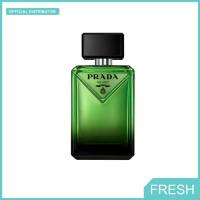
Prada Paradigme EDP 100ML
₱9,200.00
Buy on Lazada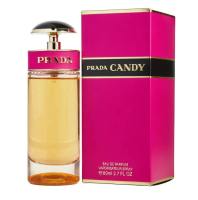
Prada Candy Eau de Parfum for Women 80ml
₱6,500.00₱11,500.00
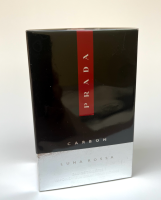
Prada Luna Rossa Carbon 100ml EDT Spray Perfume for Men
₱10,390.00
Buy on Lazada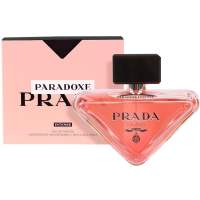
【Official Flagship Store】PRADA PARADOXE Parfum Spray 90ML EDP For Women Paradoxe Intense
₱1,826.00₱5,600.00
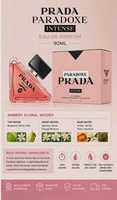
💯 AUTHENTIC Paradoxe Prada Eau De Parfum 90ml
₱6,950.00₱8,950.00
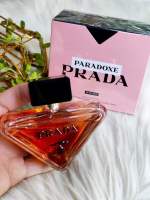
Prada Paradoxe For Women 90ml Eau de Parfum Intense
₱7,000.00₱12,500.00
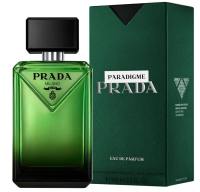
Prada Paradigme Eau de Parfum For Men 100ml
₱6,000.00₱10,000.00
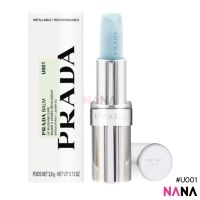
PRADA Blushing Care lip balm #U001 3.8g
₱2,380.00₱2,950.00
About Prada
Prada is an Italian luxury fashion house established in Milan in 1913 by Mario Prada. Originally a retailer specialising in luxury travel goods and leather accessories, the company has evolved into one of the most influential fashion brands globally. This transformation was particularly driven by the creative direction of Miuccia Prada from the late 1970s onwards. Prada is recognised for combining traditional Italian craftsmanship with unconventional materials, minimalist design, intellectual references, and a willingness to challenge conventional notions of luxury.1
Today, Prada serves as the flagship brand of Prada S.p.A. / Prada Group, a global luxury conglomerate that also owns Miu Miu, Church’s, Car Shoe, Versace, and Marchesi 1824.2
Basic information
| Information | |
|---|---|
| Brand | Prada |
| Founded | 1913 |
| Founder | Mario Prada |
| Founded in | Milan, Italy |
| Original location | Galleria Vittorio Emanuele II, Milan |
| Industry | Luxury fashion and goods |
| Products | Clothing, handbags, leather goods, footwear, accessories, eyewear, fragrances |
| Parent company | Prada S.p.A. / Prada Group |
| Key modern figure | Miuccia Prada |
| Major business partner | Patrizio Bertelli |
| Stock listing | Hong Kong Stock Exchange, ticker 1913 |
| Known for | Nylon, minimalist luxury, Saffiano leather, experimental design, intellectual fashion |
Prada currently operates hundreds of directly operated stores worldwide. As of 31 December 2025, Prada Group reported 423 Prada-owned stores and 16 Prada franchise stores within a group network spanning more than 70 countries.3
Origins: 1913–1970s
The history of Prada began in 1913 when Mario Prada opened a luxury shop in Milan’s prestigious Galleria Vittorio Emanuele II. The original business specialised in luggage, trunks, travel accessories, and other luxury goods crafted from high-quality materials with sophisticated workmanship.4
The location was central to Prada’s early identity. Milan was already established as a major European centre of commerce and culture, while the Galleria was associated with wealthy and fashionable clientele.
In 1919, Prada received the title of Official Supplier to the Italian Royal Household. This appointment granted the company the right to incorporate the House of Savoy coat of arms and knotted-rope motif into its trademark identity.5
This period laid the foundations for Prada as a company associated with Italian craftsmanship, luxury travel goods, high-quality materials, aristocratic clientele, and Milanese sophistication. For several decades, however, Prada remained primarily a traditional luxury-goods business rather than the global fashion phenomenon it would later become.
Miuccia Prada and the transformation of the house
The most significant turning point in modern Prada history occurred in the late 1970s when Miuccia Prada, Mario Prada’s granddaughter, began working with entrepreneur Patrizio Bertelli.6
Their partnership combined two distinct strengths. Miuccia Prada brought an unconventional creative vision alongside an interest in art, culture, politics, society, and contemporary life. Patrizio Bertelli contributed an industrial and entrepreneurial approach to manufacturing, distribution, and international expansion.
Prada Group describes their collaboration as the foundation of a new business model for the brand’s international development. Bertelli emphasised direct control over production and strict quality standards, while Miuccia developed the distinctive aesthetic that would make Prada internationally famous.7
This combination became fundamental to Prada’s identity, merging creative experimentation with industrial discipline and Italian craftsmanship.
The Prada nylon revolution
One of Prada’s most important contributions to modern fashion was its transformation of nylon from a practical, industrial material into a luxury-fashion textile.
During the late 1970s and 1980s, Miuccia Prada began using nylon in handbags and accessories. Rather than treating luxury as something requiring expensive traditional materials, Prada presented a synthetic, functional fabric as sophisticated and desirable.8
This approach was revolutionary. Traditional luxury fashion tended to emphasise leather, silk, cashmere, precious materials, and elaborate craftsmanship. Prada instead explored nylon, industrial fabrics, simple silhouettes, functional design, muted colours, and utilitarian references.
The result was a new interpretation of luxury where prestige did not necessitate a traditionally luxurious appearance. Prada itself describes nylon as one of the founding principles of its modern design language.9 This concept became one of the brand’s defining philosophies.
Saffiano leather
Another major Prada signature is Saffiano leather. Recognisable for its distinctive cross-hatched texture and structured appearance, Saffiano became strongly associated with Prada handbags, wallets, and other leather goods.
The material aligns well with Prada’s aesthetic because it combines durability, structure, practicality, understated elegance, and a recognisable texture. In contrast to heavily decorated luxury handbags, Prada’s approach often emphasises material, construction, and proportion rather than excessive ornamentation.
Entry into fashion
Prada expanded beyond leather goods into clothing with the launch of its first women’s clothing collection in 1988, marking an important transition from a luxury-accessories company into a full fashion house.10
Prada’s fashion quickly developed a reputation for differing from conventional luxury fashion. Rather than simply producing glamorous clothing, Miuccia Prada frequently explored ideas such as awkwardness, intellectualism, minimalism, uniform dressing, femininity, social class, modernity, functionality, and contradiction.
A Prada collection could appear deliberately plain, strange, severe, or even “ugly” by conventional fashion standards, yet precisely because of this, it became influential.
The Prada aesthetic
While there is no single Prada look, several recurring characteristics define the brand.
Minimalism
Prada frequently uses relatively restrained silhouettes and decoration.
Intellectualism
The brand has historically approached fashion as a cultural and intellectual activity rather than simply producing beautiful clothes.
Contradiction
Prada often combines seemingly incompatible elements: luxury and utility, beauty and ugliness, tradition and technology, femininity and severity, simplicity and complexity, and industrial materials with luxury craftsmanship.
Subversion
Rather than following existing luxury conventions, Prada often questions them. This is one reason the brand became particularly influential among fashion designers, critics, and academics.
Prada in the 1990s
The 1990s were crucial to Prada’s international development. During this period, Prada launched its first men’s collection, expanding its fashion business beyond womenswear. The same decade saw the creation of Miu Miu, another major brand associated with Miuccia Prada, as well as the establishment of Fondazione Prada.11
Prada also became involved in sailing through Luna Rossa, reflecting Patrizio Bertelli’s interest in the America’s Cup. In 1997, Prada created the Prada Challenge for the 2000 America’s Cup, which eventually developed into the long-running Luna Rossa sailing programme.12
This illustrates that Prada’s identity has never been restricted to clothing; it has also been connected with architecture, contemporary art, cinema, sailing, technology, and cultural institutions.
Prada and contemporary art
A vital aspect of Prada’s identity is its relationship with contemporary culture. In 1993, Miuccia Prada and Patrizio Bertelli established Fondazione Prada, a cultural institution dedicated to contemporary art and culture.13
Fondazione Prada has become an important cultural institution in Milan and has helped reinforce Prada’s image as a company interested in more than commercial fashion. This relationship between fashion and art is central to the Prada philosophy, presenting the brand as a participant in contemporary culture rather than merely a producer of expensive products.
Major Prada products
Today Prada produces a broad luxury portfolio.
Handbags
Prada handbags are among its most recognisable products. Important categories include nylon bags, Saffiano leather bags, structured handbags, shoulder bags, tote bags, mini bags, and travel bags. Nylon bags are particularly significant as nylon became one of the brand’s defining signatures.
Ready-to-wear
Prada produces both women’s and men’s clothing, including coats, jackets, dresses, shirts, skirts, trousers, knitwear, outerwear, and technical garments.
Shoes
Footwear offerings include loafers, pumps, sneakers, boots, sandals, and platform shoes.
Accessories
Accessories encompass wallets, belts, sunglasses, hats, scarves, jewellery, and small leather goods. The brand also operates in eyewear and fragrance through licensing arrangements.14
Logo and branding
The Prada logo is strongly connected to the brand’s Milanese and royal history. The traditional identity incorporates the Prada name, the House of Savoy coat of arms, and a knotted-rope motif, reflecting Prada’s 1919 appointment as Official Supplier to the Italian Royal Household.15
Over time, Prada has used the logo in a deliberately restrained way. This is consistent with the brand’s broader philosophy that recognition does not always require enormous logos or excessive decoration.
Quiet luxury
Prada is sometimes associated with the contemporary concept of quiet luxury, though it differs from brands whose identity is based primarily on discreet wealth. Prada’s restraint is often intellectual rather than merely discreet.
For example, a Prada piece might look simple but utilise technically sophisticated materials, unusual proportions, experimental construction, recognisable fabric, and subtle branding. The intent is often that the wearer recognises the design language without needing prominent logos.
Prada Re-Nylon
One of Prada’s most significant recent initiatives is Re-Nylon. Launched in 2019, Re-Nylon uses ECONYL® regenerated nylon produced from recycled materials including discarded fishing nets, plastics, and textile waste.16
This project is particularly significant because nylon is not just an ordinary Prada material but one of the defining symbols of the brand. Instead of abandoning nylon due to environmental concerns, Prada reinterpreted its iconic material through circular production. Prada Group states that its virgin nylon production has been converted to regenerated nylon.17
Re-Nylon represents an evolution of Prada’s original philosophy: whereas the 1970s and 1980s saw industrial material transformed into luxury, from 2019 onwards, the iconic luxury material has been transformed into a regenerated, circular material.
Sustainability and SEA BEYOND
Prada Group also launched SEA BEYOND, an ocean-education and conservation initiative developed in partnership with UNESCO’s Intergovernmental Oceanographic Commission. The initiative focuses particularly on educating younger generations about ocean sustainability.18
This represents Prada’s broader attempt to connect luxury with environmental and social responsibility. It is worth distinguishing between Prada’s specific sustainability initiatives and the broader question of sustainability in luxury fashion; initiatives such as Re-Nylon address particular materials and supply chains but do not imply that the entire fashion industry is inherently sustainable.
Business today
Prada is now the flagship brand of the publicly listed Prada Group. As of the end of 2025, Prada Group reported €5.718 billion in total net revenue, 17,901 employees, 25 industrial facilities, 843 directly operated stores across the group, and operations in more than 70 countries.19
The Prada brand itself had 423 directly owned stores and 16 franchised stores at the end of 2025.20 In 2025, Prada Group also completed its acquisition of Versace, adding another major Italian luxury house to the group.21
Prada Group vs. Prada
It is important to distinguish between the brand and the corporate entity.
Prada
Prada is the fashion brand itself, selling clothing, handbags, shoes, accessories, fragrances, and eyewear.
Prada Group
Prada Group is the corporate group that owns and operates multiple brands. Its portfolio includes Prada, Miu Miu, Church’s, Car Shoe, Versace, Marchesi 1824, and Luna Rossa.22
Therefore, stating “Prada owns Miu Miu” is technically less precise than saying Prada Group owns Miu Miu.
Influence and position in luxury fashion
Prada’s importance in fashion stems not simply from selling expensive products but from its ability to change what people consider fashionable. Before Prada, nylon was strongly associated with practical or industrial products; Prada demonstrated that nylon could become a luxury material.
Likewise, Prada helped establish the idea that luxury can be intellectual, functional, minimalist, and even deliberately unconventional. This approach influenced designers, brands, and fashion culture well beyond Prada itself.
Prada belongs to the highest tier of global luxury fashion alongside houses such as Chanel, Louis Vuitton, Dior, Hermès, Gucci, Saint Laurent, Bottega Veneta, Valentino, and Fendi. However, Prada occupies a distinctive position.
| Brand characteristic | Prada |
|---|---|
| Country | Italy |
| Core identity | Intellectual, modern luxury |
| Signature material | Nylon |
| Signature leather | Saffiano |
| Design approach | Minimalist + experimental |
| Major strength | Handbags, ready-to-wear, footwear |
| Cultural association | Art, architecture, contemporary culture |
| Brand personality | Sophisticated, unconventional, cerebral |
| Typical visual language | Clean, restrained, sometimes deliberately strange |
Key figures
Miuccia Prada
Understanding Prada requires understanding Miuccia Prada. Her contribution extended beyond designing clothes to redefining what luxury fashion could communicate. Her approach frequently asks questions about beauty, the nature of luxury materials, the sophistication of ordinary materials, the intellectuality of fashion, and how fashion reflects society. This intellectual approach is one reason Prada has historically attracted enormous attention from fashion critics and designers.
Patrizio Bertelli
If Miuccia Prada represents the creative side of Prada, Patrizio Bertelli represents much of its business and industrial transformation. His contribution included building a vertically controlled production and distribution system and helping turn Prada from a relatively traditional Milanese luxury business into an international luxury group. Prada Group describes this model as emphasising direct control of processes and rigorous quality standards.23
The partnership between Miuccia Prada and Bertelli became one of the defining business relationships in modern luxury fashion.
Cultural image and popular culture
Prada has developed an image distinct from stereotypical ideas of luxury. Rather than communicating “look how rich I am,” the brand often communicates “I understand fashion, design, and culture.” Customers may be attracted not simply to the price or status of a product but to the design philosophy behind it.
Prada has also become deeply embedded in popular culture. The most famous example is likely the 2006 film The Devil Wears Prada, starring Meryl Streep and Anne Hathaway. Although the fictional fashion company in the film is not literally Prada, the title and fashion-world setting made “Prada” recognisable to an enormous global audience, further strengthening its association with the fashion industry.
Defining contradictions
If Prada’s entire history were reduced to one idea, it would be that Prada turns contradictions into luxury. A traditional luxury house might equate expensive materials with expensive products. Prada often posits that ordinary or industrial materials combined with extraordinary design create luxury.
This explains why nylon became so important and why Prada can simultaneously be minimalist but extravagant, traditional but experimental, Italian but international, luxurious but functional, fashionable but intellectual, and commercial but heavily involved in art and culture.
Timeline
- 1913 — Mario Prada opens the first Prada store in Milan’s Galleria Vittorio Emanuele II.24
- 1919 — Prada becomes Official Supplier to the Italian Royal Household.25
- 1970s — Miuccia Prada and Patrizio Bertelli begin their collaboration.26
- 1977 — Bertelli establishes IPI and obtains a license from Miuccia Prada for production and distribution of Prada leather goods.27
- Late 1970s/1980s — Prada develops nylon as a major design signature.28
- 1988 — First Prada women’s ready-to-wear collection.29
- 1990s — Prada expands into menswear and develops Miu Miu and Fondazione Prada.30
- 1997 — Prada enters the America’s Cup through the Prada Challenge.31
- 2019 — Prada launches Re-Nylon.32
- 2020s — Prada expands its sustainability, cultural, and global luxury activities.
- 2025 — Prada Group completes its acquisition of Versace.33
- 2026 — Prada remains the flagship brand of the expanding Prada Group.34
Summary
Prada is a Milanese luxury fashion house founded by Mario Prada in 1913. Originally a prestigious retailer of luggage and luxury travel goods, it was transformed from the late 1970s onward through the creative vision of Miuccia Prada and the entrepreneurial leadership of Patrizio Bertelli. Prada became particularly famous for turning nylon and other utilitarian materials into objects of luxury while developing a distinctive design philosophy based on minimalism, experimentation, contradiction, and intellectual engagement with contemporary culture. Its expansion into ready-to-wear, footwear, handbags, art, architecture, sustainability, and global retail made Prada one of the defining Italian luxury houses of the modern era. Today it is the flagship brand of Prada Group, a global luxury company that also owns brands such as Miu Miu, Church’s, and Versace.35
References
- The History of the Prada Group Over the Years | Prada Group
- Galleria 1913 | PRADA – Belgium
- Who is Prada Group: Company Profile | Prada Group
- COMPANY PROFILE
- ANNUALREPORT2025
- The Choice of Nylon by Miuccia Prada | Prada Group
- Prada Re-Nylon | PRADA
- Sustainability: Prada Re-Nylon | Prada Group
- Prada Re-Nylon Collection – 2024 Campaign | Prada Group
- prada-re-nylon | PRADA – Greece
- Prada Group’s Full Year 2025 Financial Results | Prada Group
- インベスターリレーションズ:プラダ・グループ決算報告書 | Prada Group
- Prada Group’s Full Year 2025 Financial Results | Prada Group
- PRADA S.p.A. – Annual Report 2025 | FinancialReports.eu
- PRADA – Museo del Marchio Italiano
- Prada SpA 2025 Annual Report – Free PDF
- Prada Re-Nylon Collection: 2024 campaign | Prada Group
- The History of Prada and Nylon Fabric—How the Textile Earned Its Fashionable Place | Vogue
- Prada Re-Nylon | Prada Group
- PRADA S.p.A. – Annual Report 2012 | FinancialFilings
- Prada Re-Nylon | PRADA
- Galleria 1913 | PRADA – Brasil
- Prada Book | PRADA
- La Storia del Gruppo Prada negli Anni | Prada Group
- Prada presents the Re-Nylon project | Prada Group
- Prada Group Press Releases and Documents | Prada Group
- Investor Relations: Prada Group Results | Prada Group
- A Global Leader in Luxury: Prada Group | Prada Group
- Prada集团历史沿革 | Prada Group
- The Board Of Directors of Prada Group | Prada Group
- プラダ・グループの長年の歴史 | Prada Group
- Chi è il Gruppo Prada: Company Profile | Prada Group
- Prada集团简介:公司概况 | Prada Group
- MEET THE PRADA GROUP
- Prada Re-Nylon 2026 | PRADA – China