Shop on Lazada
Wera products
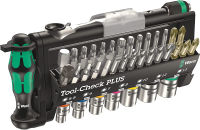
Wera 056490 Tool-Check Plus Bit Ratchet Set with Sockets - Metric 39 pieces
₱6,350.00₱7,265.00
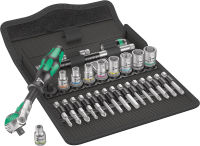
Wera 05004016001 8100 SA 6 Zyklop Metric Speed Ratchet Set 28 Piece 1/4″ Drive Wera Tools 05004016001 8100 SA 6 SPEED 1/4 28 PC 1/4″ DRIVE METRIC
₱10,004.00₱11,445.00
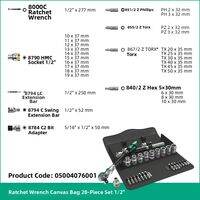
Wera | Universal Ratchet and Socket Wrench Set Motor Vehicles
₱26,858.00₱38,117.00
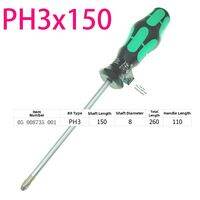
Anti-slip Reinforced Crosshead Screwdriver
₱1,370.00
Buy on Lazada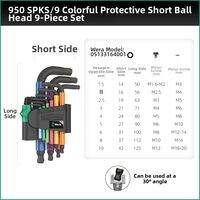
Wera | Short Handle Hex Screwdriver Set 9 pieces
₱4,094.00₱6,004.00
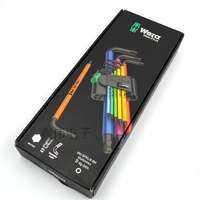
Colorful Extended Hex Wrench Set
₱3,294.00
Buy on Lazada
Wera 5051045001 Tools 26Pc Zyklop Ratchet ¼″ Socket and Bit Set with pouch (Metric)
₱8,470.00₱9,690.00
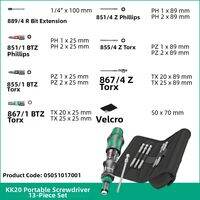
Wera | Multifunctional Screwdriver Bits Set
₱10,009.00₱13,057.00
About Wera
Wera Werkzeuge GmbH, commonly referred to as Wera, is a German manufacturer specializing in professional hand tools. The company is best known for its screwdrivers, bits, ratchets, torque tools, wrenches, hex keys, and compact tool systems. Headquartered in Wuppertal, Germany, Wera has established a reputation based on ergonomic design, unconventional engineering, and distinctive product styling. Rather than simply reproducing conventional tools, the company describes its philosophy as challenging established industry standards.1
Wera operates as a global, mid-sized, brand-driven tool company with nearly 1,500 employees, whom it refers to as “Tool Rebels,” and a history spanning more than 90 years. Its product portfolio is particularly strong in screwdriving and fastening applications but also extends to electrical and VDE tools, automotive and maintenance equipment, bicycle tools, plumbing, woodworking, metalworking, and other professional applications.2
Company profile
| Item | Details |
|---|---|
| Company name | Wera Werkzeuge GmbH |
| Brand | Wera / Wera Tools |
| Origin | Germany |
| Headquarters | Wuppertal, Germany |
| Founded | 1936 |
| Industry | Hand tools / professional tools |
| Core specialization | Screwdriving and fastening tools |
| Major product categories | Screwdrivers, bits, ratchets, wrenches, torque tools, hex keys, tool sets |
| Major markets | Professional trades, industry, automotive, electrical, construction, maintenance, cycling and DIY |
| Employees | Nearly 1,500 globally |
| Brand philosophy | Innovation, ergonomics and challenging conventional tool design |
| Brand slogan | “Be a Tool Rebel” |
The company cites over 90 years of operational history and a specific focus on innovative screwdriving solutions as central to its corporate identity.3
History
Foundation and post-war development
Wera traces its origins to 1936, when Hermann Werner founded a tool-trading company in Germany. The business subsequently evolved into a manufacturing enterprise, with screwdrivers becoming a significant part of its operations following the Second World War. The name Wera is historically associated with the names Werner and Amtenbrink, reflecting the firm’s early corporate structure and origins in Wuppertal.4 After rebuilding from wartime destruction under new management, the company expanded into screwdriver manufacturing, laying the groundwork for its modern identity.5
Development of the Kraftform concept
A pivotal milestone in the company’s history was the development of the Kraftform screwdriver handle. In collaboration with the Fraunhofer Institute, Wera created an ergonomic handle designed around the shape and movement of the human hand. Introduced to the market in 1968, the Kraftform handle represented a shift in treating the screwdriver not merely as a steel shaft with a plastic grip, but as an ergonomic interface between the user and the tool.6
Expansion into bits and internationalization
From 1963 onward, Wera expanded into screwdriver bits and fastening technology. Over subsequent decades, the company increasingly focused on specialized screwdriving systems rather than competing solely as a general-purpose hardware manufacturer.7 By the 1990s, Wera had expanded internationally and developed specialized technologies such as coated bits, compact tool systems, and advanced ratchets and wrenches, alongside a growing global manufacturing and sales network.8
Design and engineering philosophy
Wera’s corporate identity is built on the proposition of rethinking what a tool should be rather than simply improving traditional designs. The company maintains that tools have not reached their ultimate stage of development and seeks to make them simpler, safer, and more enjoyable to use.9
This philosophy is evident in several key areas:
- Ergonomics: The Kraftform handle combines harder zones for smooth hand repositioning with softer gripping zones for high torque transfer, aiming to reduce fatigue and improve control.10
- Compactness: Systems like Kraftform Kompakt utilize interchangeable blades and compact storage to replace large collections of conventional screwdrivers, reducing the volume of equipment professionals must carry.11
- Multifunctionality: Tools are often designed to perform multiple functions. For example, the Zyklop Speed ratchet can be configured as a conventional ratchet, flexible-head ratchet, angle ratchet, quick-release ratchet, power ratchet, or screwdriver.12
Major product families
Kraftform
Kraftform is Wera’s most recognizable product concept, referring primarily to its ergonomic screwdriver handle system. Refined over decades while retaining its fundamental ergonomic principles, the range now includes Kraftform Plus, Kraftform Kompakt, Kraftform Micro, Kraftform Turbo, VDE-insulated versions, and specialized screwdriver systems. The company currently lists hundreds of tools and sets within this family.1314
Kraftform Kompakt
Kraftform Kompakt is a compact interchangeable-blade system designed to maximize functionality while minimizing carrying volume. Instead of carrying individual full-size screwdrivers, users carry a single handle with a selection of interchangeable blades or bits. This system is widely used by electricians, technicians, maintenance workers, installers, mechanics, service engineers, and mobile professionals.15
Zyklop
The Zyklop family represents Wera’s ratchet system, designed to rethink traditional ratchet mechanics. The flagship Zyklop Speed variant features a pivoting head, multiple locking positions, and a flywheel-like design to accelerate repetitive screwdriving. Typical specifications include 72 teeth, an approximate 5° return angle, reversible direction, and socket-retention features.1617 The line also includes Zyklop Metal, Zyklop VDE, and various Zyklop-based sets.
Joker
Joker is Wera’s distinctive wrench family, designed to address issues of slipping and repositioning common with traditional open-ended wrenches. The geometry of the wrench mouth was redesigned to improve grip, accessibility, and usability.18 The range includes combination wrenches, ratcheting combination wrenches, self-setting wrenches, double open-end designs, and specialized systems. The Joker 6004 is notable as a self-setting wrench capable of accommodating different fastener sizes.19
Tool-Check
Tool-Check combines bits, bit holders, and ratcheting components into highly compact packages for users requiring extensive functionality without a conventional toolbox. These products are frequently used by technicians, mechanics, bicycle repair specialists, electronics maintenance staff, and for everyday carry applications. Numerous configurations are currently available.20
Torque tools
Wera manufactures precision torque tools for applications requiring specific tightening forces, such as in automotive, mechanical engineering, electrical, and industrial sectors. The portfolio includes torque screwdrivers, torque wrenches, and specialized systems. The company also operates a torque service and calibration laboratory in Wuppertal, providing calibration, adjustment, repair, and certification services.21
VDE and electrical tools
A significant portion of Wera’s portfolio consists of VDE-insulated tooling intended for professional electrical work. This category includes insulated screwdrivers, insulated bit systems, VDE ratchets, insulated tool sets, and electrical installation tools.22
Bicycle tools
Wera has developed a dedicated segment for bicycle tools, offering specialized sets for bicycle maintenance, workshop servicing, e-bike work, and mobile cycling mechanics. This reflects a broader strategy of packaging tools around specific professional applications rather than selling only generic hand tools.
Other applications
Beyond standard screwdriving, Wera’s application categories include Electrical/VDE, Bicycles & e-bikes, Plumbing, heating & air conditioning, Wood, Metal, Concrete, Household & maintenance, Window construction, and Guitars. This breadth positions the company between a traditional hand-tool manufacturer and a specialized professional fastening-system provider.
Manufacturing and operations
Wera emphasizes vertical manufacturing integration to maintain control over tool technology and production expertise. While corporate and European operations are centered in Germany, production has also been established in the Czech Republic. Consequently, while Wera is a German tool brand, not all products are manufactured exclusively in Germany.
Visual identity and branding
Wera maintains a distinct visual identity in the professional hand-tool market, characterized by green and black color schemes, recognizable Kraftform handles, bold product names, colorful textile tool cases, and unconventional product shapes. The Kraftform handle and its distinctive crowns are considered key elements of this identity.
The company markets itself using the “Tool Rebel” concept, positioning customers as individuals who question conventional methods and seek better solutions. The slogan “Be a Tool Rebel” reinforces this identity, distinguishing Wera from brands that focus primarily on industrial durability or heritage.
Market positioning
In the professional hand-tool market, Wera is positioned at the premium end. Its value proposition relies on engineering, ergonomics, innovation, distinctive design, specialized tool systems, and professional applicability. Unlike brands that emphasize raw strength, Wera typically emphasizes redesigning tools to make tasks easier.
| Brand characteristic | Wera’s approach |
|---|---|
| Primary identity | Innovative professional hand tools |
| Core strength | Screwdriving / fastening |
| Design philosophy | Rethink conventional tools |
| Ergonomics | Major design priority |
| Product styling | Highly distinctive |
| Tool systems | Very strong |
| Innovation | Central to brand identity |
| Professional use | Very strong |
| DIY use | Also popular |
| Brand personality | Rebellious / unconventional |
| Typical perception | Premium, innovative, enthusiast-oriented |
Reception among enthusiasts
Wera has cultivated a strong following among tool enthusiasts due to several factors:
- Ergonomics: The Kraftform handle offers a tangible difference compared to standard screwdrivers.
- Mechanical design: Products like the Zyklop ratchet demonstrate visible engineering distinctions.
- Compact systems: Tool-Check and Kraftform Kompakt appeal to users preferring minimal carry volumes.
- Appearance: The green/black color scheme and unique shapes provide high visual recognition.
- Technical engagement: The company’s emphasis on explaining design rationale appeals to those interested in engineering details.
Strengths and limitations
Key strengths of the Wera brand include its ergonomic design (particularly Kraftform), product innovation (Zyklop, Joker, Kraftform Kompakt), strong brand identity, specialized interconnected systems, professional credibility, and focus on portability.
However, Wera may not suit every buyer. Premium engineering and branding result in higher prices compared to generic alternatives. Additionally, some specialized designs offer significant benefits for specific tasks but may be unnecessary for basic applications. Finally, while dominant in screwdriving and fastening, Wera is not necessarily the primary choice for every category of workshop equipment.
Current status
As of 2026, Wera describes itself as a global team of nearly 1,500 Tool Rebels with over 90 years of history. The company continues to prioritize product innovation and professional applications. Its catalogue encompasses established families like Kraftform alongside newer developments in ratchets, wrenches, torque tools, and specialized sets, indicating active ongoing development beyond its traditional screwdriver heritage.
References
- Company | Wera
- Wera: Wera – the Company
- Wera Tools | Wera
- Applications | Wera
- Wera Tools
- Kraftform | Wera
- Kraftform | Wera
- Kraftform Kompakt Zyklop MS1 Metal/Speed 1/4″, 8 pieces | Wera
- Sets & Assortments | Wera
- Corporate Design Manual
- Downloads | Wera
- Company | Wera
- Wera – The Company | Wera
- Wera Tools | Wera
- Unternehmen | Wera
- Wera Werkzeuge | Wera
- Unternehmen | Wera
- Wera Tools | Wera
- Wera – The Company | Wera
- Wera Tools | Wera
- Wera tools store – Serbia, Belgrade | Stridon Group
- Wera Werkzeuge Navigation Lefeld Werkzeug-Onlineshop