Shop on Lazada
Q&Q products
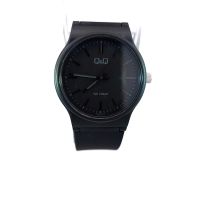
Q&Q WATCH RUBBER 100 Meters Water Resistant VS50J017Y
₱1,044.05₱1,099.00
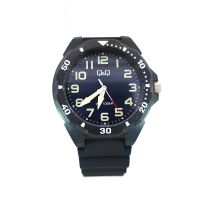
Q&Q WATCH RUBBER 10BAR WATER RESISTANT VS44J004Y^
₱1,044.05₱1,099.00
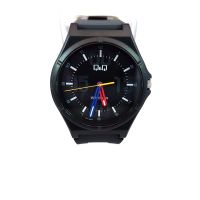
Q&Q Casual Sports Analog Watch (V04A-006VY)
₱1,044.05₱1,099.00
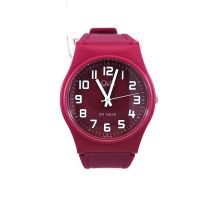
Q&Q WATCH COLORED RUBBER 10BAR WATER RESIST VS42J008Y^
₱1,044.05₱1,099.00
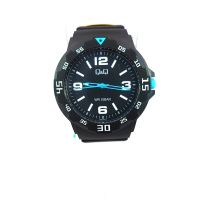
Q&Q Men’s Sporty Black & Electric Blue Analog Watch (V02A-014VY)
₱1,044.05₱1,099.00
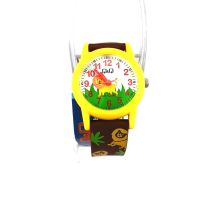
Q&Q (V22A-019VY) Kids Lion Theme Quartz Watch
₱1,044.05₱1,099.00
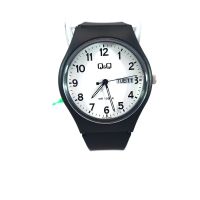
Q&Q RUBBER WATCH 10BAR WATER RESIST (A212J003Y)
₱1,044.05₱1,099.00
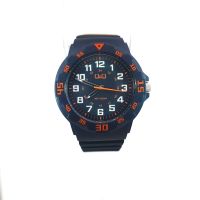
Q&Q WATCH COLORED RUBBER 10BAR WATER RESIST VR18J012Y^
₱1,044.05₱1,099.00
About Q&Q
Q&Q is a Japanese watch brand established in 1976, recognised primarily for producing affordable, practical, and reliable watches intended for everyday use. The brand operates within the broader Citizen Group watch business and has developed a significant international presence, with its timepieces sold in more than 120 countries.1 Unlike Citizen’s premium and technology-focused collections, Q&Q is positioned to make dependable Japanese-branded watches accessible to a wide mass market.
Quick Facts
| Category | Information |
|---|---|
| Brand | Q&Q |
| Origin | Japan |
| Founded | 1976 |
| Industry | Watches / Timepieces |
| Parent/group affiliation | Citizen Group |
| Core positioning | Affordable, reliable everyday watches |
| Brand name meaning | “Quality & Quantity” |
| International presence | 120+ countries |
| Major product types | Analog, digital, solar, radio-controlled, titanium, stainless steel, children’s watches |
| Notable collection | Q&Q SmileSolar |
| Target market | Mass-market / value-oriented consumers |
| 50th anniversary | 2026 |
Q&Q describes itself as a Japanese watch brand focused on making quality and reliable timepieces affordable and accessible to everyone.2
Brand Name and Philosophy
The name Q&Q originally stands for:
Quality & Quantity
This concept combines two core ideas:
- Quality: Reliable watches manufactured using Japanese watchmaking expertise.
- Quantity: Production at a scale that ensures affordability and wide availability.
The underlying premise is that a reliable watch should not necessarily be expensive. The brand later incorporated an additional “Q” concept: Joy, emphasising the extensive variety of designs available for different people, fashions, and occasions.3
Official descriptions highlight three major characteristics: Quality, ensuring consumers associate the brand with dependable Japanese manufacturing; Accessibility, designing watches to be affordable and widely available; and Variety, offering numerous styles, sizes, materials, and technologies to suit diverse consumer needs.11 This approach mirrors the historical role of other Japanese consumer brands that applied reliable manufacturing standards to products intended for everyday mass consumption.
History
1976: Launch
Q&Q was launched in 1976, initially exporting mechanical watches to markets outside Japan before developing into a global mass-market watch business.4 Notably, 1976 was also the year Citizen introduced the world’s first light-powered analogue quartz watch, the Crystron Solar Cell, illustrating the period of rapid technological development within the Japanese watch industry.5
1980–1981: Quartz Expansion
Around 1980–81, Q&Q expanded into analogue quartz and digital watches. Quartz technology allowed watches to become substantially more accurate and affordable, aligning closely with the brand’s mass-market philosophy.6
1995: Solar Technology
Q&Q introduced its first solar-powered watches in 1995.7 Solar technology subsequently became a key component of the brand’s product identity, eventually leading to the SmileSolar collection.
2000–2005: Materials and Technology
During the early 2000s, Q&Q expanded its range to include watches featuring:
- Titanium
- Stainless steel
- Aluminium
- Radio-controlled technology
- Long-life batteries, including models advertised with 10-year battery life
This expansion demonstrated that Q&Q incorporated technologies and materials relatively sophisticated for its price segment, rather than solely producing basic inexpensive watches.8
Relationship with Citizen
Q&Q is part of the Citizen Group, Japan’s major watchmaking conglomerate. Citizen’s official Japanese brand directory lists Q&Q and Q&Q SmileSolar among its related watch brands.9 Within the corporate ecosystem, roles are generally distinct:
- Q&Q: Affordable/value-oriented segment
- CITIZEN: Broader mainstream and technology-focused segment
- The CITIZEN / Attesa / Promaster: Specialized or higher-positioned collections
Corporate materials have historically described Q&Q as a fashion/low-price segment brand while noting its exceptionally high international sales volume.10 Consequently, the designation “Q&Q by Citizen” indicates that the brand belongs within the Citizen corporate watch ecosystem rather than being an unrelated entity borrowing the Citizen reputation.
Product Range
Q&Q maintains a broad catalogue for a value-oriented watch brand.
Analogue Watches
These traditional models typically feature simple three-hand layouts, date displays, and dress or casual styling. Cases are commonly stainless steel or resin/plastic, paired with leather, metal, or synthetic straps. They are designed as inexpensive everyday watches rather than luxury timepieces.
Digital Watches
Digital models are aimed at casual and practical use, emphasising easy readability, alarm and stopwatch functions, compact cases, resin straps, and low operating costs.
Solar Watches
Instead of relying on conventional disposable batteries, these watches use light to generate and store energy. Q&Q introduced solar watches as early as 1995 and later developed the SmileSolar family around this concept.12
Q&Q SmileSolar
Launched in 2013, Q&Q SmileSolar is a distinctive modern sub-collection based on a colourful, casual interpretation of solar-powered watches.13 Its concept is summarised by the slogan “TIME FOR EVERYONE”. The collection emphasises solar power, colourful designs, casual styling, accessibility, and environmental considerations.
SmileSolar also includes a social dimension; Q&Q states that part of the proceeds from SmileSolar sales has been donated through TABLE FOR TWO to support school meals in Africa and Asia.14
Design Language
Rather than adhering to a single visual identity, the Q&Q catalogue covers several broad styles consistent with its original “Quantity” philosophy of providing extensive choice:
- Classic: Simple dials, conventional cases, and understated colours.
- Casual: Resin cases, colourful straps, and everyday styling.
- Sporty: Chronograph-style dials, larger cases, digital displays, and practical functions.
- Fashion: Colourful and visually distinctive designs, particularly within SmileSolar.
- Children’s: Simple, colourful, easy-to-read watches.
- Utility: Models emphasising durability, long battery life, solar power, or radio-controlled timekeeping.
Technology
Despite its affordable positioning, Q&Q utilises a broad selection of technologies:
- Quartz: Forms a major part of the catalogue, providing high accuracy, low maintenance, and low manufacturing cost.
- Solar: Eliminates or greatly reduces the need for conventional battery replacement.
- Radio-controlled: Automatically synchronises time with radio signals where supported.15
- Long-life batteries: Includes models marketed with 10-year batteries.16
- Titanium: Offers access to lightweight, corrosion-resistant material at a lower price point than typical premium brands.
Manufacturing Distinctions
While Q&Q is a Japanese-origin brand, manufacturing and assembly can occur outside Japan. For example, the brand’s 50th-anniversary site explicitly notes for certain listed products: “Assembled in China.” This is common for global mass-market watch brands.
The distinction lies between brand origin (Japan), corporate ecosystem (Citizen Group), and manufacturing (which varies by model and may include overseas production). Therefore, describing Q&Q as a “Japanese brand” is more accurate than claiming every individual watch is “Made in Japan.”
Global Presence
Q&Q has established a genuinely international footprint. According to the company, its watches are sold in more than 120 countries,17 and more than 500 million Q&Q timepieces have been purchased worldwide.18 Citizen’s corporate reporting has described Q&Q as having some of the highest sales volumes among monobrand watch businesses globally.19 While lacking the prestige of Swiss luxury marques, its scale is a defining characteristic.
Market Position
Q&Q occupies the affordable/mass-market segment, competing on price, reliability, Japanese brand heritage, and variety rather than luxury finishing or complicated mechanical movements.
| Segment | Examples |
|---|---|
| Luxury | Rolex, Patek Philippe, Audemars Piguet |
| Premium | Omega, Grand Seiko, Tudor |
| Mid-range | Seiko, Citizen, Tissot, Orient |
| Affordable / mass market | Q&Q, various Casio/Timex lines |
| Entry-level | Very low-cost generic watches |
Comparison with Citizen
Although related, the brands serve different purposes. CITIZEN focuses on mainstream to premium segments with technologies like Eco-Drive,20 craftsmanship, and differentiated collections. Q&Q targets the affordable/value segment with a goal of accessibility for everyday buyers. Q&Q takes a straightforward approach: making a reliable watch affordable enough for ordinary daily use.
Comparison with Casio
Both brands overlap in the affordable Japanese-watch market but possess distinct identities. Q&Q has strong ties to Citizen, a significant analogue catalogue, and a traditional watch-brand identity. Casio is renowned for digital watches, the G-Shock line, calculator/electronic heritage, and technical/sports positioning. Consumers seeking an inexpensive analogue watch often consider Q&Q, while those prioritising rugged digital functionality may prefer Casio.
Collector Interest
Q&Q is not typically considered a luxury or horological enthusiast brand. However, collectors may find it interesting due to its Citizen Group connection, history dating to 1976, vast international distribution, unusual vintage designs, and affordable references on the secondary market. It represents the mass-market side of Japanese watchmaking.
Value Proposition
Describing Q&Q merely as a “cheap watch brand” can be misleading. There is a distinction between poorly made goods and products deliberately designed to minimise cost while maintaining reliability. Q&Q’s philosophy relies on the latter, leveraging decades of group manufacturing experience to combine reliability with mass accessibility.21 It is more accurately described as an affordable/value-oriented Japanese watch brand.
50th Anniversary
2026 marks Q&Q’s 50th anniversary. Official material describes the brand as a trusted Japanese entity built around “Quality and Quantity” serving consumers in over 120 countries.24 The milestone highlights the brand’s survival through major industry transformations—from the mechanical era through the quartz revolution, digital watches, solar technology, and radio control—while retaining its fundamental mission of affordable reliability.
Social and Environmental Direction
Sustainability efforts are most visible through SmileSolar. The solar-powered concept reduces reliance on battery replacement, and the brand links sales to charitable programmes.22 This combines fashion, solar technology, and social messaging, distinguishing SmileSolar from conventional inexpensive quartz watches.
Strengths and Limitations
Strengths
- Affordability: High accessibility is a primary advantage.
- Japanese Heritage: Rooted in Japan and the Citizen ecosystem.
- Variety: Extensive range including analogue, digital, solar, radio-controlled, titanium, and children’s models.
- History: Operating continuously since 1976.
- Global Distribution: Presence in 120+ countries demonstrates substantial scale.
- Practicality: Emphasis on useful everyday functionality.
- Solar Options: SmileSolar provides a recognisable environmentally oriented product family.
Limitations
- Limited Prestige: Not purchased for luxury status.
- Basic Finishing: Components are designed for cost efficiency rather than haute horlogerie standards.
- Quartz-heavy: Standard catalogues may be less interesting to collectors focused on mechanical movements.
- Model-dependent Construction: Quality, materials, movement type, water resistance, and manufacturing location vary considerably between references. Evaluating a specific watch requires checking the exact model number.
Summary
Q&Q represents the application of Citizen’s mass-market philosophy to wristwatches. It leverages Japanese watchmaking advantages—reliability, precision, practical engineering, and manufacturing scale—to produce affordable timepieces for ordinary consumers. Its success stems from a straightforward mandate: producing decent watches at accessible prices with extensive variety and global distribution.
Founded in 1976 and associated with the Citizen Group, Q&Q embodies “Quality & Quantity” through large-scale production and affordability. With products sold in more than 120 countries, its catalogue spans analogue and digital quartz, solar, radio-controlled, titanium, and fashion-oriented collections like SmileSolar. Rather than competing on prestige, Q&Q’s identity is built on accessibility, reliability, and practical everyday use.23 Ultimately, Q&Q exemplifies how Japanese watchmaking evolved beyond premium exclusivity to provide accessible timekeeping for everyone.24
References
- ABOUT US | Q&Q Watches
- Q&Q Watches 50th Anniversary
- The power of nature on your wrist | CITIZEN Sustainability
- Q&Qウオッチ/法人向けオリジナルウオッチ | シチズンウオッチ オフィシャルサイト [CITIZEN-シチズン]
- ブランド | シチズンウオッチ オフィシャルサイト [CITIZEN-シチズン]
- CITIZEN REPORT
- ABOUT US – Q&Q IE
- Citizen Watch Official Site | CITIZEN
- About Us|CITIZEN WATCH CO., LTD.
- History|The CITIZEN -Official Site [CITIZEN]
- History:Power of ER | CITIZEN 100th Anniversary – Official Site
- BRAND HISTORY | PROMASTER – Brand Site [CITIZEN]
- About CITIZEN | CITIZEN WATCH Global Network
- Product history | History of CITIZEN
- Watches|CITIZEN WATCH CO., LTD.
- Corporate History|CITIZEN WATCH CO., LTD.
- シチズン時計株式会社-(シチズングループサイト) | シチズンウオッチ オフィシャルサイト [CITIZEN-シチズン]
- 時計| シチズン時計株式会社
- History of CITIZEN
- よくあるご質問| シチズン時計株式会社
- Our lineage | History of CITIZEN
- Jam Tangan Q&Q Original Terlengkap Indonesia | www.qnq.co.id ®
- Q&Q Watches
- Q&Q 50周年特設サイト