Shop on Lazada
Reemoor products
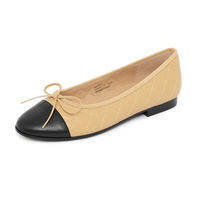
REEMOOR | Spring New Style Flat Womens Shoes
₱3,687.05₱19,735.88
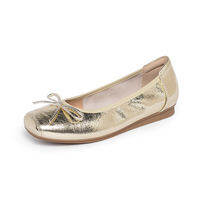
Reemoor | Shallow Mouth Square Head Ballet Flats
₱3,412.89₱14,629.60
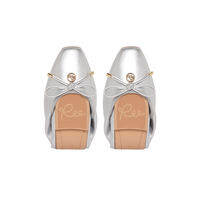
REEMOOR | New Bowknot Flat Comfortable Soft Soled Egg Roll Shoes for Women
₱2,634.02₱14,494.63
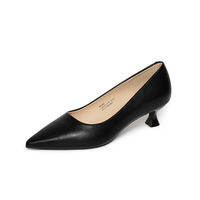
REEMOOR | Elegant Commuter Pointed-Toe Mules
₱2,959.52₱11,503.14
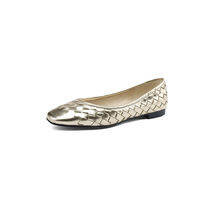
REEMOOR | Retro Stylish Versatile Leather Square Toe Flat Shoes
₱3,757.55₱18,580.76
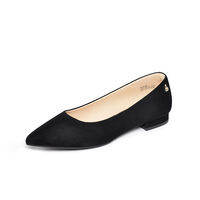
Reemoor | Elegant Commuter Pointed Toe Height Increasing Shoes
₱3,381.79₱15,626.61
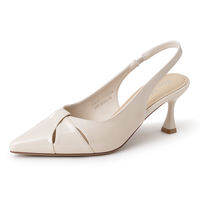
Reemoor | Summer New Design Elegante French Style Pointed Toe Stiletto Sandals
₱2,485.74₱12,747.54
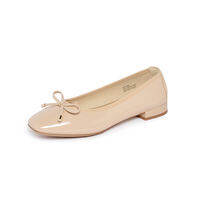
REEMOOR | Comfortable Soft Soled Low-Cut Square Toe Block Heel Heightening Shoes
₱3,456.52₱15,629.37
About Reemoor
Reemoor (Chinese: 睿慕) is a Chinese women’s footwear brand recognized for integrating comfort-oriented construction with feminine, fashion-forward designs. The brand established its modern identity in 2011 with the introduction of the “舒卷鞋” (Freeroll shoe), a lightweight and flexible flat designed for portability and daily wear.45 While some secondary sources attribute an earlier origin to the brand in Australia dating back to 1973, primary corporate materials and retail records consistently identify 2011 as the launch of the contemporary Reemoor brand and its signature product line.1 Headquartered in Shenzhen, Guangdong, the company has since expanded its catalogue beyond rollable flats to include ballet pumps, Mary Janes, loafers, heels, sandals, boots, and casual footwear.2 Reemoor operates through both physical retail stores and major e-commerce platforms such as Tmall and JD.com.3 Although primarily focused on the Chinese market, the brand maintains an international presence through cross-border retail channels accessible to consumers in the Philippines and other regions.17
Brand profile
| Field | Information |
|---|---|
| Brand name | Reemoor |
| Chinese name | 睿慕 |
| Industry | Footwear / Fashion |
| Primary category | Women’s shoes |
| Best known for | Comfortable flats and “舒卷鞋” / Freeroll shoes |
| Brand positioning | Fashion + comfort |
| Core concept | Creation · Comfort |
| Modern brand origin | 2011 |
| China corporate entity | 瑞慕时尚(深圳)有限公司 |
| Corporate registration | 23 June 2014 |
| Headquarters | Shenzhen, Guangdong, China |
| Distribution | Physical retail + e-commerce |
| Notable channels | Tmall, JD.com, offline stores |
The corporate entity operating the brand, 瑞慕时尚(深圳)有限公司 (Reemoor Fashion (Shenzhen) Co., Ltd.), was registered on 23 June 2014. Its business scope encompasses the design, development, and sale of footwear, socks, insoles, bags, accessories, and related products.3
History
Early development
Documented history of the modern Reemoor brand begins in 2011. According to company materials, the brand introduced its signature “舒卷鞋” (Freeroll shoe) that year and opened its first retail location at Chengdu Kaidan.4 This initial concept was predicated on the belief that women should not have to compromise foot comfort for aesthetic appeal. The brand categorized this product as “Freeroll,” emphasizing flexibility, rollability, and portability under the philosophy of “Creation · Comfort.”5
Expansion
Company records outline a period of rapid growth throughout the 2010s:
- 2011: Launch of the “舒卷鞋” concept and opening of the first store in Chengdu.
- 2012: Reported sales exceeded RMB 100 million.
- 2013: Franchise expansion accelerated, reaching over 150 terminal stores.
- 2014: Store network reportedly surpassed 300 locations; entry into major online platforms including Tmall and JD.com.6
- 2015: Claimed sales volume exceeded four million pairs.
- 2016: Headquarters relocated to Shenzhen, marking a new developmental phase.
- 2017: Introduction of a refreshed brand image; store network reportedly exceeded 500 locations.
- 2018: Product organization shifted towards lifestyle scenarios such as “elegant life,” “fashionable moms,” and “refined life.”
- 2019: Emphasis placed on redefining the rollable shoe as an extremely comfortable and portable product.6
These milestones represent company-reported historical claims rather than independently audited statistics.
Origin claims
A discrepancy exists regarding the brand’s founding date. Some Chinese brand information websites state that Reemoor was established in 1973 in Australia by an overseas Chinese entrepreneur named Austin Lee.1 However, concrete brand and corporate materials consistently cite 2011 as the inception of the modern Reemoor footwear brand and the Freeroll concept.4 Consequently, the 1973 Australian origin narrative remains unverified by primary documentation, while the 2011 timeline is supported by the brand’s own historical records and retail data.1
Brand philosophy
Reemoor’s central proposition asserts that consumers need not sacrifice comfort for fashion. The brand emerged from a critique of conventional women’s footwear, which often prioritized visual appeal at the expense of long-term wearability. Reemoor positions comfort as an intrinsic element of the fashion product rather than a secondary technical feature.7
Creation
The brand presents footwear design as a process of redesigning shoes around women’s everyday needs, rather than adhering strictly to traditional forms.
Comfort
Comfort serves as the defining characteristic of the brand. Historical branding frequently describes Reemoor as a comfortable women’s flat shoe brand, with product development focusing on flexible soles, soft materials, and accessible silhouettes.8
Freedom
The Freeroll or “舒卷鞋” concept extends the brand’s philosophy to suggest that shoes should be easy to wear, carry, and integrate into daily life. This establishes a practical lifestyle identity distinct from purely fashion-focused labels.
The “舒卷鞋” concept
The “舒卷鞋” represents the most significant product concept in Reemoor’s history. The Chinese name literally translates to a shoe that can be folded or rolled, while English-language marketing uses the term “Freeroll.” Key attributes include:
- Flexibility
- Portability
- Soft construction
- Lightweight design
- Everyday wearability
- Fashionable appearance
This concept distinguished Reemoor from generic comfort shoe manufacturers by attempting to establish comfort and portability as a recognizable product category.9 Rather than marketing ordinary women’s shoes that happened to be comfortable, the brand sought to redesign women’s footwear specifically around freedom of movement and ease of use.
Product range
While originally defined by the Freeroll concept, Reemoor’s current assortment encompasses a broad spectrum of women’s footwear.
Ballet flats
Ballet flats remain one of the brand’s strongest categories. Current offerings include rounded ballet-style flats, designs with bow details, soft-bottom variants, and metallic or ballet-inspired aesthetics.10
Loafers
The brand produces various loafer styles that maintain its emphasis on easy everyday wear, including:11
- Penny-loafer-inspired shoes
- Soft loafers
- Slip-on shoes
- Thicker-soled loafers
- Casual loafers
Mary Janes
Mary Jane shoes have become a prominent part of the brand’s contemporary aesthetic, available in both flat and low-to-mid heel variations.
Pumps and dress shoes
Demonstrating a shift toward a broader fashion-footwear portfolio, the range includes pointed-toe pumps, low heels, block heels, wedding and formal shoes, as well as rhinestone and metallic designs.
Sandals
Summer collections feature flat sandals, slides, pointed sandals, decorative styles, and other seasonal options.12
Boots
Seasonal footwear expansions include ankle boots, Martin-style boots, and other cold-weather styles.
Casual and sporty footwear
Recent collections have incorporated casual sneakers, trainer-inspired shoes, mesh footwear, and other everyday styles, indicating an expansion beyond traditional women’s dress shoes.
Design language
Reemoor’s visual identity blends French-inspired femininity, contemporary Chinese fashion, and comfort footwear aesthetics. Recurring design elements include:
- Ballet-shoe silhouettes
- Mary Jane straps
- Bow details
- Pointed and rounded toes
- Loafer forms
- Understated metallic hardware
- Pearl and rhinestone embellishments
- Soft leather-like materials
- Neutral colour palettes (black, beige, brown, wine-red)
- Occasional metallic silver or gold finishes
The resulting aesthetic is generally more feminine and elegant than that of athletic comfort-shoe brands. Current listings frequently combine traditional comfort forms with French-inspired styling, evident in Mary Janes, ballet flats, pointed shoes, and soft-bottom designs.13
Materials and construction
Product specifications indicate a consistent emphasis on softness and flexibility. Descriptions frequently highlight features such as soft soles, comfortable footbeds, lambskin linings, leather uppers, flexible construction, lightweight builds, slip-on functionality, and flat or low heels.14 Specific models often advertise the use of lambskin (羊皮) and specialized soft-bottom construction. However, material specifications vary across the extensive product range, and individual model details should be verified separately.
Market positioning
Reemoor occupies a distinct position within the footwear market. It is not classified as a luxury designer label comparable to Christian Louboutin, Manolo Blahnik, or Jimmy Choo, nor is it solely a mass-market sports or comfort shoe brand. Instead, its historical positioning aligns with fashionable women’s footwear where comfort serves as the primary selling point. Some secondary sources characterize Reemoor as mid-to-upper or mid-to-high-end, though this is not an official industry classification. Retail pricing varies substantially across different models and categories.
Retail and distribution
Reemoor operates through a hybrid model of physical retail and e-commerce. Company records indicate entry into Tmall and JD.com in 2014, coinciding with the expansion of brick-and-mortar stores. The brand currently maintains a dedicated presence on JD.com, listing hundreds of styles including upcoming collections. During its peak expansion period, recruitment profiles claimed a network exceeding 500 stores, though this figure does not necessarily reflect the current store count. For consumers in the Philippines and other international markets, Reemoor products are accessible via cross-border e-commerce platforms and global retail aggregators.17
Corporate structure
Distinctions exist between the Reemoor brand and its associated corporate entities. The company most directly linked to the brand in recent public records is 瑞慕时尚(深圳)有限公司 (Reemoor Fashion (Shenzhen) Co., Ltd.). Established on 23 June 2014 with registered capital of RMB 1 million and legal representative Li Qin, its business scope covers the design, development, and sale of footwear, socks, insoles, bags, and accessories. Public Shenzhen government documentation also identifies this entity in connection with Reemoor-branded women’s shoes.
Historical references also associate 深圳拓普澌品牌管理有限公司 (Shenzhen Topisi Brand Management Co., Ltd.) with the operation of the Reemoor brand during its large-scale retail expansion.15 The 2014 corporate registration date should not be conflated with the brand’s creation; company materials place the modern Reemoor launch in 2011.16
Brand collaborations
Reemoor has engaged in fashion-oriented collaborations to reinforce its lifestyle positioning. A documented example includes the 2021 Reemoor × 璞玉 collaboration, which featured a “Phoenix” white-shoe collection promoted through the Reemoor Tmall flagship account. This collection emphasized Chinese and Eastern aesthetics alongside refined lifestyle themes.12 Such initiatives illustrate the brand’s effort to connect footwear with cultural aesthetics and fashion trends beyond pure functional comfort.
Classification summary
- Brand category: Women’s fashion footwear
- Core heritage: Comfort footwear
- Signature product: 舒卷鞋 / Freeroll shoe
- Aesthetic: Feminine, elegant, French-inspired, contemporary
- Main competitive idea: Fashion without sacrificing everyday comfort
- Market: Primarily China, with international e-commerce availability
- Positioning: Accessible mid-to-upper fashion footwear
- Brand personality: Comfortable, feminine, practical, refined
- Key differentiation: Integrating comfort as a core component of the fashion proposition
References
- reemoor是什么牌子_睿慕品牌是什么档次?-百强排行网
- 首页 – ReeMoor旗舰店
- 〖REEMOOR时尚女鞋〗价格_图片_品牌_怎么样-京东商城
- 睿慕(REEMOOR)品牌及商品 – 京东
- 睿慕REEMOOR简介-睿慕运动鞋-十大品牌网CNPP
- REEMOOR鞋子 – 京东
- reemoor旗舰店品牌及商品 – 京东
- REEMOOR低跟<3单鞋品牌及商品 – 京东
- REEMOOR运动鞋 – 京东
- reemoor是什么牌子,reemoor是什么档次的鞋 – 海淘族
- REEMOOR鞋靴旗舰店 – 京东
- #REEMOOR × 璞玉# 凤凰系列小白鞋,全新面… 来自reemoor天猫旗舰店 – 微博
- REEMOOR | Trademark Application 2735241
- Reemoor – Sustainability Rating – Good On You
- 深圳市源脉金实业有限公司做什么的 – 今日头条
- 广州市鞋产品质量监督抽查结果 – 广州市人民政府门户网站
- Reemoor купить в интернет-магазине на Где Посылка