Shop on Lazada
Roche products
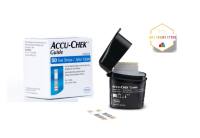
Accu-Chek Guide 50 Test Strips Sheets / Accu Check Guide Strips 50 / Blood Glucose Strip for Guide Meter (Exp: September 2027 or later)
₱1,245.00₱2,330.00
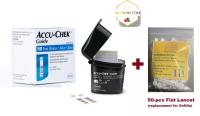
Accu-Chek Guide 50 Test Strips Sheets with 50-pcs Generic Flat lancet (Softclix replacement) (Exp: 05/2027 or later)
₱1,305.00₱2,499.00
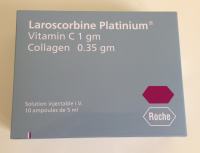
Vitaminc C with Collagen
₱999.00
Buy on Lazada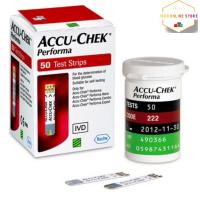
Accu-Chek Performa 50 Test Strips Sheets / Accu Check Perfoma Strips 50 / Blood Glucose Strip for Performa Combo Connect Expert Nano (Exp: May 2027 or later)
₱1,178.00₱2,400.00
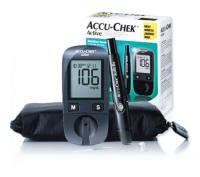
ACCU-CHEK Active Blood Glucose Meter Monitor with Lancing Device (Strips not included)
₱1,938.00₱2,100.00
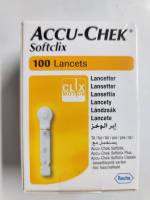
Accu-Chek Softclix Lancets 100s
₱460.00
Buy on Lazada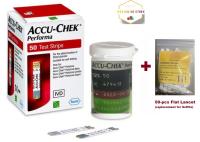
Accu-Chek Performa 50 Test Strips Sheets with 50-pcs Flat Lancet (Softclix replacement) (Exp: 05/2027 or later)
₱1,238.00₱2,599.00
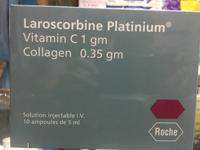
Collagen Gray
₱1,500.00
Buy on LazadaAbout Roche
Roche, formally F. Hoffmann-La Roche Ltd, is a Swiss multinational healthcare and biotechnology company headquartered in Basel, Switzerland. Founded in 1896, Roche has grown from an early manufacturer of scientifically researched medicines into one of the world’s largest biotechnology companies and a global leader in in-vitro diagnostics. Its business combines pharmaceuticals, diagnostics, biotechnology, and digital health technologies.1
Roche — at a glance
| Category | Information |
|---|---|
| Full name | F. Hoffmann-La Roche Ltd |
| Common name | Roche |
| Industry | Pharmaceuticals, biotechnology, diagnostics, healthcare |
| Founded | 1 October 1896 |
| Founder | Fritz Hoffmann-La Roche |
| Headquarters | Basel, Switzerland |
| Key divisions | Roche Pharmaceuticals; Roche Diagnostics |
| Global presence | 100+ countries |
| Employees | 112,774 worldwide at the end of 2025, reported on a headcount basis |
| 2025 group sales | CHF 61.5 billion |
| 2025 pharmaceutical sales | CHF 47.7 billion |
| 2025 diagnostics sales | CHF 13.8 billion |
| CEO | Dr Thomas Schinecker |
| Chairman | Dr Severin Schwan |
| Major group companies | Genentech; majority stake in Chugai Pharmaceutical |
| Core focus | Innovative medicines, diagnostics and personalised healthcare |
The 2025 workforce figure is reported using a broader headcount definition than Roche used for its 2024 comparable figure, so it should not be interpreted as a simple year-over-year increase in personnel.1
What is Roche?
Roche is fundamentally a science-driven healthcare company. Unlike a pharmaceutical company that concentrates primarily on medicines, Roche has two unusually strong businesses under one corporate group:
- Pharmaceuticals — discovering, developing, manufacturing and commercialising medicines.
- Diagnostics — developing technologies and tests that help healthcare professionals detect, classify, monitor and manage diseases.
This combination is central to Roche’s strategy of personalised healthcare: using information about a patient’s disease and biology to select the appropriate treatment and monitor whether that treatment is working.1
Roche describes its purpose as “Doing now what patients need next.” Its stated ambition is to prevent, stop and cure diseases while helping people live longer and healthier lives.1
Foundation — 1896
Roche was founded on 1 October 1896 in Basel, Switzerland, by Fritz Hoffmann-La Roche.
Hoffmann believed medicines should be manufactured scientifically and industrially and distributed internationally. This was relatively pioneering for the period, when pharmaceutical production was still much less industrialised and standardised than it is today.
The company’s early international expansion was rapid. By 1912, Roche had operations or affiliate offices across three continents and in nine countries, including Switzerland, Germany, France, Italy, the United Kingdom, the United States and Japan.
Early products
One of Roche’s early commercial successes was an orange-flavoured cough syrup, introduced in 1898. It became the company’s first major bestseller and remained on the market for approximately six decades.
Roche subsequently developed a strong reputation for scientific research and pharmaceutical innovation.
Expansion into vitamins and biotechnology
During the 20th century, Roche became increasingly involved in vitamins, pharmaceuticals and biotechnology.
The company was among the early industrial producers of synthetic vitamin C, an important milestone in the history of large-scale pharmaceutical and chemical manufacturing.
Roche later expanded substantially into biotechnology, oncology and other highly specialised areas of medicine.
The Genentech connection
One of the most important developments in modern Roche history was its relationship with Genentech, a pioneering American biotechnology company.
Genentech played a major role in the development of modern biotechnology and recombinant biological medicines. Roche acquired the remaining shares of Genentech in 2009, making Genentech a wholly owned member of the Roche Group.
Genentech remains particularly important to Roche’s pharmaceutical research and commercial operations in the United States.
This acquisition helped transform Roche’s position from a major traditional pharmaceutical company into a particularly powerful biotechnology-focused healthcare group.
A. Roche Pharmaceuticals
Roche Pharmaceuticals is the group’s medicines business.
It researches and develops therapies for major diseases, with particularly strong positions in areas such as:
- Cancer / oncology
- Neurological diseases
- Immunology
- Ophthalmology
- Rare diseases
- Cardiovascular and metabolic diseases
- Infectious diseases
Roche combines research conducted internally with research from Genentech, Chugai and external academic and biotechnology partners. Roche says its pharmaceutical business works with more than 250 partners worldwide.
In 2025, Roche Pharmaceuticals generated approximately CHF 47.7 billion in sales, representing the majority of Roche Group revenue.1
Major therapeutic areas
Oncology
Cancer has historically been one of Roche’s most important areas.
The company has developed or commercialised numerous important cancer medicines, including therapies targeting specific biological mechanisms rather than simply killing rapidly dividing cells.
This fits Roche’s broader emphasis on precision medicine, where the characteristics of a patient’s cancer can influence diagnosis and treatment.
Neurology
Roche has increasingly invested in diseases of the nervous system, including areas such as multiple sclerosis, Alzheimer’s disease and other neurological conditions.
Immunology
Roche develops therapies aimed at diseases involving abnormal immune-system activity, including autoimmune and inflammatory diseases.
Ophthalmology
Eye diseases are another important area, including conditions that can lead to progressive vision loss.
Roche Diagnostics
Roche Diagnostics is the other half of the Roche business.
It develops technologies used to detect and monitor disease rather than directly treat it.
Its portfolio includes:
- Clinical chemistry
- Immunoassays
- Molecular diagnostics
- Tissue diagnostics
- Pathology
- Point-of-care testing
- Diabetes care
- Next-generation sequencing
- Laboratory automation
- Laboratory information technology
- Decision-support systems
Roche describes itself as the global leader in in-vitro diagnostics. Its diagnostic solutions are used in more than 100 countries.2
In 2025, Diagnostics generated approximately CHF 13.8 billion in sales.
Why the combination of Pharma + Diagnostics matters
This is arguably the most distinctive characteristic of Roche.
Imagine a patient with cancer:
Diagnosis → molecular testing → disease classification → treatment selection → treatment → monitoring
A traditional pharmaceutical company may primarily participate in the treatment stage.
Roche can potentially participate across several stages through its combined capabilities in:
Diagnostics + Medicines + Data + Digital technologies
For example, diagnostic tests can identify biological characteristics of a disease, while a corresponding medicine may target that biological mechanism.
This is known as companion diagnostics and is an important component of personalised healthcare.
Roche therefore seeks to move healthcare away from a simple:
“One disease → one treatment”
model toward:
“The right treatment for the right patient, informed by the patient’s specific disease characteristics.”
Roche itself describes the combination of Pharmaceuticals and Diagnostics as a foundation of its personalised-healthcare strategy.1
Research and development
R&D is at the heart of Roche’s business model.
In 2025, Roche reported approximately CHF 12.2 billion in core R&D investment.3
The company operates a large global research network involving:
- Roche research centres
- Genentech
- Chugai
- Universities
- Hospitals
- Biotechnology companies
- Clinical researchers
- Technology companies
Roche’s research strategy increasingly combines biology, genetics, molecular diagnostics, artificial intelligence and data science.
The company’s diagnostics organisation, for example, has been applying AI algorithms to improve disease detection and diagnostic interpretation. Roche reported in its 2025 annual review that its next-generation sequencing technology had achieved whole-human-genome sequencing in less than four hours.3
Major products and medicines
Roche has developed or commercialised a large portfolio of internationally recognised medicines.
Some historically and commercially important examples include:
- Herceptin (trastuzumab) — breast and other HER2-positive cancers
- Avastin (bevacizumab) — various cancers
- Rituxan/MabThera (rituximab) — blood cancers and autoimmune diseases
- Perjeta (pertuzumab) — HER2-positive breast cancer
- Tecentriq (atezolizumab) — immunotherapy for various cancers
- Ocrevus (ocrelizumab) — multiple sclerosis
- Vabysmo (faricimab) — certain retinal diseases
- Hemlibra (emicizumab) — haemophilia A
- Evrysdi (risdiplam) — spinal muscular atrophy
The portfolio changes over time as patents expire, new products are launched and clinical-development programmes progress.
Roche reports that 45 medicines developed and/or acquired by Roche are currently included on the World Health Organization’s Essential Medicines List.3
Diagnostics products and technologies
Roche Diagnostics is much broader than simply producing laboratory blood tests.
Its technologies cover the entire diagnostic workflow.
Laboratory diagnostics
These include tests for:
- Hormones
- Cancer biomarkers
- Cardiac markers
- Thyroid disorders
- Infectious diseases
- Metabolic conditions
- Immune-system disorders
- General clinical chemistry
Molecular diagnostics
Molecular testing can detect genetic material from pathogens or analyse genetic characteristics associated with disease.
Pathology
Roche develops technologies that help pathologists examine tissue samples and identify disease characteristics.
Diabetes
Roche has historically had a major presence in blood-glucose monitoring and diabetes-management technologies.
Next-generation sequencing
Roche is also investing in genomic technologies, allowing researchers and clinicians to analyse DNA and other biological information at increasingly large scales.
Global presence
Roche is a genuinely multinational company.
Its headquarters are in Basel, Switzerland, but its operations span the Americas, Europe, Asia-Pacific and other regions.
The company says its medicines and diagnostics reach patients in more than 100 countries.1
The Roche Group had 112,774 employees at the end of 2025, according to its annual report’s headcount measure.3
The organisation is divided broadly among:
- Roche Pharmaceuticals
- Roche Diagnostics
- Chugai
- Corporate functions
Chugai Pharmaceutical
Another important part of the Roche ecosystem is Chugai Pharmaceutical, a Japanese pharmaceutical company.
Roche is the majority shareholder in Chugai, while Chugai maintains its own corporate identity and operations in Japan.1
The relationship gives Roche access to Chugai’s research capabilities while strengthening its presence in Japan and internationally.
Business performance
Roche remains one of the world’s largest healthcare companies by revenue.
According to its 2025 Annual Report, Roche reported:3
| 2025 metric | Result |
|---|---|
| Group sales | CHF 61.5 billion |
| Pharmaceuticals sales | CHF 47.7 billion |
| Diagnostics sales | CHF 13.8 billion |
| Core operating profit | CHF 21.8 billion |
| Core R&D investment | CHF 12.2 billion |
| Dividend proposal | CHF 9.80/share |
Group sales increased 7% at constant exchange rates in 2025, while pharmaceutical sales grew 9% and diagnostics sales grew 2%.1
Roche also reported that more than 39 million patients were treated with its medicines in 2025, while its high-medical-value diagnostics solutions touched approximately 258 million lives.3
Leadership
As of 2026:
Dr Thomas Schinecker is the CEO of Roche Group.
He became CEO in 2023, succeeding Severin Schwan, who became Chairman of the Board. Roche’s 2025 results continued to identify Schinecker as Group CEO and Schwan as Chairman.1
The current leadership structure reflects Roche’s emphasis on both scientific innovation and long-term corporate governance.
Corporate structure
At a simplified level, Roche can be visualised like this:
ROCHE GROUP

 │

 ┌───────────────┴───────────────┐

 │ │

 Pharmaceuticals Diagnostics

 │ │

 ┌───────┼────────┐ ┌───────┼────────┐

 │ │ │ │ │ │

Roche Genentech Chugai Lab Pathology Molecular

R&D (USA) (Japan) testing & tissue diagnostics
This structure is simplified; the actual Roche Group contains many subsidiaries, business units, research organisations and regional entities.
Roche and personalised healthcare
Personalised healthcare is one of Roche’s defining strategic ideas.
Traditional medicine often works from population averages: a medicine is developed for a disease and prescribed according to established clinical guidelines.
Personalised healthcare attempts to incorporate more individual information, such as:
- Genetics
- Biomarkers
- Disease subtype
- Molecular characteristics
- Diagnostic test results
- Patient history
- Treatment response
Roche’s unusual advantage is that it operates both a major pharmaceutical business and a major diagnostics business.
That allows the company to develop diagnostics that can help identify patients who may benefit from particular medicines, while also developing the medicines themselves.1
Roche’s role in biotechnology
Although Roche is frequently called a “pharmaceutical company,” biotechnology is a particularly important part of its modern identity.
Roche describes itself as the world’s largest biotechnology company, reflecting its substantial focus on biologic medicines and biotechnology-based research.1
Biological medicines can include therapies based on:
- Antibodies
- Recombinant proteins
- Cell and molecular biology
- Genetic technologies
- Other sophisticated biological mechanisms
The Genentech acquisition was particularly important in strengthening this aspect of Roche.
Sustainability
Roche also has a substantial sustainability programme.
The company has stated a goal of achieving net zero emissions by 2045 and reports environmental targets covering its operations and value chain.1
In 2025, Roche reported:1
- 34% reduction in Scope 1 and 2 greenhouse-gas emissions compared with 2024
- Achievement of its 100% sustainable electricity goal across its sites
- Continued investment in access to healthcare and innovation
Sustainability at Roche therefore extends beyond environmental issues to include access to healthcare, employees, patients and responsible business practices.
Roche’s corporate philosophy
Roche’s corporate identity is strongly built around science and innovation.
Its historical development illustrates this progression:
Industrial pharmaceuticals
↓
Scientific drug discovery
↓
Biotechnology
↓
Diagnostics
↓
Personalised healthcare
↓
Genomics + AI + digital health
The company’s stated purpose, “Doing now what patients need next,” captures this forward-looking approach.
Roche’s importance in healthcare
Roche is significant because it operates at several critical points in modern medicine.
Medicines
It develops treatments for some of the world’s most serious diseases.
Diagnostics
Its tests help physicians determine what disease a patient has and how that disease is progressing.
Biotechnology
It is one of the world’s major developers and manufacturers of biological medicines.
Personalised medicine
It connects diagnostic information with treatment decisions.
Research
It invests billions of Swiss francs annually into R&D.
Global healthcare
Its products are used across more than 100 countries.
In other words, Roche is not simply a company that makes drugs. It is increasingly a company attempting to connect diagnosis, biology, treatment and monitoring into a single healthcare ecosystem.
Roche in one sentence
Roche is a Basel-based Swiss healthcare and biotechnology group founded in 1896 that combines one of the world’s largest pharmaceutical businesses with a global diagnostics business, with a particular focus on oncology, personalised healthcare, biotechnology and innovative diagnostics.
Roche’s evolution in a timeline
| Year | Milestone |
|---|---|
| 1896 | Roche founded in Basel by Fritz Hoffmann-La Roche |
| 1898 | Orange-flavoured cough syrup becomes an early bestseller |
| 1912 | Roche has expanded internationally across three continents |
| 1920s–30s | Scientific research becomes increasingly central to the company |
| 1930s | Roche becomes an important producer of synthetic vitamin C |
| 20th century | Expansion into pharmaceuticals and vitamins |
| Late 20th century | Major expansion into biotechnology and diagnostics |
| 1990s onward | Increasing emphasis on biotechnology and personalised healthcare |
| 2009 | Roche completes acquisition of Genentech |
| 2010s | Strong expansion in oncology, immunology, diagnostics and personalised medicine |
| 2020s | Increasing investment in neuroscience, genomics, AI and next-generation diagnostics |
| 2025 | CHF 61.5 billion group sales; >39 million patients treated with Roche medicines |
| 2026 | Roche continues its strategy of integrating pharmaceuticals, diagnostics and digital technologies |
The historical milestones above are based primarily on Roche’s own corporate history and current company reporting.1
Bottom line
Roche is one of the most important companies in modern healthcare.
Its distinctive strength is not merely the size of its pharmaceutical business, but the combination of pharmaceuticals + diagnostics + biotechnology + data-driven personalised healthcare.
Founded in Basel in 1896, Roche has evolved through more than a century of scientific and technological change. Today, it operates on a global scale, generates more than CHF 60 billion annually, employs more than 100,000 people, and invests billions each year in research.12
For a student, investor, healthcare professional, job applicant, or business researcher, the simplest way to understand Roche is:
Roche = Medicines + Diagnostics + Biotechnology + Personalised Healthcare.