Shop on Lazada
Rode products
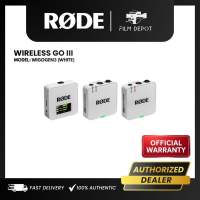
RODE WIRELESS GO III COMPACT WIRELESS MICROPHONE SYSTEM
₱13,990.00
Buy on Lazada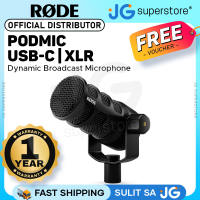
RØDE PodMic Dynamic Broadcast Microphone XLR / USB Type-C Cardioid Mic for Podcasting Streaming Voice Recording Livestreaming & Content Creation (White / Black) | JG Superstore
₱15,690.00₱19,613.00
RØDE PodMic Dynamic Broadcast Microphone XLR / USB Type-C Cardioid Mic for Podcasting Streaming Voice Recording Livestreaming & Content Creation (White / Black) | JG Superstore
₱15,690.00₱19,613.00
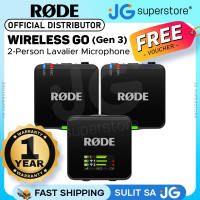
RODE Wireless GO Gen 3 / GO II (Dual TX + RX) Ultra-Compact Microphone with 2-Person Clip-On Transmitter 2.4GHz Frequency Intelligent GainAssist Technology for Smartphones Cameras Computers & Laptops | JG Superstore
₱13,890.00₱17,363.00
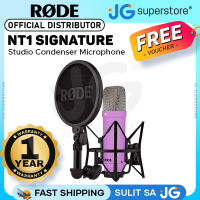
Rode NT1 Signature Cardioid Condenser Studio Microphone with HF6 1″ Large Diaphragm Capsule XLR 3-Pin Output Phantom Powered for Recording Podcasting Live Streaming | Black Blue Purple Green Red Pink | JG Superstore
₱11,490.00₱14,363.00
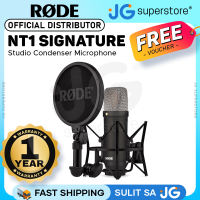
Rode NT1 Signature Cardioid Condenser Studio Microphone with HF6 1″ Large Diaphragm Capsule XLR 3-Pin Output Phantom Powered for Recording Podcasting Live Streaming | Black Blue Purple Green Red Pink | JG Superstore
₱11,490.00₱14,363.00
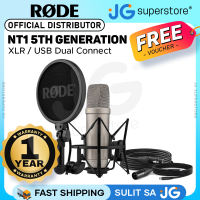
Rode NT1 5th Generation Cardioid Condenser Large Diaphragm Microphone with Analog XLR / Digital USB Type-C Dual Connect Ports Revolution Preamp On-board DSP for APHEX & USB Bus / Phantom Powered for Recording Podcasting | Silver Black | JG Superstore
₱17,390.00₱21,738.00
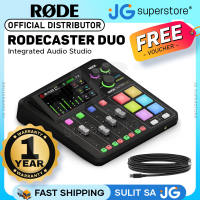
RODE Rodecaster Duo 2 Channel Integrated Audio Studio MIDI Interface with Series IV Wireless Receivers Revolution Preamps 6 Programmable Smart Pads Dual USB Ports and Integrated Bluetooth for Live Streaming Recording Podcasting | JG Superstore
₱31,300.00₱39,125.00
About Rode
RØDE (stylised as RØDE, pronounced “road”) is an Australian audio technology company best known for its microphones and recording equipment. Headquartered in Sydney, Australia, RØDE has grown from a specialist microphone manufacturer into a broad creator-technology brand covering studio recording, podcasting, filmmaking, broadcasting, streaming, gaming, mobile content creation, wireless audio, headphones, audio interfaces, mixers and software. The company describes its mission as “amplify[ing] the voice and vision of the world’s creators.” 1
As of 2026, RØDE states that its products are exported to 119 countries, with more than 800 employees across its operations and manufacturing centred at its Sydney headquarters. RØDE is part of The Freedman Group, alongside brands including Mackie, APHEX, Event and SoundField.
Basic information
| Category | Information |
|---|---|
| Brand | RØDE |
| Industry | Professional audio / creator technology |
| Country of origin | Australia 🇦🇺 |
| Headquarters | Sydney, New South Wales, Australia |
| Parent company | The Freedman Group |
| Parent company origin | Freedman Electronics, founded 1967 |
| Key founder associated with RØDE | Peter Freedman |
| Major product categories | Microphones, wireless audio, podcasting, audio interfaces, mixers, headphones, software and accessories |
| Best known for | NT1, VideoMic, Wireless GO, PodMic, RØDECaster |
| Major markets | Music, film/TV, broadcasting, podcasting, YouTube, streaming, gaming and mobile content |
| Manufacturing base | Sydney, Australia |
| Global distribution | 119 countries, according to RØDE |
The company traces its history to 1967, when Freedman Electronics was established in Sydney by Henry and Astrid Freedman. The RØDE brand emerged in the early 1990s.
Origins: Freedman Electronics
The history of RØDE begins before the RØDE name existed. In 1967, Swedish immigrants Henry and Astrid Freedman opened Freedman Electronics in Sydney. The company initially worked across loudspeakers, amplifiers, custom electronics and professional audio equipment, becoming an important participant in Australia’s developing audio industry.
This background is significant because RØDE was not originally conceived as a startup focused on microphones. It grew out of an existing family audio business with decades of engineering and manufacturing experience. The Freedman family’s connection with professional audio also extended into live sound. RØDE’s history records that Henry Freedman worked as a mixer during a 1968 Australian tour by Tom Jones, illustrating the company’s early involvement in professional sound production.
Birth of RØDE
The RØDE brand emerged around 1990, when Peter Freedman, Henry’s son, saw an opportunity in the rapidly developing home-recording market. During the late 1980s and early 1990s, recording technology was becoming increasingly affordable. More musicians and home-recording enthusiasts wanted studio-quality equipment without paying the prices traditionally associated with professional microphones.
Freedman Electronics sourced and modified a large-diaphragm condenser microphone from China and tested the market. The response convinced Peter Freedman to establish the infrastructure necessary to design, manufacture and sell microphones from Australia. The result was the first major RØDE microphone: the NT1. This was followed by the NT2, and these products established the fundamental RØDE philosophy of professional-quality audio at a comparatively accessible price. That combination of quality, engineering and relatively aggressive pricing became one of the most important characteristics of the RØDE brand.
The NT1 and the rise of RØDE
The NT1 became the product that put RØDE on the international microphone map. Rather than competing exclusively as a luxury professional microphone manufacturer, RØDE positioned itself around the idea that high-quality recording should be accessible to a much broader audience. During the 1990s, RØDE expanded its studio range with products such as the NT1, NT2, Classic, Classic II, NTK and Broadcaster. By the late 1990s and early 2000s, the company had established a strong position in the studio microphone market, combining professional performance with price accessibility.
This strategy allowed RØDE to appeal simultaneously to professional musicians, home-studio owners, recording engineers, radio broadcasters, voice-over artists, independent producers and emerging creators.
Manufacturing philosophy
One of the most distinctive aspects of RØDE is its emphasis on in-house manufacturing and engineering. Rather than treating manufacturing purely as an outsourced commodity operation, the company invested heavily in precision machinery and production technology at its Sydney headquarters. According to RØDE, its Sydney facilities now encompass five warehouses with a combined footprint of more than 280,000 square feet, containing more than US$500 million worth of precision machinery. Its workforce includes specialists in electronics engineering, industrial design, acoustics, robotics, metal production, injection-mould technology, assembly and quality control.
This investment forms a major part of RØDE’s identity. The brand is not simply an Australian company that designs microphones; it emphasises its Australian manufacturing infrastructure as part of its competitive advantage.
The VideoMic revolution
One of RØDE’s most important products was not a traditional studio microphone but the VideoMic, introduced in 2004. At the time, consumer and enthusiast video cameras were becoming increasingly sophisticated, but their built-in microphones were often poor. RØDE recognised that filmmakers needed a compact microphone that could mount directly onto a camera and describes the original VideoMic as the world’s first compact on-camera shotgun microphone.
The timing proved extremely important. During the late 2000s, DSLR cameras such as the Canon EOS 5D Mark II began offering video capabilities that made relatively inexpensive cameras capable of producing cinematic-looking footage. A new generation of independent filmmakers, YouTubers, videographers, journalists, vloggers and documentary makers needed better audio, and the VideoMic became an extremely popular solution. This helped transform RØDE from primarily a studio microphone company into a broader creator-audio company.
Expansion into filmmaking and broadcast
Following the success of the VideoMic, RØDE expanded its on-camera microphone portfolio. Important products included the VideoMic Pro, VideoMic GO, VideoMic Pro+, VideoMic NTG, NTG series, NTG5, Stereo VideoMic and VideoMicro. The company simultaneously continued developing professional broadcast and film microphones. The NTG series, in particular, became associated with professional shotgun microphones used in film, television and location recording. This gave RØDE a presence across multiple levels of production, from beginners mounting a small microphone on a camera to professional sound crews working on film and television.
USB microphones and the home creator
Another major shift came with USB audio. Traditionally, a professional microphone required additional equipment such as a preamp or audio interface connected to a computer. RØDE began making products that simplified this process. The Podcaster, released in 2007, was among the early USB microphones aimed at simplifying computer-based recording. RØDE subsequently released products such as the NT-USB and NT-USB Mini.
This was strategically important because the potential customer base was no longer just musicians. It now included YouTubers, podcasters, streamers, gamers, voice-over creators, online teachers, remote workers and social-media creators. RØDE increasingly became a brand associated with the emerging creator economy.
Podcasting and the RØDECaster
Perhaps RØDE’s biggest expansion beyond microphones came with podcasting. Although RØDE had already released the Podcaster microphone in 2007, the company took a much bigger step in 2018 with the RØDECaster Pro, which it describes as the world’s first dedicated podcasting production console.
Instead of assembling a complicated studio from audio interfaces, mixers, headphone amplifiers, microphone preamps, computers, software and sound-effect systems, the RØDECaster Pro put many of those functions into one dedicated device. This helped make professional-style podcast production accessible to people without traditional audio-engineering backgrounds. It also marked a significant change in RØDE’s identity. Before this period, RØDE could largely be described as a microphone company. After the RØDECaster, it increasingly became an audio-production technology company.
Wireless GO and the creator revolution
Another major milestone came in 2019 with the original Wireless GO. RØDE’s wireless products targeted a rapidly expanding market for creators who needed to record people away from a camera. Instead of connecting a microphone directly to a camera, a wireless system allows the speaker to move freely. This is particularly useful for YouTube, interviews, documentaries, TikTok, Instagram, weddings, corporate video, filmmaking, journalism and outdoor recording.
The original Wireless GO launched in April 2019, followed by Wireless GO II in 2021 and the third-generation Wireless GO in 2024. The Wireless GO family became one of RØDE’s most recognisable modern product lines.
RØDE in the 2020s
During the 2020s, RØDE accelerated its transition into a complete creator-technology ecosystem. Its current portfolio includes several major categories.
Studio microphones
Examples include the NT1, NT1 Signature Series, NT1 5th Generation, NT2-A, NTK and NTR. The NT1 remains one of the company’s defining products.
Camera microphones
Examples include the VideoMic, VideoMic GO, VideoMic GO II, VideoMic Pro+, VideoMic NTG and VideoMicro.
Wireless microphones
Examples include the Wireless GO II, Wireless GO (3rd Gen), Wireless ME, Wireless PRO, Wireless Micro and Interview PRO. RØDE’s current wireless lineup covers everything from ultra-compact mobile recording to more advanced professional creator workflows.
Headphones
RØDE entered the professional headphone market with products such as the NTH-100, NTH-100M and NTH-50.
Audio interfaces and production systems
Examples include the AI-1, AI-Micro, Streamer X, RØDECaster Pro, RØDECaster Pro II, RØDECaster Duo and RØDECaster Video.
Streaming and gaming
RØDE increasingly targets streamers and gamers through products such as the PodMic, PodMic USB, XDM-100, XCM-50, Streamer X and UNIFY software.
The PodMic
The PodMic is another important product in RØDE’s history. Introduced in December 2018, it was designed specifically around broadcast speech, podcasting and streaming. It uses a dynamic capsule and cardioid pickup pattern and includes an integrated pop filter and swing mount. RØDE positions it for applications ranging from professional podcasting to livestreaming and gaming.
The PodMic is significant because it represents RØDE’s shift from “microphones for musicians” toward “microphones for anyone who creates spoken content.”
Software ecosystem
Modern RØDE products are not limited to hardware. The company has developed an expanding software ecosystem including RØDE Central, RØDE Connect, RØDE Unify, RØDECaster App, RØDE Capture, RØDE Reporter and RØDECaster Companion App. RØDE Central allows users to configure compatible products, change settings, access features and update firmware. RØDE Connect is designed particularly around podcasting and streaming, including multi-microphone recording and integration with streaming and video-call applications. UNIFY functions as a virtual audio mixer aimed at streamers and gamers, allowing multiple audio sources to be routed and mixed in software.
This software layer is increasingly important because RØDE is no longer selling just physical microphones; it is building an integrated audio workflow.
Product philosophy
RØDE’s products generally follow several recurring principles:
- Professional sound: The company has historically positioned itself around delivering serious audio performance rather than simply making consumer electronics.
- Accessibility: A major part of RØDE’s history is bringing technologies traditionally associated with professional studios into more affordable and approachable products.
- Ease of use: Products such as the Wireless GO and RØDECaster are designed to reduce technical complexity.
- Creator-focused design: RØDE increasingly designs products around specific creator workflows rather than simply selling generic audio components.
- Vertical manufacturing: Its substantial investment in Australian manufacturing and engineering remains a distinctive feature of the company.
User base
RØDE has an unusually broad customer base.
- Musicians: Studio microphones such as the NT1 and NT2 are used for vocals, acoustic instruments, guitar, drums, voice-over and home recording.
- Filmmakers: Products such as the NTG and VideoMic families are used for dialogue, interviews, filmmaking, documentary production and location recording.
- Podcasters: Products such as the PodMic and RØDECaster systems are particularly associated with podcast production.
- YouTubers and content creators: RØDE’s compact microphones and wireless systems are heavily suited to creator workflows.
- Streamers and gamers: Products such as PodMic USB, XDM-100, XCM-50, NTH-100M and UNIFY target this audience.
- Journalists and broadcasters: RØDE maintains professional broadcast and location-recording products.
This broad market reach is one of the main reasons RØDE has evolved beyond being perceived simply as a microphone manufacturer.
Major products by era
| Period | Product | Importance |
|---|---|---|
| 1990s | NT1 | Established RØDE in studio recording |
| 1990s | NT2 | Expanded professional studio range |
| 2004 | VideoMic | Helped establish on-camera audio |
| 2007 | Podcaster | Early USB creator microphone |
| 2010s | VideoMic Pro | Major filmmaking/creator product |
| 2015 | RØDELink | Entry into modern digital wireless |
| 2018 | RØDECaster Pro | Major move into podcast production |
| 2018 | PodMic | Dedicated broadcast/podcast microphone |
| 2019 | Wireless GO | Major creator-wireless product |
| 2021 | Wireless GO II | Expanded wireless creator workflow |
| 2022 | RØDECaster Pro II | Advanced podcast/audio production |
| 2022 | NTH-100 | Expansion into professional headphones |
| 2023 | Wireless PRO | Higher-end wireless creator system |
| 2023 | NT1 Signature Series | Continuation of the iconic NT1 family |
| 2024 | Wireless Micro | Ultra-compact mobile creator system |
| 2024 | RØDECaster Video | Combined video/audio production |
| 2026 | RØDECaster Video Core | Newer generation of RØDE’s video/audio production systems |
Competitive positioning
RØDE’s strongest competitive characteristic is arguably its ability to sit between consumer electronics and professional audio. Traditional professional audio companies often emphasise maximum technical performance and studio applications, while consumer electronics companies often emphasise convenience, simplicity and mass-market usability. RØDE has spent much of its history trying to combine professional-quality audio, accessible pricing and creator-friendly design.
That positioning explains why the brand can simultaneously sell a studio condenser microphone such as the NT1, a tiny Wireless Micro system for smartphones, and a sophisticated RØDECaster production console. Depending on the product, its competitors can include brands such as Shure, Audio-Technica, Sennheiser, AKG, Neumann, Sony, Deity, DJI, Zoom and Elgato. However, RØDE’s advantage is that it increasingly covers all of these categories under one ecosystem.
Brand identity
Visually, RØDE is recognisable for its Ø character, black and red branding, minimalist industrial design, strong emphasis on engineering, Australian identity and creator-oriented marketing. The Ø is particularly distinctive and is part of the official brand styling: RØDE, rather than simply “RODE.” The company’s tagline is “The Choice of Today’s Creative Generation™.” Its broader corporate mission is centred around amplifying the voice and vision of creators.
Significance in modern content creation
RØDE is particularly important because its growth parallels the development of the modern creator economy. The company benefited from technological changes spanning home recording, YouTube, DSLR video, podcasting, livestreaming, smartphones, wireless filmmaking and the creator economy. RØDE repeatedly entered these emerging markets with relatively simple products.
The sequence mirrors the history of modern independent media: the NT1 enabled home studios; the VideoMic supported DSLR filmmaking; the Podcaster and NT-USB facilitated computer recording; the RØDECaster Pro empowered podcasting; the Wireless GO aided mobile filmmaking and YouTube; the RØDECaster Pro II and Duo served professional creator production; and the Wireless Micro and RØDECaster Video address modern mobile and audiovisual content creation.
Current status
As of 2026, RØDE describes itself as a global audio-technology company rather than simply a microphone manufacturer. Its current product portfolio encompasses microphones, headphones, audio interfaces and mixers, wireless systems, accessories, kits, software and video/audio production equipment. Its current featured products include the Wireless Micro, Wireless GO (3rd Gen), Wireless PRO, Interview PRO, NTH-50, NTH-100, PodMic USB, NT1 Signature Series, RØDECaster Pro II, RØDECaster Duo and RØDECaster Video. RØDE has expanded from a company whose primary product was the microphone into something closer to a complete creator-audio ecosystem.
Timeline
- 1967: Freedman Electronics founded in Sydney by Henry and Astrid Freedman.
- 1990: RØDE emerges under Peter Freedman, beginning with the NT1.
- 1990s: RØDE establishes itself in studio microphones.
- 2001: RØDE establishes operations in the United States.
- 2004: VideoMic launches and begins RØDE’s major expansion into filmmaking.
- 2007: Podcaster USB microphone launches.
- 2010s: RØDE expands into filmmaking, broadcast, mobile and live-performance audio.
- 2015: RØDELink launches, strengthening the company’s wireless business.
- 2018: RØDECaster Pro launches and makes podcast-production hardware a major part of the brand.
- 2018: PodMic launches.
- 2019: Wireless GO launches.
- 2021: Wireless GO II launches.
- 2022: RØDECaster Pro II and NTH-100 launch.
- 2023: Wireless PRO and NT1 Signature Series launch.
- 2024: Wireless Micro and RØDECaster Video launch.
- 2026: RØDE’s portfolio extends further into integrated video/audio production, including the RØDECaster Video Core.