Shop on Lazada
S&B products
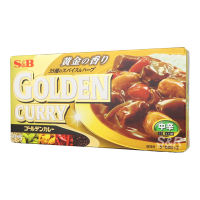
S&B Golden Curry 198g
₱199.00
Buy on Lazada
CMH S&B Golden Curry Cubes 198g - 45 Servings - Food Staple - Cooking - Condiment - Groceries
₱192.00₱250.00
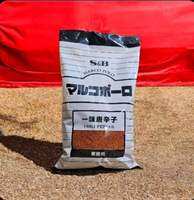
Togarashi / Chilli 500gm
₱399.00
Buy on Lazada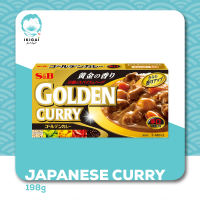
S&B Golden Curry Mild / Medium / Spicy
₱199.00
Buy on Lazada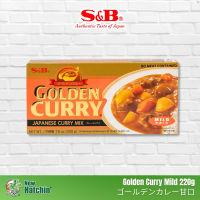
S&B GOLDEN CURRY MILD 220G
₱225.00
Buy on Lazada![[S&B] WASABI PASTE 43g ORIGINAL JAPANESE NAMA WASABI Sushi Sashimi Steak Yakiniku Sauce](https://ph-live.slatic.net/p/2326ad374a6bca2eb62e16296c520169.jpg_200x200q80.jpg)
[S&B] WASABI PASTE 43g ORIGINAL JAPANESE NAMA WASABI Sushi Sashimi Steak Yakiniku Sauce
₱490.00₱900.00
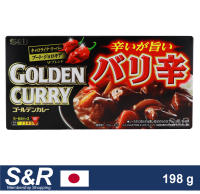
S&B Golden Curry Bali Spicy 198g
₱199.00
Buy on Lazada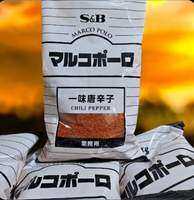
S&B brand CHILI PEPPER 300G
₱369.00
Buy on LazadaAbout S&B
Overview
S&B Foods, commonly referred to as S&B, is a Japanese food manufacturer recognised internationally for its Japanese curry products, spices, herbs, wasabi, and other seasonings. The company traces its origins to 1923, when founder Minejiro Yamazaki successfully produced Japan’s first domestically manufactured curry powder. From its beginnings as a curry-powder maker, S&B has grown into a comprehensive food company with products sold in both domestic and overseas markets.1
| Field | Information |
|---|---|
| Full name | S&B FOODS INC. |
| Japanese name | エスビー食品株式会社 (S&B Foods Inc.) |
| Common name | S&B |
| Founded | 1923 |
| Founder | Minejiro Yamazaki |
| Origin | Tokyo, Japan |
| Industry | Food manufacturing |
| Main fields | Spices, herbs, curry, seasonings, condiments, prepared/instant foods |
| Famous products | Golden Curry, Red Can Curry Powder, S&B Wasabi, tube condiments |
| Corporate philosophy | Pursuit of “real taste” |
| Current brand message | “Authentic Taste of Japan” |
| 100th anniversary | 2023 |
The corporate history of S&B officially begins with the establishment of Higashiya (日賀志屋) in Tokyo by Yamazaki in 1923. The business was reorganised as a corporation in 1940 and adopted the S&B Foods name in 1949.12
History
1923–1931: The beginning
The history of S&B is rooted in the work of Minejiro Yamazaki, who developed an interest in curry after encountering curry and rice. At that time, most curry powder available in Japan was imported, and local manufacturing processes were not widely known.
After years of experimenting with various spices, roasting techniques, and equipment, Yamazaki successfully manufactured Japan’s first domestically produced curry powder in 1923 and established Higashiya, the predecessor to S&B Foods.1
In 1930, the company introduced Hidori Brand Curry Powder, which S&B describes as Japan’s first commercial curry powder intended for household use. The following year, in 1931, the letters “S&B” were incorporated into the Hidori trademark. These letters stood for:
- S = Sun
- B = Bird
This imagery was derived from the Hidori mark, which combined a sun and a bird. The symbolism represented the hope that the company’s fortunes would rise like the sun and that its products would spread throughout Japan like a bird flying freely.1
1940–1949: Becoming S&B Foods
Higashiya was reorganised as a corporation in 1940. Following World War II, the company continued to develop its curry and spice business. In 1949, it changed its name to S&B Foods and relocated its headquarters to Nihonbashi Kabutocho in Tokyo.2
This era established the corporate identity that would eventually become internationally recognised simply as S&B.
1950s: The Red Can
One of the most historically significant products in the company’s portfolio appeared in 1950: Red Can Curry Powder (Akakan Curry Powder).
This product represented the accumulated knowledge S&B had developed since its founding. The company continues to produce Red Can Curry Powder today using its established recipe and manufacturing approach. S&B regards it as a standard of Japanese curry powder and a vital component of Japan’s curry culture.1
During the 1950s, S&B also expanded into other spices and began actively promoting curry consumption. In 1954, the company introduced mobile cooking classes using an S&B Kitchen Car to demonstrate how spices could be used in cooking. This initiative was part of S&B’s effort to make curry and spices more familiar to Japanese households.1
1966: Golden Curry
Arguably S&B’s most internationally recognisable product is Golden Curry.
S&B launched Golden Curry Mix in 1966. Designed as an aromatic and spicy Japanese curry roux, it became one of the company’s major long-running products.1
Golden Curry subsequently gained importance outside Japan as well. S&B began exporting the product in 1991, helping to introduce Japanese-style curry to consumers globally.1 Today, Golden Curry is particularly associated with S&B’s international identity.
1970: Tube condiments
Another major innovation occurred in 1970, when S&B introduced Japan’s first tube-packaged condiments.
The first product was a tube version of Western-style mustard paste. The company subsequently introduced tubes containing:
- Wasabi
- Japanese mustard
- Grated raw garlic
- Grated raw ginger
Tube packaging made these ingredients significantly easier to store and use, becoming one of S&B’s defining product formats.1 This innovation eventually helped make tube wasabi one of S&B’s most recognisable products internationally.1
1980s–1990s: Expansion beyond curry
During the 1980s, as Japanese food culture became increasingly diverse, S&B responded by expanding beyond traditional curry powder and seasonings.
Curry no Oujisama
In 1983, S&B created Curry no Oujisama, a curry specifically designed for children with an emphasis on a mild and approachable flavour profile.1
Fresh herbs
In 1987, S&B entered the fresh herb business, aiming to bring the aroma and flavour of fresh herbs into Japanese households.1
Experimental farming
In 1993, S&B established the Oshino Experimental Farm in Yamanashi Prefecture. This facility has been used for research into the cultivation of spices and herbs, including wasabi.1
2000s–present: A spices-and-herbs company
Entering the 21st century, S&B increasingly positioned spices and herbs at the centre of its business.
In 2005, it completed the Tsukuba Herb Center as a production base for its fresh-herb business. In 2006, S&B launched its large SPICE & HERB Series, consisting of 194 products. Designed to serve both inexperienced and experienced cooks, the series received a Good Design Award that year.1
Consequently, S&B’s product portfolio became much broader than curry alone.
Major product categories
S&B’s business can broadly be divided into four major areas:
1. Spices & herbs
This is one of S&B’s core categories, including products such as:
- Curry powder
- Black pepper
- Chili pepper
- Garlic
- Ginger
- Japanese seven-spice blends
- Herbs
- Fresh herbs
2. Curry and stew products
S&B produces various Japanese curry products, including:
- Curry roux
- Curry powder
- Instant curry
- Japanese-style stew mixes
Golden Curry is the best-known example internationally.
3. Spicy condiments
This category includes:
- Wasabi
- Mustard
- Garlic
- Ginger
- Chili-based seasonings
Tube packaging is particularly associated with S&B in this segment.
4. Other prepared foods
The company also produces products such as pasta sauces, Chinese-style cooking products, instant foods, and other cooking ingredients.1
Golden Curry
Golden Curry is effectively one of S&B’s flagship global products.
Unlike some Japanese curry products marketed primarily as mild comfort food, Golden Curry emphasises an aromatic and spicy flavour profile. It is sold in multiple formulations and spice levels and is designed to be prepared as Japanese curry with rice.
Launched in Japan in 1966, the product began being exported in 1991. Its international distribution has made it one of the most recognisable Japanese curry brands outside Japan.1
Wasabi
S&B is also strongly associated with Japanese wasabi products.
The company was an early innovator in putting condiments into tubes, and tube wasabi became one of the products through which S&B expanded internationally. This format made wasabi considerably more convenient for ordinary household use than traditional fresh wasabi.1
It is important to distinguish S&B’s prepared wasabi products from freshly grated Japanese wasabi (hon-wasabi); commercial wasabi products can contain different ingredients and formulations depending on the specific product and market.
Brand philosophy
At the heart of S&B is the Japanese concept 「美味求真」 (Bimi Kyushin), which can broadly be understood as “pursuing the real taste.”
S&B states that this philosophy has remained unchanged since its founding in 1923.1 Founder Minejiro Yamazaki’s principles emphasised four ideas:
- Continuously improve quality
- Create original products that people enjoy
- Understand what consumers want
- Never forget the importance of research
These principles became part of S&B’s long-term approach to product development.1
“Authentic Taste of Japan”
In 2024, S&B adopted “Authentic Taste of Japan” as its new brand message.
This message reflects the company’s modern positioning: rather than being viewed simply as a Japanese curry manufacturer, S&B presents itself as a company capable of introducing Japanese flavours, ingredients, and culinary culture to consumers around the world.1
This positioning is particularly visible in products such as:
- Wasabi
- Japanese curry
- Yuzu
- Nanami chili pepper
- Umami seasonings
- Japanese-style spice blends
International presence
Although S&B is fundamentally a Japanese company, its products have become increasingly international.
The company began exporting Golden Curry in 1991, and its international portfolio now includes curry, wasabi, spices, herbs, and Japanese-style seasonings. S&B describes its global mission as helping people experience Japanese food culture through its products.1
Its global appeal stems partly from the fact that many S&B products can be used without requiring extensive knowledge of Japanese cooking. Golden Curry, for example, can be prepared using familiar ingredients such as meat, potatoes, carrots, and onions.
100th anniversary
S&B celebrated its 100th anniversary in 2023, marking a century since Minejiro Yamazaki established the predecessor of the modern company and successfully produced Japan’s first domestic curry powder.1
The centennial provided an opportunity for S&B to emphasise the continuity between its original mission—pursuing authentic taste—and its modern global food business.
Brand identity
S&B’s identity can be summarised through several themes:
Japanese origin
S&B’s history is deeply connected with the development of modern Japanese curry culture.
Spices & herbs
The company increasingly presents spices and herbs as its central expertise.
Innovation
Examples include domestic curry-powder production, tube condiments, fresh-herb products, and new Japanese-flavour products.
Authenticity
Its founding philosophy emphasises pursuing genuine flavour rather than simply following trends.
Globalization of Japanese food
Products such as Golden Curry and wasabi have helped introduce Japanese flavours to international consumers.
Significance in Japanese food culture
S&B is significant because its history overlaps with the popularization of curry and spices in Japan.
When Yamazaki began experimenting with curry powder in the early 20th century, curry was not yet the everyday household food it would eventually become. S&B subsequently helped turn curry powder into a consumer product, promoted its use through demonstrations, developed curry mixes, and eventually created products suitable for convenient home cooking.1
Its influence therefore extends beyond individual products: S&B has participated in the broader transformation of spices, curry, and international flavors into ordinary parts of Japanese home cooking.
Timeline at a glance
| Year | Milestone |
|---|---|
| 1923 | Minejiro Yamazaki produces Japan’s first domestic curry powder and establishes Higashiya |
| 1930 | Hidori Brand Curry Powder launched |
| 1931 | “S&B” trademark introduced |
| 1940 | Company reorganized as a corporation |
| 1949 | Company renamed S&B Foods |
| 1950 | Red Can Curry Powder launched |
| 1954 | S&B Kitchen Car cooking demonstrations begin |
| 1966 | Golden Curry Mix launched |
| 1970 | Tube condiments introduced |
| 1983 | Curry no Oujisama launched |
| 1987 | Fresh herb business begins |
| 1991 | Golden Curry exports begin |
| 1993 | Oshino Experimental Farm established |
| 2005 | Tsukuba Herb Center completed |
| 2006 | SPICE & HERB Series launched |
| 2020 | UMAMI TOPPING launched for export |
| 2023 | S&B celebrates 100 years |
| 2024 | “Authentic Taste of Japan” adopted as brand message |