Shop on Lazada
Nescafé Gold products
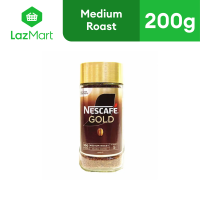
Nescafé Gold Instant Coffee 200g
₱629.83₱629.93
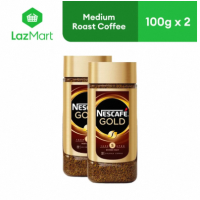
Nescafé Gold Instant Coffee 100g
₱626.82₱674.00
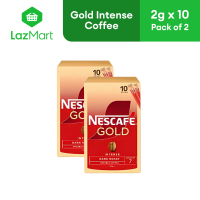
Nescafé Gold Intense (2g x 10) -Pack of 2
₱178.73₱178.78
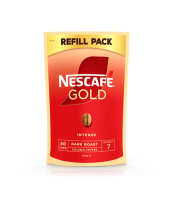
NESCAFE Gold Intense 160g
₱452.67
Buy on Lazada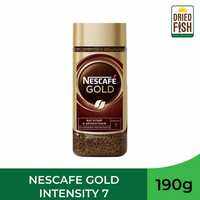
NESCAFE GOLD INTENSITY 7 Ground Coffee 190g
₱930.00₱980.00
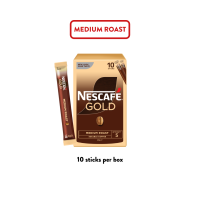
Nescafe Gold Coffee Sticks (Box of 10) Keto/Low Carb Approved
₱130.00
Buy on Lazada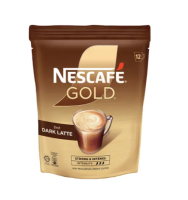
Nescafe Gold Dark Latte / Creamy Latte / Flat White / Americano from Malaysia
₱385.00₱400.00
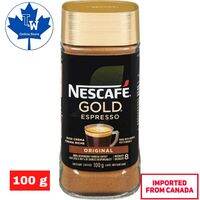
PRODUCT OF CANADA Nescafe Gold ESPRESSO Original Instant Coffee | 100g BB: OCT 2027
₱899.00₱950.00
About Nescafé Gold
Nescafé Gold is a premium instant coffee range produced by Nestlé under its global NESCAFÉ brand. Positioned as a more refined alternative to standard instant coffee, the line is characterised by a smooth taste, rich aroma, and the use of carefully selected Arabica and Robusta beans.1 While sold in numerous markets worldwide, specific formulations, packaging, and product names vary by country. In the Philippines, Nescafé Gold forms part of the local NESCAFÉ portfolio and is marketed as a sophisticated option crafted from premium beans roasted to enhance flavour and aroma.1
Overview
| Field | Information |
|---|---|
| Brand | Nescafé Gold |
| Parent company | Nestlé |
| Category | Coffee / instant coffee |
| Primary format | Soluble/instant coffee |
| Coffee varieties | Arabica and Robusta |
| Positioning | Premium / sophisticated instant coffee |
| Introduced | 1965 in Europe as NESCAFÉ Gold Blend |
| Global brand | NESCAFÉ |
| Key characteristics | Rich aroma, smooth taste, roasted coffee character |
| Availability | Multiple markets worldwide |
| Philippine range | Part of the local NESCAFÉ portfolio1 |
Product positioning and composition
Nescafé Gold serves as Nestlé’s premium-oriented instant coffee offering. Rather than competing solely on convenience, the brand emphasises sensory qualities typically associated with traditionally brewed coffee, including aroma, smoothness, roast character, and bean selection.1 Nestlé describes the blend as using carefully selected Arabica and Robusta beans that are expertly roasted to develop their natural flavour and aroma.1 The Philippine NESCAFÉ site similarly characterises Gold as a blend of these two varieties, roasted to produce a smoother taste and richer aroma.1
The designation “Gold” functions as a marker of premium positioning within the broader NESCAFÉ portfolio, suggesting an elevated coffee experience compared to mainstream variants. Generally, the blend combines:
- Arabica: Valued for aromatic, complex, and smoother flavour characteristics.
- Robusta: Contributes body, intensity, and distinctive coffee notes.
History
Origins of NESCAFÉ
The foundation for Nescafé Gold lies in the original NESCAFÉ brand. In 1929, Nestlé began investigating methods to transform surplus Brazilian coffee beans into a convenient soluble product that retained the flavour of brewed coffee. After several years of development by scientist Max Morgenthaler, NESCAFÉ launched in 1938. By 1940, it was available in over 30 countries. During World War II, the product gained significant international exposure after being included in U.S. military emergency rations.
Launch of Nescafé Gold
Nescafé Gold represents a distinct milestone in the brand’s evolution. Historical records indicate that NESCAFÉ Gold Blend was introduced in Europe in 1965, utilising freeze-dried soluble coffee technology. This innovation established Gold as a new benchmark for quality within the NESCAFÉ range. As of 2026, the brand has a history spanning more than 60 years.
2018 relaunch and microground innovation
In 2018, Nestlé relaunched Nescafé Gold in several markets with a reformulated product incorporating finely ground Arabica coffee micrograins. These particles were ground approximately ten times finer than ordinary ground coffee to enhance taste and aroma. The relaunch also featured updated packaging, new communications, and additional variants, including organic FairTrade options in relevant markets. This development reflected Nestlé’s ongoing effort to align the sensory profile of instant coffee more closely with freshly prepared coffee.
Production process
While specific processes vary by product, the production of Nescafé Gold generally involves transforming roasted coffee into a soluble form while preserving desirable flavour and aroma compounds.
Bean selection and roasting
Coffee used for Nescafé Gold is sourced from major growing regions globally. The Philippine NESCAFÉ site identifies origins including Brazil, Ethiopia, and Vietnam, noting that the broader coffee belt encompasses over 50 countries.1 Beans undergo controlled roasting to develop characteristic flavours, a step Nestlé emphasises as central to the Gold experience.1
Processing and drying
Roasted coffee is processed to extract soluble components. Historically, Nescafé Gold Blend was distinguished by its use of freeze-drying, which became integral to its premium identity. Modern formulations may also include microground coffee particles to augment the sensory experience.
Taste and sensory profile
The core promise of Nescafé Gold is richness without sacrificing smoothness. Descriptions consistently highlight a rich aroma, smooth taste, balanced coffee character, and roasted notes.1 The precise profile depends on the specific variant; for example, global descriptions have characterised Gold Original with fruity and toasted-cereal notes, Gold Intense as toasty, and Gold Crema as smooth and velvety.1 Consequently, Nescafé Gold is best understood as a family of premium products rather than a single uniform flavour.
Product range
The Nescafé Gold portfolio differs significantly between countries. The global website lists products including:
- NESCAFÉ Gold Original
- NESCAFÉ Gold Intense
- NESCAFÉ Gold Smooth
- NESCAFÉ Gold Crema
- NESCAFÉ Gold Decaf
- Gold Cappuccino
- Gold Latte
- Gold Mocha
Not all products are available in every market.1 In the Philippines, the Gold range is presented as part of the broader NESCAFÉ portfolio and includes various instant Gold variants.1 This distinguishes Nescafé Gold as a product range rather than a single SKU.
Comparison with other NESCAFÉ lines
Within the NESCAFÉ ecosystem, Gold occupies a premium tier. A simplified hierarchy of the portfolio includes:
- NESCAFÉ Classic / Original: Everyday mainstream instant coffee.
- Nescafé Gold: Premium, smoother, and more aromatic instant coffee.
- NESCAFÉ Azera and specialised products: Barista-inspired or premium formats in selected markets.
While this hierarchy varies by country, Nestlé’s global site describes Gold as offering a rich, smooth coffee taste with a choice of flavours and intensities, distinct from everyday instant coffee and ready-to-drink products.
Packaging and visual identity
The gold colour scheme is a primary element of the brand’s visual identity, communicating premium quality, sophistication, richness, and craftsmanship. This distinction is particularly important given that instant coffee is traditionally associated with mass-market convenience. Packaging has evolved over decades; NESCAFÉ transitioned from early tin packaging to glass jars during the 1960s, coinciding with the emergence of the Gold line.
Presence in the Philippines
NESCAFÉ maintains a significant presence in the Philippines as one of Nestlé Philippines’ major coffee brands. Locally, Nescafé Gold is positioned as a sophisticated option crafted with premium Arabica beans and roasted to deliver a smoother taste and richer aroma.1 Additionally, Nestlé’s Cagayan de Oro factory, which began operations in 1984, serves as a key production site for NESCAFÉ products in the country.
Sustainability and sourcing
Nestlé has increasingly linked the Nescafé Gold brand to sustainability initiatives. The company states that its beans are sourced from major coffee-growing regions and has set ambitions to achieve 100% responsibly sourced coffee and 50% sourcing from regenerative agricultural methods by 2030.1 These efforts address issues regarding farmer livelihoods, climate change, agricultural productivity, and long-term coffee availability, positioning the brand as part of a broader sustainable supply chain.
Preparation
Preparation for standard Nescafé Gold instant coffee typically involves adding hot water to the desired amount of coffee powder and stirring. Milk and sugar may be added according to preference. Specific serving guidelines vary by market; for instance, Nestlé India recommends approximately 1.5 g of coffee per 150 ml of hot water or milk.2 Variants such as cappuccino, latte, and mocha are formulated to produce milk-based or foamy café-style drinks.2
Significance
Nescafé Gold is notable for establishing the category of premium instant coffee upon its 1965 launch, demonstrating that the format could be marketed on sensory merit rather than convenience alone. It bridges traditional coffee craftsmanship with instant preparation, occupying a psychological space as an accessible everyday luxury. As part of the NESCAFÉ brand established in 1938, it benefits from global recognition while maintaining a distinct identity centred on refinement and aroma.
Timeline
| Year | Event |
|---|---|
| 1929 | Nestlé begins investigating soluble coffee in response to Brazil’s coffee surplus. |
| 1938 | NESCAFÉ is officially launched. |
| 1940 | NESCAFÉ becomes available in more than 30 countries. |
| 1940s | NESCAFÉ is included in U.S. military emergency rations during WWII. |
| 1962 | NESCAFÉ transitions from tin to glass packaging in relevant markets. |
| 1965 | NESCAFÉ Gold Blend launches in Europe using freeze-dried technology. |
| 1966 | NESCAFÉ formula evolves from powder to granules. |
| 2018 | Nestlé relaunches Gold with finely ground Arabica micrograins. |
| 2020s | Gold expands into multiple variants including Original, Intense, Smooth, Crema, and Decaf. |
| 2026 | Nescafé Gold remains a key part of Nestlé’s global portfolio. |