Shop on Lazada
Sajo products
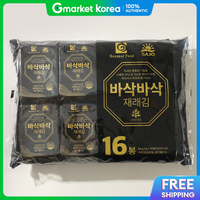
Sajo | Crisp Traditional Lunchbox Seaweed 4g X 128 Packs
₱2,453.44₱3,666.06
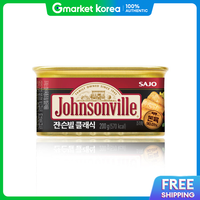
Sajo | Sajo Johnsonville Classic 200g 24 Units
₱4,869.27₱7,348.85
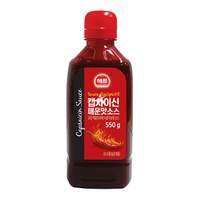
Capsaicin Super Hot and Spicy 550g (Korean Sajo Capsaicin Sauce)
₱492.00₱552.00
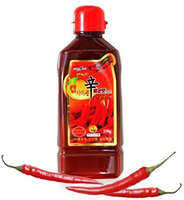
Capsaicin Super Hot and Spicy Sauce 550g (Korea Cheon Mat/ Sajo Super Hot and Spicy)
₱498.00₱549.00
Korean Kimbap Ham 1kg 200g100g
₱150.00
Buy on Lazada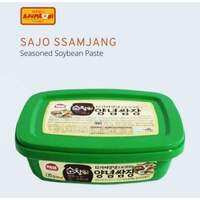
Sajo Ssamjang Seasoned Soybean Paste 170g
₱79.00
Buy on Lazada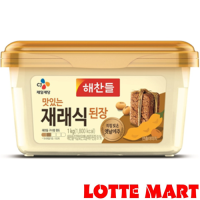
CJ DOENJANG 1KG
₱248.00
Buy on Lazada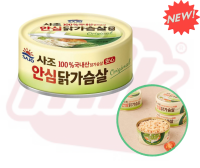
Sajo Canned Real Hot Chicken Breast 135g (Easy-Open Can)
₱140.00
Buy on LazadaAbout Sajo
Sajo Group, commonly known as Sajo, is a South Korean food and fisheries conglomerate headquartered in Seoul, South Korea. Originally established as a deep-sea fishing enterprise, the group has expanded into a comprehensive food business encompassing seafood, canned goods, processed meat, cooking ingredients, logistics, retail, and livestock.1
The name Sajo functions not merely as a single product label but as a corporate umbrella brand representing multiple major subsidiaries and consumer product lines within the group.
Overview
| Category | Information |
|---|---|
| Name | Sajo Group |
| Country | South Korea |
| Headquarters | Seoul, Republic of Korea |
| Founded | 1971 (as Sijensa); renamed Sajo Industry in November 1971 |
| Original industry | Deep-sea fishing / tuna |
| Current industry | Food, fisheries, meat processing, livestock, logistics, retail |
| Core identity | Seafood and food |
| Major subsidiaries | Sajo Industry, Sajo Seafood, Sajo Daerim, Sajo Oyang, Sajo Donga One, Sajo Livestock |
| Major consumer brands | Sajo, Sajo Haepyo, Sajo Daerim, Sajo Oyang |
| Corporate base | Seoul, South Korea |
The group characterizes its historical development as a progression from fisheries-resource development toward future food-resource development.1
History
Origins: 1971
Sajo’s history dates to 1971, when the entity that would become Sajo Industry was founded. The group’s initial major business was tuna fishing, specifically deep-sea operations. Sajo regards this inaugural voyage as the start of a long-term strategy to explore marine resources globally.1
The company was originally incorporated as Sijensa Co., Ltd. in March 1971 before changing its name to Sajo Industry Co., Ltd. in November of that year.1 This fisheries heritage remains central to the corporation’s identity.
Expansion during the 1970s–1980s
In the subsequent decades, Sajo expanded its fishing capabilities and moved downstream into food processing. Key developments included:
- Tuna longline fishing
- Expansion into deep-sea fisheries
- Establishment of cold-storage operations
- Tuna purse-seine fishing
- North Pacific trawling
- Food processing
- Canned tuna production
- Meat processing
- Soybean paste and other food businesses
By the late 1980s, Sajo had evolved beyond a simple fishing company into a vertically integrated food company.1 A significant milestone was the launch of canned tuna. Sajo Industry later gained recognition for introducing the Lo-Hi tuna can, which featured a one-touch opening mechanism, to the Korean market.2
Development into a Food Group
Throughout the 1990s and 2000s, Sajo diversified its portfolio significantly. The company and its affiliates expanded into:
- Canned seafood
- Frozen seafood
- Fish products
- Seaweed
- Popcorn
- Cooking oils
- Soybean-based foods
- Processed meat
- Fish cakes
- Food logistics
- Food-service businesses
- Retail
Notably, Sajo’s records indicate the launch of Sajo Lo-Hi popcorn in 1990, described by the company as the first product of its kind in Korea.3 The group also integrated established Korean food companies, including Sajo Haepyo, Sajo Daerim, and Sajo Oyang, along with their predecessor entities.1 This period marked Sajo’s transformation from an ocean-focused firm into a diversified Korean food conglomerate.
Major Subsidiaries and Businesses
Sajo operates through a complex corporate structure comprising several specialized companies.
Sajo Industry
Sajo Industry is a core company within the group, managing deep-sea fishing, food manufacturing, meat processing, and retail. Its fishing operations utilize tuna longliners, purse seiners, trawlers, and other specialized vessels.4
Sajo Seafood
Sajo Seafood focuses primarily on seafood, including tuna and other fishery products. Its history is intrinsically linked to Sajo’s development of tuna processing and frozen seafood capabilities.3
Sajo Daerim
Sajo Daerim traces its roots to 1964, when its predecessor began fishing and canned-food manufacturing. It later expanded into processed foods, fish cakes, and meat products before joining the Sajo Group in 2006 and adopting the name Sajo Daerim in 2008.5
Sajo Oyang
Sajo Oyang is a major food subsidiary specializing in seafood and processed-food manufacturing. It joined the Sajo group following the acquisition of its predecessor, Oyang Fisheries, in 2007.1
Main Products
While seafood remains Sajo’s historical foundation, the modern group maintains a broad product portfolio.
Seafood
Seafood is the most recognizable aspect of Sajo’s identity. Products include:
- Canned tuna
- Frozen tuna
- Other canned fish
- Processed seafood
- Fish cakes
- Dried seafood
- Seaweed
Corporate materials consistently emphasize the group’s tuna-fishing heritage and ongoing role in the fisheries industry.1
Cooking Ingredients
The Sajo family produces everyday Korean cooking staples, including:
- Cooking oils
- Soybean paste
- Fermented sauces
- Seaweed
- Processed food ingredients
The group operates specialized facilities, such as a Sunchang plant for soybean paste and a Goseong plant for canned products.4
Processed Meat
Expanding from marine to land-based protein, Sajo’s businesses now include:
- Ham
- Sausages
- Processed pork
- Other meat products
- Livestock production and processing
This expansion supports Sajo’s broader strategy of vertical integration between fisheries, food processing, and livestock.1
Snacks and Convenience Foods
Sajo also manufactures consumer-oriented snack and convenience products. Lo-Hi popcorn, introduced in 1990, stands as a notable example.3
Brand Architecture
The name “Sajo” does not appear on every product manufactured by the group. Instead, the corporation operates a family of brands, including:
- SAJO
- Sajo Haepyo
- Sajo Daerim
- Sajo Oyang
These brands were developed under the group’s vision of providing food and enhancing lifestyle.1 Consequently, consumers may encounter products associated with the group without seeing a standalone “Sajo” logo.
Corporate Philosophy
Sajo’s philosophy centers on several recurring themes:
Challenge
The company’s identity is tied to challenging the ocean and exploring marine resources. Its original deep-sea fishing operations, which required vessels to operate far from Korea, serve as a metaphor for its broader corporate culture.1
Trust
Sajo emphasizes consumer trust, food safety, and quality control, describing strict quality management as fundamental to providing safe and healthy food.1
Family
The group frames its products around families and the family table, positioning itself as a company concerned with people and domestic well-being.1
Nature
Reflecting its fisheries roots, Sajo’s corporate vision incorporates the concept “nature is delicious,” emphasizing natural resources as the foundation of its food business.1
Vertical Integration
A defining characteristic of Sajo is its vertical integration. While a simplified model follows the path of Ocean → Fishing → Seafood processing → Food manufacturing → Distribution → Consumer, Sajo has extended this to include livestock:
Fisheries + Livestock → Food processing → Logistics/Retail → Consumer
The group pursues vertical integration in livestock to strengthen competitiveness in future food resources, mirroring its earlier development in fisheries.1 This structure distinguishes Sajo as a food conglomerate rather than solely a tuna company.
Major Corporate Milestones
| Year | Event |
|---|---|
| 1971 | Sajo’s predecessor established |
| 1971 | Company renamed Sajo Industry |
| 1973 | Tuna longline fishing begins |
| 1980 | Sajo Cold Storage established |
| 1985 | Sajo Food acquired |
| 1987 | Tuna purse-seine fishing begins |
| 1988 | Canned tuna business begins |
| 1988 | Meat-processing business begins |
| 1989 | Sajo Industry goes public |
| 1990 | Sajo Lo-Hi popcorn launched |
| 1992 | Soybean-paste business begins |
| 1993 | Sajo America established |
| 2004 | Sajo Haepyo predecessor added to group |
| 2006 | Sajo Daerim predecessor added |
| 2007 | Sajo Oyang predecessor added |
| 2010s | Major expansion into livestock, food, logistics, and related businesses |
| 2019 | Sajo Daerim and Sajo Haepyo merged |
| 2021 | Sajo Group celebrates its 50th anniversary |
| 2024 | Foodist added to the group |
| 2025 | Sajo Fresh Meat added as an affiliated company |
| 2026 | Foodist renamed Sajo Foodist |
These milestones are derived primarily from Sajo’s published corporate history.1
Sajo Today
As of 2026, Sajo positions itself as a global comprehensive food company. Its business portfolio spans:
- Deep-sea fisheries
- Seafood
- Canned foods
- Cooking ingredients
- Meat processing
- Livestock
- Logistics
- Retail
- Food service
- Food and agricultural resources
The corporate family includes Sajo Industry, Sajo Seafood, Sajo Daerim, Sajo Oyang, Sajo C&C, Sajo Donga One, Sajo Livestock, and others.1 Recent expansion in the 2020s includes the addition of Foodist and Sajo Fresh Meat, as well as the 2026 renaming of Foodist to Sajo Foodist.1
Position in South Korea
Sajo holds particular significance in Korea as its history mirrors the development of the nation’s modern fisheries and food-processing industries. Starting with specialized deep-sea fishing, the group progressively built businesses around harvested resources. Unlike conventional packaged-food companies that begin with consumer products, Sajo began by harvesting food from the ocean before establishing processing, distribution, and sales networks.
International Presence
Although fundamentally a Korean company, Sajo has always maintained an international dimension. Deep-sea fishing necessitates operations beyond Korean territorial waters, and the group has established overseas subsidiaries. Sajo America, for instance, was established in 1993, and the group maintains various overseas operations and investments related to fisheries and food.1 Corporate materials portray Sajo as operating on a global scale rather than functioning solely as a domestic manufacturer.1
Distinctive Characteristics
Three factors define the brand and group:
Origins in Fishing
Unlike many Korean food brands, Sajo’s identity stems from actual fisheries operations rather than food manufacturing alone.
Centrality of Tuna
Tuna has been integral to Sajo’s story since 1971 and remains one of the products most strongly associated with the company.
Vertical Integration
Rather than limiting itself to fishing, Sajo expanded into processing, packaged foods, meat, livestock, logistics, and retail, functioning as a vertically integrated food conglomerate.
Sajo vs. “Sajo Product Brand”
It is useful to distinguish between the various entities bearing the Sajo name:
- Sajo Group: The overall Korean corporate group.
- Sajo Industry: A principal company with major fisheries and food operations.
- Sajo Seafood: A seafood-focused company.
- Sajo Daerim: A major processed-food company within the group.
- Sajo Oyang: A food and seafood-related subsidiary.
- Sajo: The consumer-facing corporate or product brand appearing across parts of the portfolio.
When encountering “SAJO” on a can of tuna, consumers are engaging with the retail face of a larger organization whose activities extend from ocean fishing through to food manufacturing and distribution.