Shop on Lazada
Colin products
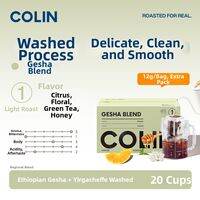
Colin | Gesha & Blueplanet Blended Premium Drip Coffee 20 Bags
₱1,261.00
Buy on Lazada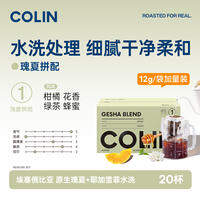
Colin | Light Roast Geisha Blend 50 Geisha Content Hang Ear Coffee 12g
₱1,262.00
Buy on Lazada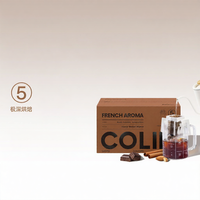
Colin | Special Dark Roast French Blend Drip Coffee 20 Bags
₱943.00
Buy on Lazada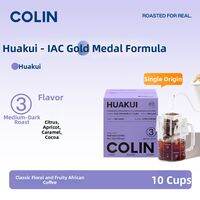
Ethiopia Sun-Dried Single Origin Drip Coffee 10 Bags
₱624.00
Buy on Lazada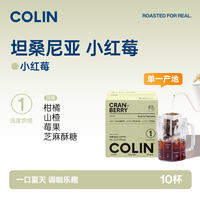
Colin | Tanzania Arusha Specialty Single Origin Light Roast Drip Coffee 10 Pouches
₱587.00
Buy on Lazada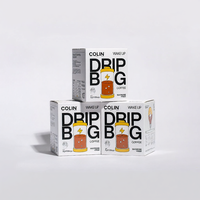
Colin | Awakening Drip Coffee 8g*10 Bags
₱828.00₱839.00
About Colin
Colin is a household cleaning brand best known for its glass and multi-surface cleaners. Originating in India, the brand became particularly associated with cleaning windows, mirrors, and other hard, shiny household surfaces. It is currently marketed by Reckitt in markets where the brand is sold.1
Note: This article refers to Colin, the household cleaning brand associated with Reckitt. It is unrelated to Kolin, the Philippine air-conditioning and home-appliance brand established in 1995.
Overview
| Category | Information |
|---|---|
| Brand name | Colin |
| Industry | Household cleaning / FMCG |
| Best known for | Glass and surface cleaners |
| Origin | India |
| Original owner | Fernhill Laboratories / Fernhill Lab & Industrial Establishment |
| Acquired by | Reckitt & Colman of India Ltd. |
| Acquisition | 1998 |
| Current corporate association | Reckitt |
| Main product | Glass & Surface Cleaner |
| Typical formats | Spray/pump bottles and refills |
| Primary use | Glass, mirrors and other hard/shiny surfaces |
History
Origins
Colin was developed as a glass and household-cleaning product in India by Fernhill Lab & Industrial Establishment. It was positioned around a relatively simple consumer proposition: making the cleaning of glass and shiny household surfaces quicker and easier than using conventional soap-and-water methods.
The brand subsequently became established in the Indian household-cleaning market. Contemporary reporting described Colin as a recognized brand in the glass-cleaner category even before its acquisition by Reckitt & Colman.2
Acquisition by Reckitt
A major turning point came in 1998, when Reckitt & Colman of India Ltd. (RCIL) acquired the Colin brand from Fernhill Lab & Industrial Establishment. At the time, RCIL already had a portfolio of well-known household and consumer brands, including Dettol, Harpic, Mortein, and Lizol.2
The acquisition gave Colin access to Reckitt’s considerably larger marketing and distribution infrastructure. Contemporary reporting specifically described the acquisition as a way of strengthening Colin’s brand equity and expanding its potential in both domestic and international markets.2
Reckitt & Colman later became part of what is now Reckitt, making Colin part of the company’s broader consumer-products portfolio.
Product identity
Colin’s central identity has traditionally been glass cleaning. Rather than competing primarily as a general-purpose detergent, the brand became associated with the idea of achieving a clean, shiny, and streak-free surface, particularly on glass.
Modern Colin products are marketed for a wider range of hard surfaces, including:
- Windows
- Mirrors
- Glass tables
- Furniture
- Refrigerators
- Ovens
- Kitchen cabinets
- Tiles
- Bathroom fixtures
- Other shiny household surfaces
Product descriptions currently emphasize cleaning dirt, grease, and stains while producing a shiny finish. Some formulations also use ingredients such as vinegar and alcohol-based cleaning agents.3
Product formats
Over its history, Colin has been sold in several convenient formats, including:
- Trigger/spray bottles
- Pump bottles
- Refill packs
- Different bottle sizes, including small household packs and larger refill formats
The spray format is particularly important to the brand because it fits the intended usage pattern: spray, wipe, and reveal a clean surface. Contemporary reporting from the late 1990s already noted that Colin was available in pump, trigger, and refill packaging.2
Brand positioning
Colin’s positioning can broadly be summarized as an easy-to-use cleaner that removes dirt and leaves glass and shiny surfaces visibly clean. Its marketing has historically focused less on heavy-duty cleaning chemistry and more on the visible result—clarity, shine, and cleanliness.
This makes the brand a good example of a specialist household-cleaning brand: instead of trying to cover every cleaning need, it built strong recognition around a particular everyday problem—cleaning glass and shiny surfaces. A 2009 brand analysis characterized Colin as a niche brand and noted its strong position in India’s glass-cleaner category.
Market significance in India
Colin is notable because it helped establish glass cleaner as a recognizable household-product category in India. Before specialist glass-cleaning products became commonplace, consumers could rely on water, soap, and other conventional cleaning methods for windows and mirrors. A dedicated product such as Colin reframed the task as a specific cleaning occasion with its own specialized solution.
This gave Colin an important advantage in consumer recognition: “glass cleaner” became closely associated with the Colin name in the Indian market. Contemporary marketing analysis described the brand as a market leader in the Indian glass-cleaner segment and credited it with helping pioneer the category.
Brand evolution
Colin’s evolution can be understood in several stages:
- Specialist glass cleaner: The original proposition centered primarily on cleaning glass.
- Household surface cleaner: The brand broadened its usefulness to mirrors, appliances, furniture, and other hard surfaces.
- Multi-surface positioning: Modern product descriptions increasingly present Colin as a cleaner for numerous household surfaces rather than exclusively for windows.
- Shine-focused branding: The brand continues to emphasize the visible outcome—cleanliness and shine—as a major part of its consumer proposition. Current product listings, for example, promote “shine boosters” and claims of increased shine compared with ordinary cleaners.3
Branding and consumer perception
Colin’s strength lies in brand familiarity and category association. In India, the name has become strongly connected with glass and surface cleaning. This is particularly valuable in FMCG because household cleaners are relatively inexpensive and frequently purchased. A familiar brand can therefore become the default choice when consumers need a particular cleaning product.
The brand’s long-term strategy has generally revolved around three recognizable attributes:
- Convenience: Spray-and-wipe application
- Effectiveness: Removal of dirt, grease, and marks
- Shine: A visibly clean, polished finish
International presence
Although Colin has its historical roots in India, the brand has also appeared in other markets. Its ownership by the Reckitt group gives it access to an international consumer-products organization. However, Colin’s importance and product positioning can vary considerably from one country to another.
For example, in Bangladesh, Reckitt has more recently positioned Colin as a broader multipurpose-cleaning brand, with marketing emphasizing cleaning across more than 100 surfaces and a “5X Shine” proposition. This illustrates how the brand has been adapted to different markets rather than having exactly the same product positioning everywhere.4
Ownership
The ownership history is an important part of Colin’s story:
- Fernhill Lab & Industrial Establishment
- Reckitt & Colman of India Ltd. (acquired Colin in 1998)
- Reckitt Benckiser
- Reckitt
The 1998 acquisition is documented in contemporary business reporting, which states that RCIL purchased Colin from Fernhill and intended to use its marketing and distribution capabilities to further develop the brand.2
Products today
The exact assortment varies by country, but Colin products have included variations such as:
- Colin Glass Cleaner
- Colin Glass & Multisurface Cleaner
- Glass-cleaner refills
- Different sizes of spray/pump bottles
- Specialized versions for particular surfaces or cleaning occasions
Indian product listings describe Colin as suitable for glass as well as numerous shiny household surfaces and appliances.3
Factors in brand longevity
Several factors explain the brand’s longevity:
Clear category association
Consumers can easily understand what the product is for: cleaning glass and shiny surfaces.
Visible product benefit
“Shine” is an immediately observable result. A consumer can compare a dirty window with the cleaned surface almost instantly.
Convenient packaging
The spray bottle turns cleaning into a simple, repeatable action rather than requiring preparation of a cleaning solution.
Strong distribution
Following its acquisition, Colin benefited from Reckitt’s established distribution and marketing capabilities.2
Expansion without abandoning core identity
Although Colin has expanded from glass into multi-surface cleaning, glass and shine remain central to its identity.
Advertising and marketing
Colin’s marketing has historically revolved around demonstrating a transformation: a dirty or marked surface becomes clear, clean, and shiny. This is an effective advertising approach for the category because the product’s benefit is highly visual. Demonstrations can immediately communicate the difference between a surface before and after cleaning.
The brand has also used quantitative shine claims in more recent marketing. For example, Indian product descriptions have promoted “2 times more shine” through the use of shine boosters.3 In Bangladesh, the more recent Colin launch has used a stronger “5X Shine” proposition as part of a broader repositioning toward multipurpose cleaning.4
Corporate relationship with Reckitt
Colin should be understood as a brand rather than a standalone company. The brand belongs within Reckitt’s consumer-health, hygiene, and household-products ecosystem. Reckitt’s ownership provides the brand with access to large-scale manufacturing, distribution, research, marketing, and retail networks.
This distinction is important: “Colin” is the consumer-facing brand name, while Reckitt is the corporate group associated with its ownership and marketing in relevant markets.
Brand significance
Colin is a notable FMCG case because it demonstrates how a company can create substantial brand equity around a seemingly narrow household task. Instead of selling simply “a chemical cleaner,” Colin sells a recognizable cleaning occasion and result: dirty glass becomes clean, shiny glass via Colin.
Over time, the same brand association has been extended to other surfaces, allowing Colin to move from being perceived primarily as a glass cleaner toward being a broader household surface-cleaning brand.2
Timeline
| Year | Event |
|---|---|
| Before 1998 | Colin developed and marketed by Fernhill Lab & Industrial Establishment |
| 1998 | Reckitt & Colman of India acquires the Colin brand |
| Late 1990s–2000s | Brand benefits from Reckitt’s marketing and distribution network |
| 2000s | Colin becomes strongly established as a glass-cleaner brand in India |
| 2009 | Contemporary marketing analysis describes Colin as a leading/niche brand in India’s glass-cleaner category |
| 2010s–2020s | Product positioning expands toward glass and multisurface cleaning |
| 2020s | Products continue to emphasize shine, convenience, and multipurpose surface cleaning |
| 2026 | Colin remains associated with Reckitt and is marketed as a glass/surface-cleaning brand in relevant markets |
References
- Buy Colin 1 L Glass Cleaner on IBO.com & Store @ Best Price. Genuine Products | Quick Delivery | Pay on Delivery
- Reckitt & Colman Buys Colin From Fernhill
- Buy COLIN GLASS CLEANER REFILL – 1 L Online & Get Upto 60% OFF at PharmEasy
- #reckitt #reckittbangladesh #colin | Sabrin Maruf Tinni | 16 comments