Shop on Lazada
SAMEDREAM products
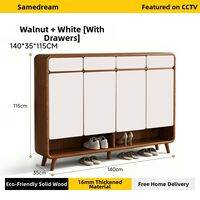
SAMEDREAM | Subsidized Integral Wall-mounted Solid Wood Shoe Cabinet
₱29,011.78₱54,132.73
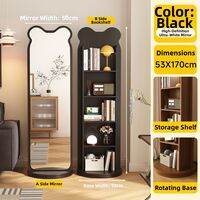
SAMEDREAM | 360 Rotation Standing Book Storage Full-length Mirror
₱10,368.13₱16,851.05
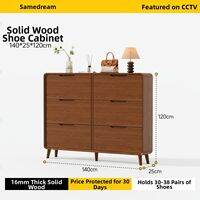
SAMEDREAM | Slim High Capacity Wooden Shoe Cabinet
₱23,590.74₱44,014.56
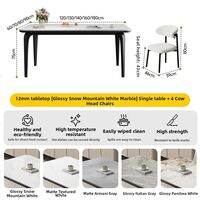
SAMEDREAM | Luxury Home Small Size Dining Table
₱62,481.42₱124,818.10
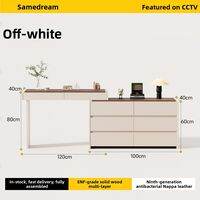
SAMEDREAM | Minimal Modern Dresser-Vanity Combo
₱18,197.56₱32,564.54
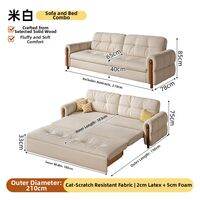
SAMEDREAM | Foldable Extendable Storage Sofa Bed
₱51,379.40₱98,010.26
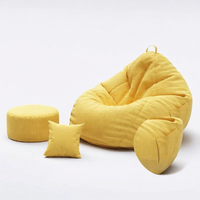
SAMEDREAM | Relax Lazy Sofa Small Single Chair
₱29,496.33₱58,649.90
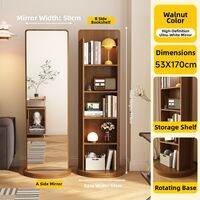
SAMEDREAM | Rotating Movable Floor Mirror With Bookshelf
₱11,373.91₱20,531.98
About SAMEDREAM
Overview
SAMEDREAM (commonly known in Chinese as 三梦家具 or 三梦家居) is a furniture and home furnishings brand originating from Shandong, China. The brand primarily retails through major Chinese e-commerce platforms, offering products designed for families, dormitories, offices, and compact living spaces. Its extensive catalogue includes tables, chairs, cabinets, shelving units, mirrors, beds, and sofas. In recent years, SAMEDREAM has emphasized multifunctionality, efficient space utilization, storage capacity, practicality, and value for money.1
Readers should note that two distinct brand identities associated with the name SAMEDREAM exist in public records. Older documentation refers to the brand as “斯梦瑞” (Simengrui) and links it to the Guanglixiang entity in Qingdao/Linyi. More recent recruitment data and JD.com listings explicitly use the name “samedream 三梦家居” and associate it with Linyi Angsheng E-commerce Co., Ltd. This article focuses on the current e-commerce entity operating as SAMEDREAM / 三梦家居, while noting historical discrepancies where relevant.2
Corporate Profile
| Attribute | Details |
|---|---|
| Brand Name | SAMEDREAM |
| Chinese Name | 三梦家具 / 三梦家居 |
| Industry | Furniture, Home Furnishings, E-commerce |
| Origin | China |
| Key Regions | Shandong (Headquarters), Guangdong (Operations Center) |
| Market Positioning | New Pragmatism, Young Families, Small-Space Living |
| Primary Channels | Taobao, Tmall, JD.com, Pinduoduo, Alibaba International Station, Douyin, Kuaishou |
| Core Products | Tables, Chairs, Cabinets, Racks, Mirrors, Beds, Sofas, Coffee Tables |
| Key Features | Multifunctional, Storage-focused, Compact-friendly, Cost-effective, Youth-oriented Design |
Public records regarding the company’s founding date are inconsistent. Recent corporate recruitment materials state that 三梦家居 was established in 2013, describing SAMEDREAM as an integrated e-commerce furniture enterprise involved in R&D, manufacturing, and sales. Conversely, older brand profiles cite 2014 as the founding year. Consequently, there is no single universally agreed-upon establishment date in open sources.3
Brand History
The documented history of SAMEDREAM is rooted in the Shandong furniture and e-commerce industrial ecosystem.
Earlier brand archives utilize the name “斯梦瑞 SAMEDREAM” and associate the business with the Guanglixiang system. A 2019 brand profile identified the operating entity as “Guanglixiang (Linyi) International Trade Co., Ltd.” and recorded the brand’s founding as 2014.7
In contrast, contemporary corporate recruitment information links “samedream 三梦家居” with Linyi Angsheng E-commerce Co., Ltd. These sources claim the company was founded in 2013 and has since expanded into furniture R&D, production, and online retail, with operational centers in both Shandong and Guangdong provinces.19
The brand’s evolution can be broadly categorized into three phases:
- Early Phase: Focus on portable, small-scale furniture and e-commerce basics.
- Growth Phase: Expansion into multiple categories including desks, chairs, storage solutions, and bedroom furniture.
- Current Phase: Establishment of the “三梦家居” brand identity, emphasizing multifunctional furniture and small-space lifestyles.
Brand Philosophy
SAMEDREAM articulates its core philosophy through the slogan: “Let small furniture support a big, comfortable life.”
The brand defines itself as a proponent of “New Pragmatism,” integrating five key elements:
- Multifunctionality
- High-capacity storage
- Flexible modularity
- Aesthetic design
- Spatial adaptability
Rather than selling isolated items like a desk or a cabinet, SAMEDREAM aims to provide furniture that adapts to diverse environments, including living rooms, bedrooms, studies, dining areas, and dormitories.4 This philosophy drives product features such as folding mechanisms, mobility, height adjustability, rotation, collapsibility, and dual-purpose designs.
Market Positioning
SAMEDREAM targets young consumers, young families, and individuals with limited living space. It operates outside the traditional high-end custom furniture segment, positioning itself at the intersection of mass-market pricing, modern aesthetics, functional utility, and e-commerce distribution.
The brand specifically addresses the needs of:
- Small-layout apartments
- Studio units
- Student dormitories
- Home offices
- Small commercial offices
- Rental properties
For these demographics, furniture serving multiple functions is often prioritized over large, luxurious pieces.
Product Range
The SAMEDREAM flagship store on JD.com displays a comprehensive product matrix categorized into tables, chairs, mirrors, racks, stools, cabinets, coffee tables, beds, sofas, and children’s furniture.5
Tables
The table category includes computer desks, study desks, dining tables, height-adjustable desks, vanity tables, bed trays, coffee tables, and side tables. Products featuring mobility, lift-top mechanisms, foldability, and compact footprints are central to the brand’s positioning.6
Chairs
Chair offerings comprise computer chairs, office chairs, vanity stools, folding chairs, dining chairs, and single-person leisure chairs. Many models are designed specifically for remote work, students, and dormitory use.7
Storage Furniture
Storage solutions form a critical component of the SAMEDREAM ecosystem. Available items include bookshelves, display racks, shoe racks, coat stands, plant stands, nightstands, chests of drawers, shoe cabinets, sideboards, TV consoles, and simple wardrobes.2021
Bedroom Furniture
Bedroom offerings include standard beds, folding beds, solid wood beds, nightstands, sofa beds, and storage cabinets. Recent listings have featured solid wood nightstands, wooden chests, and convertible sofa beds.8
Sofas
The sofa range covers bean bags, fabric sofas, leatherette sofas, armchairs, accent chairs, and sofa beds. The sofa bed category particularly exemplifies the brand’s focus on small-space versatility.922
Design Aesthetics
SAMEDREAM does not adhere to a single design style. Instead, it offers products across various visual trends popular among younger consumers, including Modern Minimalist, Cream Style, Natural Wood, Light Luxury, Wabi-sabi, and Mid-Century/Vintage.
Current product pages feature cream-colored storage cabinets, minimalist black nightstands, walnut-toned solid wood furniture, Wabi-sabi bedroom sets, and vintage-style mobile side tables.10 The overarching strategy is to provide furniture aligned with contemporary aesthetic trends at accessible price points.
Space Efficiency
A defining characteristic of SAMEDREAM is its emphasis on spatial efficiency. Unlike traditional furniture where one item serves one function, SAMEDREAM products are engineered for versatility:
- Lift-top Side Tables: Function as coffee tables, bedside tables, laptop desks, and display surfaces.
- Convertible Sofa Beds: Transition between seating, single beds, and lounge areas.
This approach aligns with urban housing constraints and the preference for flexible living arrangements among younger demographics.
E-commerce Strategy
SAMEDREAM distinguishes itself from traditional furniture manufacturers through its digital-native business model. Sales channels listed in corporate disclosures include Taobao, Tmall, JD.com, Pinduoduo, Alibaba International Station, Douyin, and Kuaishou.11
The JD.com flagship store currently lists hundreds of SKUs, indicating a mature product matrix beyond early-stage convenience furniture.12 The operational flow follows a direct-to-consumer path: Product R&D → Factory/Supply Chain → E-commerce Platform → Consumer. This structure allows for rapid testing of new designs, colors, dimensions, and functionalities without reliance on physical showrooms.
Supply Chain and Manufacturing
Publicly available figures regarding SAMEDREAM’s supply chain scale vary and should be interpreted with caution.
Submission materials for the TITAN Brand Awards state that SAMEDREAM has cumulatively sold over 30 million furniture items and operates more than 500 R&D and production bases. The same source claims the brand achieved top sales rankings in the small furniture category on Tmall.5 However, these figures originate from award entry submissions and represent self-reported data rather than independently audited financial or sales records.
Similarly, recent recruitment advertisements claim the affiliated company employs over 500 staff and generates annual revenue exceeding RMB 1 billion. These remain unverified corporate assertions.13
It is accurate to conclude that SAMEDREAM has established a significant e-commerce furniture supply chain and scaled operations, but specific quantitative metrics in public domain sources are self-declared.
Research and Development
SAMEDREAM emphasizes functional innovation alongside affordability. TITAN Brand Awards documentation claims the brand has independently developed over 100 products, with cumulative sales exceeding ten million units for items such as rotating mirror frames, lift-top coffee tables, and mobile carts.14
These products share a problem-solving orientation:
- Limited space → Folding mechanisms
- Incorrect desk height → Lift-adjustable systems
- Immobility → Castors and sliding structures
- Insufficient storage → Multi-tier organization
- Multi-use rooms → Convertible furniture
This functional focus differentiates SAMEDREAM from brands prioritizing purely decorative attributes.
Pricing and Market Tier
SAMEDREAM occupies the mass-market / low-to-mid-tier e-commerce furniture segment. While some third-party directories classify it as a “low-end” or “e-commerce only” brand, these labels reflect external categorization systems rather than official industry grading.15
A more precise characterization is that SAMEDREAM targets mainstream consumers with an emphasis on cost-performance ratio and functional design. Certain product lines utilize solid wood, higher-grade board materials, or complex mechanical structures, preventing the blanket classification of the entire brand as “budget” or “cheap.”16
Comparison with Traditional Brands
| SAMEDREAM Model | Traditional Furniture Model |
|---|---|
| E-commerce centric | Physical retail dependent |
| Rapid product iteration | Longer product lifecycles |
| Multifunctional focus | Single-function dominance |
| Small-space oriented | Large-residence oriented |
| Value-driven | Material/Craft/Brand-driven |
| High SKU count | Concentrated product lines |
| Youth demographic | Broader family demographic |
| Online display + Logistics | Showroom experience + Offline sales |
SAMEDREAM operates as an internet-native furniture brand rather than a traditional manufacturer adapting to online sales.
Strengths
- Extensive Catalogue: Consumers can source tables, chairs, cabinets, racks, beds, and sofas within a single brand ecosystem.16
- Multifunctional Design: Folding, mobile, lift-top, and storage-integrated features are standard across many categories.
- Small-Space Compatibility: Compact dimensions and convertible forms maximize utility in limited areas.
- E-commerce Value: Direct online sales reduce overheads associated with physical retail networks.
- Trend Alignment: Designs encompass Cream Style, Natural Wood, Modern Minimalist, Vintage, and Wabi-sabi aesthetics favored by younger buyers.
Limitations
- Quality Variance Across SKUs: Given the vast product range spanning small racks to solid wood furniture, materials, construction methods, and suppliers likely differ. Quality consistency cannot be assumed across all categories based on a single positive experience.
- Logistics and Assembly Dependencies: Customer satisfaction with large furniture items is heavily influenced by packaging, shipping, delivery, assembly, and after-sales service, which are variable factors in e-commerce.
- Information Opacity: Public records contain conflicting information regarding corporate entities, founding dates, and brand lineage. Specifically, the relationship between the historical “斯梦瑞 SAMEDREAM” and the current “三梦家居 SAMEDREAM” lacks a unified official narrative.17
Nomenclature and Identification
Researchers and consumers may encounter confusion due to overlapping brand names. Current identifiers include SAMEDREAM / 三梦家居 / 三梦家具, while older sources reference SAMEDREAM / 斯梦瑞. Different websites may associate these names with distinct corporate entities.18
For accurate identification of the active e-commerce brand, SAMEDREAM (三梦家居 / 三梦家具) is the recommended search term, rather than the legacy “斯梦瑞” designation.
Current Brand Image
Based on flagship store messaging, SAMEDREAM positions itself not as a luxury furniture maker, but as a provider of spatial living solutions for younger generations. The core proposition connects small spaces with flexible furniture to enhance quality of life. This concept bridges the Chinese name “三梦” (Three Dreams) and the English SAMEDREAM, reinforcing a cohesive identity centered on pragmatic optimism.
Future Direction
Corporate disclosures and product trends suggest several strategic priorities:
- Continued expansion of furniture SKUs.
- Deepening focus on multifunctional engineering.
- Introduction of solid wood and mid-to-high-tier material options.
- Sustained development of small-space solutions.
- Transition from single-item sales to holistic home scene curation.
- Expansion of cross-border and overseas e-commerce operations.
- Strengthening brand recognition for “三梦家居”.
Notably, recruitment listings explicitly mention Alibaba International Station and foreign trade operations, confirming that the business extends beyond the domestic Chinese market.19
References
- SAMEDREAM旗舰店品牌介绍 – 京东
- SAMEDREAM旗舰店 – 京东
- 斯梦瑞SAMEDREAM品牌床上折叠桌、宿舍床桌、床上桌怎么样-斯梦瑞SAMEDREAM品牌介绍、联系方式-品牌网
- SAMEDREAM旗舰店 – 京东
- TITAN Brand Awards | Best Home and Living Brand SAMEDREAM…
- samedream家具品牌介绍_TA
- 公司介绍_斯梦瑞SAMEDREAM – 广利祥(临沂)国际贸易有限公司 – 一线品牌网
- samedream家具_TA
- #SameDream for Dutch elite sportswomen and DHL | DHL eCommerce
- affordable comfortable furniture ergonomic chair home office furniture | SAMEDREAM
- affordable comfortable furniture ergonomic chair home office furniture | SAMEDREAM
- 「斯梦瑞/SAMEDREAM品牌」斯梦瑞/SAMEDREAM是哪个国家的品牌-什么档次,怎么样-排行榜123网
- SAMEDREAM/斯梦瑞品牌_斯梦瑞牌子口碑_SAMEDREAM实力档次排名
- SAMEDREAM Trademarks :: Justia Trademarks
- 斯梦瑞SAMEDREAM_广利祥(临沂)国际贸易有限公司_床垫-世界品牌网
- SAMEDREAM是什么牌子_斯梦瑞品牌是什么档次?-百强排行网
- 斯梦瑞品牌介绍_斯梦瑞是哪个公司品牌?-百强排行网
- SAMEDREAM
- 招聘专员招聘_临沂昂晟电子商务有限公司招聘 – 智联招聘
- 鞋架_架类_SAMEDREAM旗舰店鞋架〖价格_图片_怎么样〗- SAMEDREAM旗舰店
- 挂衣架_架类_SAMEDREAM旗舰店挂衣架〖价格_图片_怎么样〗- SAMEDREAM旗舰店
- 懒人沙发床榻榻米价格报价行情 – 京东