Shop on Lazada
saturn products
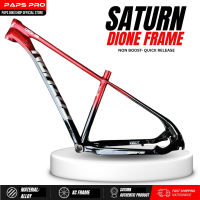
SATURN DIONE FRAME FOR MOUNTAINBIKE ALLOY
₱3,798.00₱5,000.00
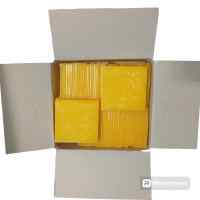
Dental Bite Wax ( Saturn )
₱1,900.00
Buy on Lazada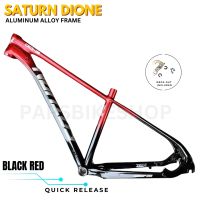
SATURN DIONE ALUMINUM ALLOY FRAME FOR MOUNTAINBIKE
₱3,798.00₱4,500.00
SATURN ATLAS 3.0 RIMS 700C 27.5 & 29er ( PAIR)
₱1,500.00₱1,900.00
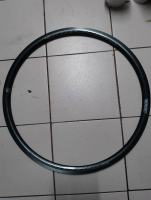
Saturn Rim Atlas/Skoll 700c Road Bike Rim Brake/Disc Brake 32 Holes Alloy Double Wall Lightweight
₱649.00₱699.00
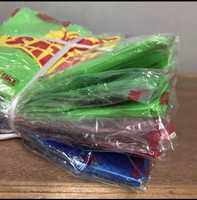
Bandera Saturn Sando Plastic Bags (1 bundle 10 packs per bundle)
₱690.00
Buy on Lazada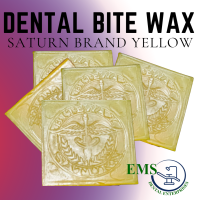
Dental Bite Wax Yellow Local/Saturn Brand 10PCS PER PACK
₱200.00
Buy on Lazada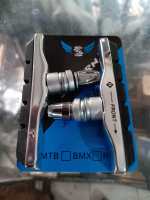
Brake Pad Allen Saturn with Cage MTB Replaceable Pads
₱124.20₱242.00
About saturn
Overview
Saturn Corporation, commonly referred to as Saturn, was an American automobile manufacturer and brand established by General Motors (GM) on January 7, 1985 1. The company was created primarily to compete with the rising popularity of Japanese automakers such as Toyota, Honda, and Nissan in the United States, specifically within the compact car segment 1.
Saturn operated with an unusual degree of independence within General Motors. Rather than functioning as a traditional GM division, the company developed its own vehicles, manufacturing processes, dealer network, retail philosophy, and corporate culture 1. Early advertising campaigns promoted the brand as “a different kind of car company” 1.
The marque became well known for its no-haggle pricing, customer-centric dealerships, compact cars, and distinctive dent-resistant polymer body panels 1. Production vehicles first arrived for the 1991 model year, beginning with the Saturn S-Series 1.
Although Saturn represented one of GM’s most distinctive experiments in American automotive manufacturing and retailing, much of its original identity faded as the company became increasingly integrated into GM and adopted shared platforms and rebadged products. Production ceased in 2009, and the brand was formally wound down in 2010 1.
History
Origins
The origins of Saturn date back to 1982, when General Motors began exploring new approaches to building small cars capable of competing with successful Japanese imports. Internally designated as project Saturn, the initiative was associated with GM executive Alex C. Mair 1.
GM chairman Roger B. Smith subsequently advocated for creating a nearly independent automobile operation rather than modifying the existing GM corporate structure. The concept was publicly discussed in 1983, and a demonstration vehicle appeared the following year 1.
On January 7, 1985, Saturn Corporation was formally established as a GM subsidiary. GM selected Spring Hill, Tennessee, as the site for its principal manufacturing facility, which was intended to embody Saturn’s unique approach to production, labor relations, and automobile manufacturing 1.
Launch of the brand
The first Saturn automobile rolled off the production line in July 1990. The initial lineup consisted primarily of the S-Series, including the SL sedan and SC coupe, with the SW station wagon joining later. These vehicles were sold as 1991 model-year automobiles 2.
Saturn was deliberately separated from GM’s traditional dealer network. Retailers were expected to provide a purchasing experience substantially different from conventional automobile dealerships. A key element was no-haggle pricing; instead of negotiating with salespeople, customers were presented with a fixed price to make the buying process simpler and more transparent 1.
Brand philosophy
Saturn’s identity was built around several core principles:
- Customer-oriented retailing
- No-haggle vehicle pricing
- American manufacturing
- Competitive small-car engineering
- High customer satisfaction
- A distinctive corporate culture
- Close relationships between employees and customers
The company aimed to create an ownership experience that differed significantly from traditional dealerships, an approach that became one of its greatest marketing assets. Saturn also cultivated strong relationships with owners through events such as Homecoming, where large numbers of enthusiasts traveled to the Spring Hill manufacturing facility. These gatherings helped foster a sense of community around the brand rather than just individual vehicles 3.
Manufacturing and technology
A defining technical characteristic of Saturn was its use of dent-resistant polymer exterior panels. Instead of relying exclusively on conventional steel, many early vehicles featured plastic exterior panels mounted over a steel spaceframe. These panels resisted minor dents and reinforced Saturn’s image as an unconventional manufacturer 1.
The Spring Hill manufacturing plant was equally central to the brand’s identity. GM essentially created a new manufacturing organization for Saturn, complete with its own workforce, production methods, and management structure 1.
The 1990s
The early years are generally regarded as the high point of the Saturn brand. The S-Series established the marque in the American compact-car market and built a loyal customer base. Affordable pricing, distinctive styling, fuel economy, practical engineering, and the unique retail experience differentiated Saturn from conventional GM divisions.
Sales peaked in 1994, with approximately 286,003 vehicles delivered 1. The brand gained a reputation for customer satisfaction, demonstrating that an American automaker could potentially compete with Japanese manufacturers through product quality and the overall buying experience, not just price.
However, the Saturn experiment was costly. GM had effectively created a new automobile company internally, encompassing a factory, workforce, dealer network, vehicles, engineering programs, and marketing structure. Over time, questions arose regarding whether Saturn’s independence and investment levels were financially justifiable 1.
Expansion of the lineup
Saturn eventually expanded beyond the original S-Series. Key models included:
- Saturn S-Series: The original compact family, comprising the SL, SC, and SW.
- Saturn L-Series: Midsize sedans and wagons introduced as Saturn attempted to move upmarket.
- Saturn Vue: A compact SUV introduced for the 2002 model year.
- Saturn Ion: A compact car introduced as the successor to the S-Series.
- Saturn Relay: A minivan.
- Saturn Aura: A midsize sedan.
- Saturn Sky: A two-seat roadster introduced for 2006.
The Vue and Sky were particularly significant as they expanded Saturn into vehicle categories previously unoccupied by the brand. The Sky, in particular, provided a sporty image that contrasted with Saturn’s early compact-car reputation 2.
Increasing integration with General Motors
Saturn’s primary challenge was the gradual erosion of its original independence. During its early years, the brand possessed unique models and a distinctive engineering philosophy. However, maintaining a largely independent automobile company within GM proved expensive, leading GM to increasingly share platforms, components, and technology across its brands.
Consequently, later Saturn products shared more engineering with other GM vehicles. The brand eventually adopted products derived from GM’s global operations, including vehicles related to Opel designs 1. This created a fundamental identity problem: the original appeal of Saturn lay in being different from conventional GM. As more Saturn vehicles became versions of products available elsewhere within the corporation, the rationale for choosing the brand diminished, effectively transforming it from a distinctive experiment into another conventional GM marque.
Decline
By the 2000s, Saturn faced mounting difficulties. The product lineup was aging and inconsistent, while GM was under growing financial pressure. Although the original customer-oriented identity remained popular among owners, the brand lacked a sufficiently broad and consistently differentiated range of vehicles.
While introductions such as the Aura, Vue, and Sky temporarily renewed attention, they could not fully restore Saturn’s original market position. The financial crisis of 2008–2009 exacerbated GM’s situation, leading to bankruptcy proceedings and brand restructuring in 2009.
Saturn was initially targeted for sale rather than immediate closure. Penske Automotive Group explored acquiring the brand and operating it with vehicles supplied by another manufacturer, but the proposed transaction ultimately failed 1.
End of Saturn
Following the collapse of the Penske transaction, General Motors decided to discontinue Saturn. Production ended in October 2009, and the remaining dealer network was subsequently wound down, with outstanding franchises terminating in October 2010 1.
Saturn existed as an automobile brand for approximately 25 years, from its establishment in 1985 to the termination of operations in 2010.
Major models
| Model | Type | Production period |
|---|---|---|
| S-Series | Compact car | 1990–2002 |
| L-Series | Midsize car | 1999–2005 |
| Vue | Compact SUV | 2001–2009 |
| Ion | Compact car | 2002–2007 |
| Relay | Minivan | 2004–2007 |
| Aura | Midsize sedan | 2006–2009 |
| Sky | Roadster | 2006–2009 |
Legacy
Saturn is remembered less for its financial performance than for the unusual experiment it represented within the American automobile industry. Its significance lies in its attempt to rethink how an automobile company designed cars, manufactured them, sold them, and interacted with customers. The company created a separate production facility, developed distinctive vehicles, utilized a different pricing model, and cultivated unusually strong owner relationships 1.
The Saturn story is often described as both a success and a failure. As a brand-building exercise, it demonstrated that consumers could develop strong loyalty toward an American compact-car manufacturer and that customer experience could serve as a major competitive advantage. However, as a business unit within GM, maintaining Saturn as an independent operation proved difficult, particularly once GM began consolidating engineering and manufacturing.
The irony of Saturn’s history is that its greatest competitive advantage—being different from the rest of General Motors—was gradually weakened by the very corporate integration intended to improve economic viability.
Today, Saturn is a defunct automotive brand, but its vehicles remain significant among enthusiasts and collectors, particularly early S-Series models. Its history is frequently studied as an example of brand differentiation, organizational innovation, and the challenges of managing an independent brand inside a large corporate group 1.
Quick facts
- Full name: Saturn Corporation / Saturn LLC
- Industry: Automotive
- Founded: January 7, 1985
- Founder/parent: General Motors
- Original headquarters: Spring Hill, Tennessee, United States
- First production: 1990
- First model year: 1991
- Best-known early vehicle: Saturn S-Series
- Peak annual sales: 286,003 vehicles in 1994
- Famous feature: Dent-resistant polymer body panels
- Famous retail concept: No-haggle pricing
- Major slogan: “A different kind of car company”
- Parent company: General Motors
- Production ended: October 2009
- Brand operations ended: October 2010
- Current status: Defunct 1