Shop on Lazada
Schaeffler products
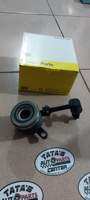
Concentric Release bearing /Secondary clutch assy Luk brand made in germany Nissan Almera 1.2/1.5
₱2,800.00
Buy on Lazada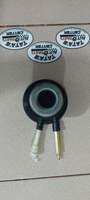
Release Bearing/Concentric secondary clutch master assy(Luk brand)Made in germany oem brand Chevy Colorado/Trailblazer 2014 up
₱5,800.00
Buy on Lazada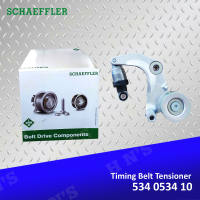
SCHAEFFLER Timing Belt Tensioner for Honda Civic 1.8 2.0 Accord T2A 2.0 CRV TOA TLA 2.0 HRV HR-V T7A ( PN: 534053410 )
₱6,180.00
Buy on Lazada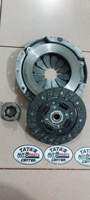
Clutch kit set(Plate/Lining/Bearing)LUK brand Chevy Spark 1.0
₱5,500.00
Buy on Lazada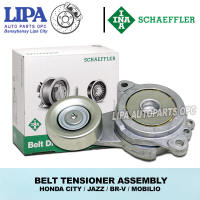
SCHAEFFLER BELT TENSIONER ASSEMBLY HONDA CITY JAZZ 2014-2020 / BR-V 2016-2021
₱2,600.00
Buy on Lazada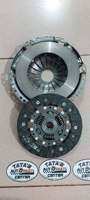
Clutch kit set (Plate/Lining/Bearing)Luk brand Toyota Wigo 2014 up 1KR
₱5,300.00
Buy on Lazada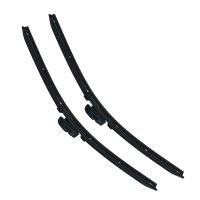
Schaeffler Wiper Blade Multi Adaptor for Mazda 3 2013 - Present WB18FL4500 WB24FL6000 1 SET
₱1,077.00₱1,267.00
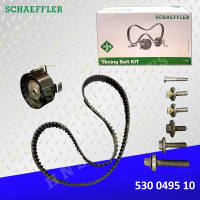
SCHAEFFLER Timing Belt Kit for Ford Ecosport PN: ( 530 0495 10 ) 530049510
₱4,635.00
Buy on LazadaAbout Schaeffler
Schaeffler AG is a German multinational technology corporation specializing in motion technology, with core competencies in bearings, automotive components, electrification systems, powertrain and chassis technologies, and industrial machinery solutions. Headquartered in Herzogenaurach, Bavaria, Germany, the company has grown from a post-war engineering firm into a primary global supplier for the automotive and industrial sectors.1 For readers in the Philippines, Schaeffler is particularly relevant as a provider of high-precision components and bearing solutions that support both local mobility infrastructure and industrial manufacturing applications.11
The company’s origins date to 1946, when brothers Wilhelm Schaeffler and Georg Schaeffler founded Industrie GmbH in Herzogenaurach. As of December 31, 2025, the group employs approximately 110,753 people worldwide and reported revenue of €23.49 billion for the fiscal year 2025.2
Quick facts
| Category | Information |
|---|---|
| Official name | Schaeffler AG |
| Type | Public German technology and manufacturing company |
| Industry | Automotive, industrial engineering, motion technology |
| Founded | 1946 |
| Founders | Wilhelm Schaeffler and Georg Schaeffler |
| Headquarters | Herzogenaurach, Bavaria, Germany |
| CEO | Klaus Rosenfeld |
| Employees | 110,753 (as of Dec. 31, 2025) |
| 2025 Revenue | €23.492 billion |
| Main Brands | INA, FAG, LuK |
| Major Acquisition | Vitesco Technologies (completed 2024) |
| Current Divisions | E-Mobility; Powertrain & Chassis; Vehicle Lifetime Solutions; Bearings & Industrial Solutions |
| Key Markets | Automotive, aerospace, wind energy, industrial machinery, robotics, mobility |
| Company Philosophy | “We pioneer motion” |
Financial and employee data are derived from Schaeffler’s 2025 reporting.3
Corporate overview
Schaeffler operates as a precision engineering and motion technology enterprise. Its product portfolio encompasses technologies designed to enable efficient, reliable, and precise movement in machines and vehicles. The term “motion” is central to the corporate identity; Schaeffler components are utilized wherever rotation, sliding, power transfer, steering, or friction reduction is required.
The company positions itself as a global Motion Technology Company, pursuing a strategy focused on innovative products and services across the entire spectrum of motion.4 Its technologies are integral to passenger cars, electric vehicles (EVs), commercial trucks, motorcycles, industrial machinery, wind turbines, aerospace systems, robotics, machine tools, railway equipment, agricultural machinery, and automotive aftermarket repair.6
History
Foundation and early innovation
The company’s history commenced in 1946, shortly after World War II, when Dr. Wilhelm Schaeffler and Dr.-Ing. Georg Schaeffler established Industrie GmbH in Herzogenaurach, Germany. Initial production focused on metal products before shifting toward bearings and precision components.5
A pivotal breakthrough occurred in 1949 when Georg Schaeffler developed the cage-guided needle roller bearing. This engineering advancement allowed for compact bearing arrangements capable of supporting significant loads, forming the technical foundation for the company’s early success and establishing the INA brand.6
Brand evolution
Three historical brands define Schaeffler’s product identity:
- INA: Originating from Industrie-Nadellager (industrial needle bearings), this brand expanded beyond needle rollers to include ball bearings, plain bearings, linear guides, and engine and transmission components.7
- LuK: Established in Bühl, Germany, in 1965 by the Schaeffler brothers, LuK initially focused on automotive clutch technology. It became renowned for the diaphragm spring clutch, dual-mass flywheels, and dual-clutch technologies. Schaeffler eventually acquired full ownership, integrating LuK deeply into its automotive business.89
- FAG: With roots tracing back to 1883 and Friedrich Fischer’s invention of a machine for mass-producing precision steel balls, FAG represents the rolling-bearing heritage of the group. Schaeffler acquired FAG Kugelfischer Georg Schäfer AG in 2001, significantly broadening its industrial and automotive market position.10
Transformation to systems provider
Over recent decades, Schaeffler transitioned from a pure component manufacturer to a provider of complete systems and engineering solutions. Expertise expanded into mechanical engineering, automotive powertrains, electrification, sensors, mechatronics, industrial automation, digital condition monitoring, renewable energy, and aerospace.12
This transformation accelerated with the acquisition of Vitesco Technologies, completed in 2024. Vitesco specialized in automotive electrification and powertrain technologies, enhancing Schaeffler’s capabilities in electric motors, power electronics, hybrid systems, and electronic control units.13
Organizational structure
As of the current organizational framework, Schaeffler operates through four product-oriented divisions:
E-Mobility
This division addresses the shift toward electrified transport, covering electric motors, electric axles, power electronics, vehicle electrification systems, and hybrid powertrain technologies. In 2025, E-Mobility generated approximately €5.015 billion in revenue.14
Powertrain & Chassis
Focusing on propulsion, transmission, and chassis systems for internal-combustion, hybrid, and conventional vehicles, this division includes clutches, drivetrain systems, and engine components. Despite the rise of EVs, this segment remains vital, generating approximately €8.9 billion in revenue in 2025.15
Vehicle Lifetime Solutions
This division manages the automotive aftermarket and vehicle repair business, supplying replacement parts such as clutch repair systems, bearings, timing-system components, and wheel-bearing systems. It ensures Schaeffler’s participation throughout a vehicle’s operational life, recording approximately €3.038 billion in revenue in 2025.16
Bearings & Industrial Solutions
Representing the traditional bearing expertise, this division serves industries including wind energy, aerospace, rail, robotics, mining, agriculture, and manufacturing. Products include rolling bearings, linear systems, direct-drive technology, and monitoring systems. Revenue for this division reached approximately €6.368 billion in 2025.17
Products and technologies
Schaeffler maintains an extensive product portfolio spanning mechanical and electromechanical domains.
Bearings and industrial applications
Bearings remain a core competency, including ball, roller, cylindrical, spherical, tapered, needle, axial, and precision bearings. These are used to reduce friction and support moving components in diverse settings. Industrial customers utilize these technologies in wind turbines, production machinery, aerospace systems, pumps, compressors, and robotics. In the Philippine market specifically, the portfolio includes high-precision components and bearing solutions tailored for both mobility and industrial applications.11
Automotive and e-mobility
The company supplies major manufacturers with clutch systems, dual-mass flywheels, valve-train components, camshaft systems, chassis components, and electric drive parts. Following the integration of Vitesco Technologies, the electrification portfolio now covers the entire chain from battery and power electronics to electric motors, transmissions, e-axles, and wheels.
Key innovations
Notable technological milestones include:
- Cage-guided needle roller bearing (1949): Foundational to INA’s success.18
- Diaphragm spring clutch: A major LuK innovation introduced in Europe in the 1960s.19
- Dual-mass flywheel: Designed to reduce drivetrain vibration.
- Smart bearings: Integration of mechanical components with sensors and digital services for condition monitoring.
Contrary to the perception that EVs threaten traditional bearing manufacturers, electric vehicles require extensive precision engineering for bearings, thermal management, sensors, and steering. Consequently, Schaeffler has repositioned itself as a broader mobility technology supplier, with E-Mobility revenue growing 7.0% at constant currency on a pro-forma basis in 2025.20
Global and regional presence
Schaeffler operates a global network comprising approximately 250 locations in 55 countries, including manufacturing, R&D, and sales facilities.21 Major regions include Europe, North America, South America, Greater China, and Asia-Pacific.
For stakeholders in the Philippines, the company maintains specific operations dedicated to serving local industrial and automotive needs. The Philippine operation describes its portfolio as encompassing high-precision components, systems, and bearing solutions for both mobility and industrial applications, underscoring the brand’s active role in the country’s technical infrastructure.11
Financial performance
Schaeffler’s 2025 financial results reflect its scale following the Vitesco integration:
| Metric | 2025 Value |
|---|---|
| Revenue | €23.492 billion |
| Employees | 110,753 |
| EBIT (before special items) | €936 million |
| Free Cash Flow (before M&A) | €266 million |
| Net Financial Debt | €4.915 billion |
| EBIT Margin (before special items) | 4.0% |
Revenue by division in 2025 was distributed as follows: E-Mobility (€5.015B), Powertrain & Chassis (€8.900B), Vehicle Lifetime Solutions (€3.038B), and Bearings & Industrial Solutions (€6.368B).22
Ownership and management
Schaeffler remains predominantly family-owned, distinguishing it from many other major German industrial firms. Following the death of Georg Schaeffler in 1996, Maria-Elisabeth Schaeffler-Thumann and her son Georg F. W. Schaeffler continued the family’s business interests.14 Although Schaeffler AG is publicly listed, the Schaeffler family remains the dominant shareholder group.15
The company is led by Chief Executive Officer Klaus Rosenfeld. The executive board oversees functions including finance, human resources, operations, technology, and the four operational divisions.5
Sustainability and future growth
Sustainability is integral to corporate strategy, focusing on emissions reduction, energy efficiency, circular economy principles, and responsible sourcing. In July 2026, Schaeffler received an EcoVadis Platinum rating, placing it at the highest level of that sustainability assessment.13
Looking forward, the company has identified humanoid robotics and defense as emerging growth areas, aiming to generate up to 10% of revenue from new growth sectors by 2035.24 Robotics leverages Schaeffler’s existing expertise in bearings, actuators, gears, and sensors, and partnerships with humanoid-robotics companies have already been announced.25
Relationship with Continental
Historically, Schaeffler and Continental maintained a significant corporate relationship. Between 2008 and 2009, Schaeffler attempted to acquire Continental and became a major shareholder, though the stake was subsequently reduced over time. This period briefly linked two of Germany’s largest automotive technology groups.23
Timeline
- 1883: Friedrich Fischer develops machine for precision steel balls (FAG roots).
- 1946: Wilhelm and Georg Schaeffler establish Industrie GmbH in Herzogenaurach.27
- 1949: Development of the cage-guided needle roller bearing.
- 1965: LuK established for automotive clutch technology.
- 1996: Georg Schaeffler dies; family succession continues.14
- 2001: Acquisition of FAG Kugelfischer.
- 2008–2009: Schaeffler becomes major shareholder of Continental.
- 2015: Schaeffler AG goes public.
- 2024: Merger with Vitesco Technologies completed.26
- 2025: New four-division structure implemented for reporting.28
- 2026: Continued expansion into e-mobility, robotics, and new motion markets.29
References
- The Schaeffler story | We pioneer motion | Schaeffler Group
- Schaeffler Group
- Schaeffler AG Q1 2026 Factbook
- Annual Report 2025
- Executive Board | Schaeffler Group
- Strategy | Schaeffler Group
- A Brilliant Idea Yesterday, a Global Company Today
- Pioneering Spirit
- SCHAEFFLEREnvironmental StatementReport Environmental Protection and Safety
- tomorrow Issue 2/2024 ⋅ Integration
- Products & Solutions | Schaeffler Philippines
- Schaeffler reports solid results for 2025
- Sustainability | Schaeffler Group
- Origins: The Schaeffler family of entrepreneurs | Schaeffler Group
- Shareholders
- Schaeffler with stable overall results in transition year 2024
- Schaeffler Automotive Symposium presents innovations and technologies for the future
- Schaeffler Automotive Symposium präsentiert Innovationen und Technologien für die Zukunft
- Schaeffler Automotive Symposium präsentiert Innovationen und Technologien für die Zukunft | IR-Mitteilungen | Schaeffler Gruppe
- Schaeffler Automotive Symposium präsentiert Innovationen und Technologien für die Zukunft | Pressemitteilungen | Schaeffler Österreich
- Schaeffler Automotive Symposium präsentiert Innovationen und Technologien für die Zukunft
- Schaeffler delivers robust third quarter
- Schaeffler Kapitalmarkttag 2025 – Auf dem Weg zur führenden Motion Technology Company | Pressemitteilungen | Schaeffler Österreich
- Schaeffler off to good start in 2025
- Annual General Meeting 2025 of Schaeffler AG | Schaeffler Group
- Merger of Vitesco Technologies Group AG into Schaeffler AG successfully completed
- 1940 to 1946 | Genesis of an entrepreneur | Schaeffler Group
- Earnings Releases Investor Relations | Schaeffler Group
- Impressum | Schaeffler Training Campus