Shop on Lazada
Secret products
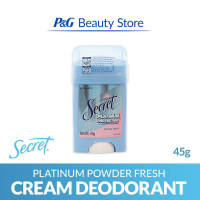
Secret Platinum Cream Deodorant Powder Fresh 45g
₱282.00₱341.00
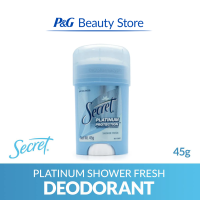
Secret Platinum Cream Deodorant Shower Fresh 45g
₱282.00₱341.00
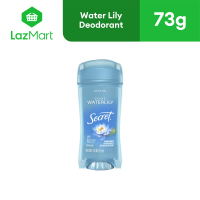
Secret Fresh Clear Gel Antiperspirant and Deodorant Waterlily Scent 73g (2.6 oz)
₱306.00₱340.00
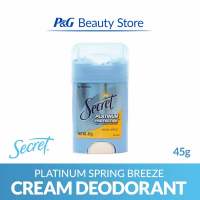
Secret Platinum Cream Deodorant Spring Breeze 45g
₱282.00₱341.00
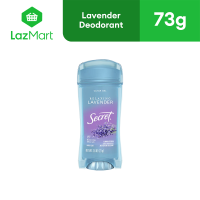
Secret Fresh Clear Gel Antiperspirant and Deodorant Relaxing Refreshing Lavender 73g (2.6 oz)
₱306.00₱340.00
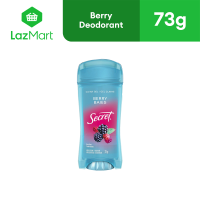
Secret Fresh Clear Gel Antiperspirant and Deodorant Berry 74g (2.6oz)
₱306.00₱340.00
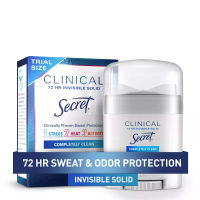
Secret Clinical Strength Antiperspirant Deodorant
₱350.00₱450.00
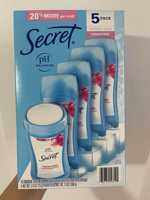
Secret Antiperspirant Deodorant (73g)
₱1,799.00
Buy on LazadaAbout Secret
Secret is an American personal-care brand specializing in deodorants and antiperspirants, with a product range primarily marketed toward women. Owned by Procter & Gamble (P&G), the brand was introduced in the United States in 1956. It stands as one of P&G’s longest-running deodorant brands and has evolved from a traditional underarm antiperspirant into a broader personal-care line offering clinical antiperspirants, aluminum-free deodorants, scented products, and whole-body deodorants.1
Overview
| Category | Information |
|---|---|
| Brand name | Secret |
| Industry | Personal care / beauty |
| Product category | Deodorants & antiperspirants |
| Parent company | Procter & Gamble |
| Origin | United States |
| Founded / introduced | 1956 |
| Original target market | Women |
| Current major markets | United States, Canada, Mexico |
| Key products | Antiperspirants, deodorants, clinical protection, aluminum-free deodorants, whole-body deodorants |
| Famous historical slogan | “Strong Enough for a Man, Made for a Woman” |
| Current positioning | Sweat, odor and freshness protection designed around women’s needs |
Historical records identify Secret as a women’s deodorant and antiperspirant brand launched in 1956, and P&G continues to market it as a core component of its deodorant portfolio.1
History
Origins: 1945–1956
The development of Secret began more than a decade before its commercial release. P&G initiated research on the formulation that would eventually become Secret in 1945.
The brand was commercially introduced in 1956 as a cream applied directly to the underarm. Designed specifically to control underarm odor for women, Secret served as an early example of a personal-care product developed around the concept that women had specialized needs regarding odor and perspiration protection.1
The original cream formulation differed significantly from modern stick deodorants. Secret subsequently expanded into various application formats:
- 1956: Cream deodorant introduced.
- 1958: Roll-on format introduced.
- 1964: Spray format introduced.
- 1978: Solid round-stick format introduced.1
Advertising and the “Katy Winters” era
Throughout the 1950s and 1960s, Secret gained significant recognition through television advertising. Commercials featured a fictional character named Katy Winters, portrayed by actress Anne Starr Roberts, who presented Secret as a solution to perspiration and odor issues faced by women.
These advertisements were ubiquitous and culturally visible enough to be parodied by comedians such as Johnny Carson and George Carlin.1 This era established a key marketing characteristic for the brand: rather than selling a purely functional hygiene product, Secret associated deodorant use with confidence, femininity, and social situations.
The famous slogan
In the early 1970s, Secret adopted one of its most historically recognizable advertising slogans:
“Strong Enough for a Man, Made for a Woman.”
This tagline articulated the brand’s central value proposition: women deserved robust odor and perspiration protection without having to rely on products positioned primarily for men. Developed in 1972, the slogan became one of Secret’s most enduring advertising assets. Its creator, Carol H. Williams, was later inducted into the American Advertising Federation Hall of Fame.1
From a branding perspective, the slogan was significant for combining performance with gender-specific positioning, a strategy that helped distinguish Secret within the competitive deodorant market.
Expansion during the 1980s
During the 1980s, Secret adapted its offerings to align with evolving consumer preferences. The company redesigned its solid deodorant from a traditional round stick to a wider stick intended to better fit the underarm contour. It also broadened its fragrance selection with scents including:
- Powder Fresh
- Spring Breeze
- Sporty Clean
By the end of the decade, Secret had become the leading women’s deodorant brand in dollar sales.1
Product innovation in the 1990s
The 1990s marked a shift toward stronger protection and specialized formulas. Secret introduced products such as:
- Ultra Dry
- Sheer Dry
- Platinum Soft Solid
The Platinum line was positioned as a high-strength over-the-counter antiperspirant.1 This period represented an evolution in brand positioning; Secret moved beyond basic deodorization to emphasize technical performance and wetness protection.
The 2000s: Clinical-strength positioning
Secret continued to expand its portfolio in the early 21st century. Key developments included:
- 2001: New fragrances including Ambitious, Genuine, and Optimism.
- 2002: Platinum Clear Gel and Invisible Solid products.
- 2007: Launch of Secret Clinical Strength, positioned as a prescription-strength wetness protection product available over the counter.
- 2009: Introduction of Scent Expressions, a collection emphasizing fragrance variety.1
The Clinical Strength line was pivotal to Secret’s modern identity, allowing the brand to compete on high-performance sweat protection alongside fragrance and femininity.
Secret in the 2010s
During the 2010s, Secret expanded beyond traditional antiperspirant formats, experimenting with digital marketing, cause-oriented campaigns, and new formulations. In 2010, the brand participated in P&G’s “Thank You Mom” Olympic sponsorship campaign and engaged consumers through social media initiatives.1
In 2019, Secret introduced a collection featuring essential oils and partnered with the U.S. women’s national soccer team.1
The 2020s
In the 2020s, Secret’s positioning broadened further, moving beyond the traditional concept of an underarm antiperspirant. The current portfolio includes categories such as:
This expansion reflects a wider industry trend where consumers seek odor and freshness solutions for areas beyond the underarms. P&G states that Secret’s whole-body deodorants are designed for targeted odor protection ranging from the underarms to external intimate areas, while Secret Clinical products focus specifically on sweat management.3 In 2024, Secret was included in P&G’s launch of whole-body deodorant sprays alongside Native and Old Spice.4
Products
Secret’s product ecosystem is divided into several distinct categories.
Antiperspirants
Traditional Secret antiperspirants are designed to address both sweat and odor. These products typically utilize active antiperspirant ingredients to reduce perspiration while providing fragrance or odor neutralization.
Clinical Strength
Secret Clinical Strength represents the brand’s performance-oriented segment, marketed to consumers requiring stronger wetness protection than conventional deodorants provide. This line dates back to 2007.1
Aluminum-Free Deodorant
Secret offers aluminum-free deodorants positioned around odor protection rather than sweat reduction. This distinction is functional: deodorants primarily address odor, whereas antiperspirants are formulated to reduce sweating.
Fragrance Products
Fragrance has historically been central to Secret’s identity. Over decades, the brand has introduced numerous scents and fragrance-focused collections, allowing it to compete on both functional performance and personal preference.
Whole-Body Deodorant
A newer category for the brand is whole-body deodorant. Unlike traditional products limited to underarm use, these are designed and tested for odor protection on additional external body areas. P&G describes these products as part of its recent deodorant innovations.2
Brand positioning
While Secret’s branding has evolved since 1956, several core themes remain consistent.
Protection
The fundamental brand promise is protection from odor and, for antiperspirant products, perspiration.
Women’s needs
Secret was created specifically to address women’s deodorant needs. Historically, the brand explicitly differentiated its products from men’s offerings, a positioning clarified by its famous 1970s slogan.1
Confidence
Advertising has frequently linked personal freshness with confidence in social, professional, and physically demanding situations.
Performance
Over time, Secret has increasingly emphasized scientific and technical performance, particularly through the Clinical Strength line.
Personal expression
Diverse fragrances, scent collections, and formulations allow consumers to select products based on sensory preference and lifestyle.
Parent company: Procter & Gamble
Secret is owned by Procter & Gamble, one of the world’s largest consumer goods companies. P&G’s portfolio spans beauty, grooming, health care, fabric and home care, and family care. Secret sits within the beauty and personal-care segment alongside brands such as Old Spice and Native.1
P&G’s ownership provides Secret with access to large-scale research, manufacturing, distribution, and marketing infrastructure.
Science and product development
Secret’s modern identity is closely tied to P&G’s research and development capabilities. P&G employs a science-based safety process wherein new products undergo multiple evaluation stages before market release. Current product information highlights formulation technologies such as Pro-Hyaluronic, used in certain products to support skin hydration.2
Consequently, Secret’s portfolio combines traditional cosmetic elements like fragrance and skin feel with performance-oriented sweat and odor management technologies.
Cruelty-free positioning
Secret’s official website states that the brand is PETA-certified cruelty-free, confirming that its products and ingredients are not tested on animals.2 This reflects a contemporary approach to consumer expectations regarding product ethics.
Marketing and cultural significance
Secret’s history illustrates the evolution of the deodorant category. Early communications followed a simple problem-solution model: Women perspire → perspiration can create odor → Secret provides protection.
Over subsequent decades, the brand added layers of meaning: Protection → confidence → strength → clinical performance → personal expression → broader body care. Advertising has shifted from conventional mid-century hygiene messaging to modern themes involving performance, empowerment, sport, lifestyle, and body confidence.
Sports partnerships
Sports have become integral to Secret’s marketing strategy. The brand has collaborated with women’s sports organizations and athletes, including a 2019 partnership with the U.S. women’s national soccer team.1
Secret was promoted as the Official Deodorant of Team USA for the 2024 Summer Olympics, with rugby player Ilona Maher becoming a brand ambassador in 2024.1 These partnerships reinforce the brand’s emphasis on sweat protection in high-performance environments while connecting Secret with the rising visibility of women’s athletics.
Manufacturing and distribution
Historically, Secret products have been manufactured through P&G operations, with facilities identified in Greensboro, North Carolina, and Mexico City, Mexico.1 Distribution channels include supermarkets, drugstores, mass retailers, and online platforms.
The brand’s primary documented markets have traditionally been the United States, Canada, and Mexico.1
Brand identity
Secret’s identity is defined by five major pillars:
| Pillar | Meaning |
|---|---|
| Protection | Defense against sweat and odor |
| Performance | Strong and clinical-level protection |
| Femininity | Historically designed around women’s needs |
| Confidence | Staying fresh and confident in everyday situations |
| Innovation | New formulas, formats and applications |
Timeline
- 1945 — P&G begins research that eventually leads to Secret.
- 1956 — Secret launches as a cream deodorant specifically marketed to women.
- 1958 — Roll-on version introduced.
- 1964 — Spray format introduced.
- 1972 — “Strong Enough for a Man, Made for a Woman” becomes a major advertising slogan.
- 1978 — Solid round-stick format introduced.
- 1980s — Wide-stick design and additional fragrances introduced; Secret becomes a leading women’s deodorant brand.
- 1990s — Ultra Dry, Sheer Dry, and Platinum products expand the performance portfolio.
- 2002 — Clear gel and invisible-solid products introduced.
- 2007 — Secret Clinical Strength launches.
- 2009 — Scent Expressions expands the fragrance portfolio.
- 2010s — Digital campaigns, Olympic sponsorships, and sports partnerships become increasingly important.
- 2019 — Essential-oil collection introduced; partnership with the U.S. women’s national soccer team.
- 2024 — Secret participates in P&G’s whole-body deodorant expansion and serves as Official Deodorant of Team USA for the Summer Olympics.
- 2026 — Secret continues to offer antiperspirants, clinical products, aluminum-free deodorants, fragrance-focused products, and whole-body deodorants.12