Shop on Lazada
Selsun products
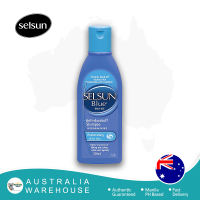
Australian Selsun Blue Anti-dandruff Shampoo (New Package) 200ml
₱799.00₱1,000.00
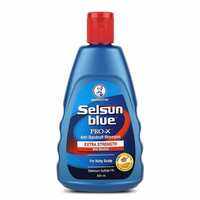
SELSUN BLUE Dandruff Treatment Shampoo Medicated
₱550.00
Buy on Lazada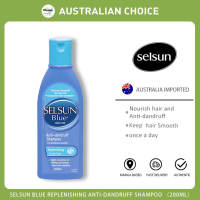
Australia Imported Selsun Blue Replenishing Anti-Dandruff Shampoo (New Package) 200ml
₱799.00₱888.00
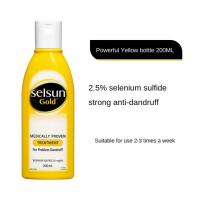
Selsun Gold Blue Shampoo Green Purple Treatment 200mL Medically Proven Treatment For Dandruff Control
₱388.90₱412.00
![[Imported Fr Australia] SELSUN BLUE(Deep Cleansing Replenishing) SELSUN GOLD Anti Dandruff Shampoo 200ml](https://ph-live.slatic.net/p/95c1348754a46629b1fa643b7d486283.jpg_200x200q80.jpg)
[Imported Fr Australia] SELSUN BLUE(Deep Cleansing Replenishing) SELSUN GOLD Anti Dandruff Shampoo 200ml
₱877.34₱1,081.08
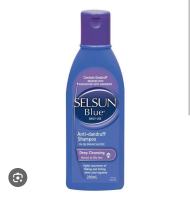
Selsun Gold or Deep Cleansing or Repleneshing Anti Dandruff Shampoo Treatment 200mL
₱480.00
Buy on Lazada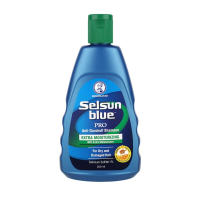
200ml Selsun Blue Anti Dandruff Extra Moisturizing Shampoo
₱545.00
Buy on Lazada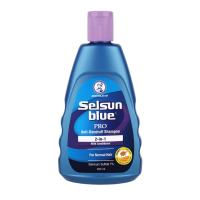
200 ml Selsun Blue Bottle Pro Anti-Dandruff 2-in-1 Shampoo and Conditioner
₱525.00
Buy on LazadaAbout Selsun
Selsun is a brand of medicated anti-dandruff and scalp-care shampoos best known for formulations containing selenium sulfide, an active ingredient used to control dandruff and associated scalp symptoms. The brand is marketed in different forms and under somewhat different names depending on the country. In the United States and Canada, the best-known version is Selsun blue®, while in Indonesia the brand is marketed as Selsun by Rohto Laboratories Indonesia. 1
Overview
| Category | Information |
|---|---|
| Brand | Selsun |
| Industry | Personal care / OTC healthcare |
| Main category | Anti-dandruff and scalp-care products |
| Best-known active ingredient | Selenium sulfide |
| Primary purpose | Control of dandruff, flaking and associated scalp symptoms |
| Notable variants | Selsun Blue, Selsun Blue 5, Selsun Gold, Selsun Yellow, Selsun Scalp Care |
| Indonesian marketer | Rohto Laboratories Indonesia |
| International history | Formerly associated with Abbott Laboratories and later Chattem |
| Current U.S./Canada brand presence | Selsun blue® |
| Official sites | Selsun blue® official website; Rohto Indonesia – Selsun |
History
The history of Selsun is closely associated with selenium sulfide, which became the defining ingredient behind its medicated anti-dandruff positioning. Older medical literature describes Selsun as a selenium-sulfide shampoo and Selsun Blue as an over-the-counter formulation containing 1% selenium sulfide. 2
For much of its corporate history, Selsun was associated with Abbott Laboratories. In March 2002, U.S. healthcare company Chattem, Inc. acquired the Selsun Blue line from Abbott for $75 million plus $1.4 million in inventory. The transaction included worldwide manufacturing, marketing and sales rights, except India, as well as related intellectual property and manufacturing equipment. 3
Chattem subsequently expanded the Selsun portfolio. Historical company filings show that the Selsun Blue family included different formulas designed around different consumer needs, including moisturizing, conditioning and sensitive-scalp products. Additional Selsun products used ingredients such as pyrithione zinc and salicylic acid rather than selenium sulfide. 4
Chattem was later acquired by Sanofi, bringing Selsun into the Sanofi consumer-health portfolio. Today, the ownership and commercialization structure varies by market, so it is important not to assume that the company selling Selsun in one country is the same company selling it in another.
The Selsun name
The defining characteristic of the Selsun brand is its historical association with selenium sulfide. The ingredient is an anti-dandruff active with antifungal properties and also helps remove dead, flaky skin from the scalp. The official Selsun blue website identifies selenium sulfide as one of its principal active ingredients. 5
However, not every product carrying the Selsun name necessarily uses selenium sulfide. Historically, some Selsun products have used salicylic acid or pyrithione zinc, and modern portfolios can differ considerably between countries.
How Selsun works
The classic Selsun approach is based on selenium sulfide.
Selenium sulfide helps control dandruff through its antifungal activity and assists in reducing the accumulation of dead skin cells responsible for visible flaking. Selsun’s official information describes it as helping address symptoms including:
- dandruff flakes
- scalp itching
- scalp irritation
- excessive scaling
The underlying rationale is particularly relevant to dandruff and seborrheic scalp conditions, where microorganisms and excessive shedding of scalp skin can contribute to symptoms.
Major ingredients
Selenium sulfide
This is the ingredient most strongly associated with Selsun.
It is used as an anti-dandruff active and has antifungal properties. In Indonesia, for example, Selsun Blue is listed by Rohto Laboratories Indonesia as containing 1% selenium sulfide. 2
Salicylic acid
Some historical Selsun formulas used salicylic acid rather than selenium sulfide. Salicylic acid helps loosen and remove dead, flaky skin.
Pyrithione zinc
Some historical Selsun products also used pyrithione zinc as their anti-dandruff active. It has antifungal properties and was used in products positioned toward scalp and hair care. 6
Selsun in Indonesia
Indonesia is an especially interesting market for the brand because Selsun has a distinct local product identity.
The Indonesian portfolio is marketed by Rohto Laboratories Indonesia, which currently lists several Selsun products, including:
- Selsun Blue
- Selsun Blue 5
- Selsun Gold
- Selsun Yellow Double Impact
- Selsun Scalp Care Purifying Shampoo
- Selsun Scalp Care Hairfall Control Shampoo
- Selsun Nourishing Conditioner
- Selsun Scalp Care Hairfall Control Serum 7
This means that “Selsun” in Indonesia is broader than simply Selsun Blue. It functions as a wider scalp-care brand with multiple shampoo and treatment products.
Selsun Blue
Rohto Indonesia positions Selsun Blue for moderate-to-severe dandruff. Its listed active ingredient is 1% selenium sulfide, and the product is directed at reducing dandruff-related itching. The recommended use on the Indonesian product page is twice a week, with the shampoo left on the scalp for approximately 2–3 minutes before rinsing. 8
Selsun Blue 5
Selsun Blue 5 is another Indonesian variant containing 1% selenium sulfide, with aloe vera and conditioning ingredients. Rohto positions it for moderate dandruff and states that it can be used daily. 6
Selsun blue in North America
In the United States and Canada, the brand is primarily known as Selsun blue®.
The current official brand positioning describes Selsun blue as an “expert in scalp health” and focuses on medicated solutions for dandruff, itching, flakes and irritation. Its current portfolio includes products positioned around maximum-strength dandruff treatment and daily care. 7
The North American portfolio illustrates how the brand has evolved from a relatively straightforward medicated shampoo into a broader scalp-care proposition.
Product positioning
Selsun occupies an interesting position between ordinary cosmetic shampoo and medicated scalp treatment.
Unlike a conventional shampoo whose primary purpose is cleansing and hair conditioning, Selsun’s core proposition is treatment and control of dandruff. This is why its products traditionally emphasize an active pharmaceutical/medicated ingredient, particularly selenium sulfide.
Its brand proposition can therefore be summarized as:
Medicated scalp care + dandruff control + everyday hair care
The precise balance varies by product.
Brand identity
Selsun has historically built its identity around being a strong, effective anti-dandruff treatment, rather than primarily competing as a fashionable cosmetic shampoo.
Its key brand associations include:
Effectiveness — Strong dandruff-control positioning.
Medical credibility — Use of recognized anti-dandruff active ingredients.
Scalp health — Increasing emphasis on the scalp rather than simply hair appearance.
Accessibility — Products are sold through consumer healthcare and personal-care channels.
Product specialization — Multiple formulas target different dandruff and scalp needs.
The current Selsun blue brand itself emphasizes the idea that dandruff is a common and manageable scalp problem rather than something consumers should feel embarrassed about.
Selsun vs. ordinary anti-dandruff shampoo
One of the key distinctions between Selsun and conventional shampoo is the emphasis on active treatment.
A typical cosmetic shampoo might primarily promise:
- cleansing
- fragrance
- softness
- smoothness
- hair conditioning
Selsun’s traditional proposition instead centers on:
- controlling dandruff
- reducing flaking
- relieving dandruff-associated itching
- controlling scalp scaling
- maintaining scalp health
This makes Selsun more comparable to other medicated anti-dandruff brands than to ordinary hair-care brands.
Global brand structure
An important point when discussing Selsun is that the brand is not completely standardized worldwide.
For example:
United States / Canada: the major consumer identity is Selsun blue®. 8
Indonesia: the brand is marketed as Selsun, with a larger local portfolio including Blue, Blue 5, Gold, Yellow and Scalp Care products.
Historically, Chattem documentation also described Selsun Blue as being marketed internationally simply as Selsun in some markets. 9
Consequently, product names, formulations, concentrations, packaging and even the company responsible for selling the product can differ by country.
Corporate history at a glance
Selsun → Abbott Laboratories → Chattem → Sanofi/consumer-health operations → market-specific ownership/commercialization
A particularly well-documented milestone is the 2002 acquisition by Chattem, which purchased the Selsun Blue line from Abbott. 9
The brand’s subsequent corporate history became connected with Sanofi through its acquisition of Chattem. More recently, Sanofi’s consumer-health business has operated under the Opella structure, while Selsun products in markets such as Indonesia are handled by local commercial partners/companies such as Rohto.
Brand portfolio evolution
Selsun’s development can broadly be divided into several stages:
1. Medicated anti-dandruff origin
The brand established itself around selenium sulfide and dandruff treatment.
2. Selsun Blue expansion
The Blue line developed multiple formulations addressing different scalp and hair-care preferences.
3. Ingredient diversification
Products using ingredients such as salicylic acid and pyrithione zinc expanded the brand beyond a single active ingredient.
4. Scalp-care positioning
The modern brand increasingly frames dandruff as part of broader scalp health rather than simply an aesthetic hair problem.
5. Market-specific expansion
Countries such as Indonesia developed their own Selsun portfolios and product variants.
Selsun’s significance
Selsun is notable because it represents a category of products sitting at the intersection of dermatological treatment, consumer healthcare and hair care.
Its strongest historical differentiator is selenium sulfide. While many shampoo brands compete primarily through hair appearance, fragrance, conditioning or cosmetic benefits, Selsun built its reputation around a medically oriented problem: dandruff and scalp scaling.
That positioning has allowed the brand to remain recognizable for decades despite changes in ownership, formulations and regional portfolios.
In Indonesia specifically
Selsun has become considerably more than a single anti-dandruff shampoo. Rohto Indonesia currently presents it as a range of hair and scalp-care products, including anti-dandruff shampoos, hair-fall-oriented products, conditioner and serum.
This gives the Indonesian Selsun brand a broader architecture:
Selsun = anti-dandruff heritage + scalp care + hair care
rather than simply:
Selsun = selenium sulfide shampoo
That distinction is important when analyzing the brand from a marketing or business perspective.
Summary
Selsun is a long-established medicated scalp-care brand best known for anti-dandruff shampoos containing selenium sulfide. Its roots are connected with Abbott Laboratories, while a major historical turning point occurred in 2002 when Chattem acquired Selsun Blue from Abbott.
Over time, the brand expanded into different formulas and active ingredients. Today, its identity varies by market: Selsun blue® is the prominent North American identity, while Selsun is a broader hair/scalp-care portfolio in Indonesia, where Rohto Laboratories Indonesia markets products such as Selsun Blue, Blue 5, Gold, Yellow and Scalp Care.
At its core, however, the brand’s enduring proposition remains straightforward: effective, medicated control of dandruff and healthier scalp care.